



New Delhi: Twenty-six-year-old S couldn’t make it to the more established IIMs such as IIM Ahmedabad and IIM Bangalore, so he settled for one of the newer ones—IIM Sambalpur. The charm was not just the IIM tag and the status it promises, but the Delhi address.
In July 2025, S was one of 45 students who enrolled for the two-year MBA in Business Analytics at the Delhi Centre of Odisha’s IIM Sambalpur. They paid about Rs 18.2 lakh for what they claim was presented as a full-time residential programme on a sprawling, state-of-the-art campus. Then the illusion shattered, and a battle began.
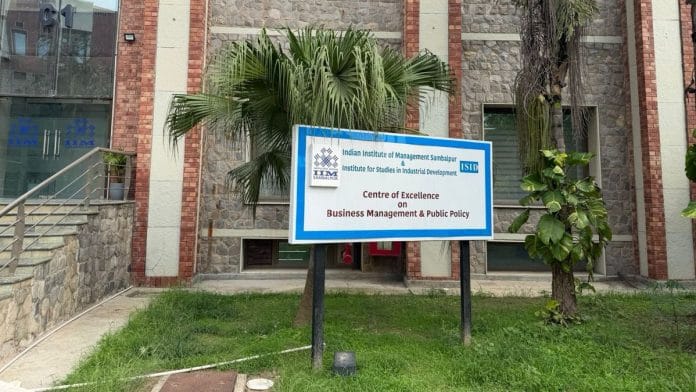
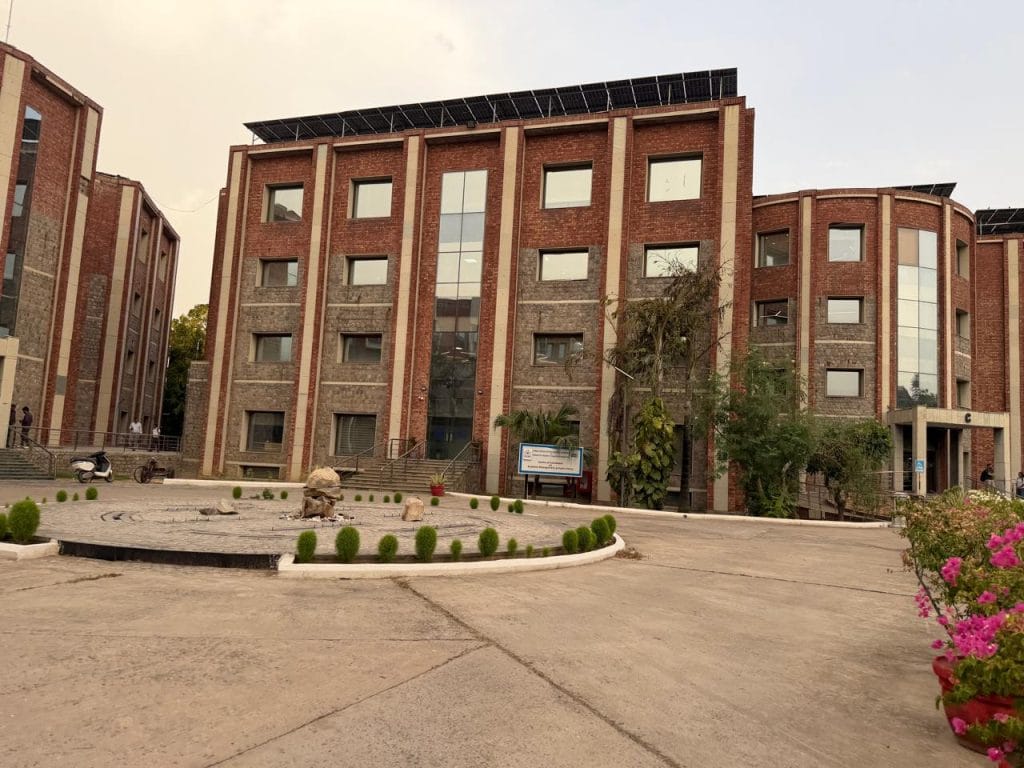
The well-appointed campus in Vasant Kunj was real enough. But only two classrooms were dedicated to IIM Sambalpur students. The property belongs to the Institute for Studies in Industrial Development (ISID), whose campus also houses other organisations. Students say they were led to believe they’d have the run of it, but this was not the case. The library was off limits. The canteen was shared. And there was no hostel.
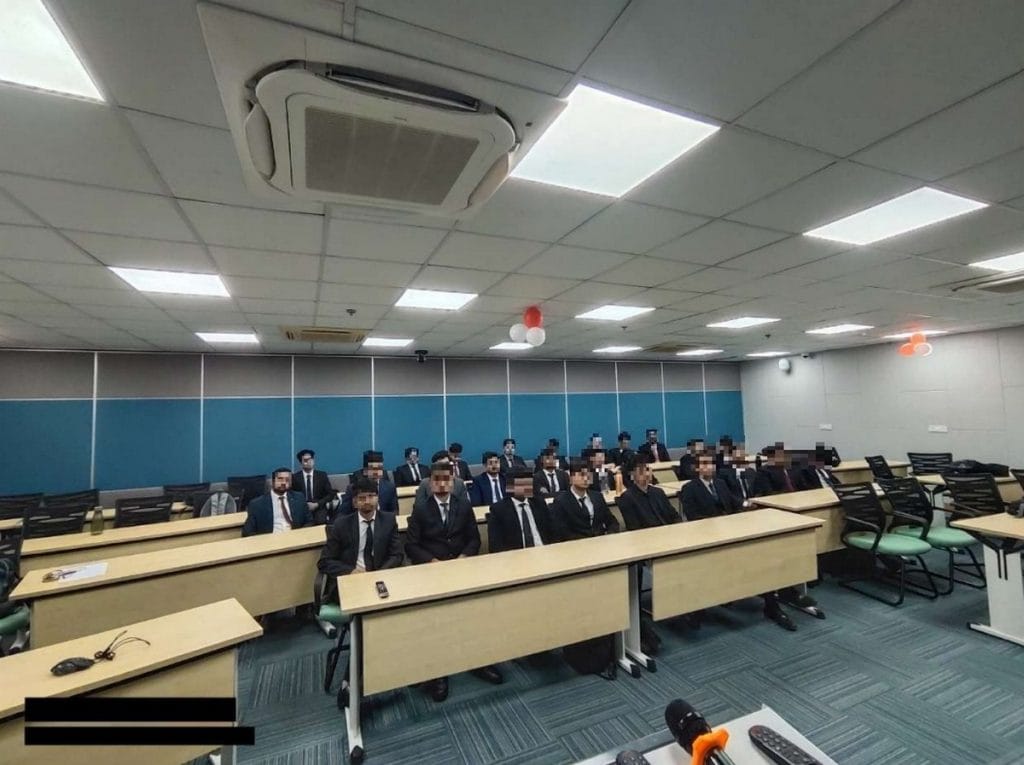
“IIM Sambalpur’s Delhi campus wasn’t even ready when we took admission, so for the first three months we had to stay at the main campus in Sambalpur, Odisha. When we returned to Delhi after that, it was a shock. In the name of a campus, they have given us just one large hall divided into two classrooms. There is nothing else,” said the second-year student, whose father is a Delhi-based businessman.
For months, the students — from places such as Agra and Muzaffarpur to as far away as Kolhapur and Hyderabad — wrote complaints to the IIM Sambalpur administration. They approached members of the Board of Governors and wrote to the education ministry. They threatened to file RTIs. Now they have gone to the Delhi High Court, asking for either a fee cut or relocation to the IIM Sambalpur campus.
The situation at the Delhi Centre is a familiar one by now. Famed public institutions expand on the heft of their brand, but campus, faculty and facilities don’t arrive at the same time as students. AIIMS Madurai has operated for years from a temporary campus. The first batch at Arunachal Pradesh’s Film and Television Institute protested last year that they were effectively studying on a construction site. The ASI’s Pt Deendayal Upadhyaya Institute of Archaeology had a different problem: a gleaming well-equipped campus but no permanent faculty. Left in a bind are students.
At the Vasant Kunj campus, the aggrieved students say they were cheated of the IIM experience they were promised in the national capital. They had expected a model along the lines of IIM Lucknow, which has a 20-acre campus in Noida, complete with hostels. Many of their families had taken loans of Rs 20 lakh and above. Instead, most facilities were shared with other ISID occupants, including IGL and Solis Nature.
This is a temporary campus. It takes time to build a new system. We are continuously improving the infrastructure. Why would we want to provide inferior facilities? That would damage our own brand.”
-Mahadeo Prasad Jaiswal, director, IIM Sambalpur
At the canteen, a group of five second-year students in jeans and T-shirts sat a few chairs away from office-goers loudly discussing shifts and project deadlines. One student sighed: “This is what our lives will look like in a few years. I don’t want to know all this now.”
According to IIM Sambalpur director Mahadeo Prasad Jaiswal, the Delhi Centre is still a work in progress.
“This is a temporary campus. It takes time to build a new system. We are continuously improving the infrastructure. Why would we want to provide inferior facilities? That would damage our own brand,” Jaiswal told ThePrint.
ThePrint has also called and sent an email to the Delhi Centre head Kakoli Sen; this report will be updated when a response is received.
Also Read: A shining 12-acre West Delhi campus was built for teacher training. An empty shell now
‘Residential programme’ without a residence
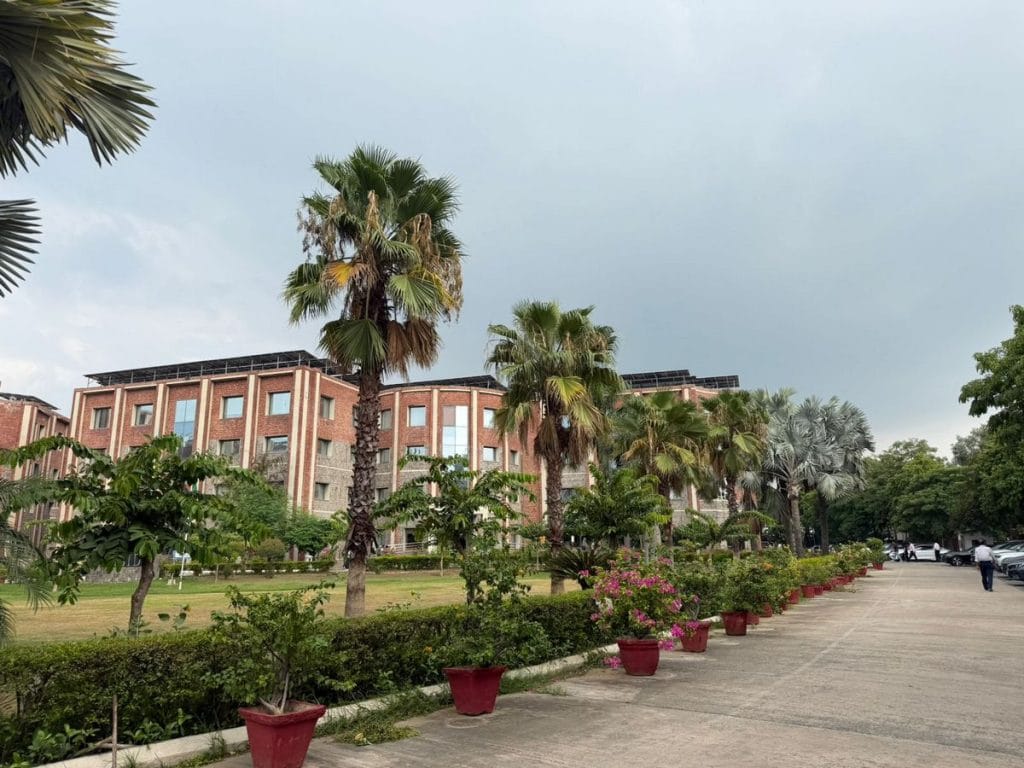
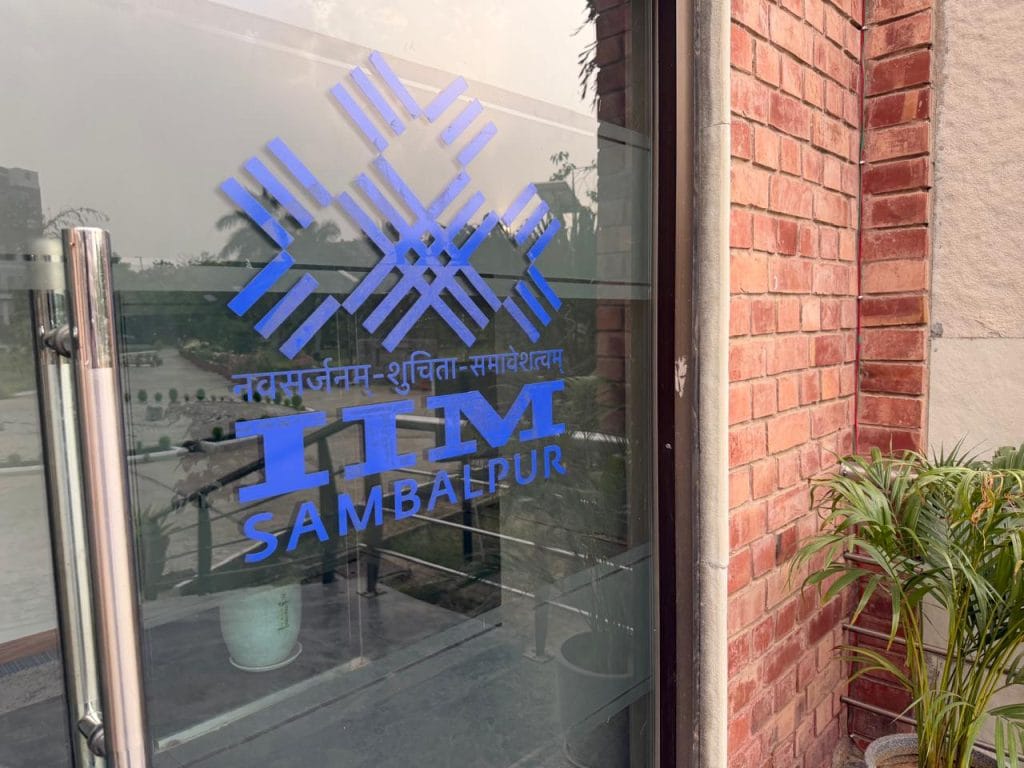
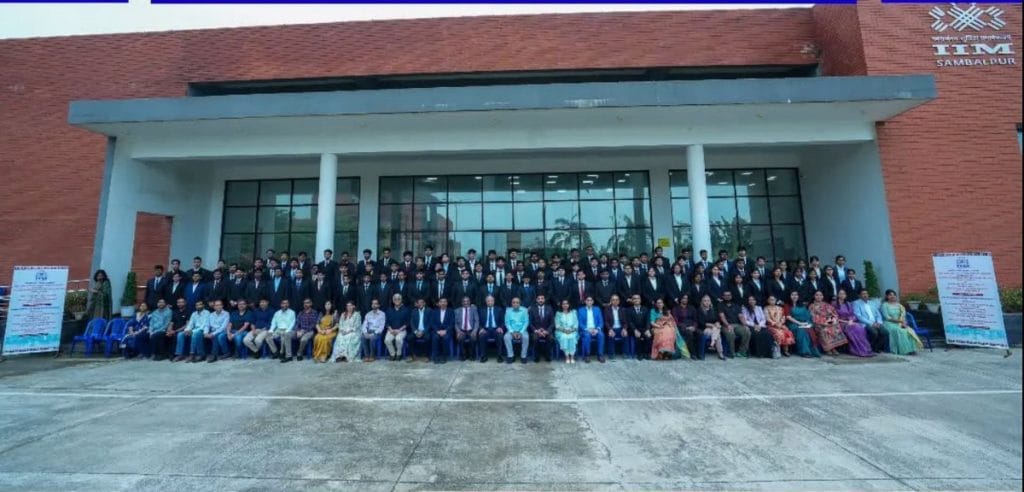
Sweeping, palm-lined roads and landscaped grounds surround the red-brick buildings of the ISID campus. One glass door on the ground floor bears the IIM Sambalpur name and logo, leading to two modern lecture halls that can seat about 60 students each. None of this is enough to assuage students who say they want what they paid for.
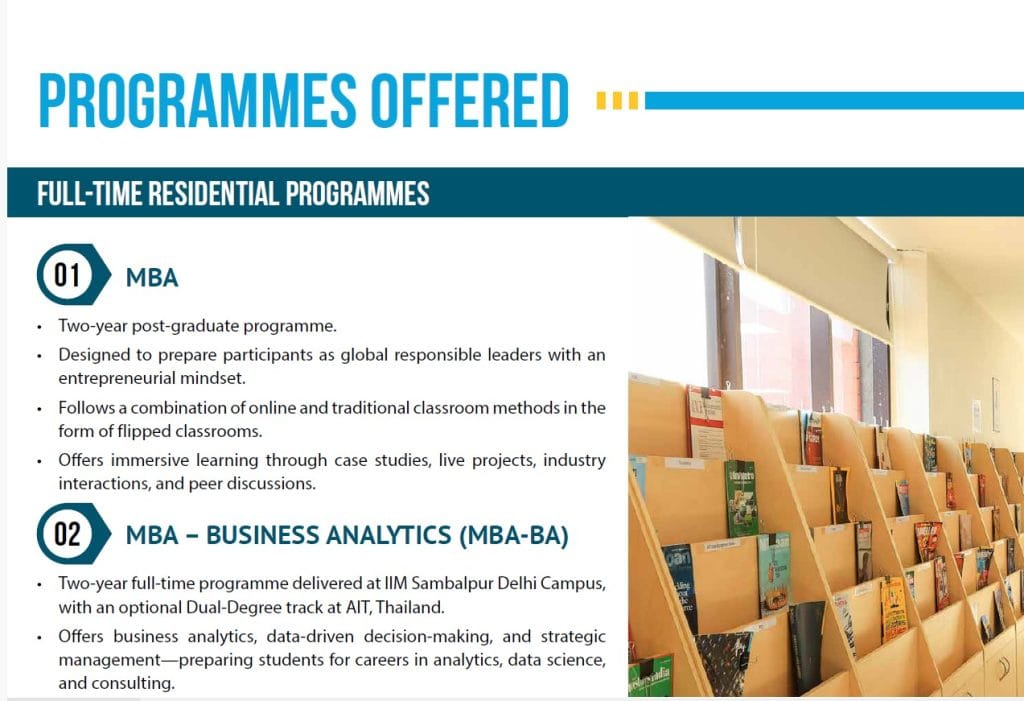
In IIM Sambalpur’s 2024-26 placement brochure, the two-year MBA in Business Analytics at the Delhi Centre is listed under “full-time residential programmes”. A June 2025 FAQ from the IIM Sambalpur Admission Office later narrowed this down, stating that “air-conditioned twin sharing on-campus accommodation” would be available to female candidates.
But there is no accommodation for anyone on campus. This is one of the sorest spots for the students.
When the first batch arrived, they discovered there was no IIM hostel. Instead, they were put up in privately run paying guest accommodation in Kishangarh, an urban village about 5 km away, shared with students from the TERI School of Advanced Studies and an aviation school. On top of the Rs 18.2 lakh programme fee, they paid Rs 70,000 each trimester for accommodation and bore their own commuting costs.
“The hostel was made mandatory,” said S, who has taken a loan of about Rs 19 lakh for the programme. He alleged that the building was also being run as a guest house for working professionals.
I could have gone to IIM Jammu or another baby IIM. I chose this because I thought there would be a large campus in Delhi and the experience would be better. I expected the standard of academics and research to be similar to IIM Lucknow’s satellite campus
-Second-year MBA student
Some students had issues with the food and the way the accommodation was run. By January, tensions had escalated enough for them to call the police.
“The owner got into a confrontation with us and called around 50-100 people to the hostel. We did not know what was going to happen,” said another second-year student, alleging that the owner kept a gun in his office.
The students allege IIM Sambalpur did not back their complaints, and no FIR was registered. After the clash, S said two students were made to leave and did not receive a refund. The batch left the accommodation in April to begin internships. When they returned for their second year, they had to arrange their own places to stay.
No Delhi advantage, boxed in
What sold many students on the Delhi programme was the location. IIM Sambalpur’s 2024-26 brochure calls the Delhi Centre its “strategic hub” and touts access to “corporate networks, policymakers, and global learning collaborations”. This promise is now another point of friction for the first batch.
The two-year MBA in Business Analytics is still in its first cycle and no batch has graduated yet, but students allege that there’s a gap in internships and placement access. Companies visiting the main Sambalpur campus do not necessarily recruit from the Delhi cohort, according to them.
“All the good companies go to the main campus. We get the leftovers,” said a second-year student. “Even for our internships, there were not many options available.”
Some students are bitter about the entire academic experience. They said that, on some occasions, one professor would teach a few classes before another took over the subject.
“Now I feel I had other options. I could have gone to IIM Jammu or another baby IIM. I chose this because I thought there would be a large campus in Delhi and the experience would be better. I expected the standard of academics and research to be similar to IIM Lucknow’s satellite campus,” said one second-year student from Delhi-NCR, whose middle-class family has taken a loan of more than Rs 15 lakh to pay his fees.
For this student, the glossy images of the brochure and website have made the situation pinch even more: “They show full ISID campus in the pictures, they don’t tell that there will be only dabbe (boxes) for us.”
Mounting anger at ‘institutional silence’
By February, the students’ anger was boiling over.
On 9 February, using their joint email account, ‘Academic Committee MBA-BA 2025-27’, the students wrote to the IIM Sambalpur director, dean and chief administrative officer, saying they were escalating their complaints due to “continued institutional silence on our earlier collective representation.” The subject line read: Final Grievance Resolution Appraisal – MBA BA Batch.
The letter detailed a long list of issues. It cited the clash with the Kishangarh accommodation owner, noting that students who vacated the premises had not received refunds and that their emails had gone unanswered. They also pointed out the lack of placement support, writing that “despite claims of superior networking and industry access in Delhi, no recruiter has physically visited the Delhi campus, nor have any exclusive Delhi-based opportunities materialized that require our physical presence here.”
Other grievances included the alleged reliance on a “flying faculty model” from Sambalpur and a pervasive sense of exclusion from main-campus events.
“We consider this the last institutional opportunity to resolve this matter internally,” the email warned. “Continued silence, delay, or refusal to address these grievances will leave us with no choice but to escalate the issue through all available formal, regulatory, and external channels.”
When a reminder email a few days later yielded no response, the students escalated the matter in another missive to the Board of Governors, the Education Ministry and other government offices, writing that internal channels had been exhausted. They alleged they’d been warned of “severe academic consequences” including expulsion if they continued raising concerns.
We feel cheated. It is very visible that what they did is very wrong but they aren’t accountable to us. When we start complaining they threaten us. So now we have gone to court against them
-S, second-year MBA student
That same day, the administration informed them that a grievance committee had been formed. A meeting took place on 26 February, but ended without a resolution. On 1 March, with the term winding down in a few weeks, the batch sent another letter to the committee and the director.
“Academic timelines are progressing, and career implications are real,” the letter said, noting that while the director had visited Delhi for an AI summit, he had not met with the batch. They reiterated that they were preparing to pursue avenues such as “filing RTI applications, seeking formal audits, approaching statutory and regulatory authorities, placing formal complaints before the Ministry of Education through CPGRAMS (PMO Grievance Portal), and engaging appropriate public platforms.”
The students’ final grievance report, submitted on 29 March, proposed two ways out: shift the batch to Sambalpur for the remaining terms or compensate each student by Rs 6.3 lakh. IIM Sambalpur rejected both demands on 27 April and instead offered a merit-based scholarship scheme, calling its response its “final position”.
Director Jaiswal told ThePrint that only a handful of students were dissatisfied.
“These are just these old 7-8 students who have issues because they have seen the Sambalpur campus and want to study there. But that’s not possible. The new students are fine with the infrastructure and the provided facilities,” he said.
In the email trail accessed by ThePrint, however, at least 40 out of 45 students of the first batch responded individually to the 9 February mail. And when the dispute finally reached the Delhi High Court, 22 students signed on as petitioners.
Campus to court
In the first three months of joining the MBA in Business Analytics, the students got a taste of the IIM experience they had imagined. At the main Sambalpur campus, they had access to a dedicated library, football and basketball grounds, badminton courts, an auditorium, and an incubation centre, apart from other facilities. That made the move to Delhi in October 2025 all the more jarring.
“We feel cheated. It is very visible that what they did is very wrong but they aren’t accountable to us. When we start complaining, they threaten us. So now we have gone to court against them,” said S.
In July 2026, a group of students filed a petition in the Delhi High Court, laying out all their issues with facilities, faculty and fees. They want to be moved back to Sambalpur or receive a partial refund. They also pointed to the facilities at IIM Lucknow’s Noida campus to paint a contrast in what the two satellite campuses offer students.
To bolster their case, the students have questioned the satellite-campus model itself, citing a 2018 statement by the then Union Human Resource Development Ministry that the government had “no plan” to open satellite campuses or branches of IIMs, IITs or JNU and that as a policy, it did not encourage such campuses. Their argument is that flagship programmes of institutions of national importance should not be run from inadequately developed satellite facilities.
These are just these old 7-8 students who have issues because they have seen the Sambalpur campus and want to study there. But that’s not possible. The new students are fine with the infrastructure and the provided facilities
-Mahadeo Prasad Jaiswal, Director, IIM Sambalpur
In its counter-affidavit dated 10 August 2026, IIM Sambalpur respondents submitted that they “expressly dispute and deny all allegations and averments contained in the writ petition”.
The institute said that the MBA-Business Analytics programme was “at no point in time a residential programme”, arguing that the students had themselves presumed it was so without any assurance from the institute. It also maintained that the accommodation it helped students find was only a support measure and not an institute-run hostel.
The counter-affidavit also contended that under the IIM Act, the Board of Governors has the power to set up centres for management studies “in any part of the country”, and that the Delhi Centre had been duly approved.
The institute rejected the students’ comparison between the Delhi and Sambalpur campuses. Calling the Delhi Centre an “emerging academic centre” being developed in phases, it stressed that differences in infrastructure, programme design and delivery models between campuses did not amount to illegality. The document, accessed by ThePrint, included photographs of a new seating area and an under-construction gym as evidence of facilities being developed at the Delhi Centre.
“The present plea seeking relocation is, therefore, self-serving, contradictory and an afterthought…” the counter-affidavit added.
In essence, the conflict has also expanded into what can, or should, be counted as an IIM campus. The case is being heard by Justice Tejas Karia, with final arguments expected at the next hearing on 16 October.
Also Read: 17 days, 14 demands. How Pune tribal students made Maharashtra listen
A different deal for the new batch
The troubles that the old batch endured and spoke against don’t seem to have dulled the enthusiasm among the new cohort who are also drawn by the IIM tag and the Delhi address. The difference seems to lie in the expectations they arrived with.
In May this year, the institute’s Student Grievance Delhi Centre wrote in an email: “The MBA-BA program will continue as a non-residential program following recent revisions, implemented based on student feedback regarding the residential model and challenges in its effective functioning.”
That wording appears to contradict IIM Sambalpur’s submission in court that the programme had never been residential. At the same time, its August 2026 placement brochure still lists the Delhi MBA under “full-time residential programmes”.
Despite the seemingly contradictory messaging, the new batch arrived in July with no illusions. One 23-year-old first-year student from Delhi-NCR, who graduated about a year ago, said she knew before joining that she would have to arrange her own accommodation.
“I knew before joining that this is a non-residential course so I didn’t have any problems. The canteen is shared so we sometimes come to Madhyanchal (Madhya Pradesh Bhawan) for lunch. The library will also be available so it’s fine,” she said while walking to her class.
This year, 55 students joined the course, compared with 45 in the inaugural batch. This time, they directly joined the Delhi campus with no detour to Odisha. The number of women rose from two to 10. In 2025, when the course started, the institute had advertised 70 seats. For the 2026-28 batch, it prescribed an approximate batch size of 60 students.
Admission is based on CAT scores, academic performance, relevant work experience and a personal interview. For the current batch, one year of post-qualification work experience is not mandatory for candidates with a four-year undergraduate degree.
One second-year student alleged that the institute had relaxed admissions criteria to increase enrolment.
“To get more admission the institute changed the rules. For example, earlier one year of work experience was a must, but for the new students they have selected freshers as well and reduced the work experience requirement. They have given diversity points to female candidates, and they have selected students with a comparatively lower percentile than us,” the student said on the condition of anonymity.
Scepticism abounds among the second-year students about the promised library. They say the new batch has simply not been at the Delhi Centre long enough to lose faith in assurances that more facilities are coming.
“The same thing was told to the first batch last July, and still after one year, the library is not there,” said S.
(Edited by Asavari Singh)