





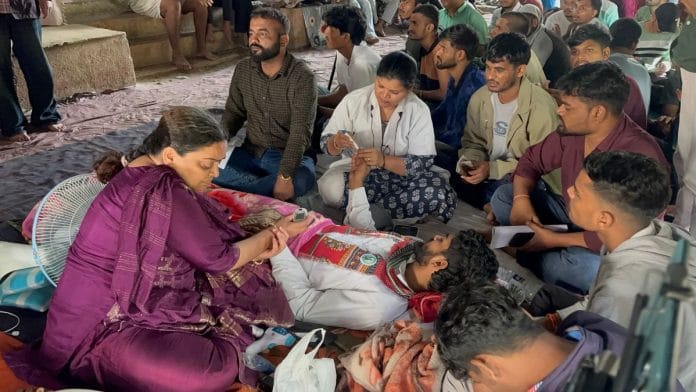

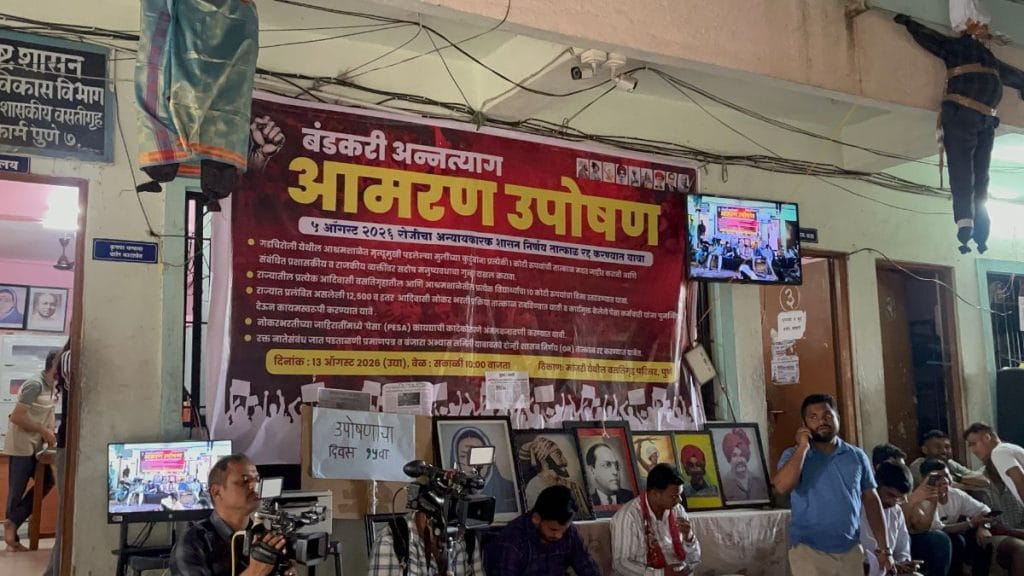
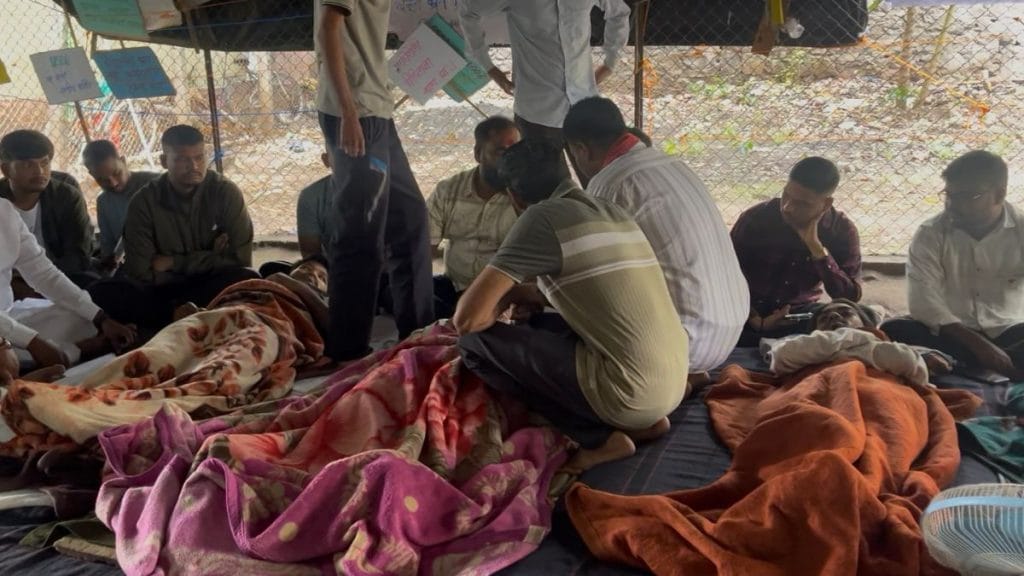
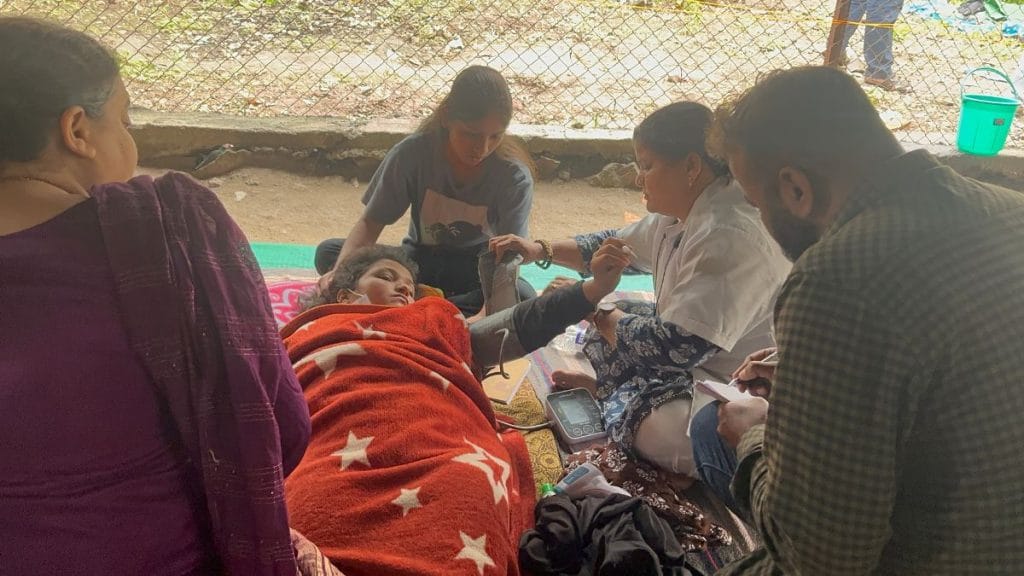
Pune: By Day 15 of their hunger strike, the six tribal students lying on mattresses inside Pune’s Government Tribal Hostel at Manjari were being watched as closely by medics as by fellow protesters. Pale and exhausted, some drifted in and out of sleep as health workers checked their blood pressure, sugar, pulse, and oxygen levels every few hours.
It was a 17-day hunger strike by six students that began as a small protest against a hostel admission age cap for tribal students. This was no Jantar Mantar’s Cockroach Janta Party rebellion. And yet, the protesting students won the battle by digging their heels silently.
From Congress leader Rahul Gandhi to NCP (SP) MLA Rohit Pawar to Sujat Ambedkar, politicians supported the students. When the Maharashtra government gave in to the age cap demand, the protest didn’t stop. It grew. They had a longer list of grievances. Over time, the Pune hostel protest snowballed into a wider fight over tribal welfare and the conditions in which Adivasi students in Maharashtra live, study and compete for government jobs.
This is the anatomy of a protest that is now being discussed as a successful template across colleges in India. From slowly escalating their demands to using Rahul Gandhi’s ‘Chhatron ki Goonj‘ platform to shine the spotlight to negotiating with the government, to widening the canvas of the protest to other tribal belts — the unprecedented win was something nobody saw coming.
Two fasting students had already required hospital treatment by Day 15; others returned to the hostel after being discharged to resume a fast they said they would not end without written assurances from the Maharashtra government. The deaths of three girls after a snakebite at a Gadchiroli ashram school added urgency to demands over hostel safety.
Former Bombay High Court judge BG Kolse Patil, who has spent decades involved in social movements and Adivasi and farmers’ rights campaigns in Maharashtra, said what distinguished the tribal students’ agitation was their conviction and their refusal to accept a setback as the end of the movement.
“Their strategies worked because they had immense will power. They made mistakes and learnt from them. They were on the stage with Rahul Gandhi and got him and the entire crowd to listen,” Patil told ThePrint.
He said the same determination was visible among the students who continued their hunger strike in Pune.
“The students on hunger strike had immense conviction too. I visited them myself during and after the protest,” he said. “They made heads turn towards them because they believed they could make a change and were not ready to take ‘no’ for an answer.”
A stage changed everything
It started small.
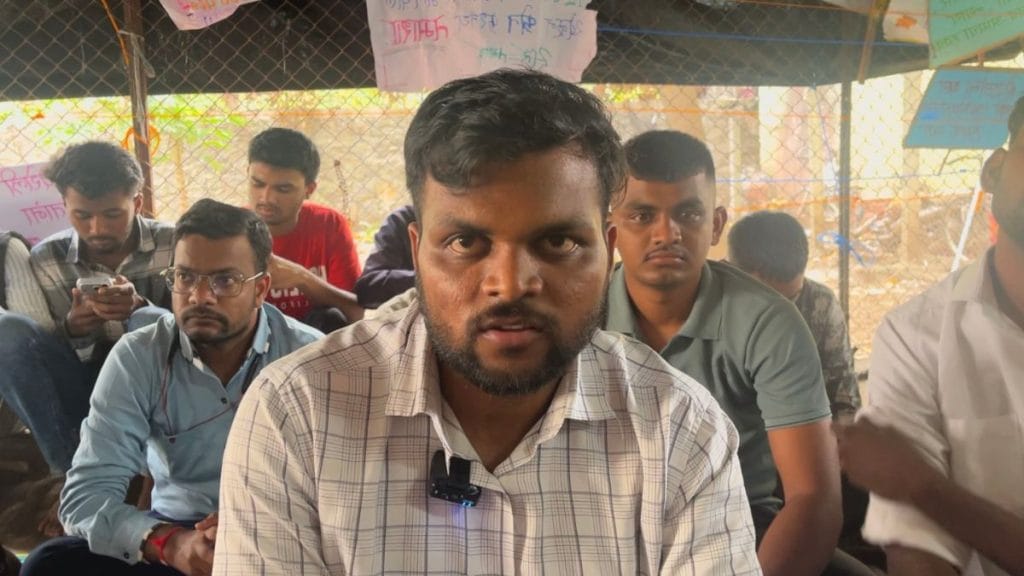
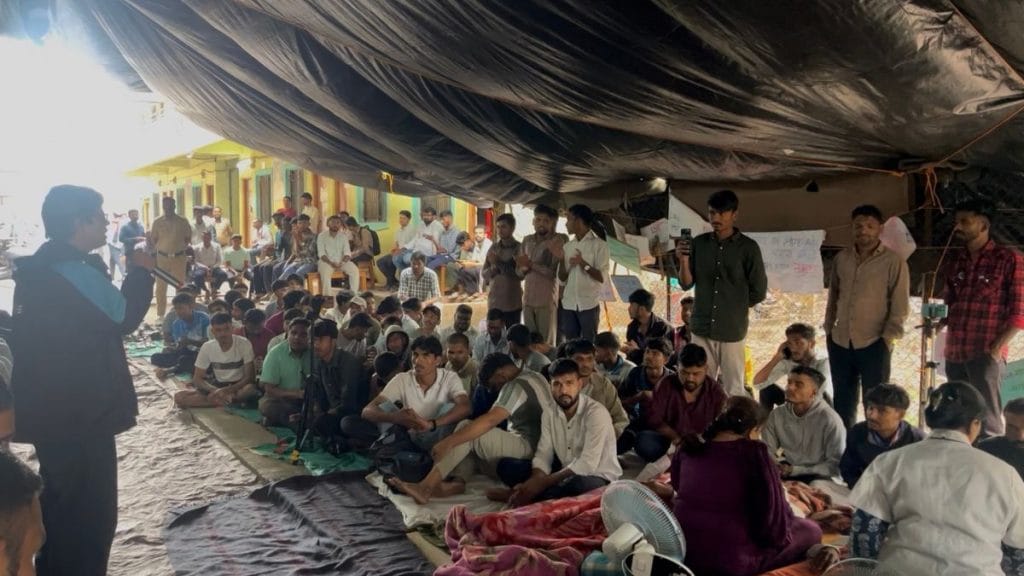
At the centre of the protest were students Sharad Khema Thokal, Vijaykumar Ramesh Bamle, Rahul Gyanba Dhanve, Rajaram Dilvarsing Padvi, Shweta Vilas Irnak and Nikita Arun Mejkar. The protest began on 13 August, with Irnak and Mejkar joining the hunger strike the following day. Students from other tribal hostels in Pune, including Gopalpatti and the Akashwani girls’ hostel, also gathered at Manjari in support.
By 27 August, the physical toll of the fast was visible. Thokal was taken for medical attention that afternoon. Bamle, a BSc graduate pursuing further studies, had already been hospitalised several times but kept returning to the hostel.
“We will stand by our demands till the end,” Bamle told ThePrint. “The government should take the right decision.”
But by then, the protest had already moved beyond the age rule.
On 22 August, two women associated with the movement raised the tribal students’ grievances during Gandhi’s ‘Chhatron Ki Goonj’ interaction in Pune.
The students had approached Gandhi on stage and convinced his team to let them have five minutes with him.
“We explained to them what our situation was. We were told that security would be an issue but after an elaborate chat with his team, we were allowed to get on stage,” Suchitra Pagi said, adding “the students were left with no choice.”
The protests, till then, had not got a space that the students had hoped for.
“The students were let down by 25 state legislators and 4 members of Parliament,” Pagi said. Gandhi, she said, gave them a platform which led to the country’s focus on their issues.
One of them, Nisha Sabale, spoke on stage about the ongoing hunger strike, conditions in tribal hostels and ashram schools, and the deaths of the three girls in Gadchiroli. Gandhi told the students that he was willing to join their protest.
Two days later, he wrote to Chief Minister Devendra Fadnavis, asking him to personally meet the protesting students.
मुख्यमंत्री @Dev_Fadnavis जी,
महाराष्ट्र के अनेक आदिवासी छात्र 10 दिनों से अधिक से अपने अधिकारों के लिए भूख हड़ताल पर हैं।
पुणे में 'छात्रों की गूंज' के दौरान छात्राओं ने बताया कि छात्रावासों में 30 वर्ष की अनावश्यक उम्र सीमा, अपमानजनक नियम, असुरक्षित सुविधाएं और महिलाओं के लिए… pic.twitter.com/mzoIrscyYD
— Rahul Gandhi (@RahulGandhi) August 24, 2026
In the letter, Gandhi flagged the hostel age restriction, inadequate food, sanitation and medical facilities, and rules affecting women residents.
“Hostels are unsafe and often lack food, sanitation and medical care. Students have suffered injuries and deaths, including from snake bites. Facilities for women are worse still,” he wrote.
The intervention gave the students something their protest had so far lacked: national political attention.
On 25 August, the state scrapped the 30-year upper-age limit for admission to tribal hostels and put on hold the revised GR issued on 14 August.
But the six students did not break their fast. They said the age cap was only one of the demands they wanted addressed.
“We have 14 other demands,” one of the student coordinators said.
The Manjari students continued fasting over food allowances, the DBT meal system, centralised kitchens, allegedly bogus tribal certificates, PESA recruitment and nearly 12,500 reserved posts — until written, time-bound assurances brought the 17-day strike to an end on 29 August.
Nilesh Sonawane, studying law in Pune and coordinating the protest, said the agitation itself was beginning to cost them their education.
“For two months, we have not been able to study properly,” he said. “We are students. We have colleges and studies.”
The protest was also spreading beyond Manjari, with support emerging from Nashik, Nagpur, Thane, Palghar, Nandurbar and other tribal belts.
“This movement is not only in Pune,” Bhande said. “It has reached the villages.”
Vinod Bhiva Nikole, the two-term MLA from the ST-reserved Dahanu constituency in Palghar and the CPI(M)’s sole legislator in the Maharashtra Assembly, described the outcome as “a big achievement” not just for those who took part in the agitation, but for tribal students across Maharashtra.
“Their patience was tested. The students were left with no choice,” Nikole said. “It is a big achievement for them and for all tribal students in Maharashtra.”
He said the agitation was also “special” and “unprecedented” because it came soon after the Adivasi protest at Jantar Mantar in Delhi. He would travel to Delhi next week for a meeting of the Adivasi Adhikar Rashtriya Manch.
“This was right after what happened in Jantar Mantar, so this government had to listen,” he said.
The rule that set it off
The immediate trigger was on 5 August, when Maharashtra’s Tribal Development Department issued an official order revising rules for students staying in government tribal hostels.
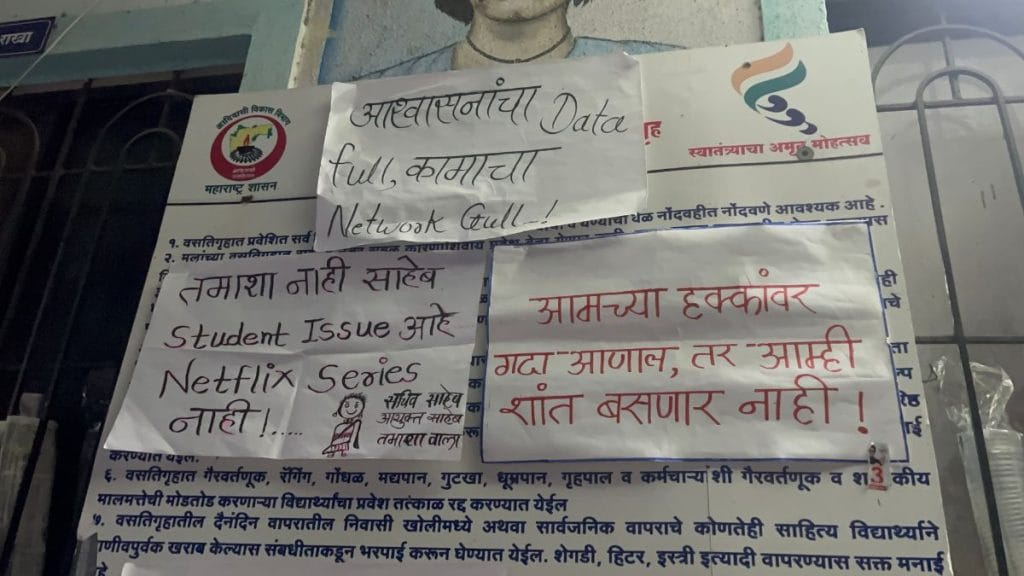
Among other changes, it introduced an upper age limit of 26 years for hostel admission, although no such ceiling had existed earlier. It also restricted hostel residents from participating in hunger strikes, protest marches and similar agitations. The provisions sparked demonstrations by tribal students in different parts of Maharashtra. Students said the rules failed to account for the disrupted educational journeys of many Adivasi students, particularly those from remote areas who face migration, financial constraints and limited access to information.
Students argued that the rules failed to account for the disrupted educational journeys of many Adivasi students, particularly those from remote areas who face migration, financial constraints and limited access to information about courses that can lead them to enter undergraduate or postgraduate education later than their urban counterparts.
The government revised the order on 14 August, raising the age ceiling from 26 to 30 and removing the restriction on protests.
But that did little to settle the matter. There was more to come. Having come this far, students didn’t want to give up this easily. They had been silent for too long and the grievances had built up.
Students had long been alarmed over a rule concerning women returning to hostels after extended leave, and protesters said the hostel administration subjected them to pregnancy testing. The government later disputed aspects of how the provision had been characterised, but the controversy added to anger over the new order.
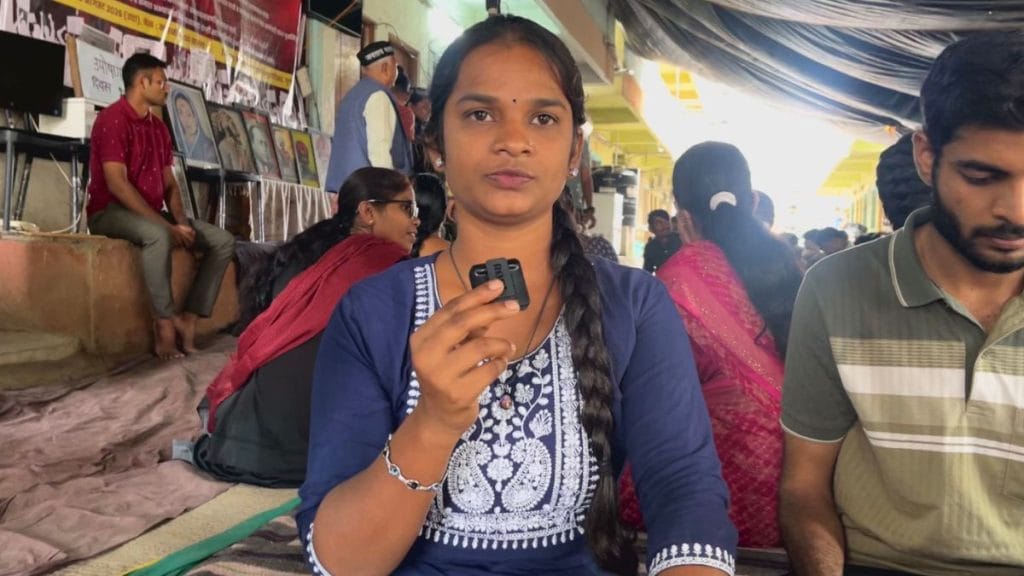
For Saurabh Bhande, an Adivasi student from the Akole-Kalsubai region who has spent nearly five years in Pune preparing for the UPSC examination, the 5 August decision was only the immediate trigger for grievances that had accumulated over years.
“I read the government resolution the day it came. But this is not only about one GR. There are several issues of Adivasi students that have remained unresolved for years,” Bhande said. “We gave representations to the government, but no firm decision was taken. That is why we began the protest on 13 August.”
Tribal representatives met on 9 August and subsequently approached the government with their demands. When there was no concrete response, students began the Manjari agitation four days later.
Then, three girls died in Gadchiroli
The students had another reason not to treat the government’s decision on the age cap as the end of the matter.
During the night of 9-10 August, six girls were bitten by a venomous snake while sleeping at a government-aided residential school at Japtalai in Gadchiroli district. Three — aged eight, 12 and 14 — died. Reports from the school showed that the children had been sleeping on mats on the floor because beds had not been provided.
The deaths also drew the attention of the National Human Rights Commission. On 14 August, the NHRC issued a notice to Maharashtra’s Chief Secretary and sought a detailed report within two weeks, including the condition of the three surviving girls. The Commission referred to a media report and said 79 girls were accommodated in a single hostel room and were sleeping on the floor because there were not enough beds. It said the allegations, if true, raised “serious issues of violation of human rights”.
Fadnavis subsequently ordered permanent cancellation of the school’s licence and action against an official who had inspected it. The incident also prompted scrutiny of conditions in tribal residential schools.
At Manjari, the deaths became one of the agitation’s central talking points.
Students demanded substantially higher compensation for the families, medical facilities at residential schools, availability of anti-snake venom, regular pest-control measures and accountability where negligence led to the death of a child.
Bhande said protesters were seeking Rs 1 crore each for the families of the three girls rather than the smaller compensation initially discussed.
They also demanded a special investigation into deaths of students at ashram schools.
“What happens when children from other communities die? We do not first ask what the budget is,” Bhande said. “Why should it be different for Adivasi children?”
The issue was part of a larger concern over mortality policing in residential institutions for tribal students. Government data cited during the agitation showed 584 students had died in government and aided ashram schools in Maharashtra during 2024-25 and 2025-26, from causes including illnesses, accidents, suicide and snakebite.
A meal allowance, but no meal
By Day 15, conversations at Manjari had returned to something more basic and everyday in nature — food.
Students wanted the government to scrap the Direct Benefit Transfer, or DBT system for meals in tribal hostels. Under the arrangement, money was deposited into students’ accounts and they were expected to arrange meals outside rather than eat at an in-house hostel mess.
Protesters said that placed an unreasonable burden on students, particularly younger residents, while the allowance had failed to keep up with Pune’s cost of living.
“If a child gets Rs 4,500 or Rs 5,000 a month, is that enough for food and breakfast every day?” student coordinator Sonawane asked. “If you give the money to a 12-year-old child for three months and tell him to manage his food, is that practical?”
He said allowances should not depend on students repeatedly protesting for revisions. Their demand was for automatic increases linked to inflation and the Consumer Price Index (CPI).
“We use these indices to increase the salaries of government employees,” he said. “There should not be a problem using them to increase what is provided for our children.”
Another demand was regarding the centralised kitchen system in ashram schools.
Students said food was sometimes cooked at one location and transported to schools spread over a 70-100 km radius. By the time meals reached remote institutions, they alleged, food could be late or no longer fresh. They wanted kitchens restored within individual ashram schools.
“This is especially common in rural and remote places, where the colleges and universities are located in the one place and the hostels are scattered around further away,” Pagi said. “Why can’t tribal hostels have a mess of their own?”
A hostel two hours from college
For many, the hostel is still far from college.
Students cited tribal hostels at Manjari, Gopalpatti, Yewlewadi and Shewalwadi — peripheral areas of Pune from which travelling to colleges in the city could take hours.
“Hostels are far from the main city. It takes two-three hours for some students,” one coordinator said.
One protester said that some residents spent nearly four hours a day commuting to and from college, leaving little time for study.
The students wanted more hostels, especially for women, and accommodation closer to universities and major education hubs.
By 27 August, the state government had already offered one concession on this front: Tribal Development Minister Ashok Uike said a hostel would be constructed on the Savitribai Phule Pune University campus.
But the protesters were no longer interested in isolated verbal assurances. They knew they were being heard and wanted to win it all the way.
They wanted everything in writing.
The fight over 12,500 jobs
Perhaps the most complicated demand being discussed in the hostel had nothing directly to do with accommodation.
Students wanted action on approximately 12,500 government posts they said should ultimately be made available to genuine Scheduled Tribe candidates after employees occupying reserved positions had their caste claims invalidated.
Their grievance goes back to a 2017 Supreme Court judgment concerning the protection of government appointments obtained using caste claims subsequently found invalid.
Protest representatives argued that while employees affected by the judgment had in several cases been accommodated on supernumerary posts, thousands of jobs meant for ST candidates had not been opened to fresh recruitment.
“This was decided years ago,” co-ordinator Sonawane said. “Even after six-seven years, these posts have not been filled. When will they be filled?”
The students also demanded publication of information concerning allegedly bogus tribal certificates and action against those who obtained jobs or educational benefits through invalid documents.
For Bhande, this was not a technical employment dispute.
“These are opportunities that should have gone to original Adivasi boys and girls,” he said.
Other demands concerned PESA recruitment in Scheduled Areas and the reservation roster for small cadres.
Students wanted pending recruitment under the Panchayats (Extension to Scheduled Areas) Act completed quickly. They also sought restoration of the position of Scheduled Tribe candidates in the small-cadre roster from point five to point two, arguing that a change introduced earlier had reduced opportunities in cadres with very few posts.
By the time minister Uike sat down with representatives at Manjari on 26 August, the students said there were around 14 principal demands on the table.
They listed increased allowances, hostels in central locations, compensation for deaths at ashram schools, filling reserved posts, action on bogus certificates, scrapping food DBT, decentralising kitchens, medical facilities and anti-snake venom, PESA recruitment, reinstatement of eligible employees and the roster change among them.
Five hours of talks, but no end to fast
The students negotiated hard with the minister. The meeting with Uike stretched for about five hours. The Maharashtra government was under enormous pressure. Opposition politicians were speaking about the demands. After the Jantar Mantar CJP protests, no state government wanted to take a chance with youth anger.
According to students at Manjari, those involved in the discussions included Uike, Food and Drug Administration Minister Narhari Zirwal, former MLC and education activist Kapil Patil, and former Vikramgad MLA Sunil Bhusara.
The mood afterwards was cautiously positive.
Shweta Irnak, who was seeking admission to an LLB course in Pune and had been fasting since 14 August, said the government had asked for two days.
“They agreed to some of our demands,” she said. “They have taken two days. If the demands are not fulfilled, we will continue the fast.”
Uike said the meeting had ended on a “positive note” and that several demands would be fulfilled. Student representatives said they were told 14 demands had been accepted in principle.
Still, the hunger strike continued.
The reason was mistrust of promises that had not been translated into government orders.
On Day 15, Bamle had already been hospitalised four times over the preceding days, according to contemporary reporting. Still, he returned to Manjari.
“I was hospitalised at night and came back in the morning,” he declared. “I will stay here till the end.”
Also Read: IIT Delhi students question ‘pattern of suicides’. Demand resignation, justice for Rishikesh
What ended the 17-day strike
The deadlock finally broke on 29 August.
After the Bombay High Court directed the Maharashtra government to protect the health of the hunger strikers, a delegation of students met Fadnavis. Uike subsequently announced that the government had accepted their demands and would provide a time-bound implementation programme.
Some decisions were immediate. The DBT food system was scrapped and the hostel mess system was restored.
On centralised kitchens, the government did not abolish the system immediately. Instead, it appointed a committee expected to submit its findings within roughly 15 days to a month, after which Fadnavis was to take a final decision.
The government also gave the students a time-bound assurance on the 12,500-post issue, with the vacancies and supernumerary posts to be identified and the recruitment question taken forward. Protest representatives said it was the first time they had received a concrete schedule rather than an open-ended promise.
Other issues — including PESA recruitment, hostel infrastructure, caste-validity cases and the roster demand — were placed on timelines for departmental action or committee examination rather than being resolved overnight.
The government also announced that it had accepted all demands, but in practice, some had been granted immediately while some had been withdrawn or altered before the final settlement. Several others were accepted in principle with deadlines for implementation.
Not every demand had been implemented on 29 August. Some had been granted, others accepted in principle, and several were still dependent on committees, departmental action or subsequent decisions.
But for the six students who had spent 17 days fasting, the written assurances represented a different kind of victory. The government had finally put its promises on paper.
The six students ended their hunger strike. It was finally enough for the protesters.
The student representatives credited Gandhi, Rohit Pawar and other Opposition leaders with giving the agitation visibility beyond the hostel gates. They said bringing their grievances to a national platform and the subsequent media attention had forced the government to respond.
For the six who had spent more than two weeks without food at Manjari, however, the outcome was less an endpoint than a set of dates against which the government could now be held accountable.
On Day 15, before those written assurances arrived, Bhande had put the protesters’ position simply: “The government should think about these issues seriously.”
The fast is over. The wait for implementation has now begun.
(Edited by Stela Dey)