



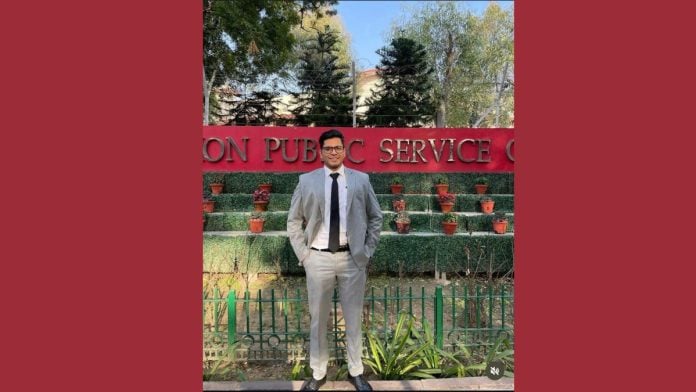
New Delhi: In Chambal, one word separates a respected man from a feared one. Dev Prabhakar Singh Tomar’s family has always known which side of it they stand on.
“He was a baaghi (rebel), not a dakait (dacoit),” Tomar said, talking about his grandfather, Ramgovind Singh Tomar. “He stood against the corrupt government system, did not loot, was non-violent, and had no police cases against him. He was respected by all the villagers.”
The grandson of the man who once stood against the system now spends his days preparing to be a cog in it. After four attempts at UPSC, three interviews and years of preparation, Tomar secured an All India Rank of 629 in the 2024-25 exam. He is now training under the Indian Railway Traffic Service.
“It wasn’t easy,” Tomar said. “Naukri (job), in our community was considered chaakri (servitude). I was able to do it because my father paved the path for us.”
The Chambal region, which straddles the borders of Madhya Pradesh, Rajasthan and Uttar Pradesh, has long been synonymous with two things— its rugged ravines and the dangerous dacoits that dwelled in them. One can leave Chambal to escape the poverty and caste conflict that plagues the region, but the dacoit tag is far more difficult to shed.
It follows you everywhere, from school to neighbourhoods to interactions with the police. While some escape it by educating themselves and others through politics, the process has been slow and tedious. The bad decades of fear of the 70s and 80s may be over, Phoolan Devi long gone – but the families are still grappling with conflicting accounts of the past.
“Ram Govind Singh was never part of any gang. Given the circumstances and environment of the Chambal Valley back then, one can say that he (Dev) worked hard to make a position for himself,” said Randhir Singh Ruhal, a retired police officer from the region, who has extensively researched and written about the time. “Since 2006-2007, no active gangs exist in Chambal but people still associate the region with dacoity. It took a lot of time and a lot of community effort to shed that image of violence,” Ruhal added.
Tomar proudly claims to be the first person from Chhoti Kothar, his village in Madhya Pradesh, to join the civil services. He takes after his father, who was the first in his family to be formally employed.
Overcoming the stigma
Tomar grew up in Gwalior, away from his grandfather’s life of dacoity. Yet, the family’s past seeped into his life.
After moving away from the ravines, Tomar’s father had put him in a school under the Madhya Pradesh board. But when he switched to a CBSE-based school in class 5, his identity started catching up with him . To the city-raised children in his new Gwalior classroom, Tomar’s khadi boli sounded rough, even offensive. In Class 6, many simply stopped talking to him.
“For the first year, people made me feel excluded,” Tomar said, reflecting at the time. “But slowly other things, especially studies, became my priority.”
His former classmates and friends remember him being introverted and reserved when he first joined school. They recall watching him shed his Chambal identity by dedicating himself to studies.
“People kept him a little separate in the beginning, and ignored him,” said Suryanshu Aggarwal, his childhood best friend. He added that his fellow classmates looked at Tomar suspiciously.
It was a straight English-medium school, he noted, and that made it harder for Tomar to overcome the communication and culture barrier and adapt. On top of that, the Chambal link took over.
“If he ever mentioned his village and it being situated in Chambal, then students presumed him to be a bit of a goonda. They even began approaching him to help sort their fights,” said Aggarwal. He recalled how Tomar was frequently called to the principal’s office for being “involved in fights” even though he was merely an onlooker. “For us, it was all just fun and games.”
These complaints, however, caused a lot of stress to Tomar’s father, who had stretched to pay for a good school. While a long scolding would suffice on some complaints, his father resorted to keeping Tomar at home for two or three days as punishment.
The stigma attached to Tomar’s Chambal links was also accompanied by a certain curiosity. Ashok Sharma, Tomar’s childhood friend and neighbour, said that in classes 5 and 6, the boys quizzed him about his grandfather, about his father’s sudden move to the city, about who in the family had taken a life. It may have been gossip but some of it came with a sting.
“We used to hear about Chambal and its dacoits or baaghis, whatever you’d like to call it. Everyone was afraid of dacoits back then. It obviously added onto how he was perceived by the other students,” said Sharma.
Tomar’s answer was to rebuild his persona by doing well at studies. A good score in a maths unit test turned the classmates’ dismissal into awe. At times, he would even play into his identity and joke that village minds are good at mental maths. Over time, he improved his Hindi, then his English, and gradually joined the toppers’ table, aspiring to get into the IITs. By Classes 7 and 8 Tomar was teaching his friends, and sometimes even his seniors.
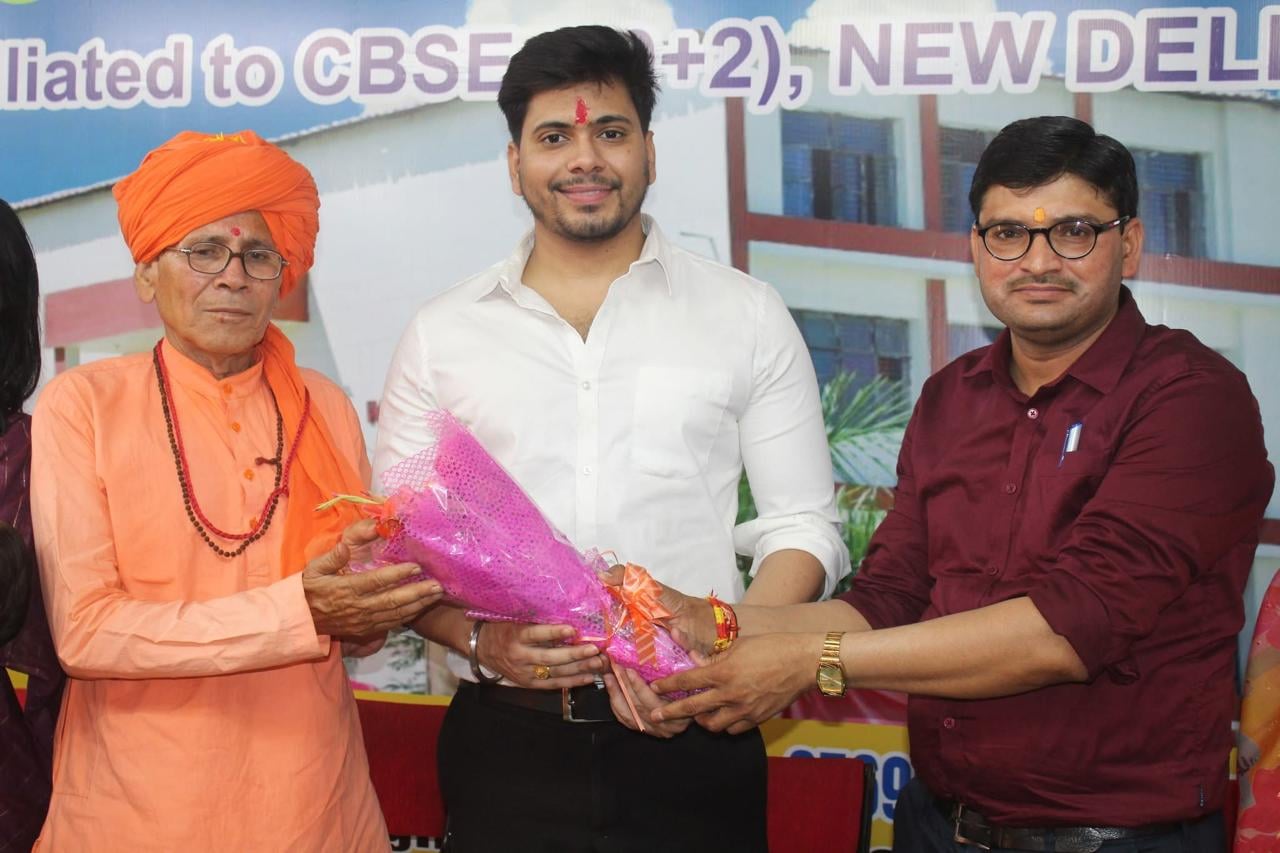
Aggarwal said that when Tomar started performing well in his exams, his teachers praised him and that played a role in changing the perception that had shadowed Tomar.
“Language was the issue, much more than the Chambal background,” Tomar said.
At home, protectiveness ran the other way. Tomar was allowed to visit the village only rarely, and for not more than a day or two. When he urged for a longer holiday, he was told he would just come back covered in dust.
“Papa did not want me to spend a lot of time with the family in Chambal. He worried I would get influenced by my cousins,” Tomar said. “He worried the manner of speaking, the dialect – full of swearing – would harden my language.”
His father understood how alluring his former life could be to his adolescent son and sought to limit his exposure to it.
For a boy marked by his origins, joining the civil services would offer the most definitive rebuttal to the stigma he had been warding off in his own different ways.
The rebel in the ravines
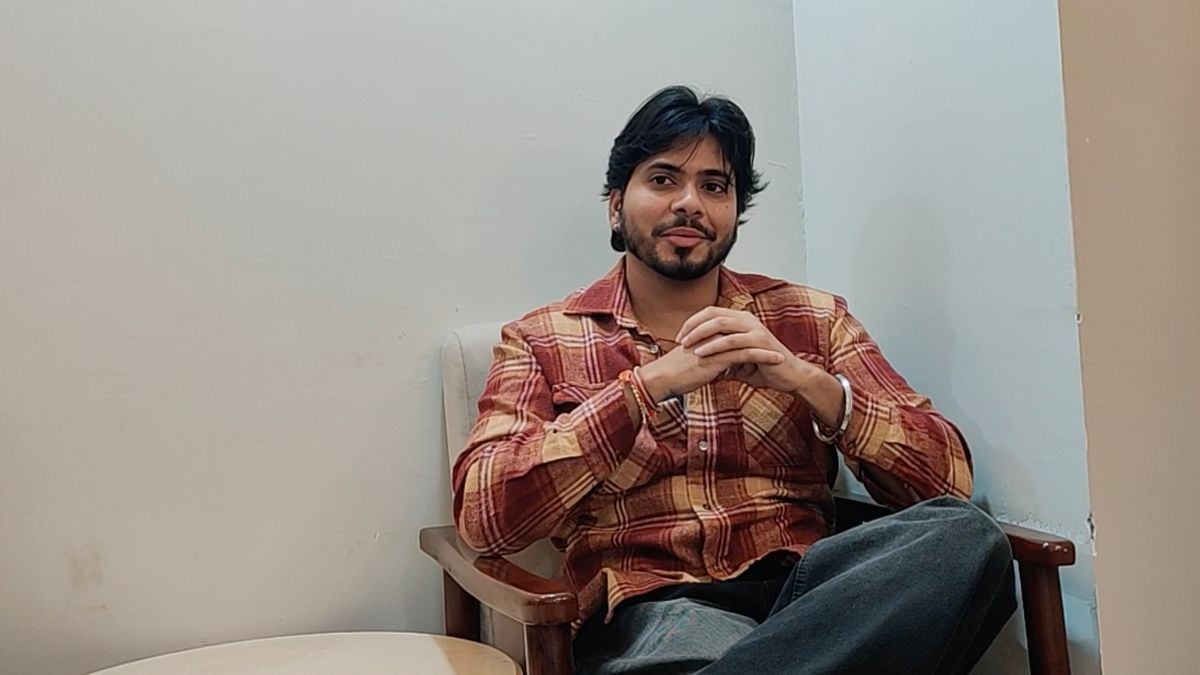
On a long weekend away from his training, Tomar is resting on the sofa of a room at the Abhinandan officer rest house in Delhi, his suitcase kept lazily across the table. It is a long way from the ravines of Chhoti Kothar in MP’s Morena district, but he talks about them as if they were close by. He recounted growing up on bedtime stories, in which the hero was always the same man.
Ramgovind, his grandfather, became a baaghi and took to the ravines after a bitter land dispute with his own brothers. He pitched a camp in a hidden fold of a ravine, where the terrain made it nearly impossible to find a man on foot. Villagers tracked him down by following the sound of firecrackers, an informal signalling system. They would usually bring him food after dark, pay their respects, and seek his help when they found themselves in trouble.
“The stories about my grandfather sat deep in my mind, at the conscious and the subconscious level,” he said. “They have shaped me.”
After years of what the family calls “social work,” he accepted a state amnesty and returned home. But he still did not want his son to take up a formal job.
“Grandfather looked down upon it,” Tomar said. “He did not approve of it, but my father was adamant.” Tomar’s father left the village for Gwalior, and studied his way through a BA, an MA and a PhD in Sanskrit. He then started working as a teacher, and eventually became the principal of a school.
Dacoit or rebel?
Ramgovind was not the only dacoit to accept amnesty, lay down his arms and turn to social service. In 1972, 502 dacoits, led by prominent gang members Mohar Singh and Madho Singh, surrendered together at Pagara in Morena district. Ruhal, who has documented Chambal’s history in over 14 books, said that it was an effort to save dacoit Man Singh’s son — Tehsildar Singh, who was also a dacoit and was arrested after he was injured in an encounter — from the gallows.
Man Singh, Ruhal said, earlier had a rule of helping poor families, supporting them financially to marry off daughters or ensuring lost girls were safely escorted home. But eventually, he started extorting money through kidnapping.
Yet, none of the dacoits in Chambal considered themselves dacoits; they all called themselves baaghi. “A dacoit isn’t respected,” Tomar said, reiterating the distinction repeatedly. “But, a rebel fighting for a cause, is (respected).”
Tomar’s family remembers his grandfather as a baaghi. He kept licensed arms, Tomar said, and the fear of them helped when disputes needed settling. Tomar insisted, however, that nothing in the family’s history involved loot or bloodshed. “Not a single registered police case—neither with grandfather nor anyone else.”
In the family’s telling, the rebel in the ravines was also the man who intervened when villagers came to him with complaints of their land records vanishing or the tehsildar neglecting their issues.
The family’s money was spent on the weddings of other people’s daughters or to clear the debts families took for funeral feasts.
“He also regularly extended financial help to those in need, which eventually dried up our accounts,” Tomar said. “By the time my father grew up, we were left with very little money.”
Ruhal too remembers Ramgovind similarly. “He was not a part of a gang; he had no police cases, no records.”
The next generation, including Tomar’s two-year-old son, however, is unlikely to hear the stories in the same way.
Swarnika grew up in Gwalior and was one of Tomar’s best friends growing up. They got together in 2020 and married in 2023. Swarnika knew about his family’s baaghi history, but it was never discussed.
“We never spoke about it as such. We were very chill about it. I didn’t care, he wasn’t too eager to share either,” Swarnika said. The family, however, is still attached to their dialect from Chambal and speaks khadi boli at home. Swarnika said that she struggled to follow it initially but is fluent in it now.
Tomar’s father, an avid reader of the Mahabharata, believes a man should rise through education, “not through all this.”
“Our son has instead grown up watching his father prepare for UPSC and hearing stories about it,” she said.
The newer generation will not be raised on stories from the ravines. Instead, they will be told stories about studying hard to overcome the society’s stigma. Tomar’s son will be expected to follow in his footsteps, and maybe join the civil services too.
The road to UPSC
For Tomar, the road to UPSC ran through IIT Ropar and a subsequent research job in Amsterdam, in The Netherlands.
Getting to IIT was a feat of self-study. Tomar never joined coaching. “He couldn’t afford the fees,” said Aggarwal.
But Tomar did not let that get in the way of his ambitions. His friends helped with coaching notes and spare books, while Tomar studied on a scholarship.
Aggarwal remembers the two-room rented house in Gwalior. “In one room, he would lay on the bed all day with an RD Sharma book of maths, relentlessly solving numericals,” he said, laughing. “Whenever I went to his house I would find him studying on the bed.”
At IIT Ropar, where he studied electrical engineering, Tomar took a different approach to his family history. His new friends were curious about his Chambal links — did a baaghi sleep out in the open; did the villagers feed him; did he build his own camp, as in the movies? Tomar didn’t address every query, but when he did, his friends tended to lean in.
“Your background never leaves you,” Tomar said, thoughtfully, “It is better to accept and own it.”
There is more to Tomar than his family history. Tomar has a keen interest in science, philosophy, literature, and mythology.
It was a patent project that led to Tomar securing an internship with Philips, which was his first-ever trip abroad. He stayed in Amsterdam for about eighteen months and travelled almost as much as he worked, covering nearly every Schengen country. He recalled walking from the Netherlands into Belgium.
But the pull of home is stronger than the lure of the unknown. “The European lifestyle never appealed to me,” Tomar said. “It is too individualistic a society. It becomes lonely.”
Aggarwal reads the decision of coming back as being about the village. A job abroad could have meant crores, he said, “but that connection one has to the land would not have remained.”
A collective dream
The classic Indian UPSC dream was not lost on the Tomar family. His mother had told him since childhood that he should either be an IAS officer or a judge.
He first heard about UPSC from seniors at IIT, and read up on it seriously in Amsterdam. He then decided to return home to Gwalior and began preparing at his parents’ house.
He reached the interview stage three times, scoring 183, 181 and 193 out of 275. But his Mains score held him back.
Swarnika remembers the day of the results after his first attempt. Relatives had gathered at the house, expecting a win. But his name was not on the list. “Within ten minutes, he brought out his books again,” she said.
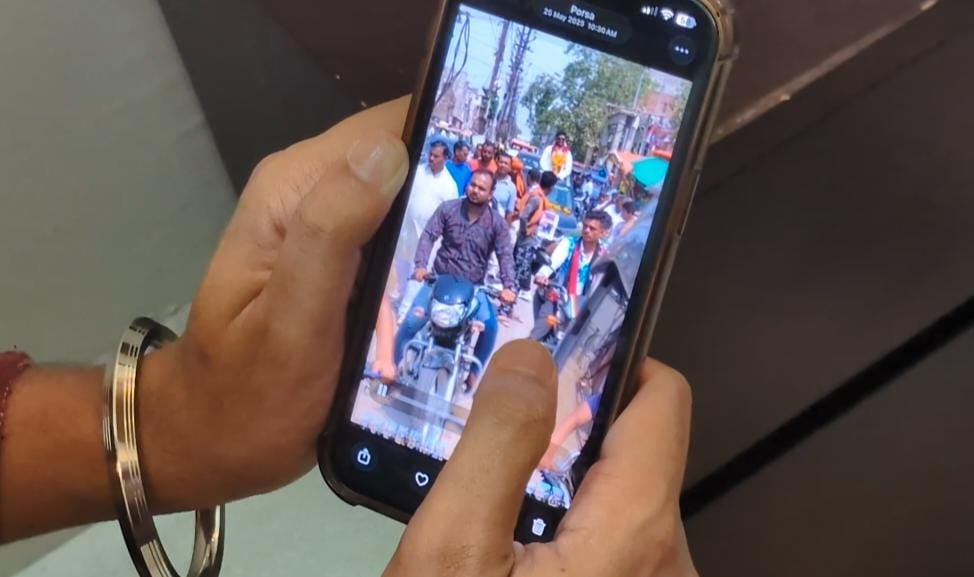
But for Tomar, the fourth time was the charm. In Chhoti Kothar, the news was treated as a collective win. No one from the village had joined bureaucracy before him. The village invited him and celebrated in a big way.
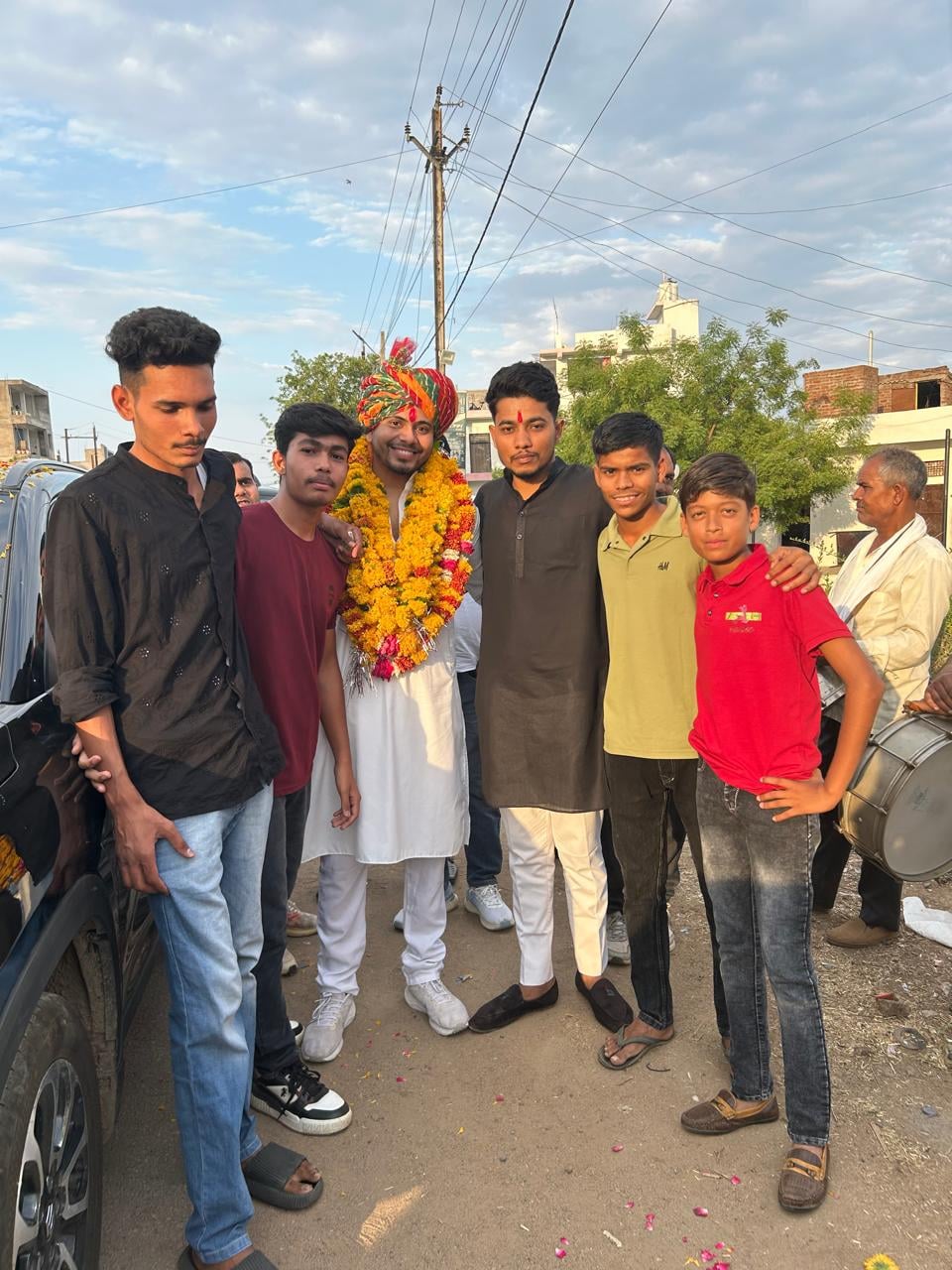
He was garlanded, a convoy of cars accompanied him, and there were felicitations. Aggarwal says the celebrations did not stop. “The villagers took out a rally for him,” he said.
“It was in a way a collective dream for everyone,” Tomar smiled. “And I am glad to have fulfilled it.”
Young people from Chambal now call him for career advice.
Social Service
Tomar began training in the foundation course at the elite Lal Bahadur Shastri National Academy of Administration in Mussoorie on 25 August 2025. He then moved to the Railways’ institute in Lucknow. His two-year probation has taken him through Trichy, Puducherry, Rameshwaram, and Delhi. Goa, Bangalore and IIM Kozhikode are still ahead.
Once he becomes an officer, he will work for better conditions for general-class passengers who travel in overcrowded coaches. He also wants to upgrade existing train stations by deploying sensors, better surveillance measures and crowd management to prevent stampedes.
“Just like my father changed things for our family, if my success helps ten or fifteen others change their lives and join civil services, that’s a wonderful thing,” Tomar said.
He is certain his grandfather would have been proud of him, had he been alive. “A hundred percent yes,” Tomar says. “His goal was always social service, just like what I do. The rebel part was secondary.”
(Edited by Aakriti Handa)