







Hyderabad: In February, an Indian Earth observation satellite quietly orbiting in space locked its sensors onto the International Space Station and clicked. This technology demonstration was no ordinary photo op. It was India’s entry into the realm of in-orbit snooping—the ability to ‘spy’ on foreign assets in space.
Behind the feat is Hyderabad-based Azista Aerospace, the only private Indian company to have developed this reconnaissance capability. Curiously, its roots lie far away from the space sector. It started off as a healthcare and pharmaceuticals company. About a decade ago, the company decided to expand into space. And the gamble paid off.
With countries across the world now relying on satellites for strategic advantage, spy satellites are the need of the future, and Azista Aerospace is determined to ensure India does not fall behind in the global race.
“This in-orbit experiment was a challenging one. In order to clearly capture another object in space that is also moving at a high speed of about 7 km/sec, a few different technologies have to be mastered. And we will be building on this experiment in the future,” said Sunil Indurti, director of Azista Aerospace, at the company’s headquarters in Hitech City, one of three centres it has in Hyderabad. The company also has satellite manufacturing and testing facilities in Ahmedabad.
The headquarters proudly displays framed pictures of Azista’s achievements over the years—milestone inaugurations, meetings, workshops.
Until now, the closest India had come to a similar accomplishment was ISRO’s SpaDeX mission last year, in which two of the agency’s own satellites photographed each other in orbit as part of a docking experiment.
Indurti said that apart from its defence capabilities, this technology will also have commercial uses. It will go a long way in keeping an eye on India’s satellites and servicing high-value assets in space. This includes monitoring satellite health and recording activities such as refuelling rockets for longer space missions.
The basic value system of a pharmaceutical company is research. The more research you are able to do, the more products you are able to put out into the market. Even when we decided to diversify, our focus continued to be research
-M Srinivas Reddy, managing director, Azista Aerospace
Spy satellites are no longer a niche capability. A March 2026 report by Spherical Insights and Consulting noted that the global military satellites market is expected to grow to about USD 38.64 billion by 2035, at a compound annual growth rate of 6.44 per cent between 2024 and 2035.
The most recent use of this investment was seen in the ongoing conflict between the US and Iran. During the war, Iran reportedly used a Chinese spy satellite, TEE-01B, to target US military bases across West Asia.
The Indian government has recognised the urgency of building India’s spying capabilities in space. Last June, the government ordered the fast-tracking of 52 dedicated surveillance satellites under the Space-Based Surveillance-III (SBS-III) programme — a Rs 27,000 crore initiative to develop next-generation military satellites over the next decade.
“It is no longer a thing of the future. I have said before that all wars from here will be fought from space and that is exactly what is happening around us,” Jitendra Singh, Union Minister of Science and Technology and Space, told ThePrint.
Also Read: Arctus Aerospace has one mission—End India’s reliance on foreign players in earth observation
The make-or-break moment
It was judgement day for Azista Aerospace. After years of R&D and repeated tests, the company’s 80-kg Earth observation satellite, AFR, was set to prove its mettle on 3 February 2026.
The team had been preparing for this day for months, but when the demonstration finally got underway, the air at Azista’s headquarters turned tense.
Engineers were glued to their screens, monitoring every movement of AFR. The commands had to be timed, manoeuvres had to be precise, and each camera angle had to be carefully calculated. The 15 minutes stretched like an eternity. When it was over, the silence broke into a collective sigh of relief. Cheers and applause soon followed.
“It was like being a part of history,” said an engineer from Azista. The company does not allow its engineers to be identified by name.
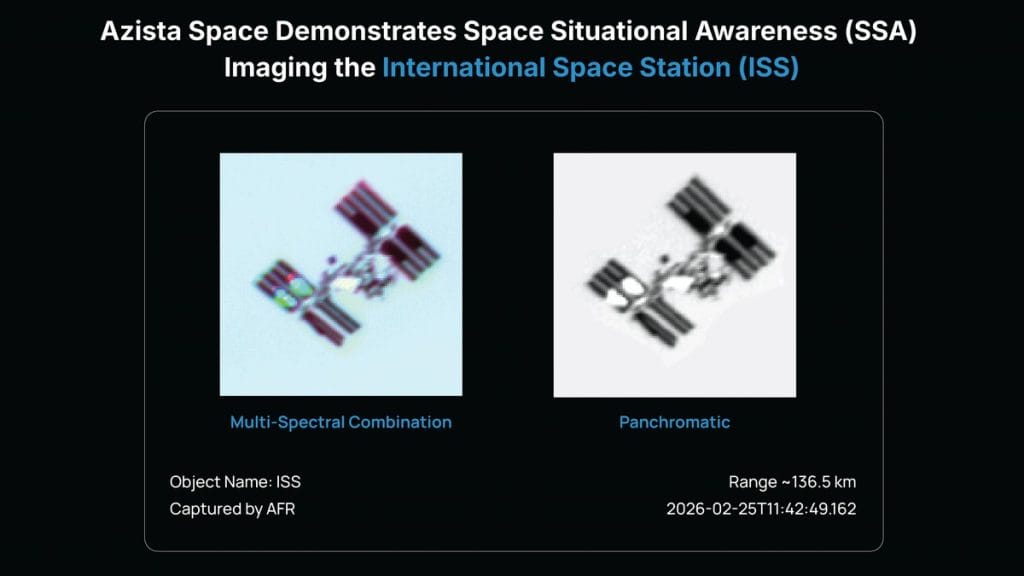
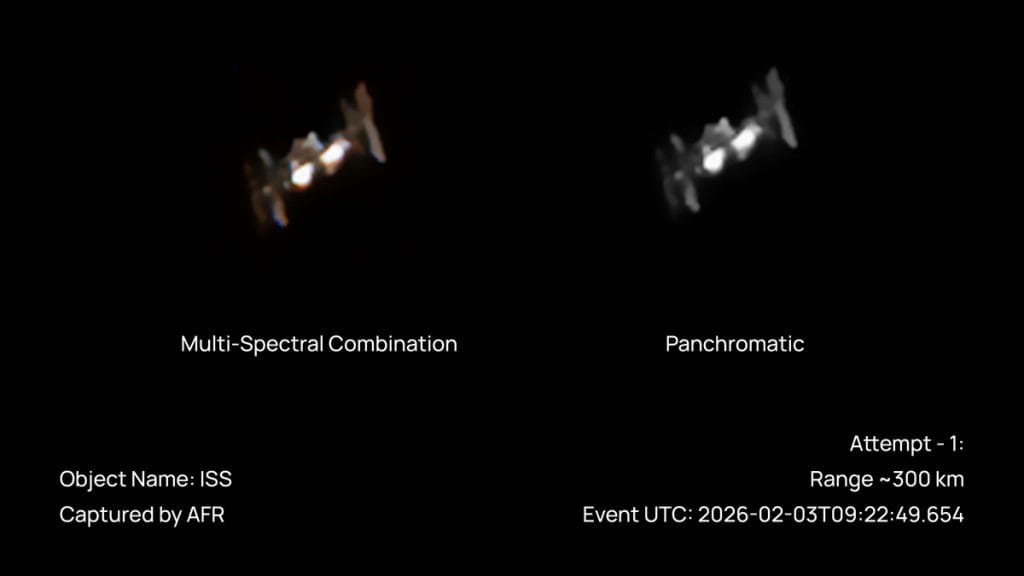
In two separate experiments, the aerospace company was able to capture images of the International Space Station. While the ISS is a large and easily visible object in space, this feat showcased the company’s capability to spot, capture and transmit images of assets in space.
“We had to first precisely capture the position of the target object, which in this demonstration was the ISS, and then we had to manoeuvre and capture it. This required a lot of planning and significant work around flight dynamics,” Indurti explained.
Unlike the usual corporate setup, people here are determined to build an industry. We are doing things that have never been done in India
-An Azista engineer
The first capture was made at a distance of about 300 km away from the ISS, and the second from about 245 km. In both experiments, Azista’s AFR satellite sensors first tracked the ISS and clicked it from 15 unique angles. This was done with an imaging sampling of around 2.2 metres. The tests successfully validated the satellite’s algorithms and electro-optical imaging precision. All these capabilities were developed indigenously.
Launched in June 2023 aboard SpaceX’s powerhorse rocket Falcon 9 as part of the Transporter-8 mission, AFR has a projected mission life of five years. It’s equipped with naval imaging, night imaging and video imaging modes, which are capabilities with clear defence applications.
The company is now working to improve the resolution of its space imaging systems so that targets in space can be captured from closer range. This upgraded system is already in development at Azista’s electro-optical payload manufacturing facility in Gujarat’s Ahmedabad.

Pharma to payloads
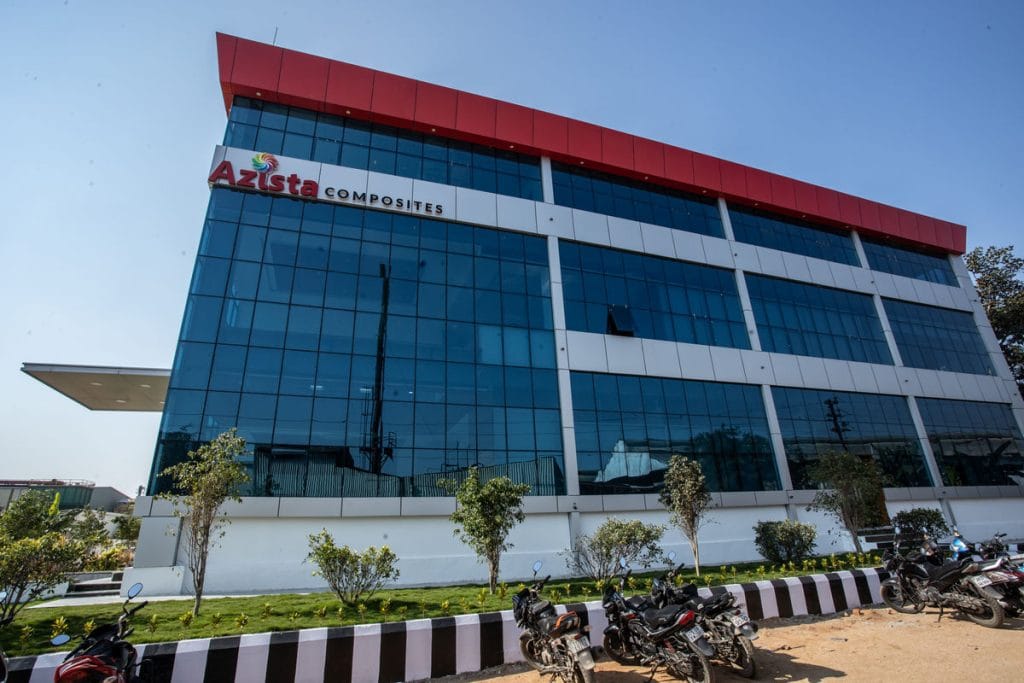
From the outside, Azista’s glass-fronted research centre in Hyderabad looks indistinguishable from the IT towers around it. But inside the three-storey space, the white walls and pristine passageways open into futuristic labs.
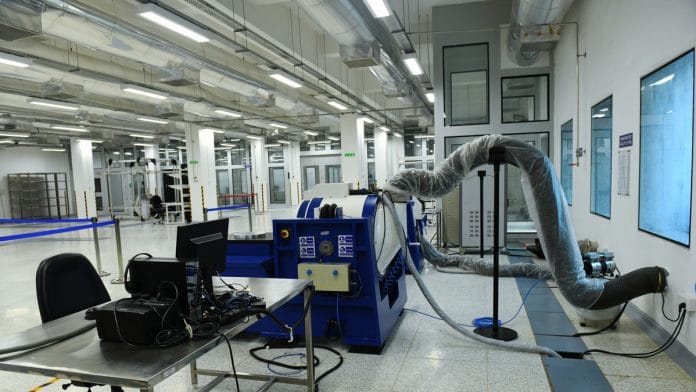
Serpentine networks of pipes, tanks and whirring machines are linked to large computer screens. This is where scientists test the composite materials — strong, lightweight blends used in place of metal — that go into the structures of spacecraft and optical payloads.
Around a dozen engineers sit in their large control room, glued to their systems. For nearly 15 minutes, the only sound in the room is clicks and taps following the movement of the satellite.
Indurti, an engineer from Chennai’s College of Engineering, Guindy, personally oversees the company’s technology development and missions. He is as hands-on as they come. Every morning, he starts the day with the whiteboard in his office, scribbled with notes—things to do, people to meet, targets to achieve.
The team he has built ranges from young engineers and retired ISRO scientists to graduates from universities ranging from Penn State in the US to the National Institutes of Technology.
We want to build ourselves as a serious competitor providing end-to-end space applications. From research to the production of payload and building infrastructure, we want to be a reliable partner for our customers in India and abroad
-Sunil Indurti, director of Azista Aerospace
“Unlike the usual corporate setup, people here are determined to build an industry. We are doing things that have never been done in India,” a young scientist from Azista’s team said, beaming as he spoke of the company’s missions.
But Azista Aerospace’s origin story is unusually down-to-earth.
Most Indian space startups are run by former ISRO engineers or science enthusiasts. Azista is different. It is an ancillary of Azista Industries Private Limited, a healthcare and nutrition company with an array of organic food and pharmaceutical products to its name.
While the transition from products such as dehydrated tomatoes and medicines to reconnaissance satellites might seem jarring, for managing director M Srinivas Reddy, the logic is consistent.
“The basic value system of a pharmaceutical company is research. The more research you are able to do, the more products you are able to put out into the market. Even when we decided to diversify, our focus continued to be research,” he said.
Founded in 2014, the company spread its wings into space and composites in 2016. Much before competing with the new players in the space industry, it partnered with ISRO in developing satellite and rocket components for various programmes.
“Space was a new area for us. So, when we partnered with ISRO, it was a learning curve for us. By working with India’s apex space agency, our teams have acquired the necessary training. We have also been acquainted with the challenges in this domain,” Reddy said.
Also Read: NIMHANS set to bring India’s first digital repository of psychiatric disorders
The next orbit
Azista Aerospace is already deep into its next mission: a constellation of satellites, expected to take flight by 2027.
These satellites aim to provide a 500 km swath—the width of the area covered on the ground—at a 4-metre resolution. This combination of “big picture” coverage and minute detailing is a rarity.
This mission will also be capable of continuous imaging for about 20 minutes— a feature currently unavailable in the Indian market. Once mastered, this technology will have a range of applications, including in agriculture, infrastructure monitoring, and defence surveillance.
“An extraordinary amount of data will be generated. We will also have an onboard edge computer that will be able to process the data collected and generate analytics, all while onboard. That means you will not have to downlink all the data that you generate,” Indurti said.

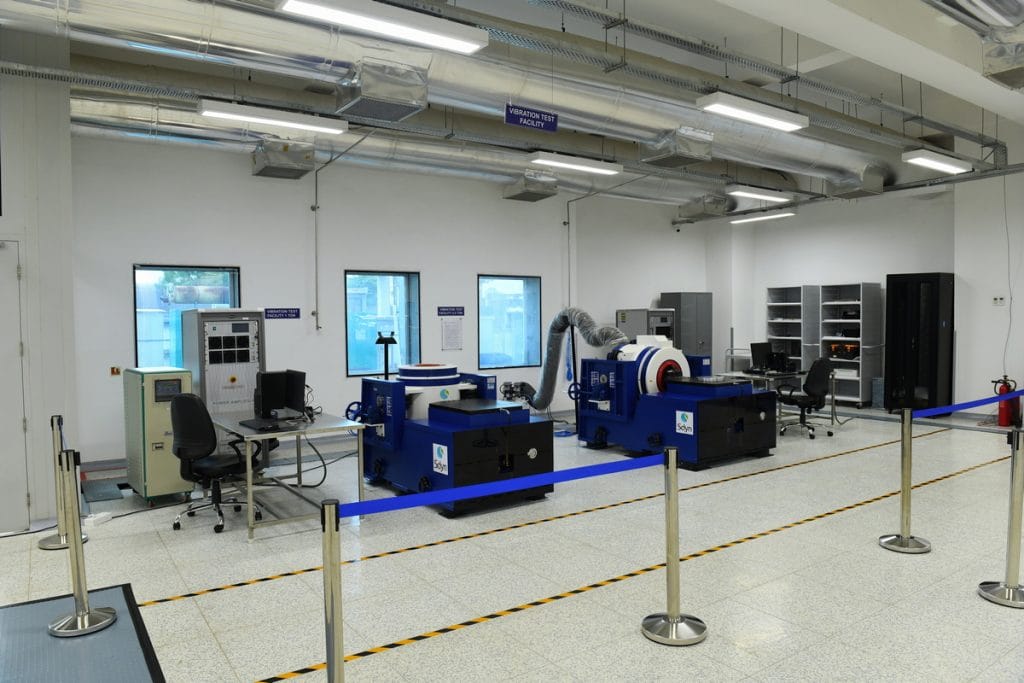
The company is developing a high-resolution optical payload as well, and is building out manufacturing capacity to match its R&D ambitions. Its electro-optical payload facility in Ahmedabad is now operational, and a new assembly, integration and testing facility is coming up in Hyderabad.
Indurti said Azista wears its “Made in India” tag very seriously, and wants to place itself in the global space race. Apart from its Indian clientele, Azista has also gained a foothold in the international market in recent years, with clients such as British aerospace and defence company Cobham Limited and Romania’s Seagull UAV.
“We want to build ourselves as a serious competitor providing end-to-end space applications. From research to the production of payload and building infrastructure, we want to be a reliable partner for our customers in India and abroad,” he added.
The successful imaging of the ISS was just the proof of concept. For Azista, those first shots from orbit are a glimpse into a much larger future. The Indian space establishment is optimistic too.
A senior ISRO official told ThePrint that Azista’s work is a benchmark for the Indian private sector.
“It is a great feat not just in the space domain but also for our defence capabilities. It is a promising new era for India,” the official said. “For the longest time, the space sector in India was centralised and it is impressive that when these private players finally got an opportunity to enter this domain, they came in all guns blazing.”
(Edited by Asavari Singh)