







Bengaluru: Behind the gates of Bengaluru’s National Institute of Mental Health and Neuro Sciences, a decade’s work has finally culminated. Carefully working around the societal stigma and hesitation around mental health conversations, over two dozen researchers have finally managed to bring out India’s first digital repository of psychiatric disorders, which is now set to pave the wave of future research and drug improvements around mental health.
For decades, Indian researchers working in the field of mental health have had to depend on studies primarily on the Caucasian populations due to a lack of in-depth analysis at home. India’s apex mental health institute is now out to change that.
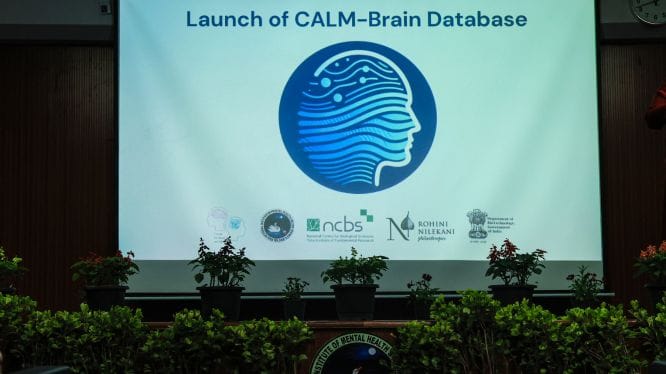
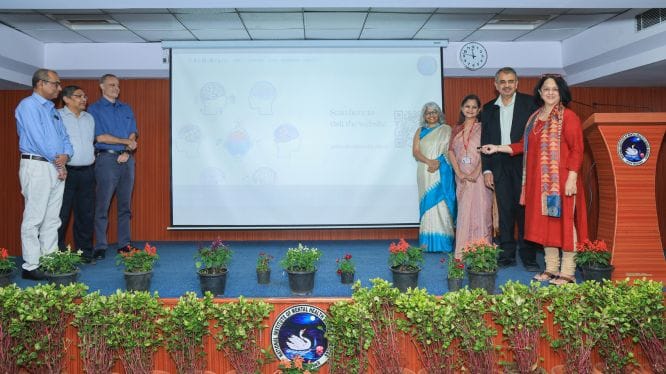
In March, NIMHANS, along with the Rohini Nilekani Centre for Brain (CBM) and Mind and the National Centre for Biological Sciences (NCBS)-TIFR, launched the first phase of CALM-Brain. This is a one-of-a-kind digital repository of data on brain structure and function for five major psychiatric disorders.
Doctors, scientists, and mental health researchers from around the world will be able to access this data repository, which has already studied over 2,000 Indian participants and 900 families.
This is a landmark moment for everyone involved. This database is now set to become the foundation for a comprehensive repository for mental health efforts across the country.
According to neuroscientists, this centralised dataset, which will eventually become open-source, will also provide a unique representation of the Indian population in global research on mental health and its treatments.
Dr Pratima Murthy, former director of NIMHANS, who is also closely involved with the project, said that most of the current studies on mental health are centred around the western population. This is when factors such as a patient’s ethnicity, local weather conditions, and social exposure play a significant role in how their symptoms unfold and how their treatments affect them.
“When so many of a patient’s immediate factors impact their condition and their treatment, it becomes important that they also have ample representation. The Asian population, especially the Indian population, is not studied well,” she said.
The data collection was done on four levels—from patients with one or multiple psychiatric disorders, family members of the patients with the same or another form of psychiatric disorder, a healthy member of the family, and unrelated healthy members of society.

“This is a landmark initiative in the field of mental health research in India. We will get a deep insight into how psychological illnesses manifest particularly in the Indian populations. This is significant for future Indian studies,” Dr Janardhan Reddy, a senior psychiatrist who is also coordinating the project for CBM-NIMHANS, told ThePrint.
The CALM-Brain project began in 2015 with the aim of creating a deeper understanding of psychiatric disorders among the Indian population.
Also read: Arctus Aerospace has one mission—End India’s reliance on foreign players in earth observation
Taboo around mental health
When a 30-year-old native of Bihar first moved to India’s tech capital, Bengaluru, eight years ago, he had big dreams. His life was planned—a well-paying job already in hand, a car in another year and eventually a house and a family.
But just two years in the city, and his big dreams were replaced by long work hours and high stress. Not having friends or family in the city only made things worse.
The final blow came in 2021.
His mother suddenly passed away from Covid-19 in his village, and he was stuck hundreds of kilometres away, unable to bid a final goodbye in-person.
“That’s when the first episode of depression and hallucinations began,” he said, requesting anonymity.
Almost a year later, he was diagnosed with schizoaffective disorder, a condition where a patient starts displaying symptoms of both schizophrenia and bipolar disorder.
“It took me a really long time to acknowledge that something could be wrong with me. I am still not comfortable sharing my condition with my entire family. It would probably be different if it were a physical ailment, but there is still a great deal of stigma attached to mental health ailments,” the NIMHANS patient, who participated in the study told ThePrint.
Dr Reddy says that convincing patients and their families to participate in their surveys was the most difficult part.
“Even if patients agreed, getting their family members, especially healthy ones, was a task,” he said.
“The issue is that patients in a mental health survey do not gain anything. At least in a drug trial, there is a possibility of a certain health outcome. Here, there is no such incentive. You need to convince them that this is for a greater cause and just hope that they come on board.”
In 2016, the team from NIMHANS and NCBS finally started the process of gathering phase-wise patient data, as part of the Accelerator Programme for Discovery in Brain Disorders Using Stem Cells, or the ADBS Project.
This project was jointly funded by the government’s Department of Biotechnology and the Pratiksha Trust—a philanthropic initiative led by Infosys co-founder Kris Gopalakrishnan and Sudha Gopalakrishnan, focusing on supporting brain research, education, and scientific innovation in India.
CALM-Brain currently contains data from over 2,000 participants, representing nearly 900 families.
A 2025 analysis conducted by scientists from King’s College London, ‘Exploring the world for longitudinal datasets: data resources for transformative mental health research’ highlighted that an ideal longitudinal mental health study should have at least 8000 participants at the inception stage, should have collected data or has the potential for collecting data from participants aged 14 to 30 years, has collected data for about three years in the initial phase and has planned to contact the participants to collect new data.
Global mental health studies, including the 2025 Global Flourishing Study carried out by Harvard University, followed 200,000 participants from 22 countries. The Indian study, which includes 2000 patients and their families, exceeds this recommended mark of 8000 participants.
Also read: Delhi’s Urdu-medium MCD schools are losing students. ‘Want better lives’
The work
In the initial phase, the data repository primarily focuses on five psychiatric disorders—addiction, bipolar disorder, dementia, obsessive compulsive disorder (OCD) and schizophrenia.
Researchers said that these ailments were chosen for the study because of how widespread they were becoming among the Indian population. While many of the conditions were not be traditionally classified as mental illnesses, they are being widely recognised as such globally.
For instance, addiction—clinically recognised as substance use disorder (SUD)—is now characterised as a chronic mental health condition triggered by compulsive alcohol or drug use.
While not understood as a psychiatric condition, dementia often presents with mental health symptoms including depression, anxiety and paranoia. It is a neurodegenerative brain disease causing progressive memory loss, cognitive decline, and behavioural changes.
The research, comprising such a large dataset and a detailed approach, will help identify key neurocognitive biomarkers, support early diagnosis of mental disorders, and develop targeted therapies in the future
For this study, participants were diagnosed with severe forms of at least one of these disorders.
The process doesn’t just involve verbal surveys.
Researchers said that while the surveys were strictly confidential, it was designed to capture various aspects and exposures of patients and their families, while also testing genetic predispositions.
The survey also involves tech interventions, including functional magnetic resonance imaging (fMRI)—a non-invasive, neuroimaging technique that maps brain activity by detecting subtle changes in blood oxygenation and flow (BOLD signal) associated with neural activity—near infrared spectroscopy (NIRS)—a light-based analytical technique used to measure tissue oxygenation— and electroencephalogram (EEG)—a technique to map brain’s electrical activity using small sensors or electrodes placed on the scalp—to analyse study the minute details of the participants’ brain activity.
The analysis also involved observations of cognition, eye-tracking, genetic testing of blood samples, and detailed clinical assessments.
The dataset is also linked to a biorepository of stem cells, which can be used to perform further biological research in psychiatry to understand the origins of severe mental illnesses.
The research, comprising such a large dataset and a detailed approach, will help identify key neurocognitive biomarkers, support early diagnosis of mental disorders, and develop targeted therapies in the future.
Dr Murthy said it will be important that the project is now sustained.
“I’d say this was the easy part. But now is when you need to ensure that the project continues to run. Continued funding, coordination between agencies and community participation are essential to reap the full benefits,” Dr Murthy said.
In the first phase, the study has been jointly funded by the Centre’s Department of Biotechnology (DBT) and the Rohini Nilekani Philanthropies. However, considering that this study is longitudinal, researchers will need to attract a steady funding channel.
The institutes involved will continue to follow the original participants for a prolonged period. This will ensure that the researchers get a more holistic picture of their symptoms over a longer period and their response to medicines.
Also read: Delhi’s parking wars now end in murder & court cases. It’s the new road rage
Lack of global representation
For over a decade, senior consultants, resident doctors, nurses and volunteers worked tirelessly. The team has gone through a tedious process of identifying participants, convincing and counselling families, undertaking long surveys and conducting high-tech tests.
The process of assessment was repetitive and thorough. All with the utmost sensitivity and precision. The cause was too important to abandon. The team knew that their work could change the lives of thousands of families struggling with mental illnesses—giving them a chance at improved treatments and providing them a life of dignity.
For over a decade, senior consultants, resident doctors, nurses and volunteers worked tirelessly. The team has gone through a tedious process of identifying participants, convincing and counselling families, undertaking long surveys and conducting high-tech tests
“We see hundreds of patients come in here every day. Not just the patient, an entire family battles the illness,” a nurse at NIMHANS said.
A 2020 Lancet study highlighted that mental health disorders accounted for nearly 5.2% of the global disease burden, with depressive disorder and anxiety disorder alone contributing to 6.2 per cent and 4.7 per cent.
The situation in India is not very different. According to the 2015-16 National Mental Health Survey, in India, about 10.6 per cent adults—accounting for roughly 11 out of every 100 adults—were living with a diagnosable mental health disorder.
Data shows that the lifetime prevalence of mental disorders in India was 13.7 per cent. This means that around 14 out of every 100 people in India have experienced a mental disorder at some point in their lives.
While wearing their work as a badge of honour, researchers hope to find the resources needed to scale it up.
Dr Murthy says the project now requires continued financial investment and acceptance from the community.
“Of course, this project will need financial aid, but what’s even more important is creating a sensitive community. We need to inculcate community awareness around mental health. Everyone needs to come together.”
“The survey was the easy part. The difficult bit begins now,” Dr Murthy said.
(Edited by Anurag Chaubey)