





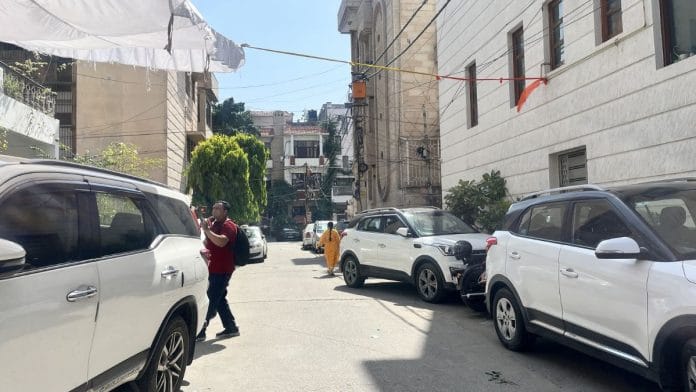

New Delhi: It was around midnight on Monday when a white Toyota Fortuner pulled up outside a home in Preet Vihar. Hearing the beep, one of the landlords, Paras Nayyar, stepped out and asked the tenant who was driving the car to park elsewhere and not block his gate. The tenant responded by pulling out a gun and firing three shots, killing Paras’ brother, Pankaj Nayyar, in an instant.
The shocking Preet Vihar murder is a new flashpoint in Delhi’s growing number of brawls and litigation over parking spaces. With more than 80 lakh cars for a population of 3.3 crore, the national capital is choked already. A designated parking lot is a scarce commodity, and Delhi’s residents are willing to argue, fight, complain, litigate – and even pull out a gun – for it.
There has been a string of violent parking disputes in Delhi NCR, where a patch of road has become a marker of power. With streets lined with cars and little room left for pedestrians, even a request can turn into a confrontation few are willing to risk.
In 2021, the Delhi police control room received only 2,413 calls related to parking violence, but in 2025, this number crossed 7,000. The district courts have witnessed more and more parking dispute cases with serious violence, reflecting how sharply the conflict has intensified. Fights over parking spaces are the new road rage.
“He hit me with the back of the pistol and fled with the other two men who came on the bike,” said Paras Nayyar, who owns two flats in Preet Vihar.
This was not the first time. A similar argument had taken place earlier between Nayyar and the accused, Gaurav Sharma. But nobody had anticipated it would spiral into a fatal act of violence.
“The man was a tenant here and owned three cars. Paras gave him his own parking space in the side building, but still his attitude was on cloud nine. He was drunk and couldn’t handle the argument. Such parking-related fights have become common day by day,” said Sohan Ahuja, a relative of the Nayyars.
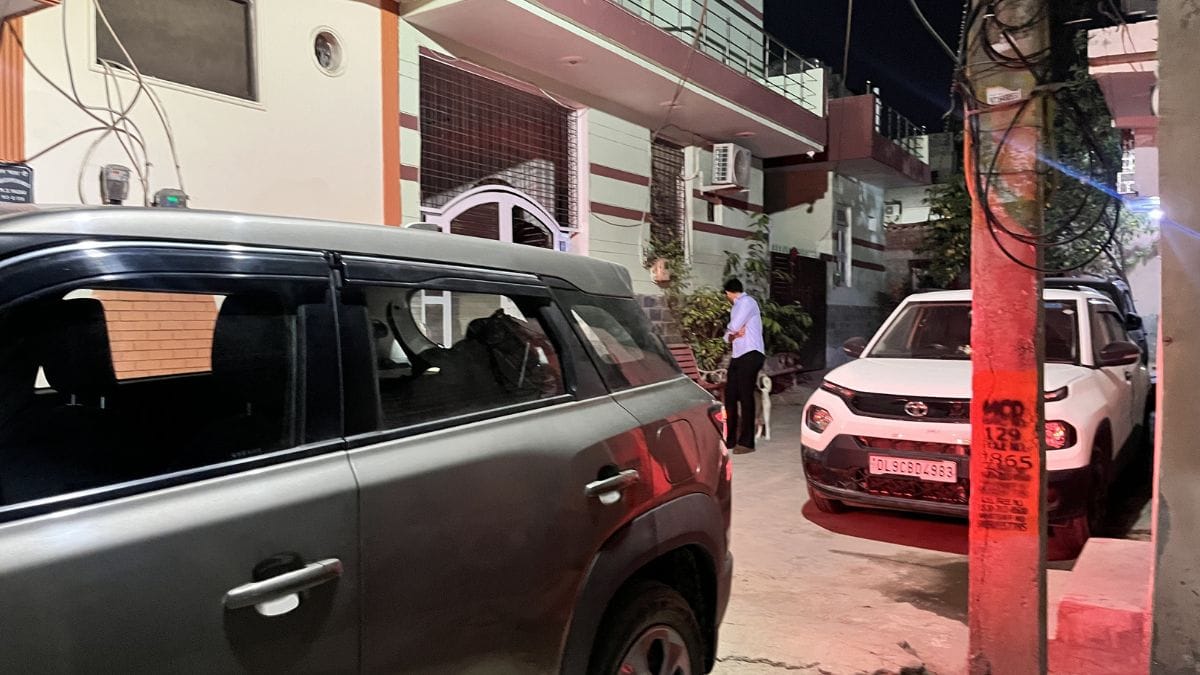
The wealthy lanes of East Delhi’s Preet Vihar in A block were covered in cars on both sides. There is limited space on the street, even though people have parking spaces inside the building. This is a common scene across Delhi’s different residential areas. The public space is shrinking, and car ownership has increased. The streets become a zone of daily friction.
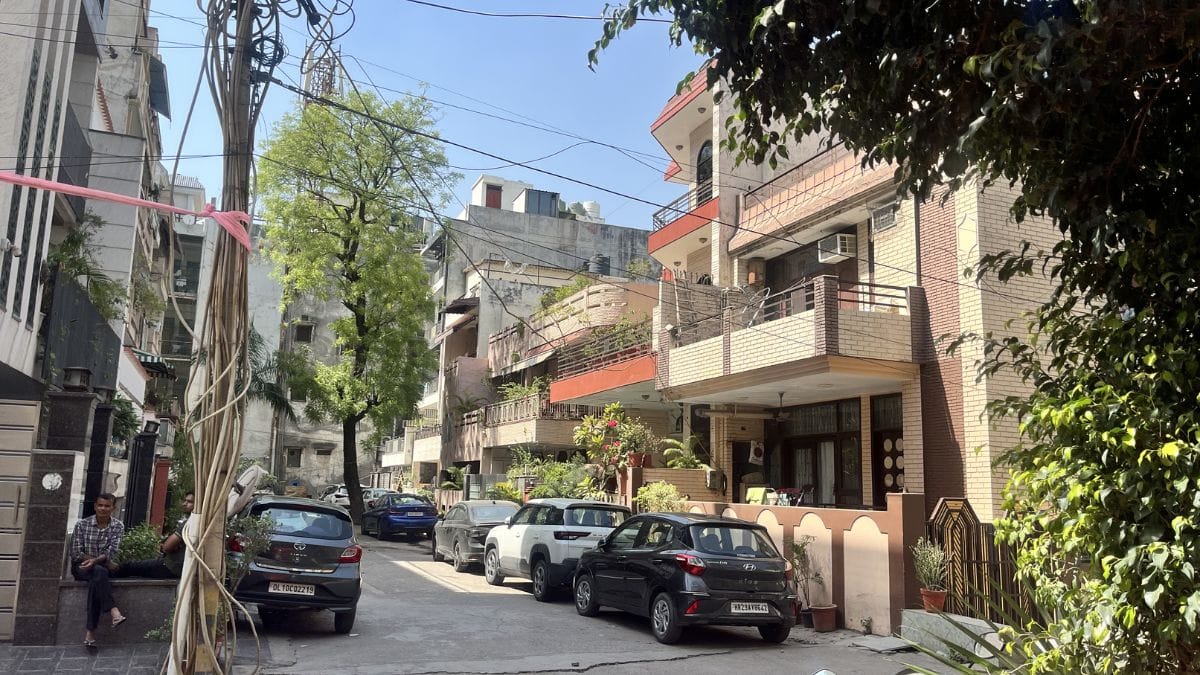
Small arguments that were handled in RWA groups now reach the police control rooms, district courts, and at times, mortuaries. Tussles over whose car blocked whose gate, who scratched whose bumper, or who “owned” a patch of road have escalated into assaults and murders.
Experts and lawyers say that the surge is rooted in a deeper mismatch. The localities were built for fewer vehicles, and now houses have multiple cars, even the publicly available parking often ends up in long bureaucratic disputes. Streets once used by children as playgrounds have become contested storage spaces for private vehicles —especially on weekends, when most cars remain parked at home, and every vacant inch acquires value.
“Delhi’s parking violence is ultimately a symptom of bad urban planning,” said former DDA Commissioner (Planning), AK Jain.
The big civic problems required a deep policy reform.
“The solution is not only policing but policy — regulate car ownership where no parking exists, create shared and underground public parking, and improve last-mile public transport so dependence on private cars reduces,” Jain added.
A family destroyed
“People do not have the patience to talk things out anymore.”
On 20 April, the parking of house number A 144 in Preet Vihar was filled with relatives and neighbours till noon. Everyone was furious about the shooting, and the residents of the colony were discussing the parking issue in small groups. “Bas parking ki baat thi” (It was only about parking), “Raat ko shor-sharabe ki awaaz aa rahi thi” (Screams were heard at night), “Kisiko laga nahi baat yahan tak pahunch jayegi” (No one thought it would go this far), “Ek ghar barbaad ho gaya” (A family has been destroyed).
Many of the neighbours had heard noises from the street when the fight was going on at midnight, but only a few people stepped out for help—because such cases are common in the area.
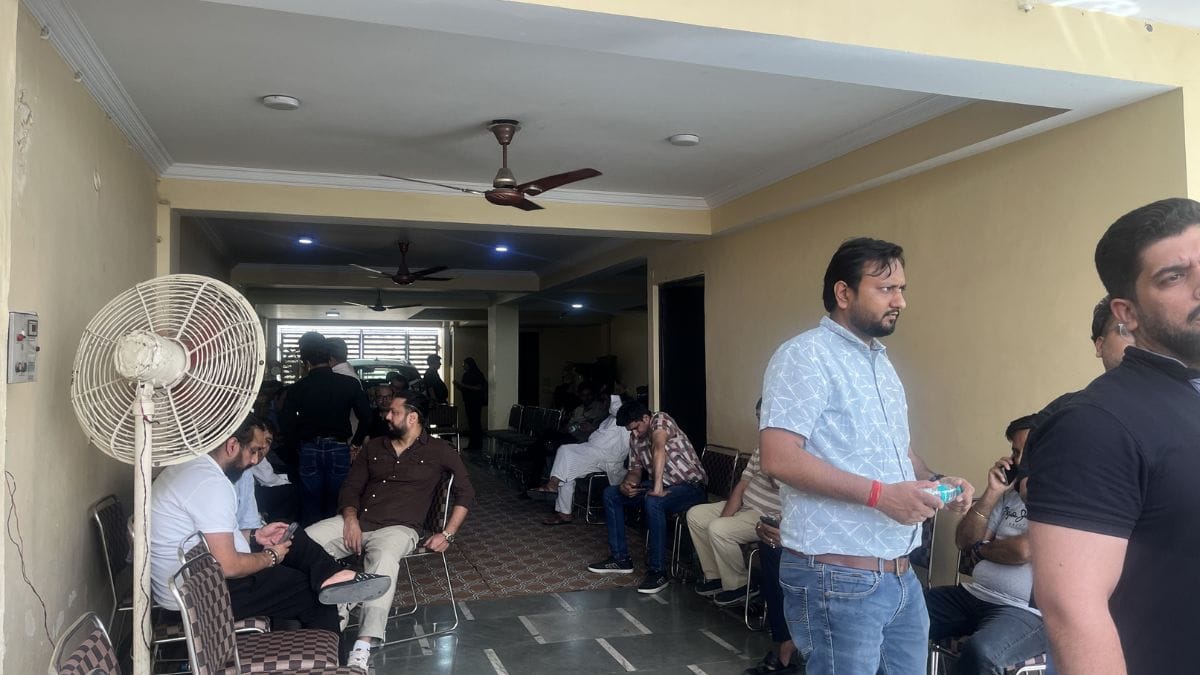
“Just last week, two people had a really bad argument about the parking space. But that didn’t go to this level. None of them was drunk. Alcohol also had a huge role to play in last night’s fight. And this was not a brand new argument. Both parties have been arguing, but this time it exploded with this,” said Mahendra Singh, a resident of Preet Vihar.
Pankaj Nayyar is survived by his seven-month pregnant wife, their six-year-old child, and his parents. His brother is burdened with guilt, as he was the one who had called Pankaj from Noida to Preet Vihar that night after the parking dispute escalated.
The fight resumed around 2 am, when Pankaj Nayyar came to Preet Vihar after Gaurav Sharma’s continuous shouting and abusing. They were first shouting at each other over the call, and then Sharma challenged him to fight him in person. Later, Gaurav Sharma allegedly pulled out a firearm and fired three rounds. One bullet struck Pankaj Nayyar in the chest, while Paras narrowly escaped.
Paras Nayyar said that after shooting Pankaj, Gaurav Sharma allegedly walked up to him and struck him in the face with the butt of the gun. Paras still bears bruises from the assault.
Sharma owns three cars — a BMW, a Fortuner, and another vehicle. Two of the cars reportedly share the same number plate, a marker of power and wealth in many parts of India. The Nayyars own a Baleno and a Swift.
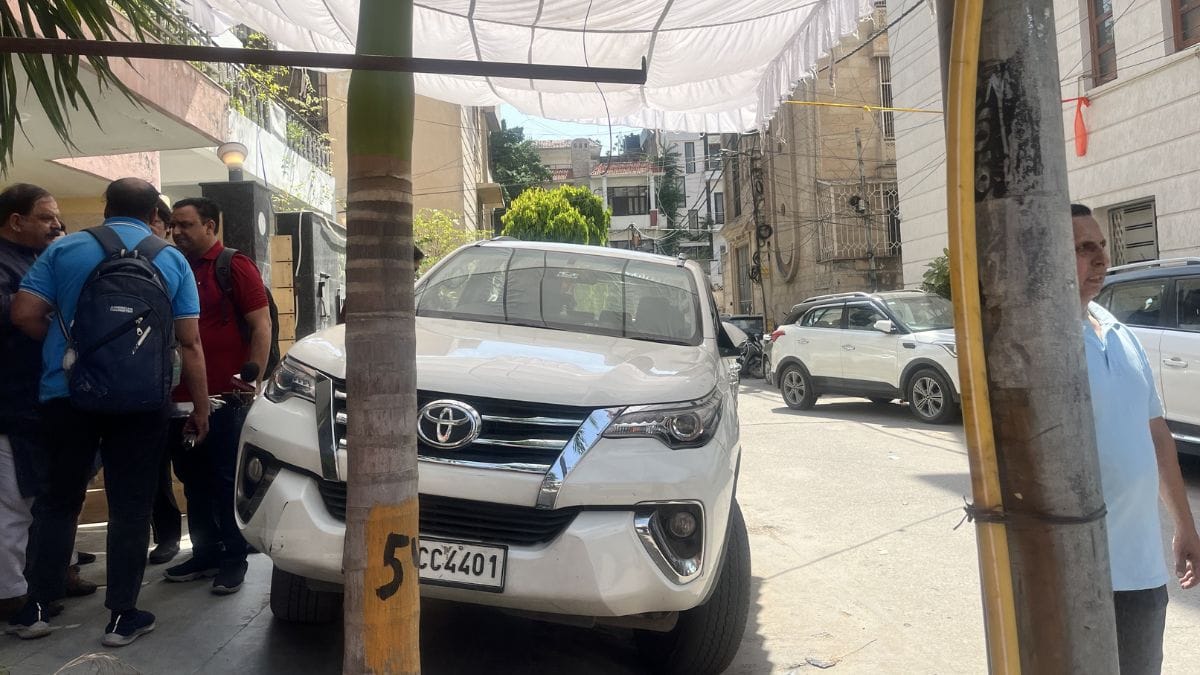
It all started when Sharma came back home at night in his BMW and found Paras’ car parked in his space.
Paras was not at home at the time, having dinner at a restaurant having dinner. And his parents had gone to a wedding in Jim Corbett National Park.
“He called Paras, and Paras told him he could park his car at A-145, beside Gaurav’s building, where Paras owns another flat. Gaurav parked his car there, but later his 20-year-old son arrived in the Fortuner and demanded a parking space. Paras told him there was only one slot allotted to each family, and Gaurav got furious,” a police officer said, describing the incident.
Thus began the fight, and neighbours came out to defuse the matter. Sharma allegedly refused to let go of the matter. After arguing endlessly, Paras decided to call his brother, Pankaj, for help.
“The issue had been sorted out and Pankaj was already leaving, but Gaurav started abusing Paras and his family. That is when Pankaj came back, and the whole incident happened,” said a resident of Preet Vihar.
“The first reason is convenience, and the other is that they do not want another person parking near their house,” said the resident, pointing at a house where a car was parked outside instead of inside the designated parking area.
About 12 hours after the incident, police arrested Gaurav Sharma from Model Town. His two friends, who were allegedly involved in the matter, remain at large. The Delhi Police station at Preet Vihar has registered an FIR under Sections 103(1) (murder), 115(2) (voluntarily causing hurt), and 3(5) (common intention) of the Bharatiya Nyaya Sanhita, along with provisions of the Arms Act.
“We have noticed a rise in such fights because now one family easily owns two or three cars, while the buildings are older and even many new ones provide parking for only two vehicles. People do not have the patience to talk things out anymore. We are now thinking about what can be done so such incidents are not repeated,” said a member of Preet Vihar RWA.
Numerous complaints, no solution
“The solutions the government announced aren’t helpful because they aren’t working on the ground.”
KK Verma, RWA secretary, has been living in Preet Vihar for the last 45 years. He said he has seen a huge spike in parking-related complaints in the last five years. The RWA WhatsApp group has been bombarded with complaints constantly. Sometimes fights become so intense that the police are called.
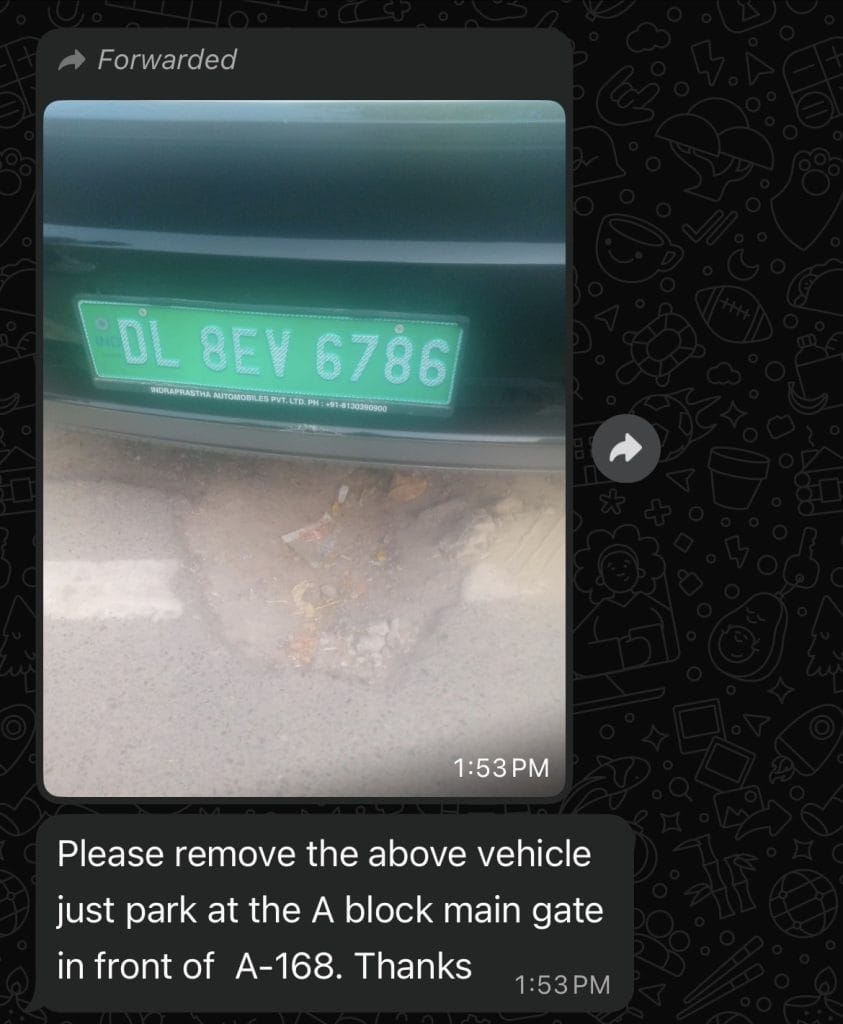
“The small fights are not small anymore. Every day, there are new complaints. It has become a big crisis,” Verma said. He recalled a fight when one angry resident threatened to slash the other’s throat over a parking space.
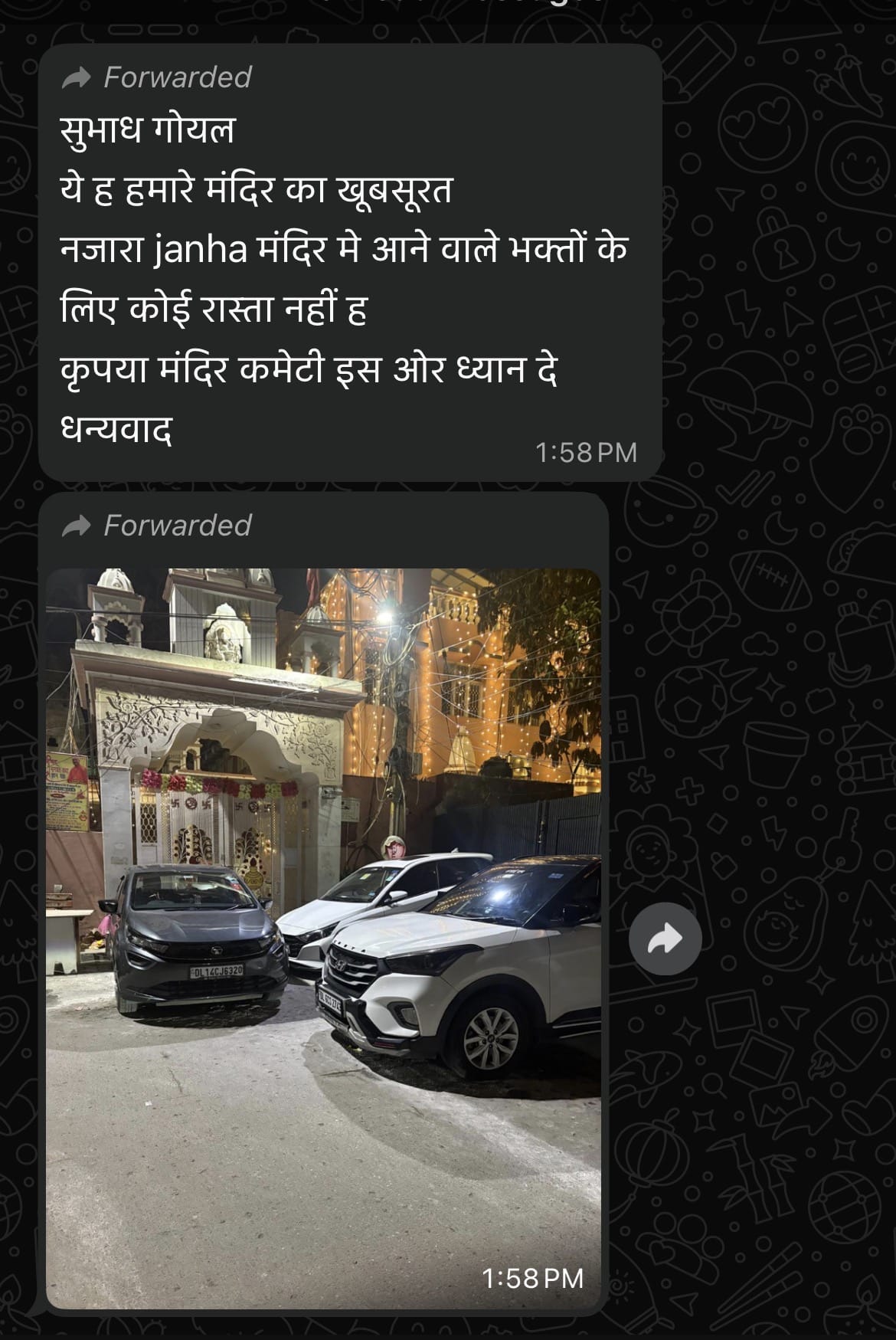
According to Preet Vihar residents, the problem is that the four or five-story buildings only have capacity for one car parking spot per floor, but nowadays, one floor owner owns four or five cars. So they park one vehicle in the parking lot and others on the roads. The lack of public parking and weak enforcement of rules fuel the situation.
There are several places in Delhi where public parking projects were announced and construction began, but the facilities never fully materialised. A massive underground parking structure near Jangpura Block-A and Jangpura Extension has remained unfinished for years. Conceived before the 2010 Commonwealth Games, the three-level project was meant to hold around 308 vehicles, but delays, contractor disputes, and funding issues kept it from becoming operational.
“The parking situation is worse here as well. If a guest comes in a car on the weekend, finding a spot to park becomes a hassle. The solutions the government announced aren’t helpful because they aren’t working on the ground. The parking facility was announced in 2010, and since then, the problem has increased, but no solution has been found,” said Sonali Verma, a resident of Jangpura.
Experts say the rage spilling onto Delhi’s streets is rooted in a deeper governance failure. They argue that parking disputes turning violent are less about individual tempers and more about the absence of clear rules, enforcement, and planned space for vehicles in overcrowded neighbourhoods.
“The increased violence due to parking is clearly a symptom of our inability to implement parking management rules,” said Anumita Roychowdhury, Executive Director (Research and Advocacy), Centre for Science and Environment.
She added Delhi cannot keep creating endless parking spaces at the cost of roads, footpaths and public land, warning that unmanaged parking is worsening congestion and social tension.
“Parking demand and parking supply cannot increase infinitely… in any given locality, any given neighbourhood, there is a need for land for other purposes—for people to walk, for community-level services. So you cannot say that any available vacant space or public space can be given away for parking,” Roychowdhury said.
Also read: Delhi’s Project Otenga pairs Northeast fine dining with mental health. ‘Not a restaurant’
Legal cases, personal rivalries
“I think I shouldn’t have bought a car.”
Just like posh societies, where the fights happen over parking spaces for multiple cars, Delhi’s less affluent neighbourhoods are also seeing similar disputes. Lower-middle-class families save up for one car and then keep having fights to park it.
Parking disputes are increasingly reaching the courts in Delhi, too.
Arvind Kumar, 42, a contractor who lives in Nagli Dairy, had a large space outside his house where others used to park their vehicles. But when he began parking his own car there, it sparked a dispute with neighbour Gajendra Kumar, who had previously used the spot. The argument escalated into repeated fights. Kumar’s children were also beaten.
“I never understood what the matter was. I will park my car in front of my house, but he owns 8–10 cars and has money, so he thinks he can do whatever he wants. He beat me and my family and got me arrested. I spent the entire night in the lockup, and that’s when I decided to go to court,” said Kumar, who has been fighting the case in Dwarka District court for the last six months.
He spends days making trips to lawyers’ offices and the court. A very large amount of his earnings is spent on these trials. Paying the lawyer and taking time off from work is taking a toll on Kumar.
“I think I shouldn’t have bought a car. My next goal in life is to build a house with parking so my car can get parked peacefully and my life has peace,” said Kumar.
In September 2024, Justice Sanjeev Narula of the Delhi High Court pointed out the urban planning failure while hearing Surmila v. Commissioner of Police & Ors., a Badarpur resident’s petition over neighbours parking outside her house.
The court also said that it needs a policy-based response from municipal authorities rather than case-by-case judicial intervention.
“The absence of dedicated parking spaces in residential colonies is a civic issue that requires a policy-based response from municipal authorities rather than judicial intervention in individual disputes,” said the court.
In the crowded neighbourhoods of Delhi, lower-middle-class families often spend their life savings building a house. Naturally, they prioritise constructing extra rooms instead of parking spaces.
Lawyer Rahul Dua, practising in Dwarka district court, said he has also witnessed a rise in cases linked to parking disputes.
“You can say that 6 cases out of 10 are parking-related. It was not the case a few years ago,” he said. “Ask any lawyer in the court today, and they will tell you they have handled parking dispute matters. Such cases have increased significantly over the last five years. Earlier, arguments did happen, but they rarely escalated into serious crimes. Now we are seeing murders, violent assaults, and stringent charges under the BNS being invoked. This clearly requires a major policy intervention.”
Plot owners in the capital convert vacant land into private parking lots and charge rent, but even that option is not available everywhere because there is hardly any empty land left in the city, said Dua. And people are growing less and less tolerant.
“Everyone wants to assert power over others.”
(Edited by Ratan Priya)