





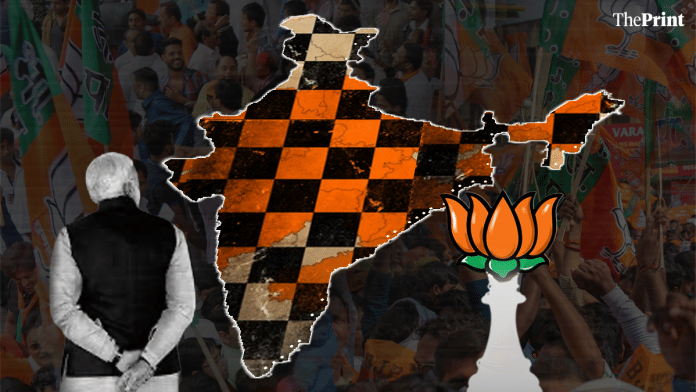

New Delhi: The Bharatiya Janata Party’s thumping victory in West Bengal and third straight win in Assam are the latest reminder that its organisational machinery is now potent enough to dominate electoral politics even beyond the Modi era, say party insiders and analysts. From Tripura to Odisha, and Haryana to Maharashtra, the BJP has managed to vanquish political adversaries in several states with more than just “Modi ki guarantee”.
For instance, in Assam, CM Himanta Biswa Sarma led the campaign, while in West Bengal, it was mostly Union Home Minister Amit Shah’s electoral strategy and combined effort of “team BJP”. In Haryana, the elections were fought under the leadership of CM Nayab Singh Saini and in Maharashtra too, leaders from the state unit led the campaign.
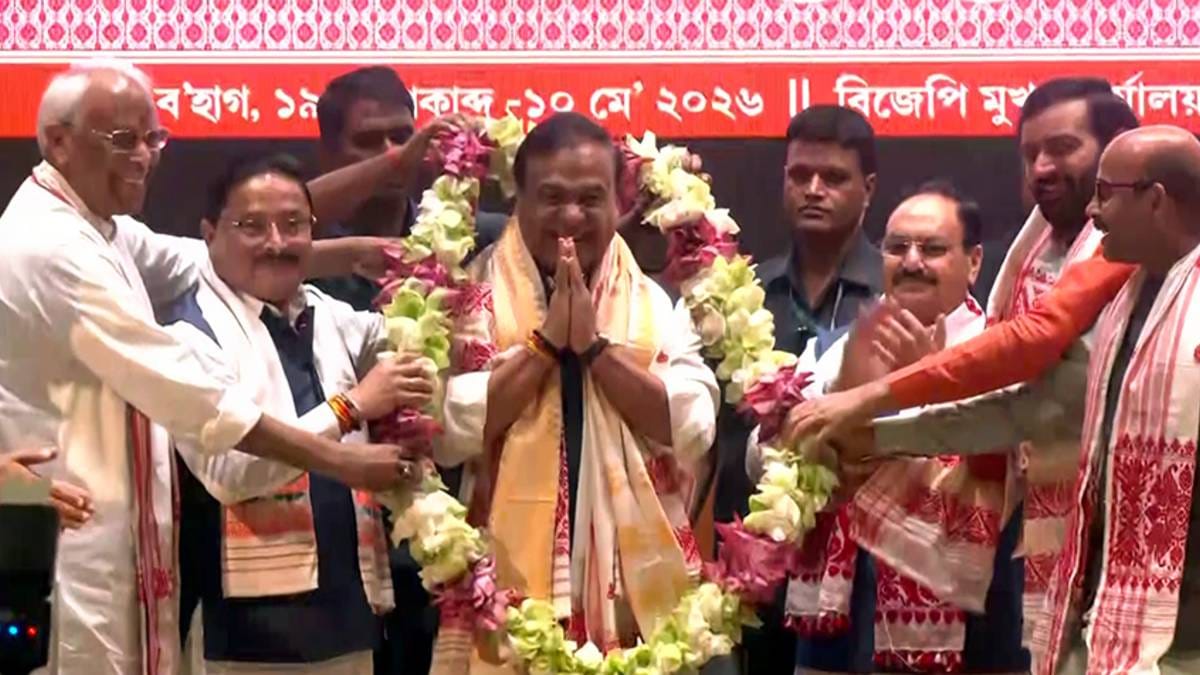
Sarma is credited with the BJP’s meteoric rise in Assam over the past decade, and the 2026 assembly poll results have only cemented his position within the party.
In Odisha and Tripura, while “Modi ki guarantee” was used in party manifesto and sparsely during campaigning, the focus was on local issues, collective leadership, especially from the state unit, and on highlighting the development work carried out by the Centre.
In Odisha, ThePrint had reported that BJP leaders were upset with their high command’s bid to stitch an alliance with their principal rival, Biju Janata Dal, and had conveyed this to the central leadership too.
The 2025 assembly elections in Delhi were an exception, as the BJP relied heavily on PM Narendra Modi’s appeal and charisma and extensively used the slogan “Modi ki guarantee”.
Speaking to ThePrint, a senior BJP leader said the systematic organisational setup of the party helps it win elections.
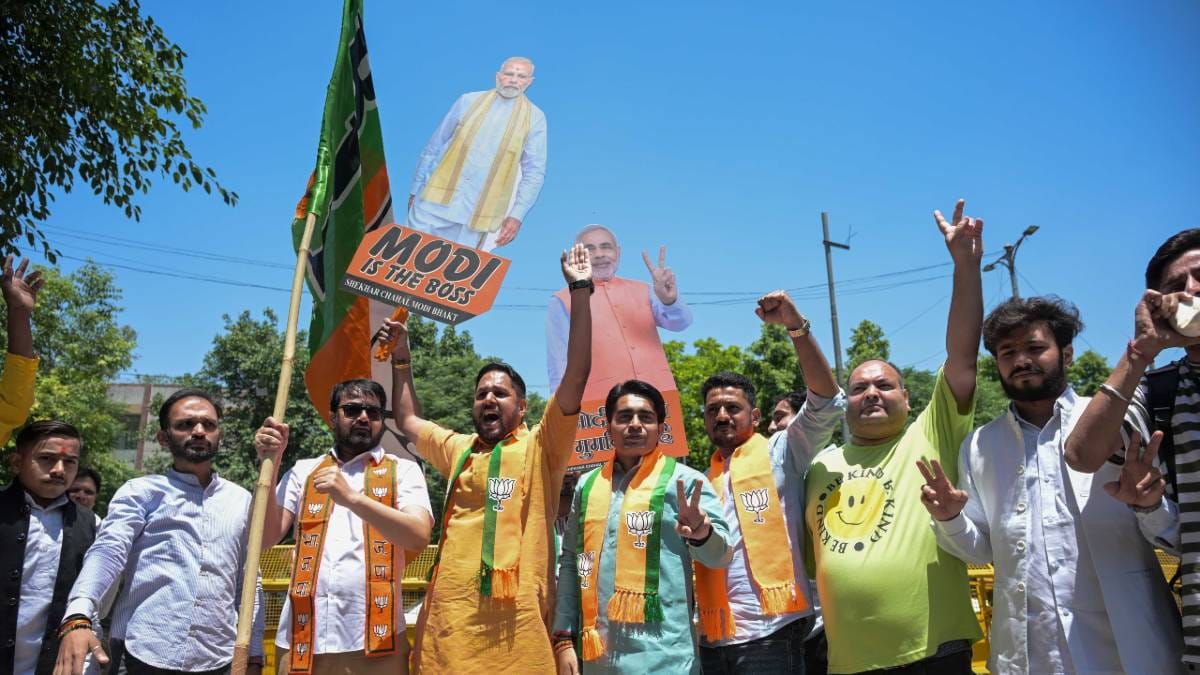
“We have an army of soldiers led by a commander-in-chief. The way we fight elections over time has also changed significantly. For instance, we started using social media, and now we use AI, so naturally, a lot has changed,” he added.
“We are active not just during elections but throughout the year, so much so that even our workers say they don’t get time to rest. As far as Modi’s appeal and charisma are concerned, he is someone the party always relies on, but organisationally the party has become strong, and all that has to be taken into account too,” he explained further.
Sayantan Ghosh, an author, columnist, and journalism teacher at St Xavier’s College, Kolkata, told ThePrint that Modi was not the face in West Bengal but there were several factors that had to be taken into account.
“This is true (Modi was not the face). But at the same time, in the West Bengal assembly election, people believe the results indicate PM Modi’s popularity and credibility. So, if a political party’s organisation, and in this case, the BJP, is not strong, the party cannot win based only on a face, say, based solely on Modi’s face,” Ghosh said.
“The 2021 West Bengal assembly election is an example. The BJP organisation was not strong, and despite Modi’s face, it could not win the elections,” Ghosh, who authored Battleground Bengal, added.
He pointed out that the BJP’s 2026 win was an example of a “well-oiled organisation” that, along with Modi’s credibility, routed the TMC that had been in power in Bengal for 15 years.
Reflecting on whether the BJP support base and campaign machinery can now handle a big state outside the Modi-centric narrative, Ghosh said the party started this experiment some time ago itself.
“I think the BJP is trying to expand by targeting a state, campaigning there and expanding there, and they have a clear strategy for it. Whether it is Tripura, Assam, Odisha or West Bengal, this is the trend we are witnessing. That is why all the states I just named operated outside the Modi-centric realm or narrative,” Ghosh asserted. “The BJP was not that popular earlier in these places, but they succeeded through their systematic planning.”
Also Read: BJP learnt from its mistakes. Here are 5 key strategies it used to dethrone AAP in Delhi
BJP & ‘Brand Modi’
Ghosh stressed that the BJP, over a period of time, has been able to develop a well-defined structure with a clear goal, such as which state to target first, what needs to be done to grow there and the kind of policies that require implementation depending on the local conditions. Along with this, it relies on Brand Modi too.
“The BJP has reached this position due to its strong organisation. At the same time, we need to acknowledge that it relies on the appeal and brand of PM Modi. Another important factor is the strategy they deploy for selecting the state and the work which then needs to be carried out in that state,” he added.
In 2024, after its tally shrank, the Haryana BJP decided to adopt a different poll strategy.
For instance, there was no mention of “Modi ki guarantee”, and the campaign tagline was “bharosa dil se, BJP phir se” (trust with your heart, bring the BJP again).
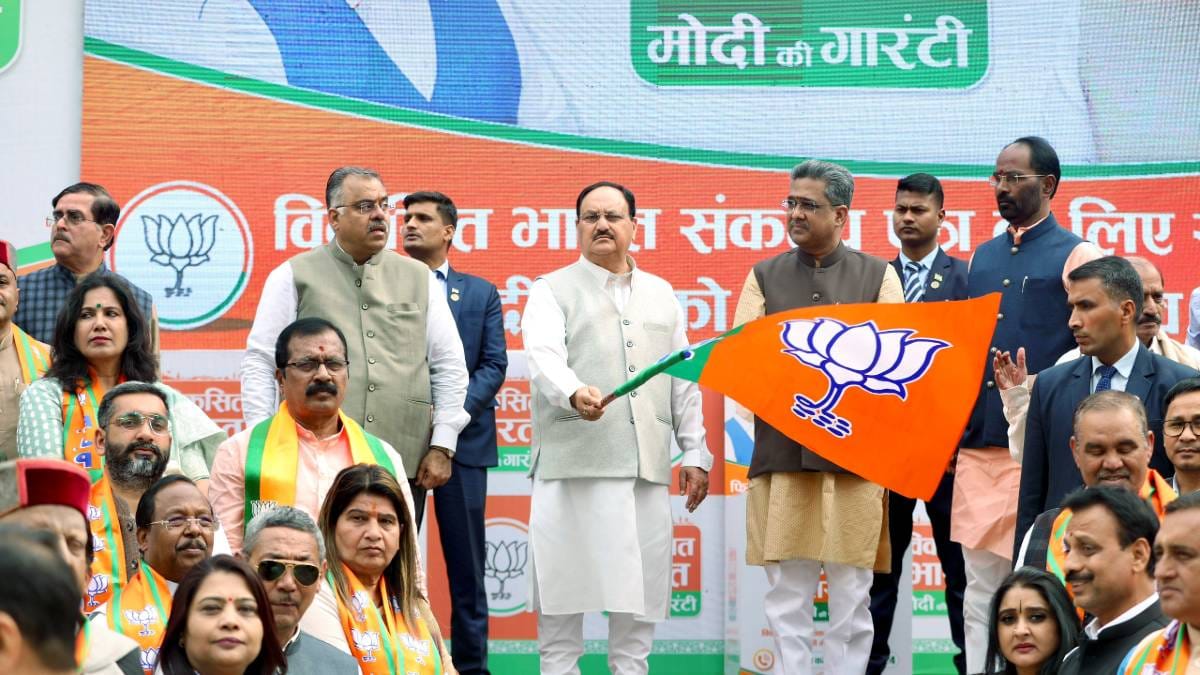
Though Modi did campaign for the party and candidates, and was visible in the campaign material, he was not the focal point of the strategy. The party decided to focus more on the candidates and collective leadership than Modi only—a strategy that worked as the BJP won 48 of 90 seats in the Haryana Assembly in October 2024.
The BJP had, in a way, started working on this strategy back in June 2024 when Shah, addressing party workers, said the BJP would fight the Haryana polls alone under CM Saini’s leadership.
The exception to the strategy was Delhi, where even as the party contested collectively against the Aam Aadmi Party (AAP), there was heavy reliance on Modi’s appeal.
The 2025 Delhi assembly elections witnessed the return of “Modi ki guarantee” on BJP’s posters and advertisements for the polls, showcasing “brand Modi”. The party also made use of “Modi ki guarantee” slogan during its campaign for the Madhya Pradesh, Rajasthan and Telangana assembly polls, which took place in 2023.
‘Right person for the right job’
“Modi ki guarantee” is a slogan first used by the BJP for the 2024 Lok Sabha elections, and which, as ThePrint had reported, “quietly” disappeared after the party failed to reach the “400-paar” target in Parliament. For instance, in the Haryana and Maharashtra assembly elections, the party did not make use of the slogan extensively.
Speaking to ThePrint, a second party leader said the BJP has always relied on its leaders during election campaigning.
“Do you remember the slogan “desh ka neta kaisa ho? Atal Bihari jaisa ho (how should a nation’s leader be? Like Atal Bihari)”—that was raised in the 1970s? So, in a way, we are doing the same now too (in Modi’s case), but in a more rigorous manner,” he said.
“Our strategy for every election is based on tactical and strategic strength. The BJP is a unique cadre-based party that follows a clear ideology; hence, leaders will come and go, leaving their mark, but the way the party is structured, it will not face any problem,” added the leader, reflecting on the future of the party.
A third BJP leader highlighted how the party has gained immense popularity over time and the role the RSS, its ideological parent, has played in strengthening it.
“The RSS background provides grounding, and unlike other dynastic parties, we have no dearth of leadership. It is a cadre-based structure, and the BJP will not face an existential or dominance problem. We must not view this merely through the prism of winning and losing, as they are part and parcel of politics,” he asserted, pointing to losses in Jharkhand, Tamil Nadu, Kerala, Karnataka and Telangana.
“As far as Modi ji is concerned, he has had a deep impact on the BJP’s growth since 2014, both in expanding the party into different frontiers and in giving it enduring power. The desire to stay in power has increased, and this must be acknowledged,” the leader added.
In several states where the BJP came to power for the first time, including Odisha and West Bengal, it relied on collective leadership and strategy, while in states like Assam and Haryana it registered a hat-trick—something that was unthinkable a few years ago, according to party leaders.
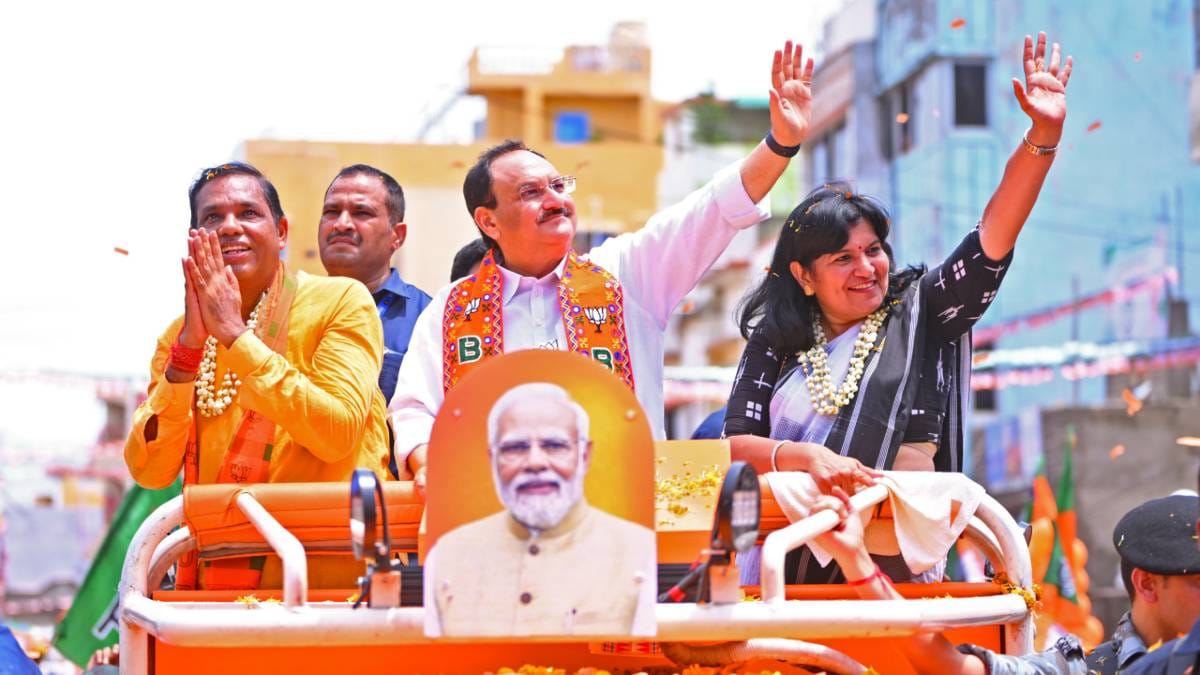
They attribute this change to the way the party strengthened the organisation by deputing “the right person for the right job”.
In Odisha, for instance, BJP leaders said, the campaign, which resulted in a significant mandate for the party, focused primarily on “Odia Asmita” (regional pride) and anti-incumbency against the long ruling Biju Janata Dal (BJD).
The campaign here was led by central leaders, including Amit Shah, Union ministers Dharmendra Pradhan and Ashwini Vaishnaw, among others.
Also Read: In Maharashtra, both national parties set records—BJP its best ever tally, Congress its worst ever
Beyond Modi
According to political experts, the post-Modi question and the future of the BJP require detailed deliberation.
When asked whether the BJP support base and campaign machinery can function outside Modi, Chandrachur Ghose, an author, columnist, and public speaker, said the PM’s personal appeal did play a huge role in the party’s rise and victory in Bengal.
“(The victory) wouldn’t have been possible otherwise. Modi’s image and Shah’s direct involvement launched the state unit into a growth trajectory. Only if the party consolidates its electoral gains through a strong organisation and a Bengal-specific narrative will it be able to reduce reliance on Modi and Shah,” Ghose said.
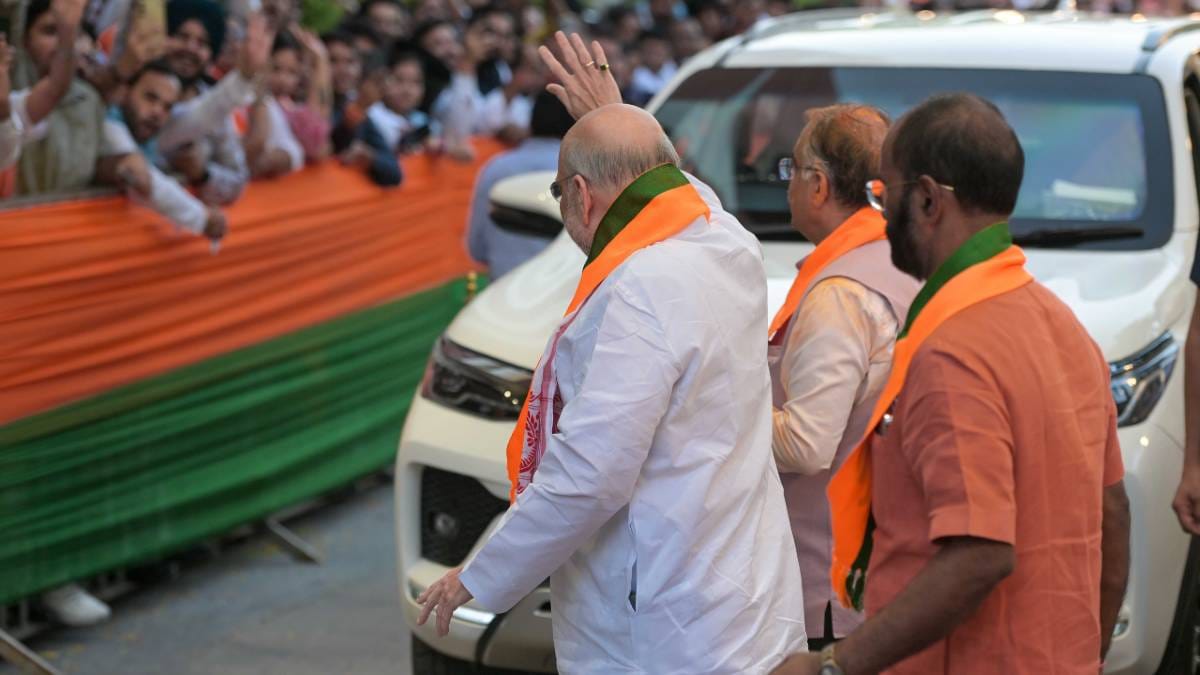
“As things stand now (after the 2026 victory), the party might probably gain an electoral majority without PM Modi’s direct involvement only if it strengthens its local organisation and tailors the narrative to its image in Bengal, but that majority will be really slender,” Ghose added.
Sayantan Ghosh said that if one looks at the BJP juggernaut, the party machinery, the Centre and all institutions under the central government are now under the BJP.
“As the BJP is a regimented political party, much like the Left, it has a very strong structure. It also has a deep-rooted structural and organisational connection with the RSS, and both maintain autonomy and a strategic relationship. So, I think that the way it is going on right now, until there is real opposition, if Mr Modi steps down from the post of PM, there will be another one who will be just as powerful as him and the party,” he told ThePrint.
“I believe that until the organisation and structure of the party remain strong, the juggernaut will continue, whether it is Modi or beyond,” he added.
A fourth senior BJP leader asserted that the matter was more complex and must be viewed in its entirety.
“See, the BJP has grown significantly, and we have won elections without over-reliance on PM Modi. But even if you look at the West Bengal elections, whether it was him eating ‘jhalmuri’ and making it a major narrative or taking the boat ride—whatever he does becomes news and shapes new narratives. Whatever he does becomes symbolic,” the leader said. “At times, there are several fault lines within the party, and he addresses them easily. He is someone whose appeal is unmatched, and who (else) will be able to do this? It’s not an easy task. Even if someone can do it, it will take a lot of time,” he added.
Another BJP leader said the question of Modi being the force behind the assembly elections and the party’s dependence on a well-oiled organisational machinery “cannot be isolated one from the other, and there’s no conflict that exists per se either”.
“Modi as a brand is part of the strategy (to win elections). The leadership process is not centred or controlled in the manner the media highlights. We may choose not to project some leaders because we feel this is the right approach at this point in time. We follow the RSS school of thought and do not function like dynastic parties or even the Arvind Kejriwal school of thought, where there is no scope for anyone else,” the leader explained.
(Edited by Nida Fatima Siddiqui)
Also Read: BJP’s West Bengal win doesn’t mean 2029 Lok Sabha election is in the bag