





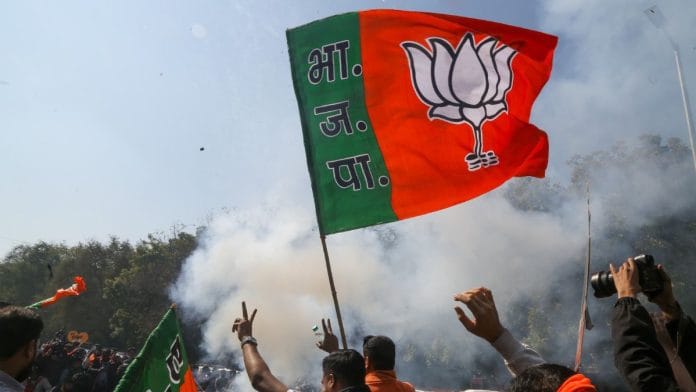

What is the larger significance of India’s recent state elections? It is important to avoid easy generalisations, however tempting such generalisations may be. The BJP’s victory in West Bengal, undoubtedly hugely significant, does not imply that the 2029 Lok Sabha elections already have a foregone conclusion.
Seven Assembly elections are coming up in 2027, including Uttar Pradesh, Gujarat, and Punjab. If the latest round of polls provides some political learning, it is more likely to be applicable to state elections next year than to national elections in 2029. State elections are not national elections, and possibilities and proclivities are not certitudes.
So what have we learned? Let me present four analytic scenarios.
Mixed news for democracy
First, the recent Assembly polls again show that India is not an “electoral autocracy”. That is what V-Dem reports, the most widely read annual assessments of democracy worldwide, have said for several years. If elections change so many state governments – three out of four in the latest round – then it must be concluded that India’s electoral democracy remains quite vigorous. Government turnovers are the best antidote to the idea of electoral autocracies.
But India’s democracy may not continue that way if the Special Intensive Revision (SIR) in West Bengal becomes a template for elections in the coming months and years. By disproportionately excluding Muslims, whose vote for the BJP has generally hovered around 8 per cent since 2014, SIR in Bengal sought to control electoral competition by “tilting the electoral field”, or what is called “voter suppression” in US politics. This is roughly how Republican governments in American states “gerrymander”, making Black people, who rarely vote over 10 per cent for Republican candidates, simply less relevant to election outcomes. Assam was also a case of gerrymandering, though in a different way. Its 30-odd minority-dominated constituencies were reduced to 20-odd.
To remain in power, several modern governments have chosen such methods for regulating elections. Sometimes, they fail. Take the recent overthrow of Viktor Orban in Hungary. But that happens only when the targeted opponents’ victory is large enough to dwarf the attempted truncation—which is why Orban lost. After three terms as Chief Minister, Mamata Banerjee’s popularity significantly went down in West Bengal. Instead of compensating for the attempted voter reduction, her vote share appreciably declined. Her defeat is best understood as a combination of two things: public resentment against her rule and the SIR-induced tilting of the electoral field. It was not SIR alone—but it contributed to her fall, which was also its purpose. To paraphrase Shakespeare, SIR sought to make “assurance double safe”.
Southern stronghold
My second point is about the Congress. By winning Kerala, the party is now in control of three of the five state governments in the South: Karnataka, Telangana, and Kerala. It can be called a primarily Southern party today. It is present in the North and West, but it has repeatedly lost there. It even runs, or is part of, the government in two Northern states (Himachal Pradesh and Jharkhand), but they are small states.
Congress party’s “Southern comfort” has contradictory implications. The economy in South India has been growing at Chinese growth rates, at least since 2000, if not longer. That means the Congress will not be devoid of party finances. But it cannot become a bigger player in Delhi with a predominantly Southern profile. The South has only a fourth of parliamentary seats. To count for more in national politics, the Congress has to develop a more effective Northern and Western strategy.
A third point is about Tamil Nadu. Vijay’s victory is significant. The actor-turned-politician’s full name is C. Joseph Vijay—son of a Christian father and a Hindu mother. If not by practice, he is definitely a registered Christian by birth. It did not matter at all to the Tamil electorate. Religious divisions don’t define Tamil politics as much as caste and language do. That is why the BJP’s anti-minority politics failed to generate any mass sentiment against Vijay. Nor did BJP make any electoral headway of its own in Tamil Nadu.
Confirming diversity as an integral part of India’s cultural and political life, the Tamil Nadu Assembly poll results are dramatically different from those in West Bengal and Assam. The BJP has always believed in what is sometimes called a constructivist view of identities. It believes that India’s massive social diversity is a problem for national unity and that such diversity should, and can, be flattened into a more one-nation kind of identity paradigm, much like how nations emerged in Western Europe and in stark contrast to how the founding fathers of the Indian Republic viewed Indian nationhood. Tamil Nadu agrees with the latter view, not with the former.
Also read: Why Bangladesh played a big role in BJP’s West Bengal win
Hindutva’s victory
Finally, let me turn to West Bengal, whose political significance was unrivaled in these elections. As I wrote in my earlier column, Hindu nationalists have always ardently desired a Bengal conquest. It is important to them for at least three reasons. First, in their view, Hindu nationalism as an ideology was born in a literary work of Bankim Chandra Chattopadhyay. His song “Vande Mataram” is especially important to them. Second, the Jan Sangh, as a political party, the predecessor of BJP, had Bengali origins. Syama Prasad Mukherji was its founder. Both of these points featured in Modi’s speech today. “BJP ki aaj jeet se Syama Prasad ji ki atma ko shanti milegi”(Syama Prasad ji’s soul will finally find peace today).
And the third point of significance concerns Muslims in West Bengal (and Assam). If the size of the Muslim community is nearly 30 per cent, BJP can’t easily win in a first-past-the-post parliamentary election unless Hindus are effectively polarised and united, and a very large proportion of them vote for the BJP. Defeating the Muslim minority where they are in the largest numbers has historically been a key ideological goal of Hindu nationalism. In various ways, this project has been achieved in Kashmir, Assam and now Bengal. Only Kerala remains, where it may not happen, given Kerala’s commitment to religious diversity, much like Tamil Nadu’s.
It is unclear what will happen to Hindu-Muslim unity in Bengal, but the BJP has managed to convince millions of Bengalis that it is not a question they should be concerned with. It was historically so till the late 1940s. Calcutta saw some of the worst Hindu-Muslim killings during 1946-1947. On 15 August 1947, MK Gandhi was not in Delhi to celebrate the country’s Independence. He was in Calcutta on a fast-unto-death, trying to prevent the city from descending into a civil war. He succeeded, and later governments worked hard to rebuild Hindu-Muslim unity into Bengal’s identity. That integrated identity in West Bengal was politically reassembled. And today its opposite, too, is being politically constructed by Hindu nationalists.
To summarise, in the womb of these elections co-exist two inherent paradoxes. The elections were a victory for democracy, even as a systematic attempt was made to narrow the democratic field. They were also a triumph of religious diversity in one part of India, along with a successful attack on it in another. The diversity that is India continues, though much less strongly than before.
Ashutosh Varshney is Sol Goldman Professor of International Studies and the Social Sciences and Professor of Political Science at Brown University. Views are personal.
(Edited by Ratan Priya)
BJP believes that India’s social diversity is a
problem for national unity ? Are they concerned about national unity? Is it not a fact that BJP is presently the biggest divisive force in the country? Haven’t they divided the country as never before?
What a coincidence. I was giving a tutorial on the election results to our senior maid. This is the exact point I made to her. What would M K Stalin and Mamata Banerjee not have showered on the voters to win at least their own seats, if not their states. There is a point beyond which a resource laden electoral juggernaut encounters the incandescent rage of an electorate that feels it has not got its due. So that should remain a cautionary tale for all incumbents everywhere.
As per author, religious identify is the only divisive one. Because in his own words “Religion is not that important in TN than caste or language”. So division by these are fine? It is this kind of stupid columnist who improve BJP’s chances every time. Bravo!