




This is Part 2 of a three-part series. Read Part 1 here.
Nuh/New Delhi: Bijender Singh had spared no effort to provide good education to his son Pawan, with the hope that he would secure a job in a big MNC some day. The 50-year-old sweet shop owner, who lives in a two-bedroom house in the densely-populated lanes of Nuh in Haryana, sent Pawan to a top IIT-JEE coaching institute in Delhi, and took out loans. Pawan was a hard-working boy. He missed the IIT cutoff, but managed to secure a spot in NIT Kurukshetra.
On 31 March this year, Bijender travelled to the NIT campus over 250 km away to visit his son, only to find him hanging in his hostel room. None of his friends seemed to know why. “I did not know what to do or say. I saw my son’s lifeless body. My Pawan had big dreams. It was all gone,” Bijender recounts the horrifying moment.
Pawan was among the four students at NIT Kurukshetra who died allegedly by suicide over the past few months. He had written in his purported suicide note, according to the police, that he had lost a lot of money to online betting.
Pawan’s case is not a one-off. Police say that within his college, other matters linked to betting and financial distress have come to light. But even beyond the limits of NIT Kurukshetra, several people across India have fallen victim to the trap that is online betting, which often begins with smaller amounts and promises of easy money, but quickly turns into big losses and debt. What follows is a cycle of borrowing, desperation and the urge to make yet another bet—and in some cases, even suicide.
In Telangana, for instance, CM Revanth Reddy told the Assembly that 51 people died by suicide after losses and distress due to online gambling between 2023 and February this year.
The Narendra Modi government’s Promotion and Regulation of Online Gaming Rules, 2026 are now in force—a move which comes after the menace took its toll on nearly 45 crore people, who suffered cumulative insurmountable losses of over Rs 20,000 crore, according to the Centre.
Telangana Police have also launched a campaign against online betting platforms and apps over the last 18 months, the state’s Cyber Security Bureau Director Shikha Goel says. “Over the last year and a half, 256 such applications have been taken down.”
But, for tragedy-stricken families, the crackdown comes rather late. All that is left is pain, shock and a string of unanswered questions.
Also Read: ED takes note of leading dailies for ‘surrogate ads’ of illegal betting platforms ‘preying’ on users
Pawan’s diary
About a month after his death, Pawan’s house in Nuh wears a dejected look. The paint is peeling off the walls. One room has bags of wheat stored, and the now remaining members of the family—Pawan’s father, mother and two siblings—sleep in the other room.
Pawan was the eldest child. His brother is training to be a weightlifter, and sister is studying physiotherapy.
Pawan did well at school academically. With a score of 91 percent in Class 10 and 85 percent in Class 12 alongside preparation for JEE, he had his eyes set on IIT. Even though he eventually ended up in the Bachelor of Electrical Engineering course at NIT, it was still a big deal for his father. Most others his age in their native village Ghaseda work only odd jobs—a driver, or a salesperson at a medical store. His mother Seema says the family took out a Rs 3.75 lakh loan to send him to college.
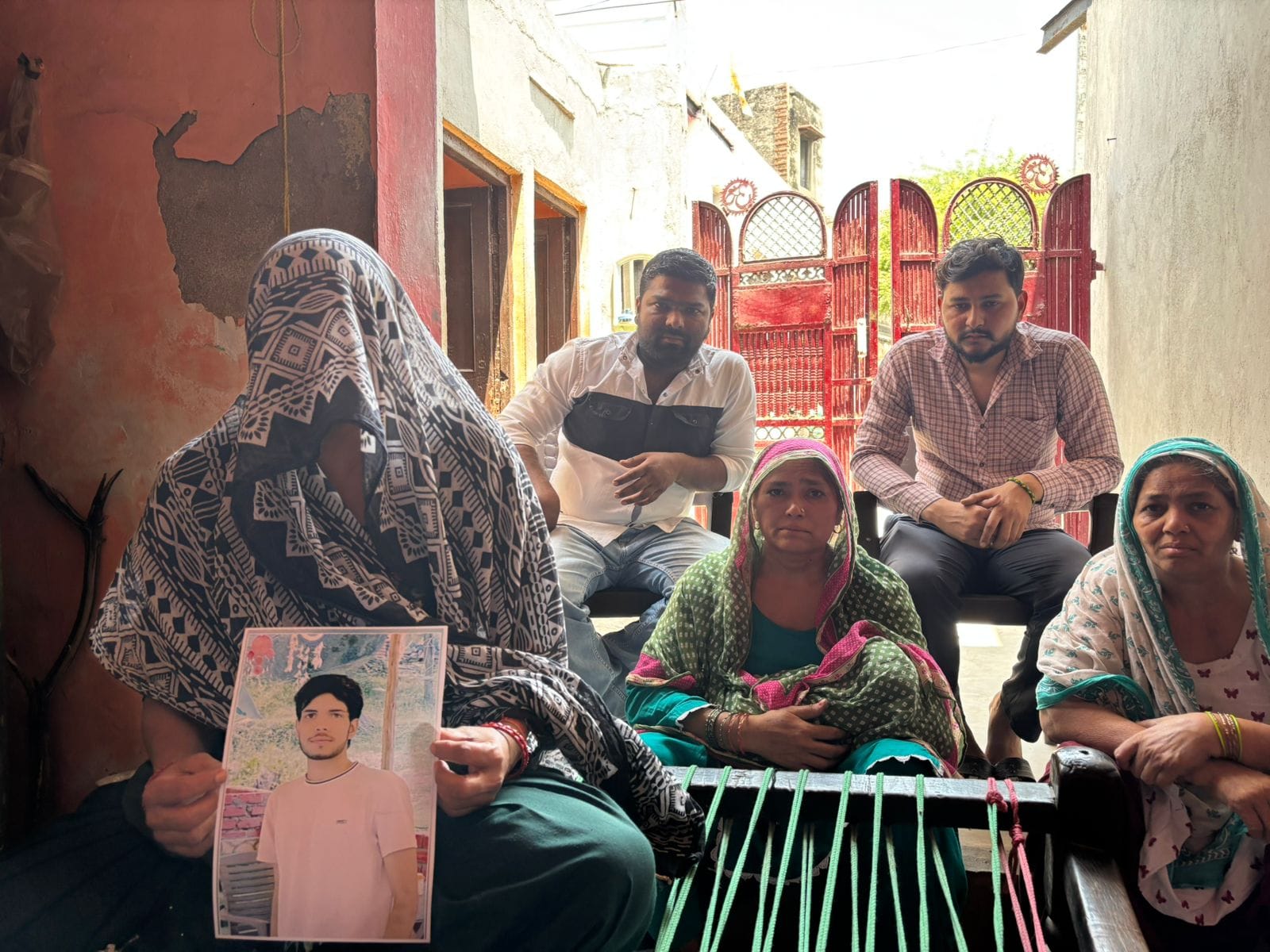
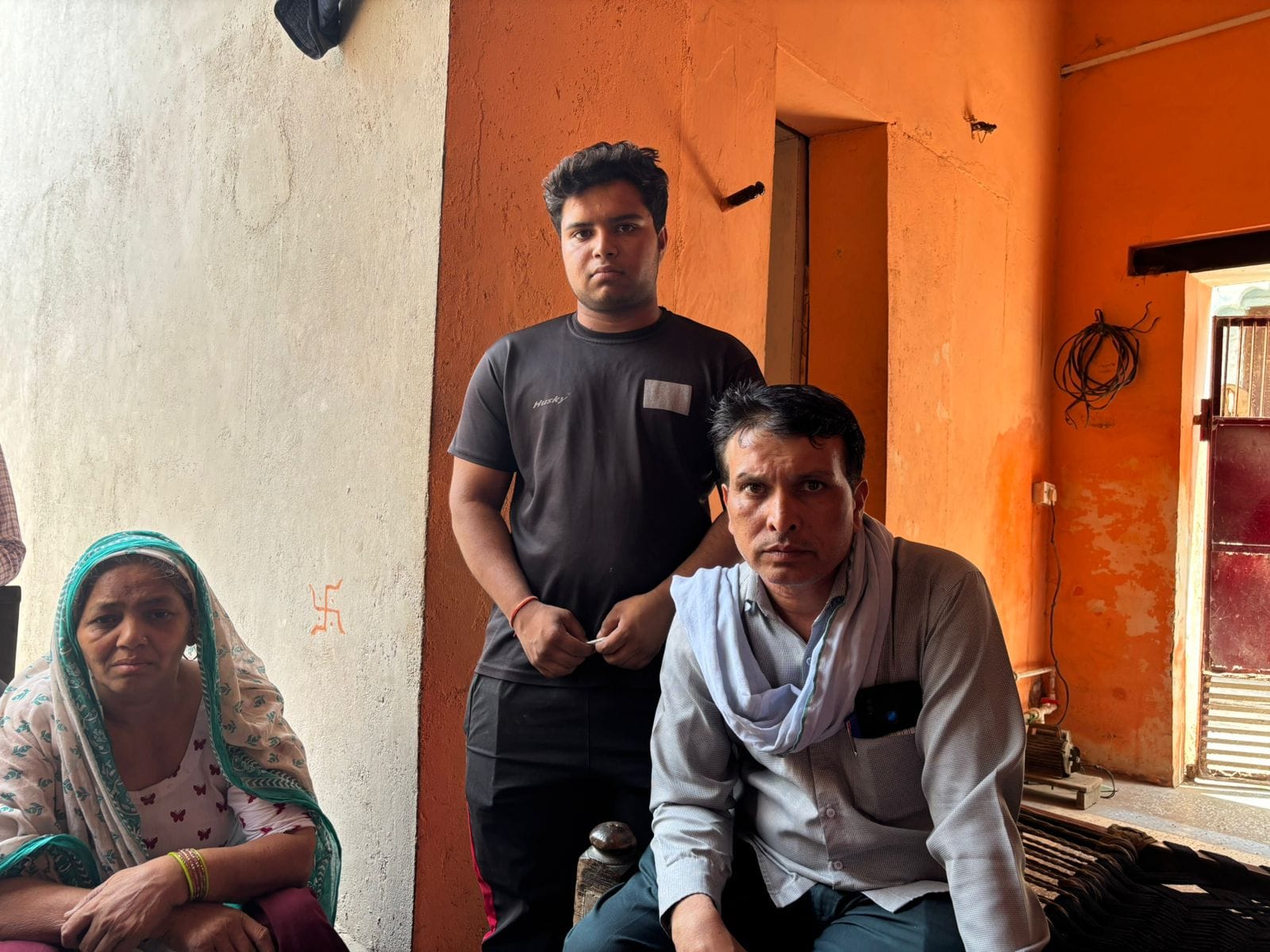
During his time at college, his father tells ThePrint, one issue the third-year student consistently dealt with was credit card bills. “He would often tell me that he needed money. He was forced to borrow money from his friends. The same friends lent him the money using their credit cards. I don’t know why the money was being borrowed. My son never shared any problems with me. I am still left with so many questions…” Bijender says.
He adds that Pawan managed to pay back all the debt that his friends had been pressuring him to repay. “His friends harassed him a lot, asking him… forcing him… Had they not done that, my son would have been alive…”
Bijender also lodged an FIR in connection with the matter, alleging abetment. But the police said no action has been taken against any student, and they are looking at all angles.
In their last conversation on 30 March—a day before his death—Pawan had asked Bijender to transfer Rs 10,000 to him, saying his friend had a credit card bill he needed to repay. “That was a lot of money. I refused. The next day, I decided to go meet him. I had been missing him, and thought I’d also give him the money.”
Bijender called Pawan, but there was no response. He reached NIT campus at around 7 pm. What he saw in the hostel left him aghast. He called the hostel warden, college administrators, police and hospital.
Kurukshetra Superintendent of Police Chander Mohan tells ThePrint that Pawan had been involved in online betting and gambling for the past few years. “We recovered a diary, where he mentioned that he was into betting and gambling since his school days. He also had suicidal tendencies, and had written about the same in his diary.”
According to another senior police officer, he had written in the diary that he had taken bank loans for credit cards, and was struggling to repay them. “He had asked his father multiple times. Even a day before his death, he had asked his father. He mentioned in his diary that he could not keep asking his father to keep repaying his loans.”
The SP says that the police have asked all banks in the vicinity to stop issuing credit cards to NIT students to prevent any untoward incidents.
Back in 2024, Bijender had first repaid Rs 1,50,000 of an apparent loan that his son had taken from his friends. “He never told me what the money was for. He just told me his friends were spending the money, and that he had been forced to pay the bills,” he recalls. A few months later, he had to send him Rs 75,000 again.
“After everything transpired, I saw newspaper headlines about what was going on in the college. They said Pawan was into online betting. We did not know any of that. If we had known, we would have stopped our child and ensured he wouldn’t take such a step. We find it hard to believe…” says Seema.
Pawan did not share much with anybody at home. “Even if he was worried, he wouldn’t tell me. He would think I’d start crying,” his mother adds. “We spent every penny we had to raise him…”
Inquiry in the matter continues, police say.
‘My husband lost our savings’
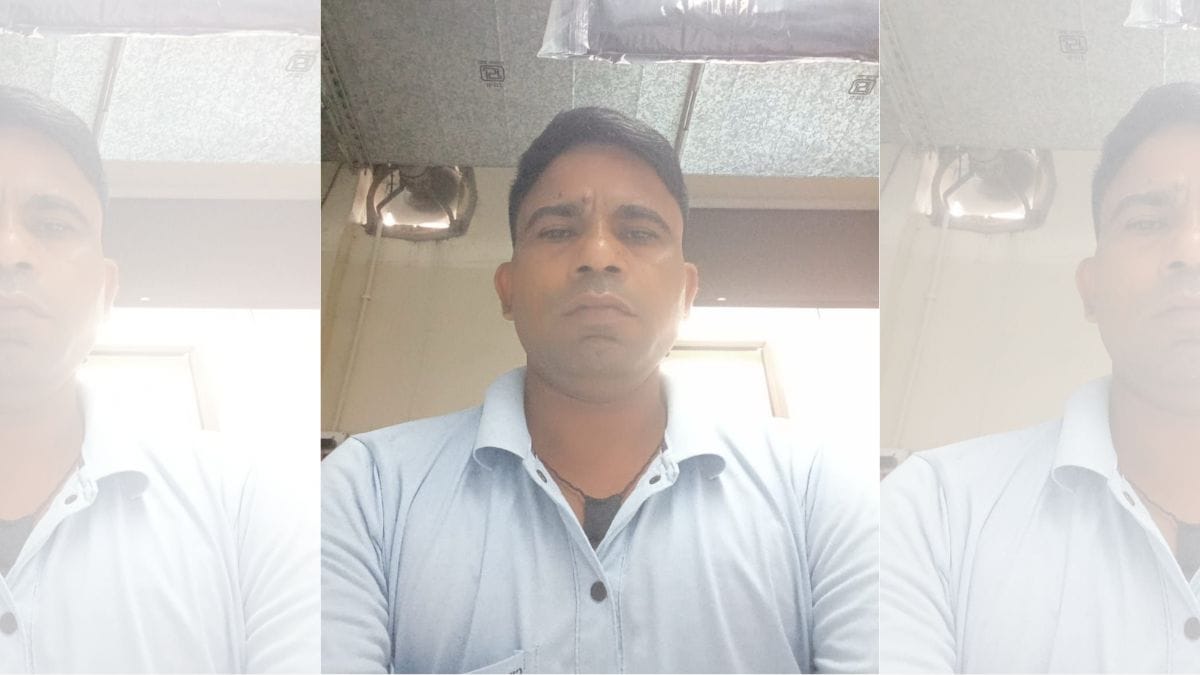
Around 50 km away from Nuh, another family suffered a similar tragedy last year. In August 2025, Bhudev Mahto, a 38-year-old textile factory worker, allegedly died by suicide after losing around Rs 5 lakh in the span of just two months.
A native of Purulia district in West Bengal, Bhudev had moved to Gurugram about 15 years ago. He, his wife and their two children lived in a rented accommodation in Bas Kusla Village in IMT Manesar. The village is an industrial neighbourhood populated by migrant workers from various states who work in factories and manufacturing units.
Bhudev worked as a helper in a textile factory, and his wife Prabhati worked in another such unit. According to police, on 22 August last year, between 5 and 5.30 pm, he returned early from work, when his wife was not yet home. When she returned later that evening, she found her husband dead.
“I did not know my husband was into online betting. He would mention several times that he had loans to repay, but I did not know what these loans were,” Prabhati says.
The couple used to collectively earn around Rs 20,000-25,000, and would send the money back home. Their children, now aged 10 and 13, studied in a residential school in Purulia.
Prabhati has now moved back. The children have been enrolled in a government school because she barely has any savings left to spend on their schooling. Bhudev spent it all on online bets.
“Every time money would get credited to my bank account, I would be happy. But I was never made aware of the money that would be deducted. That SMS would never come. It was only after my husband’s death that I found out he was stressed because his bank balance kept dipping,” Prabhati recalls.
Bhudev’s colleagues at the factory later told Prabhati that he had been playing games online since March-April last year. “These were small bets that became difficult for his pocket. Initially, there were modest profits, which encouraged him, and soon he invested a significant portion of his savings in the app… and eventually, lost it all,” he says.
Also Read: ‘Fruit of a poisoned tree’: Why Delhi HC ruled profits from illegal betting are ‘proceeds of crime’
‘A pattern’
Offline betting is not uncommon in India, but higher accessibility and the perception of profitability add to the appeal of online platforms. The risks are unavoidable, however.
Phanindra Sarma, a 32-year-old advocate and social activist from Cyberabad in Telangana, says that his milkman, a young boy, would frequently talk about his online betting activity. He would bet around Rs 2,000 a day. Some days, it would produce a profit, and on other occasions, he would lose the money. “I started noticing he would be stressed because of the losses. He had put in all his savings,” Sarma says.
Not just his milkman, many others in Sarma’s colony have indulged in online betting—be it cricket or rummy. In fact, one of his neighbours, member of his cricket club, had also allegedly died by suicide over a Rs 2 lakh debt he had accumulated due to losses last year. “When we found out it was due to online betting, I started to see a pattern. I knew something was wrong—how and why are so many people ready to put in so much money?”
In March 2025, Sarma found many of his neighbours discussing how they were putting money in betting, gambling and casino applications, which were being heavily promoted by celebrities and influencers on social media—a driving force for many to invest.
He says that to dig deeper, he scrolled through Instagram, Telegram and Facebook, where he came across several celebrities and influencers actively endorsing illegal betting apps, websites and other platforms. The public figures promoting these apps and websites do it in exchange for large sums of money as commissions and remuneration, he adds.
The observation led Sarma to file a complaint with Cyberabad Police last year. “These platforms are encouraging the public, especially people who are in dire need of money, to invest their hard-earned and family money into those apps/websites and slowly get addicted to them, leading to total financial collapse,” he submitted in the complaint.
Beyond the allure that these games offer, police officers probing such cases highlight significant limitations in the crackdown on the apps.
“These games are very easy to reproduce with slight tweaks, and in different names. The level of the speed of their return in changed form has not been matched by the law enforcement authorities yet,” an officer in the cybersecurity department of a state says.
Telangana Cyber Security Bureau’s Goel adds that the role of the payment gateways and banking channels has to be enhanced to the point where it can detect suspicious transactions and fund flows, and generate alerts for firms and law enforcement agencies. “All funds duped from people flow through payment gateways and banking channels, and regulating them to add these safeguard mechanisms can limit the damage to a great extent.”
She advocates for a comprehensive regulatory framework to limit the visibility of these apps and platforms over app stores and the internet.
‘Gaming addiction came as a shock’
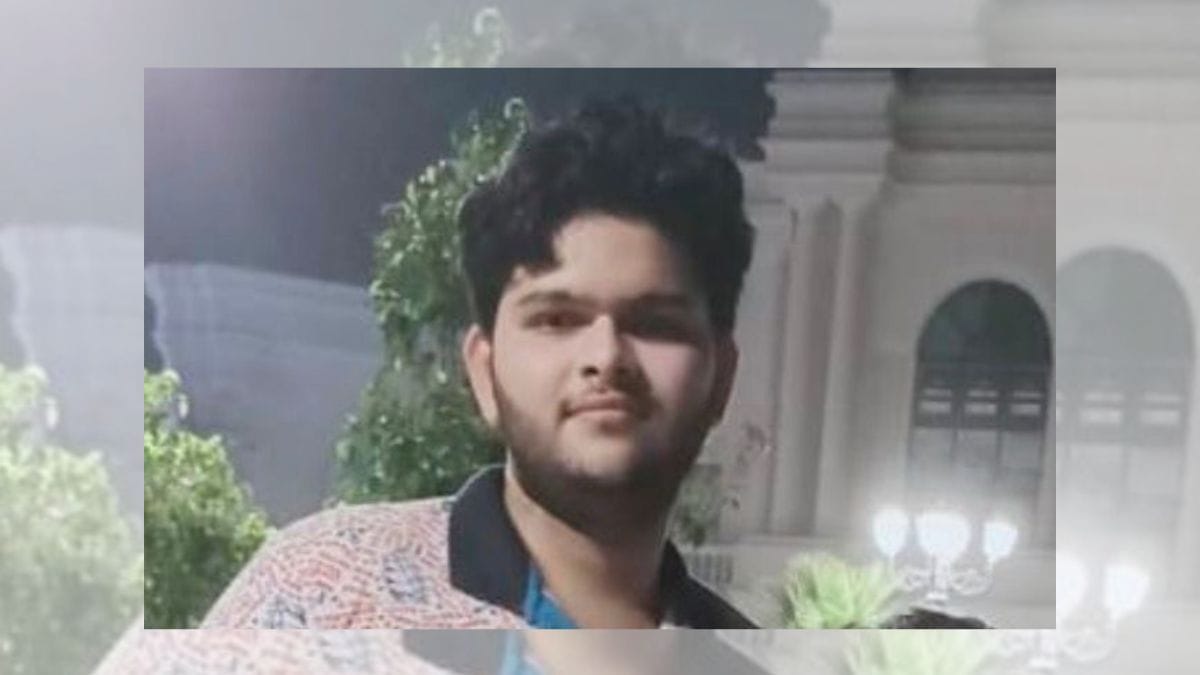
In Faridabad, 21-year-old Aditya Bhati from Faridabad could not quite come to terms with a Rs 60,000 loss. He died by suicide in April, shooting himself with the licensed weapon of his uncle, a retired Army man.
“He was an introvert and did not speak more than needed. He took the loss to heart, affecting his mental health. Had he opened up to anyone in the family, we would have never let it bother him like that,” his uncle Ravinder Bhati tells ThePrint, holding back tears. “Even Rs 6 crore would not be worth more than our beloved child’s life.”
On the afternoon of 29 April, Aditya went to the bathroom of his ninth-floor house. “He must have assembled the weapon and bullets, taken it to the bathroom, and shot himself in the head,” his uncle says. His mother and younger brother initially mistook the sound of the bullet shot for noise from the garbage truck in their residential complex.
Aditya had asked his mother if he could spend about Rs 60,000 on a government examination form. “My sister-in-law had just casually asked about the form and examinations he was trying to take. It was nothing argumentative,” Bhati adds.
He recalls his nephew as a bright student who always stood for sincerity, but says that the addiction to online gaming caught the family by surprise.
The Faridabad Police recovered a suicide note from a diary in Aditya’s room, in which he had opened up about his company and his addiction to online games. “We are in the process of identifying the games he used to play, and the friends and company he kept at the college,” BPTP Police Station SHO Arvind Kumar tells ThePrint.
Role of celebrity endorsements
While Aditya was drawn into the dark world of online betting by targeted ads according to police and his family, 26-year-old Bandaru Venkatesh from Hyderabad acquired the habit through social media posts and videos by a YouTuber.
Working as a helper at a restaurant and living in a flat in Kukatpally on the outskirts of one of India’s shining big cities, Venkatesh had not had a lot of silver linings in his life. So, the opportunity to earn up to 150 percent of his money in a short time seemed lucrative—even more so as it was being endorsed by a popular figure.
He had stumbled upon an advertisement via reels and posts by one Harsha Sai, a YouTuber from Telangana with a subscriber base of more than 10.7 million.
“Believing his claims and unaware of the risks, I clicked the links in his Instagram stories and deposited money to play online games, expecting to earn a profit. Harsha Sai consistently associated himself with online gambling websites—Parimatch, Lotus 365, and Battery—portraying them as legitimate and legal platforms in India,” says Venkatesh.
Claiming unawareness of the larger scheme of things, he adds he made repeated deposits before going on to join a closed Telegram tips group called “Harsha Sai Tips”. Having started making bets somewhere in 2022, Venkatesh lost more than Rs 13.67 lakh over the course of a year and a half. He approached the police in December 2024.
In his complaint to the police, he attached screenshots of the betting platforms promoted by Sai, as well as those of his fund transfer to the accounts provided. He sought that Sai’s social media accounts be blocked, citing violation of government laws prohibiting betting.
Sarma further points to the use of pop-up ads by betting platforms, featuring celebrities like Rana Daggubati and Prakash Raj (Jungleerummy.com), Vijay Devarakonda (A23), Manchu Lakshmi (www.yolo247.com), and Praneetha (www.faIrplay.live). In his complaint, he gave the police a list of 25 such actors endorsing betting websites on pop-ups, promotional videos, and so on.
“There are many more individuals promoting the gambling, betting & casino apps/websites, which are targeted towards luring young adults and the general public into making easy money, but eventually lead them to complete financial breakdown,” Sarma explains.
“These platforms are actively promoting their apps/websites through social media advertisements with the help of celebrities and influencers, thereby reaching the target audience automatically without even the users actually searching for it, which further exacerbates the problem.”
The case was registered under 318(4) (cheating) and 112 (petty organised crime) of the Bharatiya Nyaya Sanhita, Section 3(A) (penalty for opening a common gaming house or online gaming) and 4 (penalty for being found gaming in a common gaming house) of the Telangana Gaming Act, and Section 66(D) (cheating by personation) of the IT Act.
Based on his and Venkatesh’s complaints and several other FIRs, the Enforcement Directorate booked around two dozen celebrities, including Devarakonda and Daggubati, in July 2025 for allegedly promoting betting applications. They were then summoned for questioning.
Sources say money laundering investigation under the Prevention of Money-Laundering Act, 2002, had been launched based on complaints against applications, such as JeetWin, Parimatch, Lotus365, Junglee Rummy and A23, as well as others suspected of involvement in large-scale money laundering.
“The promoters of these betting websites divert the money from the primary firm’s bank accounts, where it was deposited, into personal bank accounts or those of unrelated firms as part of a layering process, and for subsequent use for personal purposes,” ED documented in its prosecution complaint.
Sources in Telangana Police emphasise another aspect of the syndicates operating these businesses. “Money duped from people in the name of investment has been found to be diverted into the operations of betting. These funds are used for handing over the hefty winning amount that participants are initially allowed to win to lure them deeper into the games,” a senior police officer tells ThePrint.
(Edited by Mannat Chugh)
Also Read: New online gaming rules give watchdog more teeth, steer clear from guard rails on promotion