



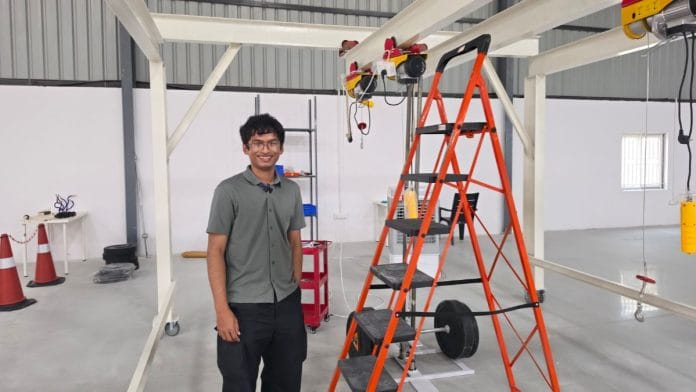
Bengaluru: Away from the noise of Bengaluru’s tech hub, gruelling traffic and nightlife, lies a fairly abandoned factory facility in Kada Agrahara—surrounded by large mango orchards, enveloped in peaceful quiet. Over the last few months, a tenant has repeatedly disrupted this quiet neighbourhood with aircraft test runs. But the residents do not mind. This is the hub of Arctus Aerospace where a 23-year-old is trying to build India’s first 3D-printed unmanned aircraft designed to fly at an altitude of 45,000 feet.
Shreepoorna S Rao, founder of Arctus Aerospace, is determined to change the face of earth observation in India.
“I always wanted to do something that would solve a hard engineering problem. Something that would be challenging but would also have real-world applications. Build something from the ground up in India, for the world. And that is what I am here to do now,” Rao said.
Arctus Aerospace, conceived in the corridors of IIT-Madras—Rao’s alma mater—is already creating a buzz in the industry for being the first in India that is building mid and high-altitude, long-endurance unmanned aircraft that can remain airborne for up to 24 hours to deliver continuous high-resolution data.
On 10 April, the company, at their headquarters in Kada Agrahara, conducted a technology demonstration of its latest experimental aircraft, the Arctus AX-1. It is a specialised, eight-metre-wing-span unmanned aerial vehicle designed to remain airborne at about 20,000 feet for up to 10 hours.
This, however, is only Arctus’s penultimate version.
In about a year, Rao’s team of 15 engineers aims to finally launch its showstopper—an aircraft with a wingspan of about 20 metres, capable of reaching an altitude of 45,000 to 50,000 feet and providing continuous monitoring for up to 24 hours.
Such a feat has never been achieved by an Indian company. India does not have a similar platform currently.
This earth observation vehicle is set to provide continuous monitoring across a range of activities, including mapping large swaths of land, oil and gas installations, and monitoring agricultural assets.
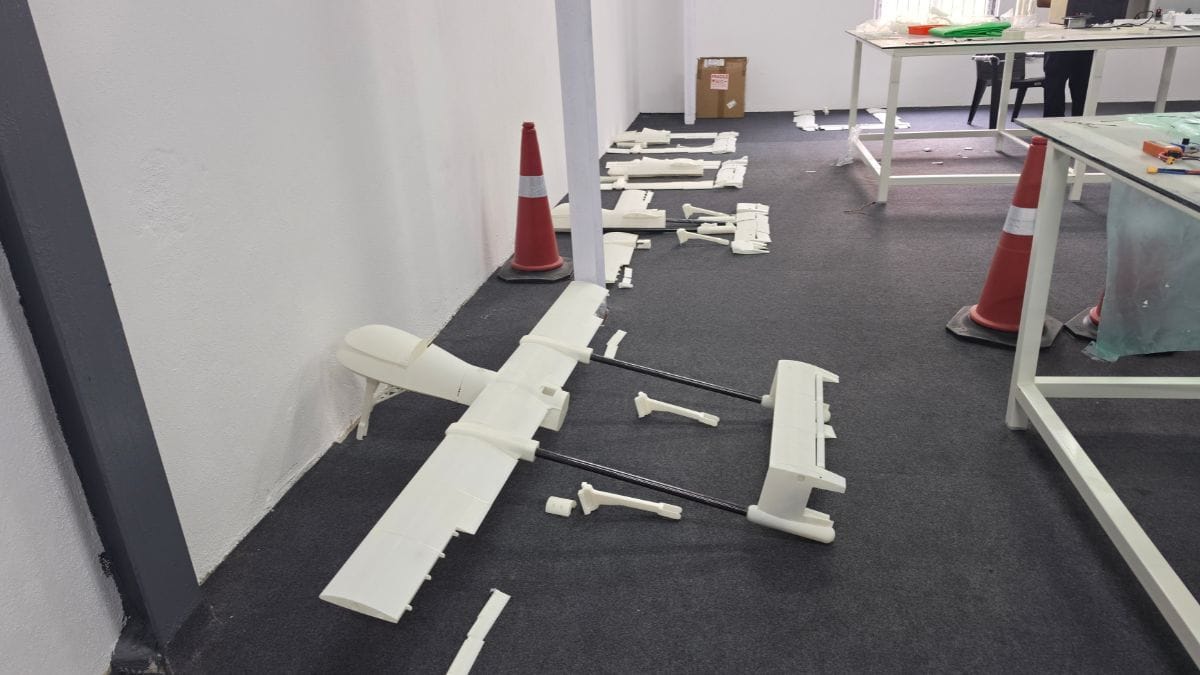
Apart from providing a range of commercial services, its utility can also extend to defence surveillance.
This is slated to alter the course of earth observation in India, which is currently dependent on space missions. It will provide a cost-efficient option for customers and ensure continuous, usable data.
According to the Satellite Data Services Market Report (2025-2034), the global satellite data services market size was valued at $12.8 billion in 2024, and is projected to reach $ 69.7 billion by 2034, growing at a compound annual growth rate (CAGR) of 18.7% from 2025 to 2034.
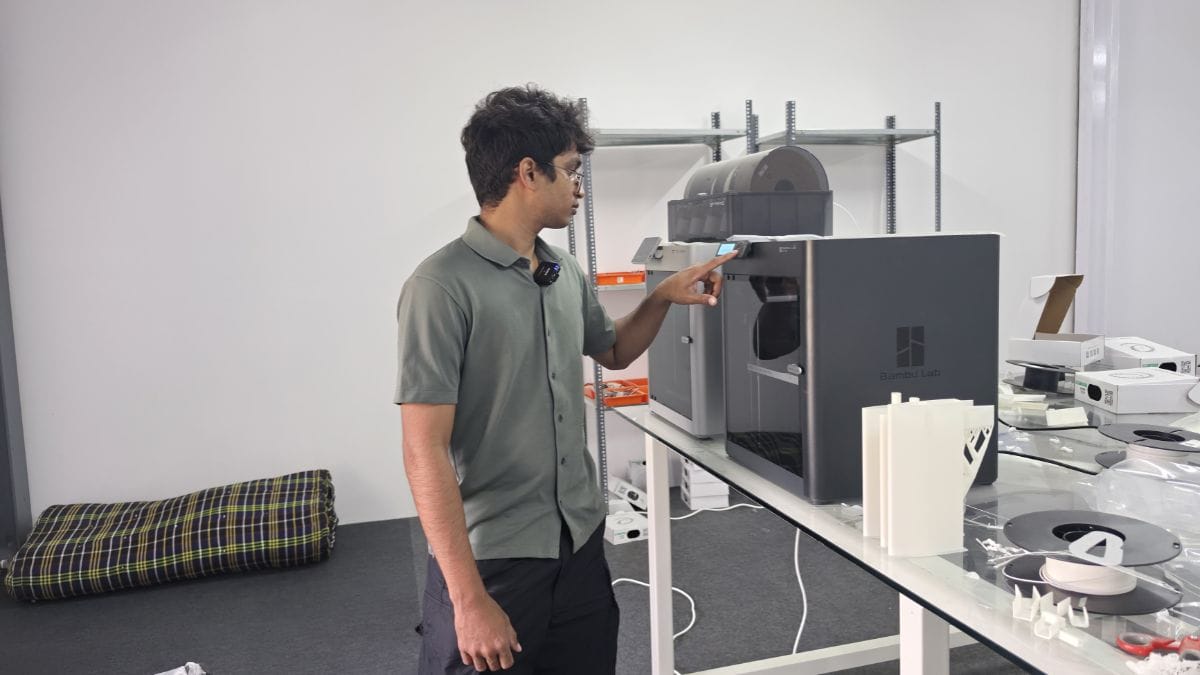
“Each component in the aircraft is built from scratch. It is 3D printed in-house. The technology development is happening in three phases, and each phase is actually a different product,” Rao said.
Also read: India is building its own MRI machine from scratch. ‘No single company will have a monopoly’
A civil guy doing UAV
Rao, a young, lanky, often carelessly dressed man has a way with words. This gift comes in handy when convincing investors, clients and fellow aerospace startup founders of the true potential of his business idea.
“When you are the sole founder, you are doing everything yourself. One day, you are presenting your project before investors, the next day, you are sifting through resumes to hire the perfect candidate,” Rao says as he carries in a pile of packages, adding, “Some days you are also the delivery boy.”
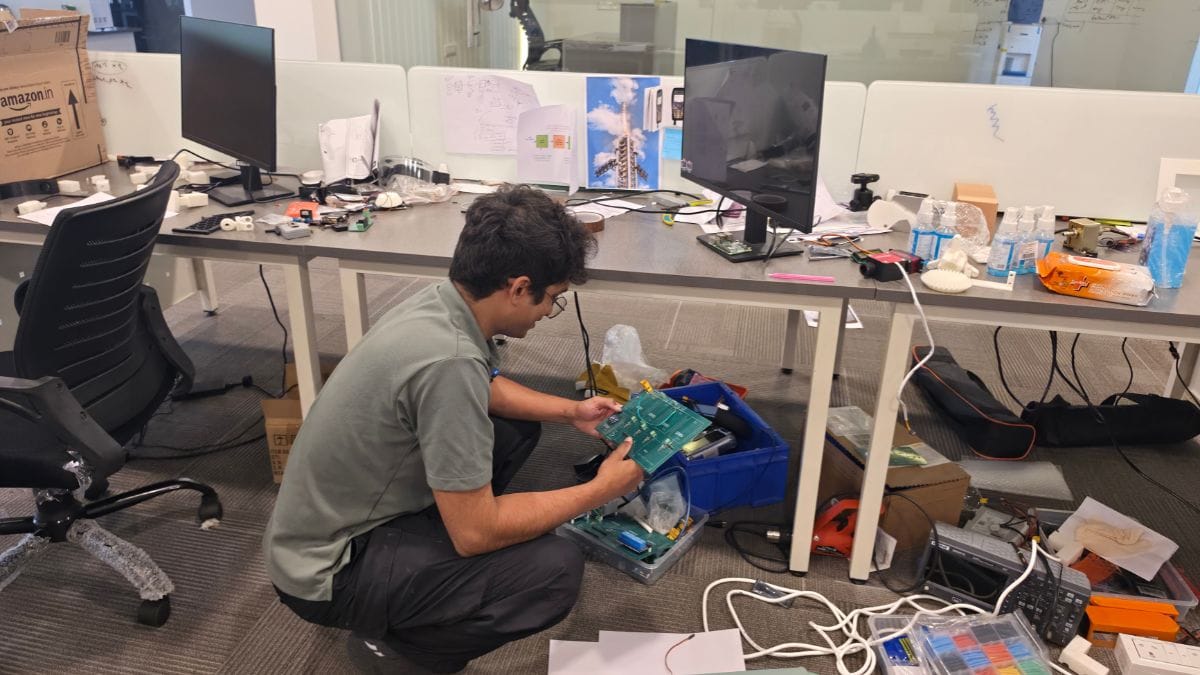
Arctus was not something that Rao stumbled upon. Every step that got him to where he is was carefully planned, paved and fought for. He always knew he wanted to build a company. In fact, his first attempt was a finance startup named ‘FlexFinance’, which he started during his second year of college.
“Even Elon Musk had a PayPal before SpaceX,” Rao giggles as he remembers his “first love”.
A native of Karnataka’s Surathkal—a small beach town near Mangaluru—Rao was quick to spread his wings in the world of science.
At an age when most children are far from knowing what they would pursue in life, Rao was building his first aircraft. At 13, he was already popular in the neighbourhood.
His path was set—after school, he would attend a college offering aerospace engineering and go on to build his startup.
“I would make sure to participate in all the science competitions. I knew I wanted to do something related to aerospace engineering,” he said.
But the grand plan was met with its first setback early.
His JEE score was not enough to get him a seat in the aerospace engineering course. He had to settle for a civil engineering degree from IIT-Madras. But four years of studying concrete and steel design didn’t alter his course.
“Aerospace was still my focus. So, I took it as my credit subject. I would juggle between regular school work to make sure I did not quit my passion,” he said.
Rao was in his final year of college when Arctus was born. Its need arose after he realised that India was heavily dependent on foreign players for medium-altitude, long-endurance UAVs. This imported technology was expensive and also outdated.
That quest for self-dependence, drove his passion.
“The technologies that we are currently importing are not tech marvels. It is 25-30-years-old. So, we are paying a high price for second-hand technology. Why can’t we build superior systems here,” he said.
Also read: How Tamil Nadu built India’s largest STEM women army. ‘Original DEI gangster’
Training the ‘dragon’
The first aircraft that came from Arctus Aerospace’s lab was the ‘Light Fury’. The name was adopted from Rao’s favourite movie, How to Train Your Dragon.
“It had to be it,” Rao says, proud of his choice.
This first version was a 2.5-metre wingspan aircraft, designed to reach up to 10,000 feet and stay in flight for up to three hours. The design could meet mission parameters efficiently and take multiple flights without any incident.
The mid-to-high altitude unmanned aircraft that is designed for earth observations usually operate on two platforms—the mid-altitude long-endurance (MALE), which operates at an altitude of 10,000 to 30,000 feet, and high-altitude long-endurance (HALE), operating at an altitude of above 30,000 feet.
While plenty of thought went into naming Arctus’s first aircraft, the Light Fury, the company’s name itself was generated by ChatGPT.
“I wish I had a deeper story. I was so involved in making sure the vision and the technology that we are developing were impeccable that I left the task of naming the company to AI,” Rao said.
Narrating the story behind Arctus, he said he entered a few “aerospace-related” prompts on ChatGPT, which threw up a few results. Rao sent this list to a group of his friends for a poll, and Arctus Aerospace came out on top.
With the names sorted, Arctus and its founder will join the heat of global market competition.
Currently, the market segment is ruled by big players like the Airbus Zephyr High Altitude Platform Station (HAPS), a solar-powered technology operating in the stratosphere that offers persistent aerial surveillance and high-resolution mapping.
Airplanes like the AeroVironment Global Observer—designed to operate at 55,000 to 65,000 feet—and RQ-4 Global Hawk—a military drone designed for an altitude of up to 60,000 feet—are also catching the attention of commercial players looking for continuous monitoring data.
These aircraft are equipped with a steerable, high-resolution optical camera, and many service providers can cover as much as 2500 km2 per day at a resolution of about 18 cm.
This technology is gaining momentum primarily because it provides the option for very high-resolution images live from the stratosphere. Currently, many companies that rely on earth observation data are forced to rely on space missions to get their satellites to perform this task for them. But compared to putting a satellite in orbit, these services are flexible, reliable and cost-effective.
“At Arctus, our focus is to provide the highest quality images to our customers. To do that, you have to ensure that the vehicle that you send up is made from the best quality material so that it does not get damaged and has a good satellite communication system,” Rao said, adding that they are also ensuring that the aircraft are reusable and each unit can clock up to one lakh flying hours.
Also read: When did the Aryans enter the subcontinent? Lucknow’s Birbal Sahni Institute is tracing DNA
The growing market
When Rao started off with Arctus, his teacher mother and professor father were not convinced. They wanted him to take up a “regular job” to ensure his financial stability.
Against his family’s wishes, Rao quietly flew back home from college a day before his placement interviews.
“I guess they realised that I can make money. Now they are a little relaxed,” he says.
In the first year of operations, Arctus managed to raise over $2.6 million from early-stage venture capitalist firms, including Version One Ventures, South Park Commons, and gradCapital. Angel investors such as OpenAI’s chief technology officer Srinivas Narayan, and former CTO of Coinbase, Balaji Srinivasan, have also come on board.
Rao is taking all the help he can get. He knows the potential of the market that he has dipped his toes in, and intends to make the most of it.
Being the first in India to operate in this domain, Arctus Aerospace is now paving its own path.
“In today’s world, data is power. We are not just doing this for our company, we are doing this to build an industry in India, which will follow soon,” Rao said.
(Edited by Anurag Chaubey)