



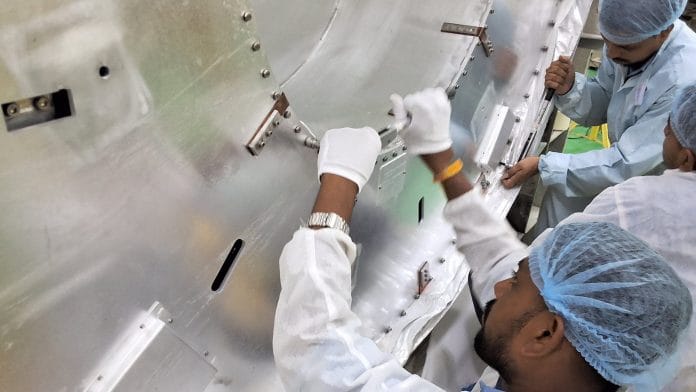
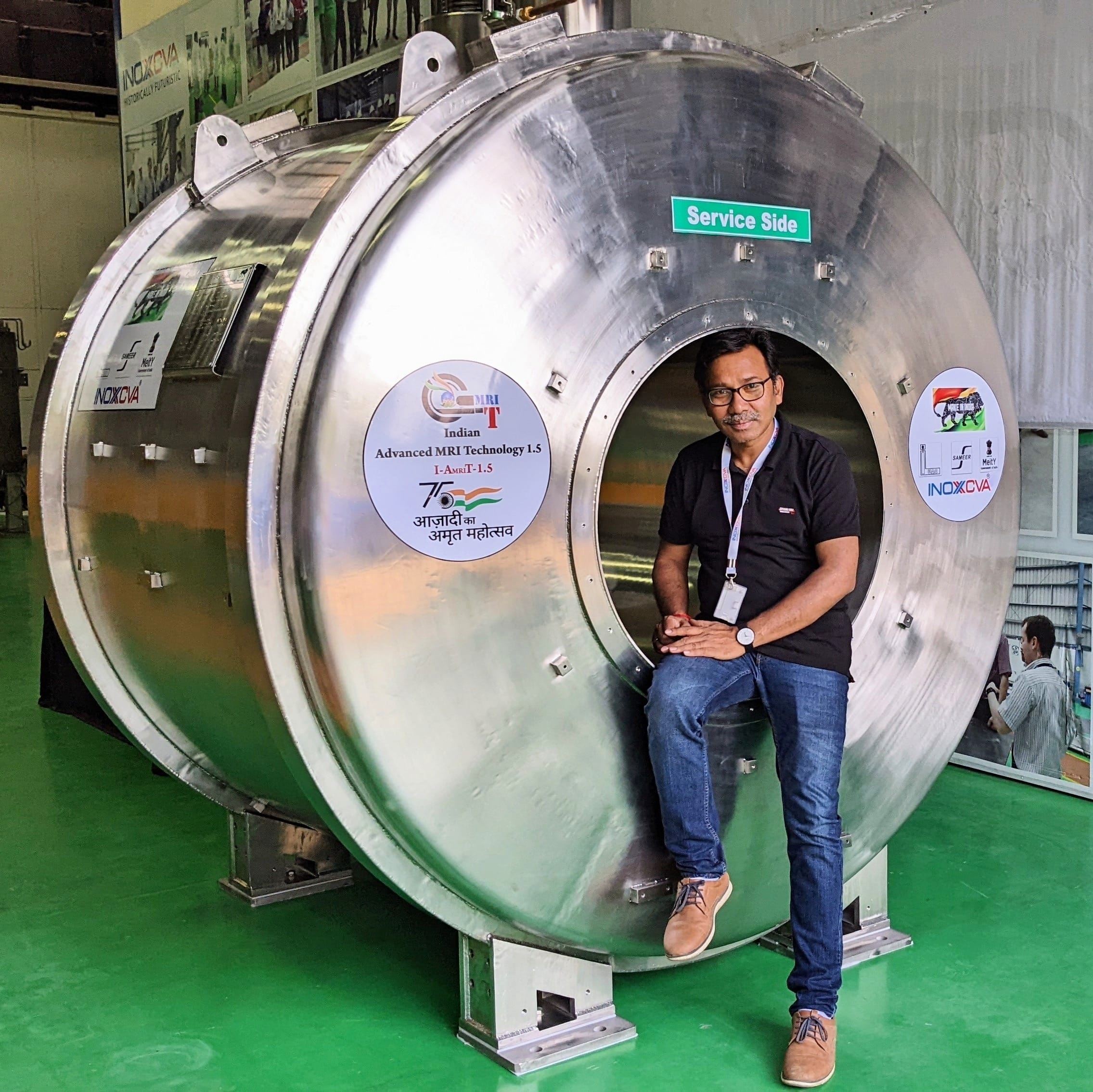
New Delhi: A life-sized stainless steel cylinder with a hollow centre sits in a ground-floor room at the Inter-University Accelerator Centre in Delhi. It is the result of ten years of work by Indian scientists to develop India’s first indigenous MRI ecosystem.
The cylinder is the coveted magnet of a Magnetic Resonance Imaging (MRI) machine, conceptualised and developed by engineers at the centre.
“We want to democratise MRI machines in India. Our Indigenous MRI project is not just about creating the technology, but also transferring it to industry and helping build a manufacturing ecosystem,” said Rajesh Harsh, scientist at the Society for Applied Microwave Electronics Engineering and Research (SAMEER) and head of the Indigenous MRI (IMRI) programme.
Currently, only a handful of companies across five countries, including China, Japan, Germany, the US, and the UK, manufacture the entire MRI machine ecosystem. Once completed, the IMRI project, funded by the Ministry of Electronics and Information Technology (MeitY), will allow India to join this league.
India imports MRI machines and related components worth over Rs 2,000 crore every year, but that looks set to change.
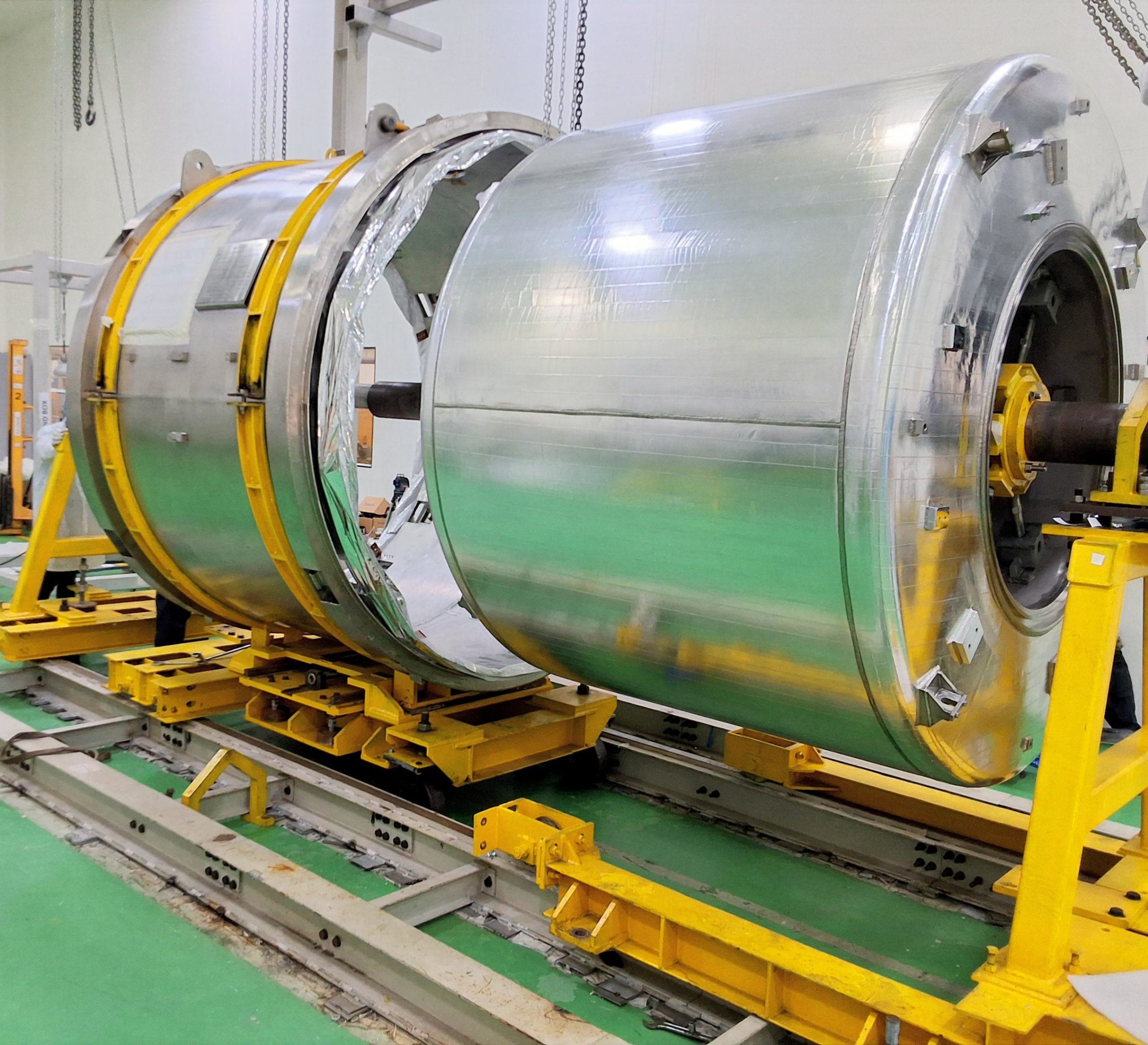
Launched in 2014, the IMRI project is being executed by three institutions. While IUAC developed the 1.5 Tesla superconducting magnet, SAMEER worked on the radio frequency hardware required for imaging, and the Centre for Development of Advanced Computing (C-DAC) is responsible for software development.
We want to democratise MRI machines in India. Our Indigenous MRI project is not just about creating the technology, but also transferring it to industry and helping build a manufacturing ecosystem.
Rajesh Harsh, head of IMRI programme
The indigenous MRI machine is yet to undergo final clinical trials. The Covid-19 pandemic disrupted supply chains, delaying the process. While SAMEER has set a deadline of end-2027, medical experts say India is still five to seven years away from commercial production.
“These things take time, especially when you’re trying to do it from scratch,” said Dr Harsh Mahajan, radiologist and founder of Mahajan Imaging. “Making an MRI machine is as complex and challenging as sending a satellite to the Moon or Mars. We have to be patient.”
The SAMEER machine
The MRI set-up at the Inter-University Accelerator Centre (IUAC) is complemented by another at All India Institute of Medical Sciences. The AIIMS system uses an imported magnet with indigenous software and hardware, while the IUAC setup is entirely indigenous.
The plan, according to Harsh, is to run parallel trials to ensure that every component of the MRI ecosystem is ready for use.
“We are integrating our hardware and software systems at AIIMS and will begin clinical trials by the end of May,” Harsh said. “At the same time, the IUAC model will also be integrated and ready for imaging.”
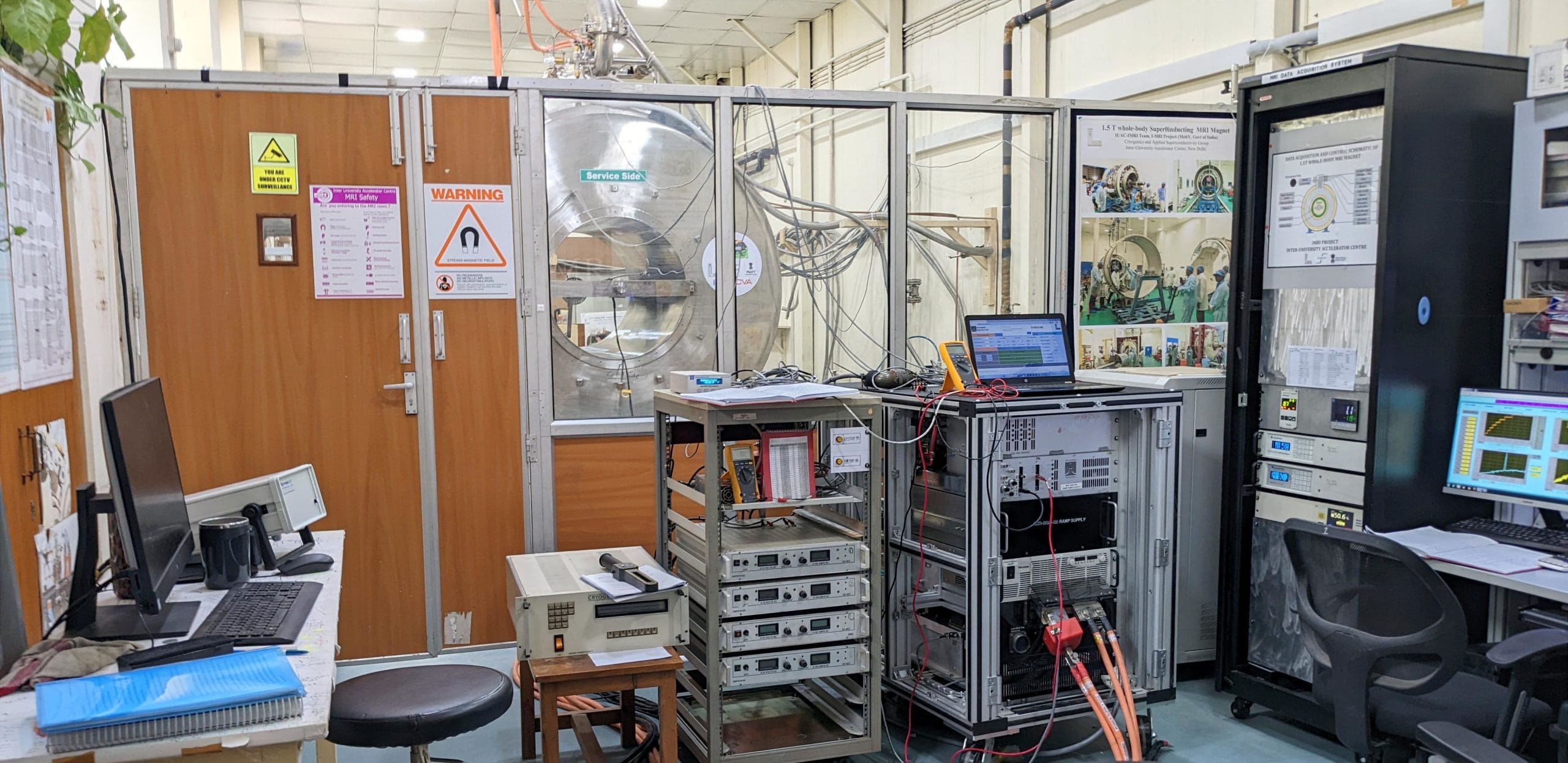
Even as clinical trials are yet to begin, the institutions have onboarded industry partners to scale up manufacturing. INOXCVA and Paras Defence & Space will commercially produce the MRI magnet, while other firms will handle hardware and software components, integration and commercial deployment.
“We have included industry players in the manufacturing process, so that once the ecosystem is fully developed, we can hand it over to them,” Harsh said. “In 18 more months, we hope our commercial MRI machines will hit the shelves.”
Currently, MRI machines sell anywhere in the range of Rs 2-12 crore in India, based on a market study by the Competition Commission of India. Harsh is hopeful the indigenous MRI machine will reduce costs for Indian operators.
“Usually, a 30-40 per cent cost reduction is automatic when all parts of a device are manufactured in India. In a few years, once the ecosystem is fully set up, we hope the same will apply to MRI machines as well,” said Harsh.
We have included industry players in the manufacturing process, so that once the ecosystem is fully developed, we can hand it over to them. In 18 months, we hope our commercial MRI machines will hit the shelves.
Rajesh Harsh, scientist at SAMEER
Indigenous MRI—how it started
The idea of developing India’s own MRI machine was first floated during a board meeting in the summer of 2013 between SAMEER and MeitY. SAMEER had just developed a linear accelerator for cancer treatment and was exploring other medical technologies it could take on.
When someone suggested MRI machines, given India’s need for imaging, Harsh decided to take up the challenge.
“We actually didn’t know how complicated an MRI machine is. If we had known, maybe we would have been too scared to try,” Harsh said with a laugh.
At the time, no company or institute in India specialised in MRI manufacturing, and over 90 per cent of the country’s MRI machines and equipment were imported. It wasn’t just MRIs; a 2024 study by the Competition Commission of India found that most medical devices, including CT scanners and X-Ray machines, are imported.
Unlike CT scans or X-Rays, MRI doesn’t use radiation for imaging. Instead, it relies on a powerful magnetic field to align hydrogen ions in the body and uses radio waves to generate images. This makes MRI safer than other imaging techniques, as it doesn’t expose patients to radiation. But it is also extremely complex to build, which is why India still has only one or two MRI machine for every 10 lakh people.
To build a functional MRI machine, India needed physicists, engineers, cryogenicists, radiologists and software developers. For nearly 10 months after the project was approved, Harsh was on a hunt. He visited medical institutes, IITs, and other research organisations to find partners with the necessary expertise.
In 2014, after months of groundwork, he zeroed in on the IUAC and C-DAC, forming a consortium of three government-affiliated institutions to deliver the project.
“Over the last 10 years or so, all of us have had an interesting journey, bringing together our expertise and learning from each other,” said Harsh. “The best part is that we’ve been committed to doing this from scratch since the beginning, and now it is paying off.”
Harsh added that it was the ministry’s support over the last ten years that helped the IMRI project get off the ground and reach the final stages.
Making the magnet
The Inter-University Accelerator Centre is exactly what its name suggests — a facility designed for advanced research in nuclear physics, atomic science, material and molecular physics using particle accelerators. At its 25-acre campus stands an imposing 50-metre concrete tower that houses the Pelletron, a high-voltage particle accelerator capable of delivering stable ion beams with energies up to a few hundreds of mega electron-volts (MeV).
“IUAC acts as a national hub for accelerator-based research, bridging the gap between large-scale scientific infrastructure and university-level research. It has been instrumental in advancing both fundamental science and applied technologies in India,” said Prof. Avinash Chandra Pandey, Director, IUAC.
A particle accelerator is essentially a large machine that generates these high-energy charged particles using a DC or electromagnetic field, and propels electrons and other particles at high speeds, either towards each other or a target surface. It is a cornerstone of fundamental science, allowing researchers to observe particles at the atomic level and study their reactions. Its applications range from nuclear physics to cancer radiation therapy.
While there are more than 10 types of particle accelerators at IUAC, some, like the superconducting linear accelerator (LINAC), need both an electromagnetic field and extremely cold temperatures. IUAC began building a superconducting LINAC as early as the 1990s.
It was this overlap of skill that made the 42-year-old institution perfect for MRI research. IUAC already had scientists experienced in handling superconducting magnets and cryogenic engineering — two critical requirements for building an MRI magnet.
“An MRI machine is built around its magnet – we need a highly homogenous magnet with exactly 1.5 Tesla strength to align the hydrogen ions in our body and generate images with radio waves,” said Soumen Kar, scientist at IUAC and head of the IMRI magnet programme. “This special magnet is made of niobium-titanium wire, and needs a cryogenic temperature to function, which is exactly -268.8 degrees Celsius.”
Kar’s team has already secured three patents in the field of indigenous MRI technology.
An MRI machine is built around its magnet. This special magnet is made of niobium-titanium wire, and needs a cryogenic temperature to function, which is exactly -268.8 degrees Celsius.
Soumen Kar, scientist at IUAC and head of IMRI magnet programme
Construction process
While the superconducting LINAC team at the IUAC worked on the magnet, SAMEER and C-DAC handled the other components of the MRI system, including radio frequency hardware and image-processing software.
“The magnet in an MRI scanner aligns the hydrogen ions in the body. Short bursts of radio waves then disturb this alignment. When the ions return to their original state, they emit signals, which are captured and processed by the system’s software to generate detailed images of the body’s soft tissues,” explained Kar.
Harsh said the IMRI project took a ‘bottom-up’ approach. From gradient coils around the magnet to spectrometers and radio frequency amplifiers, and even the graphical user interface, every component was built “from scratch.”
The goal, he added, was to fully embody the Make in India philosophy.
“We are research organisations, and our commercial interest is that we want India to manufacture these machines,” said Harsh. “We are interested in providing the best technology, and we want to make it so that anyone in the country, any industry player, can use it.”
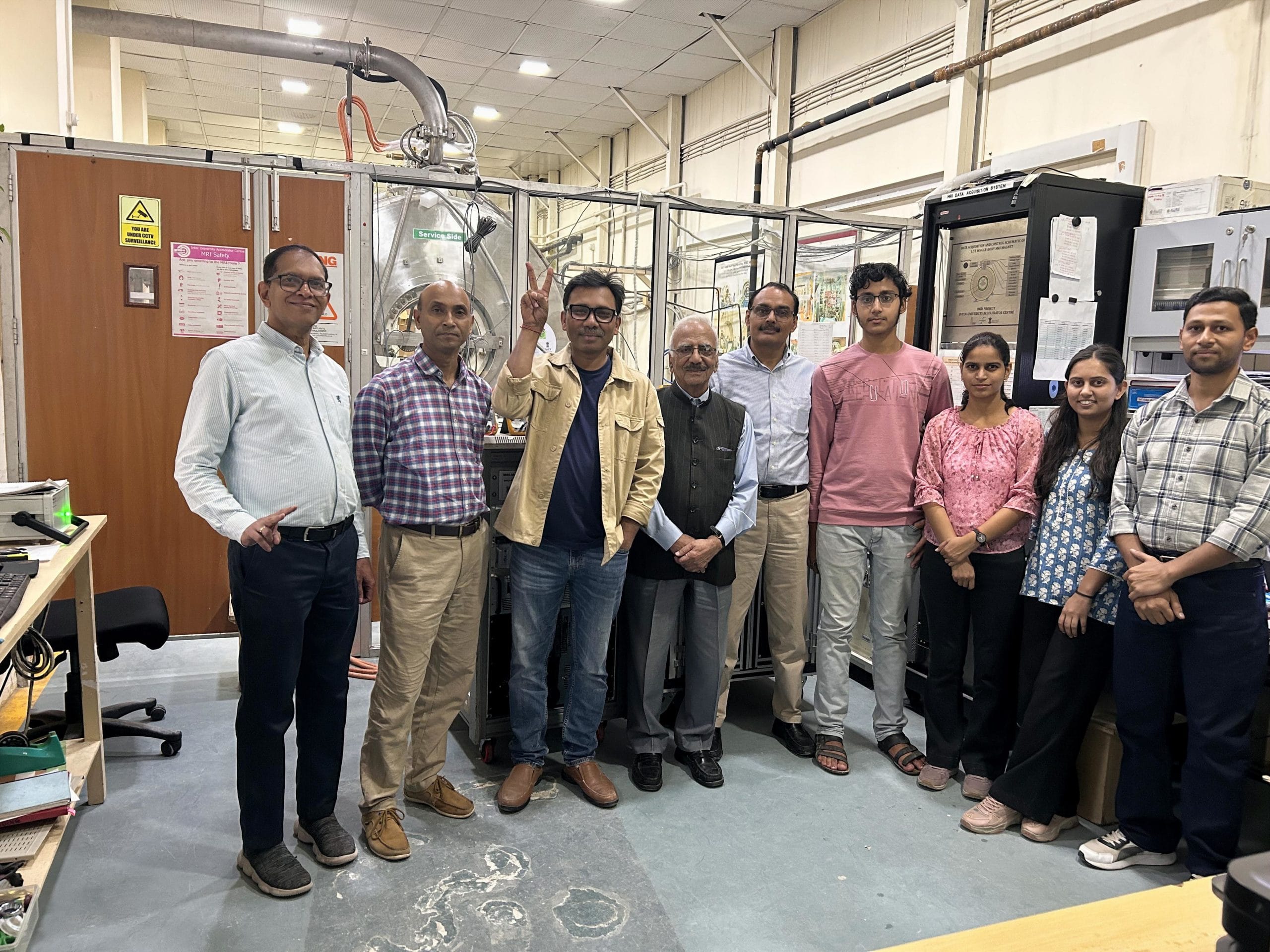
‘Democratising the MRI’
India already has a small but growing base of MRI manufacturers, ranging from original equipment makers such as Voxelgrids to assemblers like Allengers Medical Systems and Time Medical Systems. Among these, Voxelgrids is commonly associated with building India’s first ‘indigenous’ MRI machine.
The Bengaluru-based start-up launched its first MRI machine in 2023, in a ceremony presided over by Union Minister of Science and Technology, Jitendra Singh. Voxelgrids has since deployed three of its MRI machines in different hospitals; two more are in its assembly facility in Bengaluru.
SAMEER, meanwhile, does not claim to be the first to build an MRI machine. Its focus is on what no other private player in the country can do – developing the underlying technology that enables the entire system. The three-institute consortium has built every component of the MRI ecosystem with the explicit aim of transferring this technology to industry players and handholding them to produce it at scale.
“Only a government organisation can build the MRI machine from scratch because we can invest in R&D without a profit motivation, while industry players are essential to commercialise and scale-up operations” said Kar. “We don’t want to produce the machines ourselves, but we want to enable India to produce them,” he added. “No one company will have a monopoly; the entire MRI ecosystem will benefit from this.”
(Edited by Prashant Dixit)
But Voxelgrids has made MRI machine from scratch . Then what makes SAMEER different ? What are they trying to say ?
Voxelgrids has already done this – the founder, an IIT professor, quit academia and translated his research work into a world-class MRI machine.
Amazing article and a work that truly makes us belive that India can achieve real growth with such institutions