





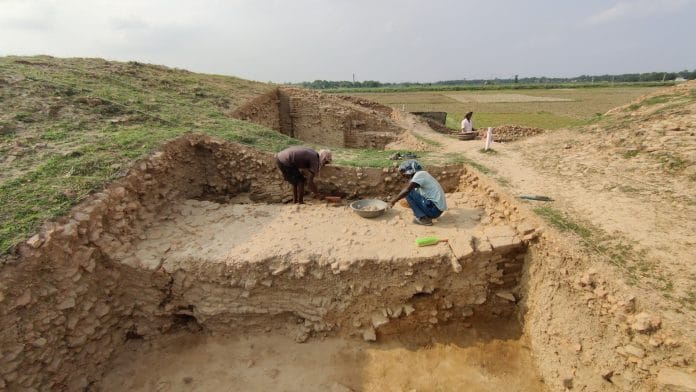


Balirajgarh: The Archaeological Survey of India trowels had barely kissed the soil of Balirajgarh when the past nearly got buried again. This time, because of some trespassers. Barely weeks into excavation, Balirajgarh — that many believe was once the administrative hub of the ancient Videha Kingdom — has already turned into a battleground between archaeology and local people’s anxiety around losing a large parcel of land that they have been using for centuries.
On the night of the 9 and 10 May, some individuals trespassed into the 176-acre Balirajgarh mound in the Madhubani district of Bihar, close to the India-Nepal border, tampered with the excavation trenches, and meddled with valuable antiquities kept in the pottery yard.
Next morning, the ASI team stopped digging and the main concern was guarding the historic site. Madhubani SP Yogendra Kumar, SDM Chandan Jha, BDO to Circle Officer (CO), all rushed to the site, which the villagers call the Raja Bali ka Garh — associated with the demon King Bali of the puranic legends.
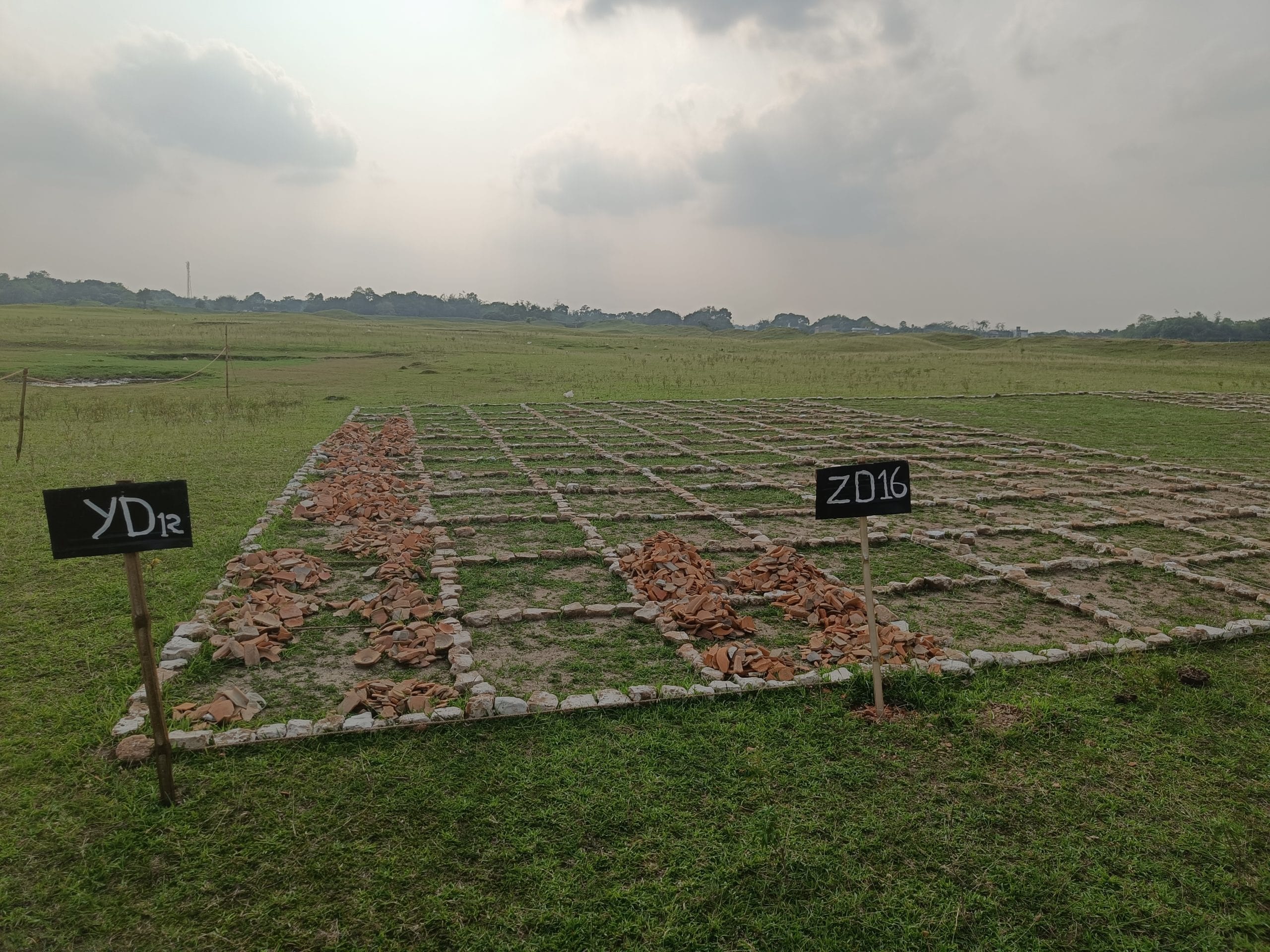
“Now the site is under the security of district administration and police are deployed 24×7. Our team is now freely working without a fear of theft,” said Vaibhav Srivastava, assistant archaeologist at ASI’s Patna Circle and part of an excavation team at Balirajgarh, showing the pottery yard from where tempering happened.
At a sprawling 176-acre mound, the ASI has begun excavating Balirajgarh in March this year in a bid to answer a question that has long haunted the history of ancient Mithila — was this fortified settlement the administrative nerve centre of the Iron Age Videha kingdom mentioned in mythology and early texts? With evidence of habitation across Mauryan, Sunga, Kushana and Pala eras already unearthed, the aim is now to dig deeper to reach the soil that could push the documented history of Mithila back by several centuries.
Balirajgarh is no ordinary archaeological dig. Touted as Bihar’s strongest claim to proving ancient Mithila was once a major political and administrative centre, the fortified mound has become a high-stakes excavation. The team at the site is uncovering a civilisation, archaeologists said, could reshape understanding of the Iron Age Videha kingdom, which is linked to King Janak and the Ramayana. It’s part of a larger push by the Narendra Modi government to dig deeper into India’s ancient roots and discover compelling evidence of Ramayana and Mahabharata period. But the ASI hasn’t prioritised Balirajgarh because it has been kept busy for over a century by the region’s dominant Magadh historiography. And the flood prone remote border landscape makes archeological work extremely challenging.
“This excavation project symbolises pride and historical significance not only for the Madhubani district but for the entire Mithila region. The archaeological evidence unearthed at this site would illuminate the region’s glorious history and will unlock immense tourism potential within Madhubani,” said Sanjay Jha, JD (U) Rajya Sabha MP and chairman of the parliamentary committee on Transport, Tourism and Culture.
Excavators here are braving groundwater that frequently surfaces from shallow depths and a perennial shortage of staff. Caught between the two, they also have a race against time as monsoon approaches. They are driven by a politics, going as far back as Lalit Narayan Mishra to now Nitish Kumar and Sanjay Jha, that has forced the ASI to take seriously a site many in Mithila see as the buried heart of their history. While political parties such as the Congress and the JD(U) — that ruled the region since Independence — have pushed for a longer excavation at the site, it is the ASI that hasn’t found much enthusiasm in the project in the past.
Sandwiched between the streams of the Kamala and Balan rivers, Balirajgarh, according to legend, was once the capital of the demon King Bali. The site was first identified in 1884 by George Abraham Grierson, then Sub-Divisional Magistrate of Madhubani, as Raja Bali Ka Garh — a massive fortification. His initial reporting brought this site into the fold of colonial archaeological studies and was declared as a site of national importance in 1938. But the site was not a priority for ASI, which never started excavations on its own or published a detailed excavation report. Every time, it has required political intervention. Before the current stint, the site has been excavated on three occasions — 1962, 1972 and 2013 — after Independence. This time, the ASI headquarter has given a one-year nod for digging.
“The excavation at Balirajgarh is always political from 1962 to the current one. The ASI has never, of its own accord, shown any interest in this historical site. Political figures have always pushed and negotiated with the culture ministry for the excavation at this site,” said Shiv Kumar Mishra, state co-convenor of Indian National Trust for Art and Cultural Heritage (INTACH). This time, the ASI’s objective is to hit the natural soil, which has never been achieved in the past, and conserve the structures that will be unearthed.
For decades, archaeologists, museologists and historians have demanded excavation at Balirajgarh that also resulted in a PIL in the High Court, several letters to director general of ASI and officials of culture ministry.
“The excavation could reshape understanding of one of north India’s least-explored civilisations,” said Mishra, who has also headed several district museums in Bihar.
Also read: Inside the secret makeover of Nalanda Museum. India’s tryst with pride & pain
Staff shortage, high water level
Before the sun rises, a small team of excavators leave the dilapidated Ambedkar Hostel, where they have set up base, a few minutes walk from the site. Trainees from ASI’s Institute of Archaeology collect their trowels and get to work before it gets too hot.
But it’s not just the heat that’s making the work challenging. It is the villagers’ eye on the excavation and the movement of ASI staff through the mound that’s causing distraction. That was evident in a recent tempering attempt at the site in May. For centuries, villagers around the large mound are using this land for their cattle, resting, partying and even organising a fair annually. Now, they are afraid a big discovery here will snatch away this land parcel from them. The recent tresspassing was one such attempt at disturbing the project. Earlier excavations haven’t lasted beyond few months.
Another challenge is water. Srivastava, a young archaeologist pointed out to one of the trenches where his team found water just digging three metres.
“The water level at the site is too high. Two rivers Kamla and Balan are flowing nearby the site and inside the campus there is a large pond. It’s one of the biggest challenges to dig in this situation,” said Srivasatava.
In the earlier excavations as well — in 2013-14 and 1972-73 — the dig was stopped because the water kept surfacing.
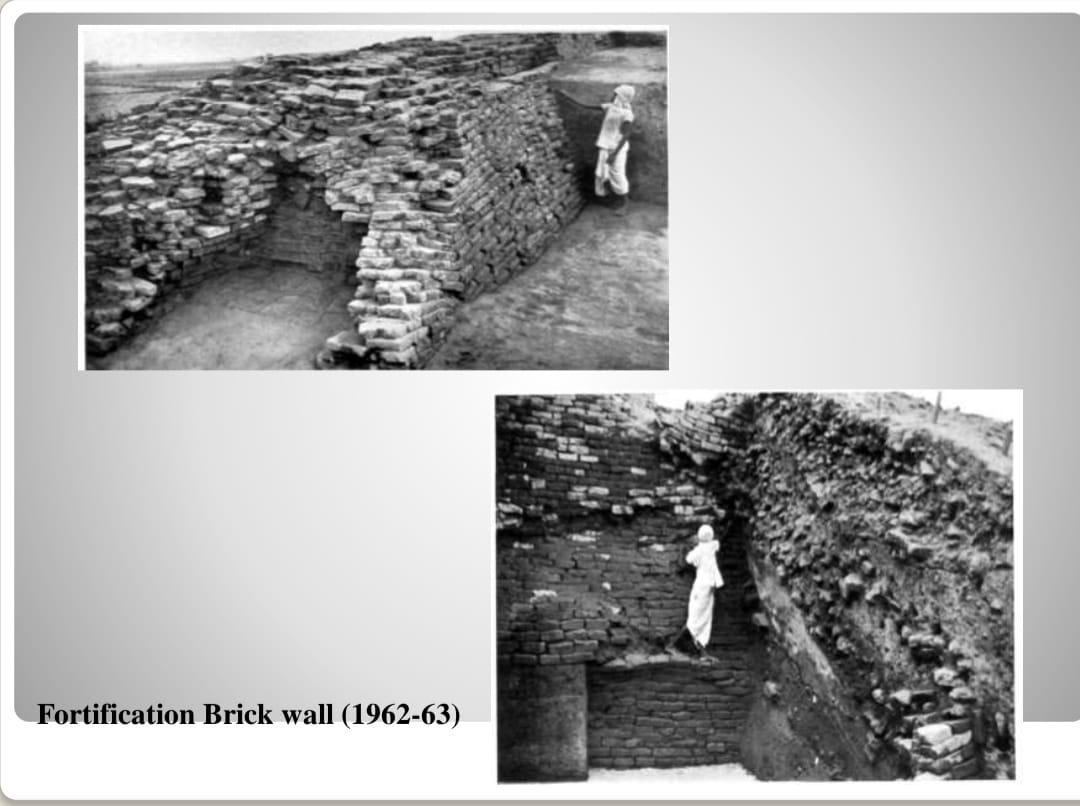
“Owing to high water level at the site, natural soil could not be reached,” reads the 1972-73 Indian Archaeological Review report.
The ASI has faced similar problems at different sites such as Arikamedua in Pondicherry, Lakhapar in Gujarat and Poompuhar in Tamil Nadu.
“At these sites, archaeologists adopted engineering-led solutions to address water seepage and flooding within trenches. At Balirajgarh, excavation strategy should combine systematic stratigraphic excavation with technical groundwater management methods including controlled pumping, lowering of the water table through tube wells, wet sieving,” said Phanikant Mishra, archaeologist and former regional director (East), ASI.
Currently, none of these measures are being deployed.
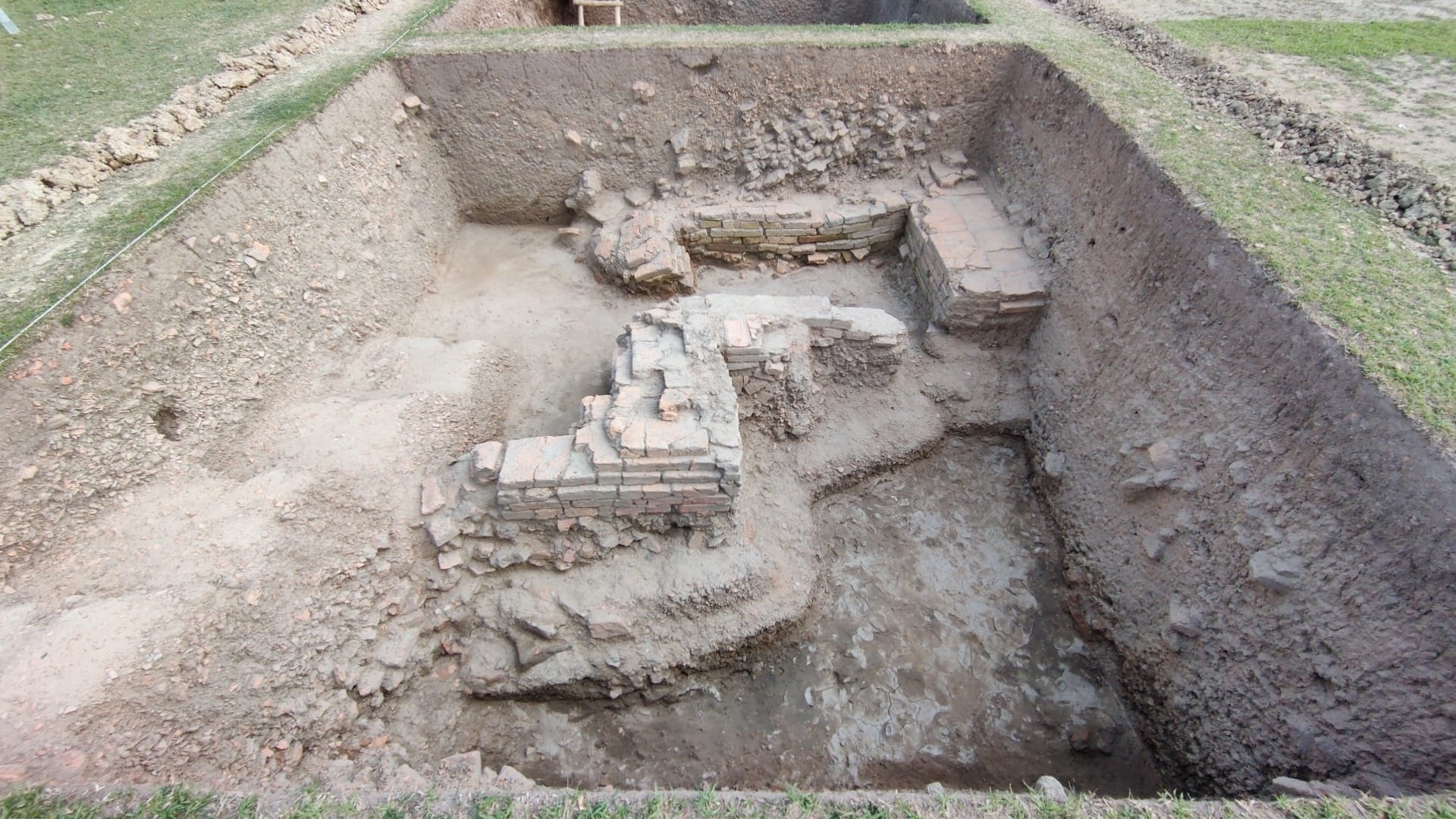
“We are removing water from the trenches and then digging. But overnight the trench is filled with water as the water table is high in this area,” said Vaibhav Srivastava, adding that, we are in talks with the local administration to help us tackle the issue.
When the dig started on 28 March, the Madhubani administration assured ASI officials that they would deploy the groundwater department to tackle the water level issue. However, in the last few days, the issue has intensified as the area recorded continuous rain.
Mishra said the Wheeler Box-Grid system introduced by Sir Mortimer Wheeler at Arikamedu may be relevant in Balirajgarh’s context. “The method based on excavating controlled square grids while retaining earth balks, can help prevent trench collapses and improve scientific control in wet conditions,” he said.
The excavation is under the direction of ASI’s Patna circle Superintendent archaeologist Hari Om Saran. On the ground, the two assistant archaeologists, two trainees and a few local labourers are doing the work.
“This type of fortified mound is very rare and one of the biggest sites in Bihar. There are various challenges at the site but focus is to touch the natural soil which has not been achieved in any of the earlier excavations,” said a senior ASI official, familiar with the developments at Balirajgarh.
However, Srivasatava admitted about the shortage of staff for this large area but said in the coming days, more people will be deployed.
The site, according to legends, was part of the Mithila Kingdom ruled by King Janak, father of Sita. However, there are no archaeological findings that can trace the site’s history to the Ramayana period. Only if the excavators find a substantial number of potteries of NBPW–and this could be achieved only if they dig deeper—can they start to trace the ancient trajectory.
This time, the ASI has set three objectives. ThePrint has accessed the internal presentation of ASI about the site. According to it, the objective is to know the complete settlement pattern, and for this, a large-scale excavation is required. In the last three excavation, archaeologists dig only few trenches, just to get an understanding of the historicity of the site where they found antiquities of different cultures. But this time, the plan is to dig 20 trenches, a significant number, to better understand the mound.
“Carrying out conservation work simultaneously. To develop the site as a prominent tourist destination like Vaishali, Nalanda and Vikramshila,” reads the ASI’s internal presentation.
Also read: Mithila paintings go from courtyards to museums—new Patna exhibition captures 60-year journey
A quest
In two months of excavation, Srivastava’s team dug five new trenches, not touched in previous excavations. Archaeologists are working on seven quadrants of the trenches — one trench is divided into four quadrants. Children play cricket adjacent to these trenches.
Scholars and archaeologists suggest this fortified area could be a large fort from the ancient times because no other site in Bihar possesses this level of fortification.
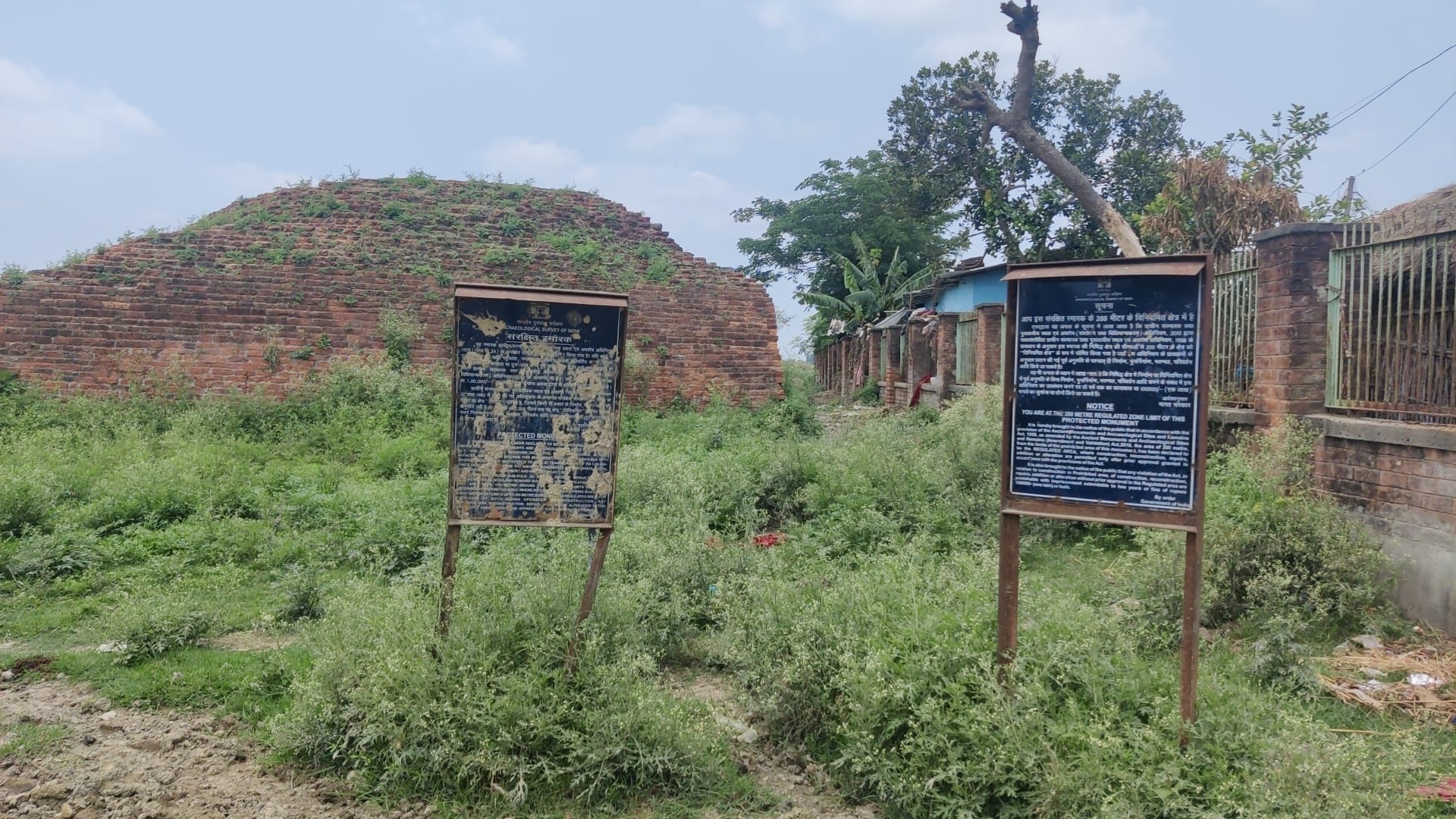
There are four gates to enter the Balirajgarh fort. At one of the gates, near the Ambedkar Hostel, a rusted blue color iron board is affixed, indicating the site as a protected monument under ASI.
According to Mishra, the fortified area is very large and it is evident that this fort did not belong to any ordinary king in ancient times. He refers to Valmiki Ramayan where it has been mentioned that Ram moved to Ishan Kon (North-east) after visiting Gautam Ashram. In Ramayana, Gautam Ashram is the sacred site where Lord Rama freed sage Gautama’s wife Ahalya from a curse. The Ashram, according to Valmiki Ramayan, is situated in the Mithila region.
“In the North-East direction, Balirajgarh is the only place and it could be the place of Sita’s father King Janak. But we have no archaeological evidence about it. There should be long term excavation here,” said Mishra.
Local papers have carried articles on Balirajgarh for long— Dabi ho sakti hai Mithila nigari, khod nikalne vala koi nahi (The city of Mithila may lie buried, yet there is no one to unearth it). Another reads: Balirajgarh me 2,500 saal purani sabhyata ke praman mile (Evidence of a 2,500-Year-Old Civilization Found at Balirajgarh). The headline refers to brick walls unearthed and the artefacts of Shung and Kushana period.
“This has provided clues to the urban civilisation that flourished in ancient times. This archaeological treasure is expected to add a new dimension to Mithila’s glorious history,” reads a recent news report published in Hindi daily Hindustan.
Despite a thriving population near this large mound, the deposits have not been disturbed.
The site has benefited from a local superstition which has saved it from destruction.
“The local people believe that the ghosts of the King and his army still live there and should anybody steal even one brick from the Garh, he will be harmed by those ghosts. This is enough to keep the people away,” wrote Sita Ram Roy, excavator, about the 1972-73 excavation in an article titled Balirajgarh – A Unique Historical Site published in The Heritage Of India : L. N. Mishra Commemoration Volume in 1978.
But tackling heat and random rains have made the work difficult. In May alone, temperature at the site hit highs of around 40 degree Celsius, along with random rains on some days. A small team toils under the relentless sun, occasionally stopping to drink water and Glucose, and wiping the sweat dripping from their brows.
There is no dearth of space to work but the challenge is ground water and hitting the natural soil.
The large mound is used by villagers to feed their cattle. In April every year, a local Chaiti Mela is organized on one of the mounds inside the campus.
“First our ancestors, and now we, use this place. Every year, we celebrate here during Ramnavmi Mela,” said Mukesh Yadav, a resident of Ramanipatti village, who witnessed the excavation of 2013-14.
But this time, the excavators are on a mission to find something significant.
Srivastava said, if it was a fort in ancient times, it has a grand entrance. On assumption, a trench was taken near the fortification wall.
“We are getting some evidence of an extended wall adjacent to the fortified wall,” said Srivastava, adding that during the dig, his team found a circular ball type weapon. He said this type of stone weapon, called the Mahashila Kantak, was used in wars by Magadh King Ajatashatru in the 5th century BCE.
Srivastava assumes that if it is unearthed from this area, then there might be a grand entrance to the fort. In no earlier dig have excavators found this evidence. The trespassers took some fragmented stone weapons from the pottery yard and threw them into a trench filled with water.
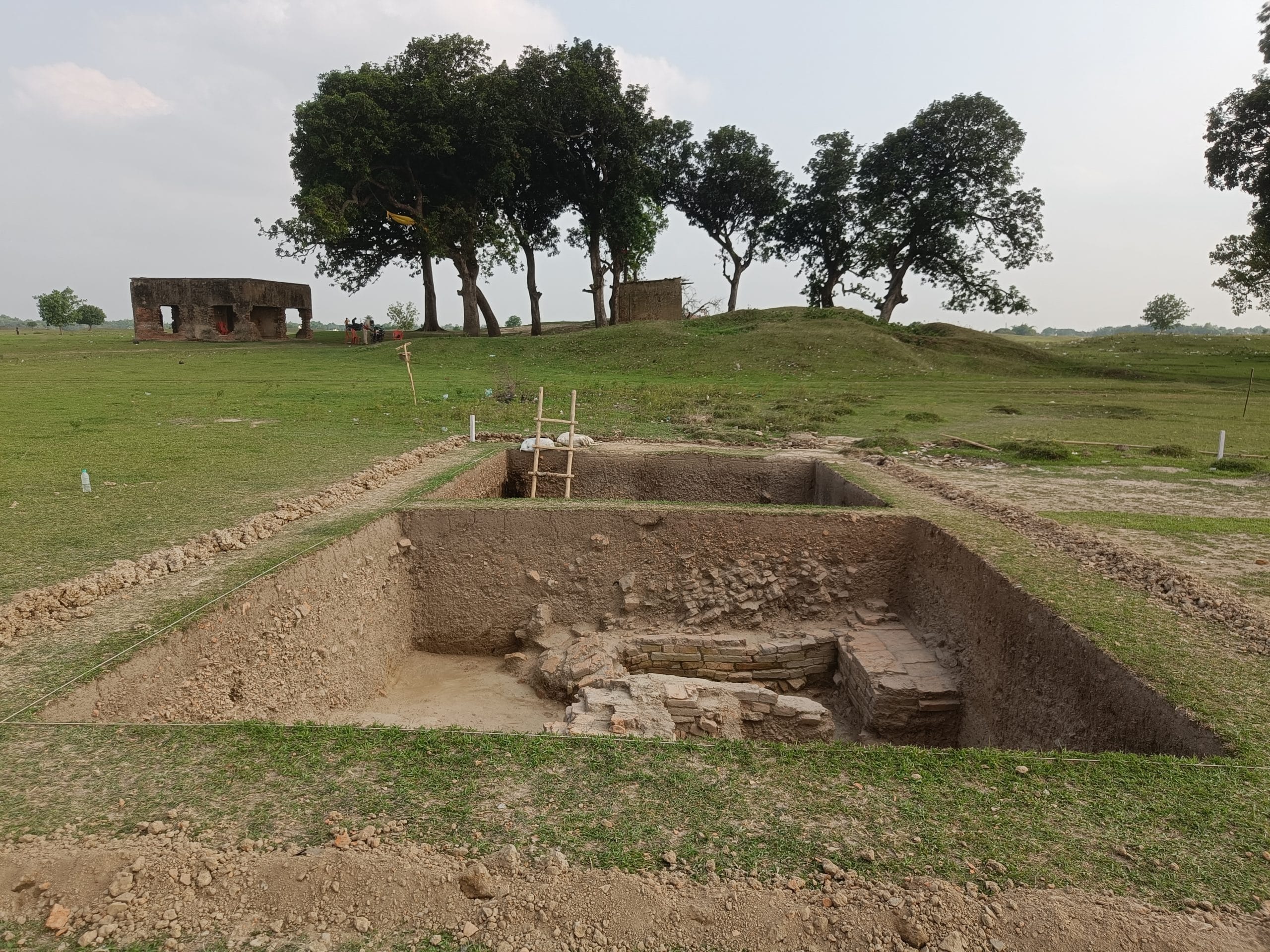
However, at the excavation site, the norms are being not properly followed. Generally, excavators mark the stratigraphic level of soil. But at Balirajgarh, there is no marking at the trenches. And the pottery yard made by the archaeologists lies in open and lacks security.
However, there is no shortage of budget for Balirajgarh excavation. Approximately 3.26 crore rupees is allotted, with half of the budget designated for the conservation work for exposed structure and fortification wall.
“The ASI should appoint senior archaeologists so that the work is done professionally,” said Phanikant Mishra, a Mithila-based archaeologist whose ancestral home just a few kilometres from the excavation site.
Also read: An IAS officer is bringing a golden era in Haryana archaeology. Narnaul is the crown jewel
Fourth dig
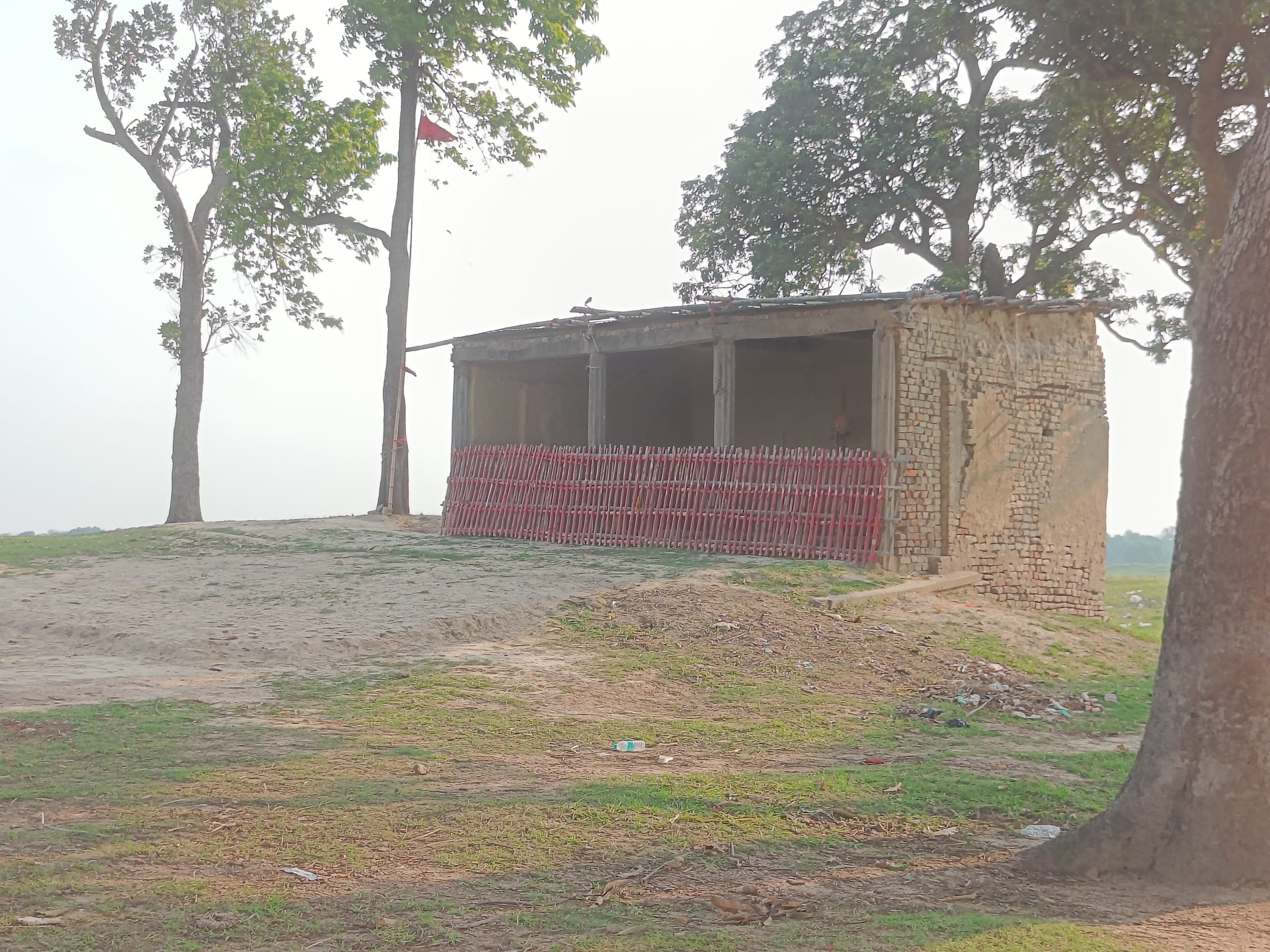
In the middle of the mound, lies a temporary brick setup covered with asbestos and bamboo roof that serves as a make shift temple during the annual Chaiti Mela. On a sunny May afternoon, few women sat outside the structure with incense sticks in their hands, worshipping that structure. A small red flag tied to a bamboo flies adjacent to the room.
Mukesh Yadav, a villager, said the site is sacred to them, and women often come here to worship.
There is also a permanent structure built by the ASI in 1960s, constructed as a residency for the staff excavating. The small brick structure lies in a dilapidated state– walls and the roof broken. For villagers who graze cattle on the mound, this small structure serves as their resting place. These days, the police team deployed after the trespass attempt uses the space to rest. ASI has not bothered to maintain the space five decades after it was constructed. The boundary walls of the mound covered with cow dung cakes.
Two months, no big findings have been made from the site. The antiquities unearthed belong to the same periods as unearthed in earlier ones— terracotta plaques depicting male and female figurine with ornamentation, beads of semiprecious stones, sling balls, bangle fragments, copper antimony rod and potteries from NBPW, Black Slipped ware, Gray ware and Red ware.
According to the ASI official, on the basis of archaeological remains, the first fort was constructed in the 2nd century BCE and remained in use till the Pala period.
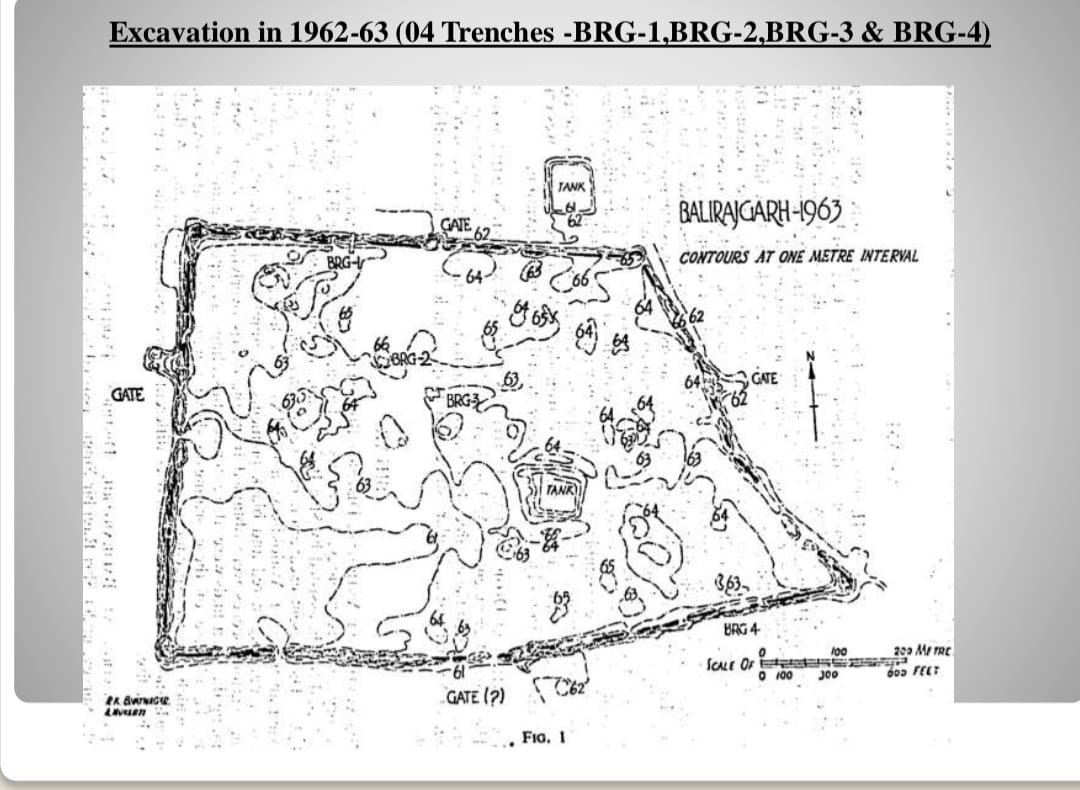
First excavation of 1962-63 was conducted by the Mid-Eastern circle of ASI. In 1972-73, by Directorate of Archaeology, Bihar government. And in 2013-14 by ASI Patna circle.
Phanikant Mishra said the excavations have yielded material remains from four cultural periods – from Northern Black Polished Ware (NBPW) to Sunga-Kushana, to Gupta to Pala period. Veteran archaeologist BB Lal used the presence of NBPW as the primary archaeological baseline to date the events and sites associated with the Ramayana at other sites.
ASI has never published a detailed excavation report of this site. However, a brief summary about the excavation was published in Indian Archaeological Review (IAR)
“From the pre-defence deposits, shards of the Northern Black Polished Ware were obtained. The fortification seems to have been built somewhere in the second century BCE and remained in use till Pala period,” reads the 1962-63 IAR report.
Also read: ASI to construct 6 new museums at archaeological sites. ‘Project around Rs 1,481 crore’
A political excavation
Archaeologists and museologists have no doubt about the historicity of Balirajgarh but it has never been on the priority list of ASI until now.
On 28 May, museologist Shiva Kumar Mishra visited the Balirajgarh site with some history students.
“Among scholars, there is no doubt about the historicity of Balirajgarh. ASI must create a special excavation project for this site, similar to those for the Nalanda, Vaishali and Vikramshila excavations. Then things will change,” said Mishra.
When trenches were dug in 1963, it was on the instance of Lalit Narayan Mishra, then Railways minister and MP from the Darbhanga, which falls under the larger Mithila region. The Bihar government had back then sent their proposal to be considered by the standing committee of the Central Advisory Board of Archaeology.
Five decades later, in 2012, during his four-day Seva Yatra, chief minister Nitish Kumar addressed a public meeting in Madhubani where he alleged the centre was discriminating against the state even in matters which can be a thing of national pride. He then wrote to PM Manmohan Singh.
“The neglect of Balirajgarh Fort in Madhubani district and many other sites of archaeological importance by the ASI is a glaring example of it,” Kumar had said in 2012.
In 2013, the ASI started digging the site under the supervision of MS Chauhan. During the excavation, five structures were reported belonging to the Gupta and Pala period. But the excavation lasted only for a month.
A year after the excavation stopped, a PIL was filed in the Patna High Court to resume work. The writ petition said that the ASI was busy excavating all over the country to search the birth place of Ram and Krishna and other mighty kings of the country but had forgetten to search the birth place of Sita.
In 2014, former director of museum and archaeology, Bihar, Umesh Chandra Dwivedi wrote to then ASI DG Rakesh Tiwari, requesting to restart the excavation.
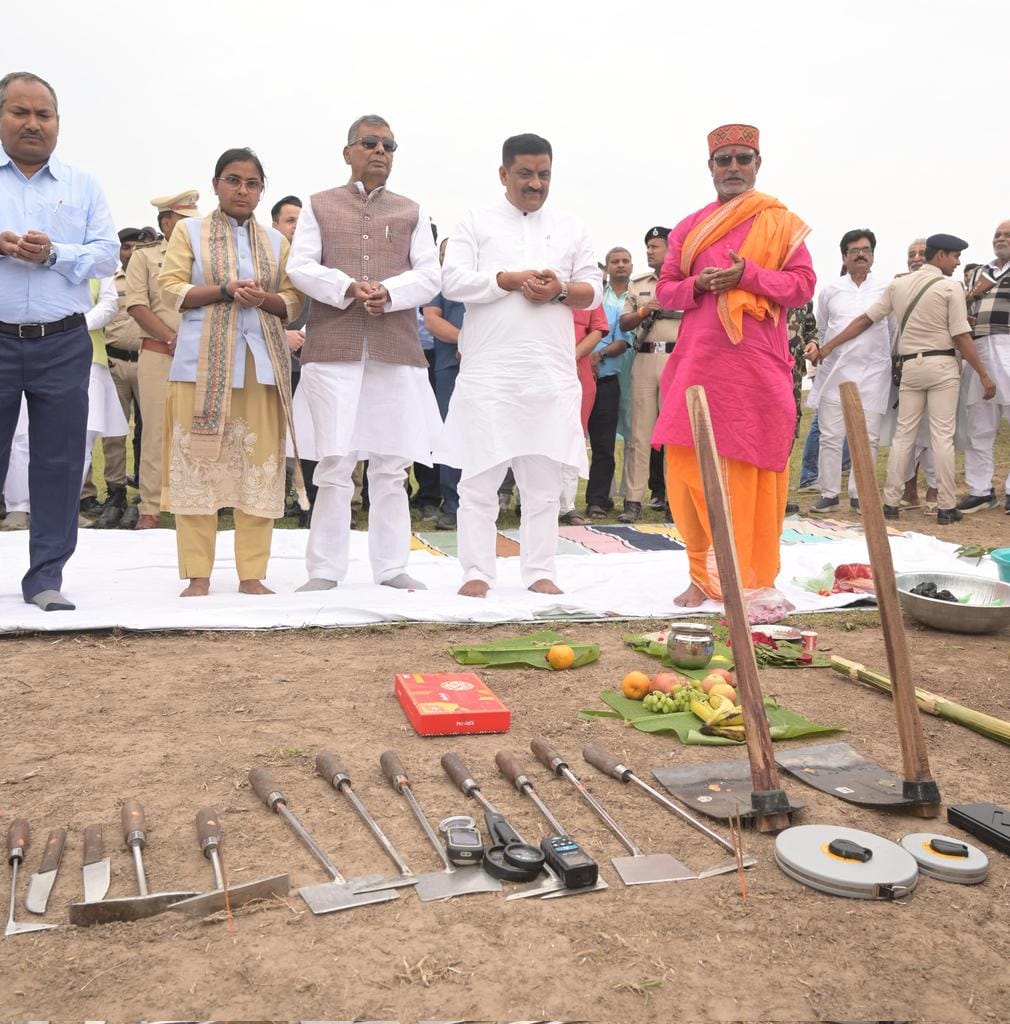
In the fresh push, JD(U) MP Jha has sought several meetings with union culture minister Gajendra Shekhawat, culture secretary and senior ASI officials. Jha is also the chairman of the Parliamentary Standing Committee on Transport, Tourism and Culture and inaugurated the excavation work on 28 March with Hindu rituals.
“This is an important step towards uncovering the rich historical heritage of Mithila and preserving it for future generations,” he said.
And Jha didn’t stop at the approval. In May, he met Shekhawat again and discussed the ongoing excavation at Balirajgarh. He submitted a letter to him and urged that Balirajgarh be developed as an independent sub-circle under the aegis of the ASI.
“We are confident that large-scale, well-planned excavation and conservation initiatives at Balirajgarh will accord a renewed identity,” he said.
The latest political push from Jha wants ASI to stay invested for a long term.
In one of his meetings with Shekhawat, he said, he has urged for the initiation of a phased and scientific excavation spanning at least the next 10 years.
(Edited by Anurag Chaubey)