





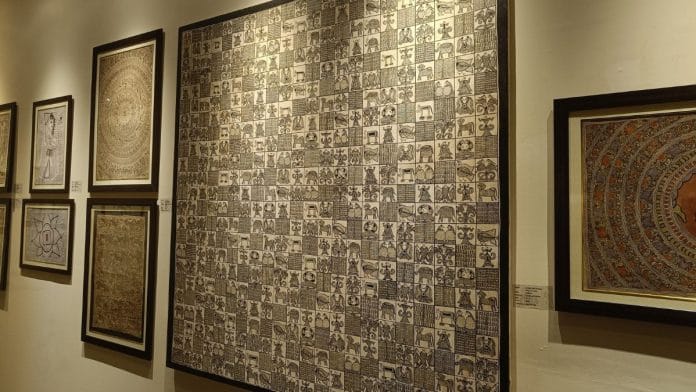


Patna: From courtyards to some of the world’s biggest museums, Mithila painting has travelled a long distance over the last six decades — a journey that artist-curator Manisha Jha says is inseparable from the story of women’s empowerment in Bihar.
At an exhibition, titled From Courtyard to Museum: A Journey of Sixty Years, 102 artworks by 56 artists from Jha’s personal collection at the Bihar Museum are on display.
The exhibition traces the evolution of Mithila painting from a folk tradition to a globally recognised art through a thematic and chronological display. The inauguration of the exhibition, which also features artworks by Padma Shri artists, brought together Mithila painting artists from across the country at the museum on Saturday.
Before the art exhibition was opened, visitors were familiarised with the Mithila artform by speakers that included the museum’s Director General Anjani Kumar Singh, Additional Director Ashok Kumar Sinha, Secretary of Bihar’s Art and Culture Department Pranav Kumar, and Mithila painting artist Urmila Devi.
“It’s the journey of women because this is an art form which is evolved by women, practiced by women, and preserved by women. I always relate Mithila paintings with the journey of women themselves, and their exposure to the world increased since 1967,” Jha told ThePrint.
Jha, a National Award-winning artist who has spent decades collecting paintings and has curated more than 300 exhibitions worldwide, has never displayed her collection in Bihar before. She said the exhibition presents Mithila artworks chronologically perhaps for the first time, documenting changing themes, materials, and styles while also highlighting the challenges of preserving artistic quality and ensuring economic sustainability for thousands of artists dependent on the tradition.
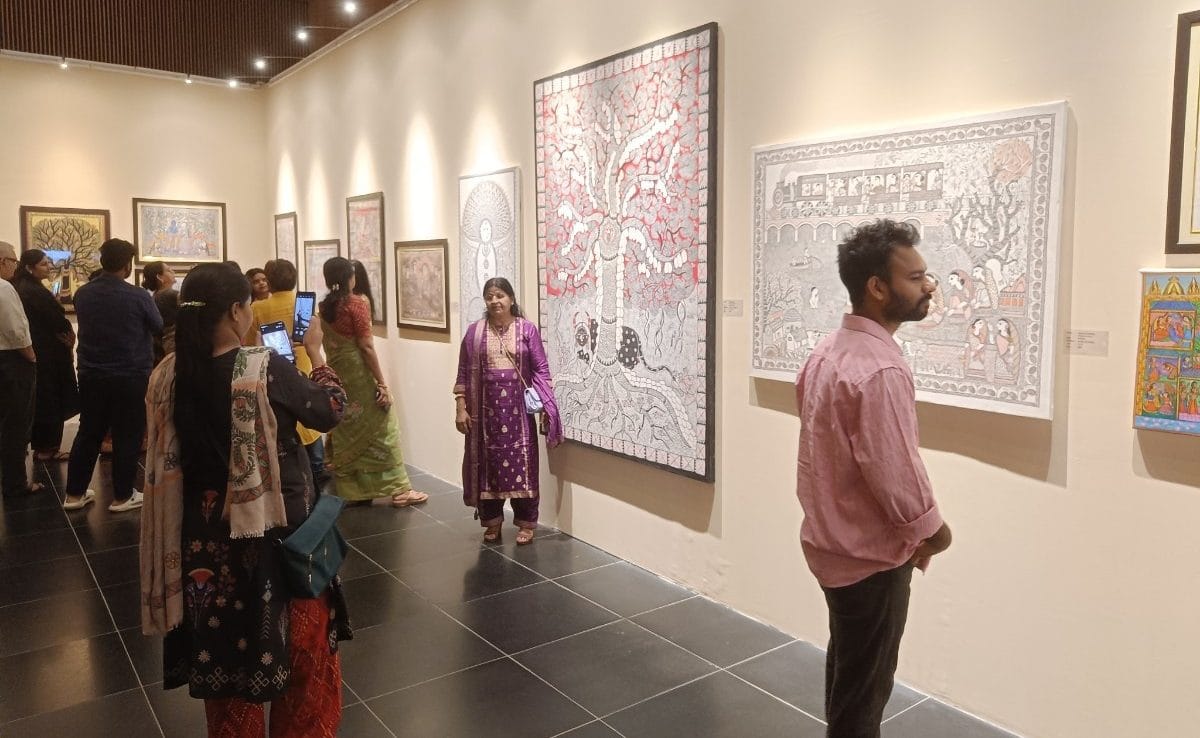
“Before this, the art was never exhibited in a chronological order. My collection is like a dharohar (heritage) for the future generation where people can see what material was used, colour combinations and the subject of the painting,” said Jha.
According to her, Mithila painting over the last 60 years has been spectacular, rare, and grand.
“Mithila painting is a very holistic tradition, it talks about nature and culture and is a very deep rooted art form that is as contemporary as any art. I call it Mithila School of Art,” said Jha.
Evolution of Mithila painting
Bihar Museum Director General and former Chief Secretary of Bihar Anjani Kumar Singh said the state’s folk traditions were given prominence alongside archaeological heritage when plans for the museum took shape after 2005.
“Our idea was that the state would have a lot of archaeological findings from the excavations. But our folk art is very prosperous, so it should be given a place in the assembly,” said Singh, adding that it was decided that a gallery will be dedicated to folk art of Bihar.
Singh said Mithila paintings have developed and gained popularity over the past few decades.
At the exhibition, the evolution of the art has been showcased. In one of the paintings made by artist Gopal Saha, he shows the movement of people in a bus through acrylic colours on handmade paper. While another painting titled Panch Mukhi Kali made using natural pigments captures shows a fiery Goddess Kali in Mithila style.
Jha gave a tour of the museum to visitors on Saturday, explaining the idea behind the artworks. In one of the paintings, she explained to Singh that Hanuman is holding Sanjeevani Booti in his hand.
On one of the large canvases, artist Urmila Devi outlined Godna art, an ancient Indian tattooing tradition that has transitioned into a unique style of Mithila painting, primarily practiced by Dalit women in Bihar. There are several forms of Godna, and Devi has given space to all of them on one canvas.
The other themes at the exhibition include Ram-sita Vivah, Kedarnath, Dilli, Ramayan, Basuki Naag and Pravaha.
A fascinating painting by Manoj Chaudhary captures the migration of people from the village. The painting, made with colours acrylic on canvas, uses the classic linework and intricate border and shows a steam locomotive pulling four carriages across a brick arch bridge.
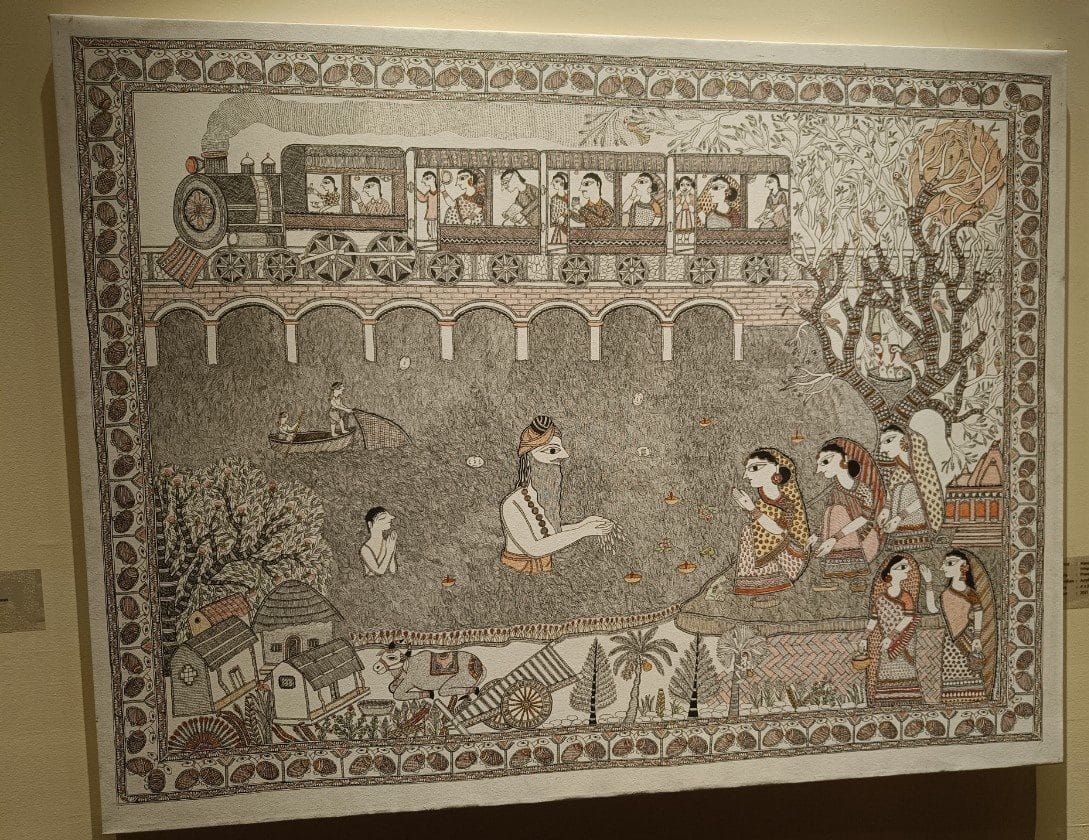
“This shows people are migrating from their places,” explained Jha to the visitors.
Jha said that every artist has a different style and identity.
“It was never put up together before me,” she said, adding that this art form has been given space in almost all the museums of the world.
Jha said India is home to a wide array of art forms, including folk arts, contemporary art, and modern art.
“I can confidently assert that the extent of Mithila painting’s presence in international museums surpasses that of any other art form of the country,” she said.
Also read: Meghalaya doesn’t want samosa tourists. It needs slow, phased development: CM Conrad K Sangma
Challenges and opportunities
Singh, however, stressed the need for greater focus on quality and design as the artform expands commercially.
“We are working in the art world. We will have to move towards more quality and design,” he said.
The museum officials highlighted the reach of the tradition, saying around 60,000 of Bihar’s one lakh registered artists are associated with Mithila painting, which has produced nine Padma Shri awardees.
“This is the strength of this art,” said Sinha.
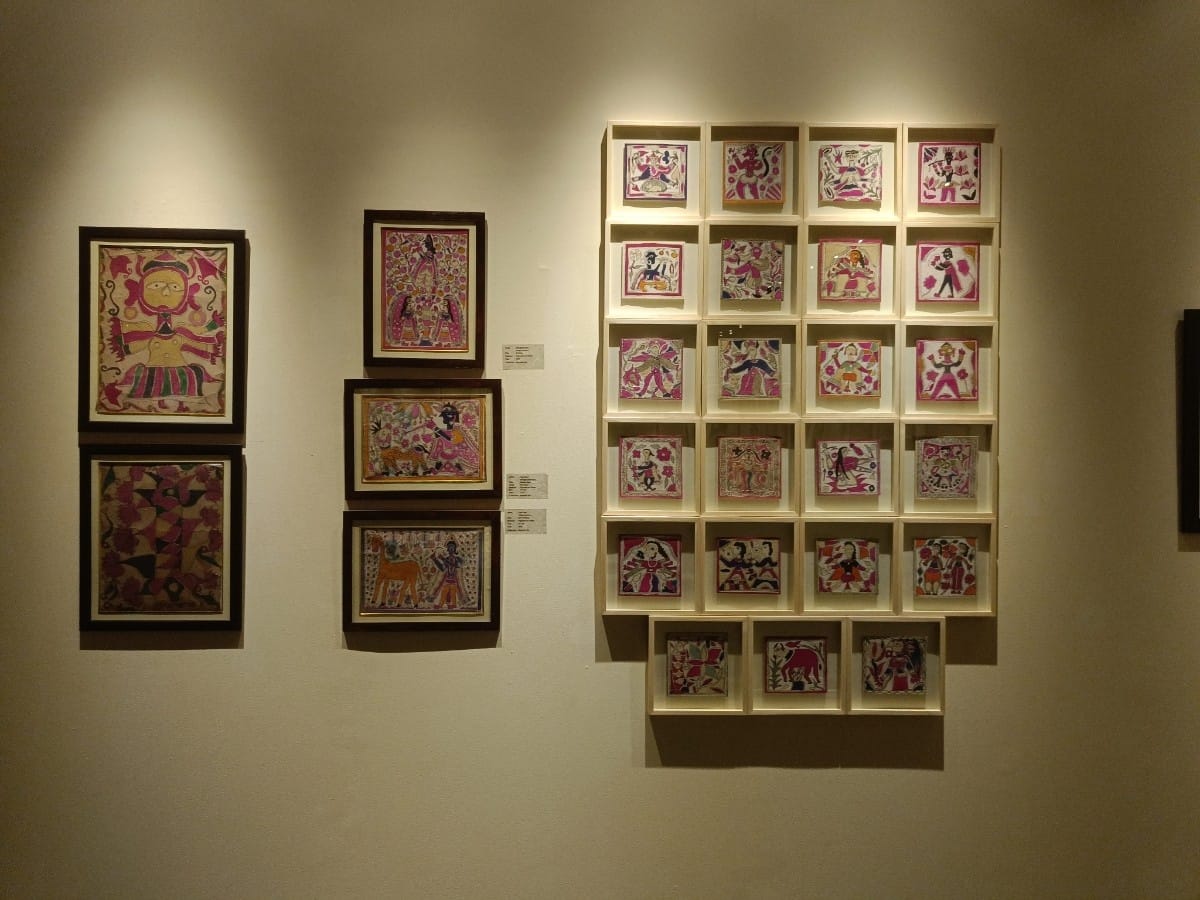
At the inauguration, officials stressed the need to link the art to economic activity to sustain artists.
For Pranav Kumar, Mithila painting is a reflection of Bihar’s rich heritage.
He said the government wants to preserve the artform and connect it with economic activity.
“Because sometimes it happens that the economy comes in the way. If we don’t connect it with economic activities, then things fall behind,” said Kumar.
The exhibition will go on until 8 June.
(Edited by Aamaan Alam Khan)