



New Delhi: Pakistan has landed a new diplomatic responsibility: leading the global conversation on debt. If there is one subject Islamabad has had plenty of experience with, it is borrowing money.
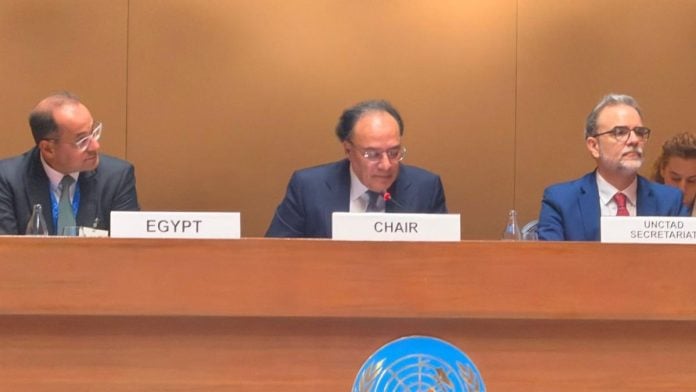
Pakistan’s Finance Minister Senator Muhammad Aurangzeb on Monday assumed the chairmanship of the Governing Council of the Borrowers’ Platform on behalf of Pakistan during the World Bank Group–International Monetary Fund annual meetings in Bangkok, Thailand.
The platform is a United Nations-backed initiative designed to help debt-burdened countries learn from one another, exchange technical expertise, and improve their standing in international discussions on development financing. There is, however, a catch: it is not a common front for negotiating with creditors.
Still, Pakistan is now in a position to lead conversations about how countries can borrow without getting trapped in repayment cycles, prevent debt from swallowing public spending, and turn loans into investments that generate lasting economic growth.
These are questions Islamabad knows something about. Pakistan’s public debt-to-GDP ratio stands at approximately 68.3 to 70.2 per cent as of late 2026, while its total public debt has reached around PKR 86.72 trillion, or nearly $290 billion.
Aurangzeb has outlined Pakistan’s priorities for the platform’s 2026-27 work plan, including better debt-management practices, exchanges of experience on economic reforms, and the exploration of innovative instruments for development financing. He said Pakistan wanted to ensure that debt remained an instrument of development rather than an obstacle to it.
The platform’s Governing Council, its highest political and decision-making body, held its first meeting on 12 October in Bangkok, bringing together finance ministers, central bank governors, and senior officials from developing countries.
Launched in April 2026 by developing countries with the support of United Nations Secretary-General António Guterres, the initiative has attracted 31 formal members so far. UN Trade and Development, or UNCTAD, serves as its Secretariat.
Guterres has described the economic environment confronting developing countries as a “perfect storm”, citing geopolitical tensions and conflicts, trade and climate pressures, inadequate financing and heavy debt-servicing burdens. The platform, he said, would allow members to share advice, tools and approaches while making fuller use of their collective voice in international discussions.
And who better to lead the conversation than Pakistan, which has spent years learning how complicated the relationship between borrowing and repayment can get?
Also read: Pakistan’s elected PTI govt in KP is gone. Critics say democracy has been buried again
Pakistan’s debt dilemma
Pakistan’s debt history offers a crash course in how borrowing can pile up across successive governments. Its experiences with debt in the past two decades are proof why it is best equipped for this presidency.
During the Pakistan Peoples Party government from 2008 to 2013, the country’s reported national debt rose from about PKR 6.4 trillion to PKR 15.1 trillion. Under Nawaz Sharif, who took office after the 2013 election, Pakistan’s external debt increased from $52.4 billion to $75.3 billion over five years. Borrowing associated with the China-Pakistan Economic Corridor, along with other financing needs, formed part of the picture.
During Imran Khan’s tenure, which began after the 2018 election, external debt rose further, from $75.3 billion to $110.6 billion, according to figures.
Meanwhile, China has emerged as Pakistan’s largest bilateral creditor. An IMF report put Chinese lending at roughly 30 per cent of Pakistan’s foreign debt in 2022. The relationship has provided Islamabad with a crucial source of financing, but it has also underscored the importance of managing repayments and maintaining access to foreign currency.
The pressure became particularly visible during Pakistan’s economic crisis in 2023, when dwindling foreign exchange reserves, a sharply depreciating rupee, and surging inflation intensified concerns about the country’s ability to meet its financial obligations. The government sought support from the IMF while negotiating additional financing from friendly countries, including China, Saudi Arabia, and the United Arab Emirates.
The crisis also exposed the domestic costs of fiscal adjustment. Higher taxes, rising prices and expensive debt servicing left households struggling while the government sought to restore economic stability.
In June 2025, China rolled over $3.4 billion in commercial loans to Pakistan, including a $2.1 billion deposit with the State Bank of Pakistan and the refinancing of a $1.3 billion commercial loan that had already been repaid, according to a report citing a source in Pakistan’s Finance Ministry.
The rollover helped Islamabad meet an IMF requirement to maintain foreign exchange reserves above $14 billion by 30 June 2025. But it also highlighted a central weakness in Pakistan’s financial position: refinancing can provide breathing room without necessarily reducing the underlying debt burden.
At this point, Pakistan’s total external debt and liabilities stand at $138.8 billion, of which $92.2 billion is external public debt owed directly by the government. The borrowing comes largely from multilateral institutions, including the World Bank, Asian Development Bank and International Monetary Fund, as well as bilateral partners, principally China, followed by Saudi Arabia.
Pakistan repaid $4.46 billion in external debt principal during the 2026 fiscal cycle. Its overall annual external debt-servicing obligations are estimated at between $21.5 billion and $23 billion. About $12 billion of this amount comprises deposits from friendly countries, including Saudi Arabia, China and the UAE, which are typically rolled over rather than repaid in cash. Pakistan has also fully repaid its $3.45 billion deposit debt to the UAE.
Pakistanis, meanwhile, had a field day deciphering what the presidency entails.
Khurram Mushtaq, the former chairman of MEPCO, the government-owned Multan Electric Power Company, sarcastically said on X: “Well, at least we got the presidency out of this excuse.”
Former Sindh governor Mohammad Zubair was more succinct: “Wow, what an honour.”
(Edited by Aamaan Alam Khan)
how to become bankrupt crash course by pak