





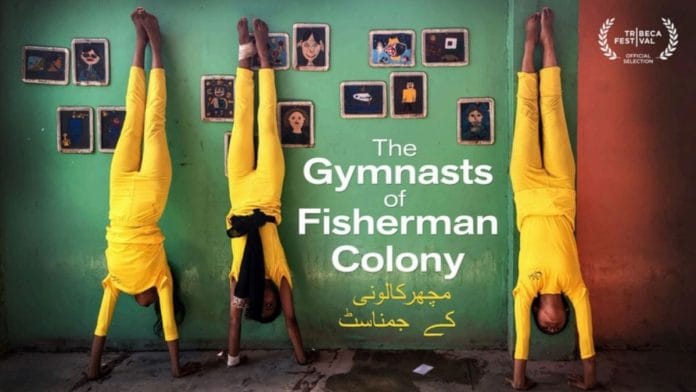


New Delhi: When 16-year-old Sonia from Karachi’s remote Machar colony sat in a movie theatre for the first time in her life, she was not there to watch any other film. She was there to watch herself.
For years, Sonia had trained as part of a gymnastics team that few outside her community knew existed. At the Tribeca Festival in New York last week, her life had become the subject of a documentary.
When the screening ended, the audience gave a standing ovation. When director Habiba Nosheen asked her how the film was, Sonia said, “It was amazing. How could it not be amazing? It was about me.”
Executive produced by Nobel laureate Malala Yousafzai, actress Mariska Hargitay and producer Amar Lohana, The Gymnasts of Fisherman Colony, a 2026 coming-of-age documentary, follows a group of teenage girls as they build a female gymnastics team, navigate family expectations, battle poverty, confront bureaucratic obstacles and dream beyond the futures assigned to them.
Nosheen, a Pakistani-Canadian filmmaker whose work has long focused on women and girls, is a Peabody and three-time Emmy Award-winning journalist and filmmaker. She first encountered the story through Tahera Hasan, the renowned human rights lawyer who would later become one of the central figures in the documentary.
Hasan had posted photographs and videos of girls doing gymnastics in Pakistan. For Nosheen, who had spent years telling stories about women and girls around the world, something about these images felt different.
“When I was growing up in Pakistan, I would have never dared to dream that this was possible for me,” she told ThePrint, speaking from New York.
The girls in the photographs were not members of Karachi’s elite. They were not attending expensive private clubs or international schools. They were ordinary girls from one of the city’s most neglected communities. And they were making history.
An invisible community
Machar Colony, referred to as the Fisherman Colony because of its ties to Karachi’s fishing industry, is home to an estimated 7,00,000 residents. Many are ethnic Bengalis who settled there after the Liberation War of 1971 with Bangladesh, along with Rohingyas and other marginalised communities. A significant number live without official documentation or citizenship recognition, leaving them effectively stateless within Pakistan.
According to a 2024 paper on citizenship challenges of Pakistani Bengalis, the community has long faced systemic discrimination and exclusion. In the early 2000s, thousands were wrongly registered as foreigners, restricting their access to citizenship rights and creating lasting barriers for subsequent generations.
The community’s marginalisation is also reflected in questions of identity and recognition. While Pakistan’s censuses acknowledge several regional languages, Bengali has been excluded as a mother-tongue option, despite being spoken by a significant population.
Nosheen first visited the girls in 2022. The documentary stretched across nearly four years. Formal production followed through 2023 until early 2025.
Her film captures their everyday realities—the girls cooked, did laundry, showed her the medals that they had to pack in multiple plastic bags to keep it safe from rats, the sisterhood and the solidarity when two of Sonia’s teammates are married off and how amid limited access to education, healthcare, employment and public services, emerged an unlikely source of hope—a female gymnastics team because the girls said–“If the boys can be trained, why can’t we?”
For Nosheen, one of the film’s most moving discoveries was not merely the determination of the girls, but the support they received from their families later. Popular narratives about Pakistan often depict women battling uniformly conservative environments. Reality, Nosheen found, was far more complex.
One of her favourite scenes involved a father watching his daughter’s achievements with visible pride.
“The father is beaming with pride as he sets out all the trophies she has received,” she said.
However, there were challenges, big and small. Structural issues like statelessness aside, the girls battled patriarchy. They were told it was not right for them to be coached by a man and that it was a sin in Islam.
One girl in the documentary recounts how her mother initially refused to let her train and would lock her inside the house. The daughter persisted, arguing repeatedly until she was finally allowed to join. Sonia persists, anchored by the unrelenting support of Hasan and Furqan, who accompany her to the Nationals.
In a particularly moving scene, Sonia is shown telling her sister, “Sometimes I complain to God, asking why he did not make me a man. Perhaps then, I could have at least supported my family. One day, I will buy a house for her.”
Also read: Lahore’s Aitchison College has a classroom named after an Indian—it’s a tale of two friends
Sports as a human right
The documentary arrives amid broader conversations about women’s participation in sports across South Asia. Pakistan has produced internationally recognised female athletes, yet opportunities remain limited, particularly for girls from poor and marginalised communities.
Nosheen sees that reality not merely as a sporting issue but as a rights issue.
“I think sports for girls should be about human rights,” she said. “It is a right that they should have access to.”
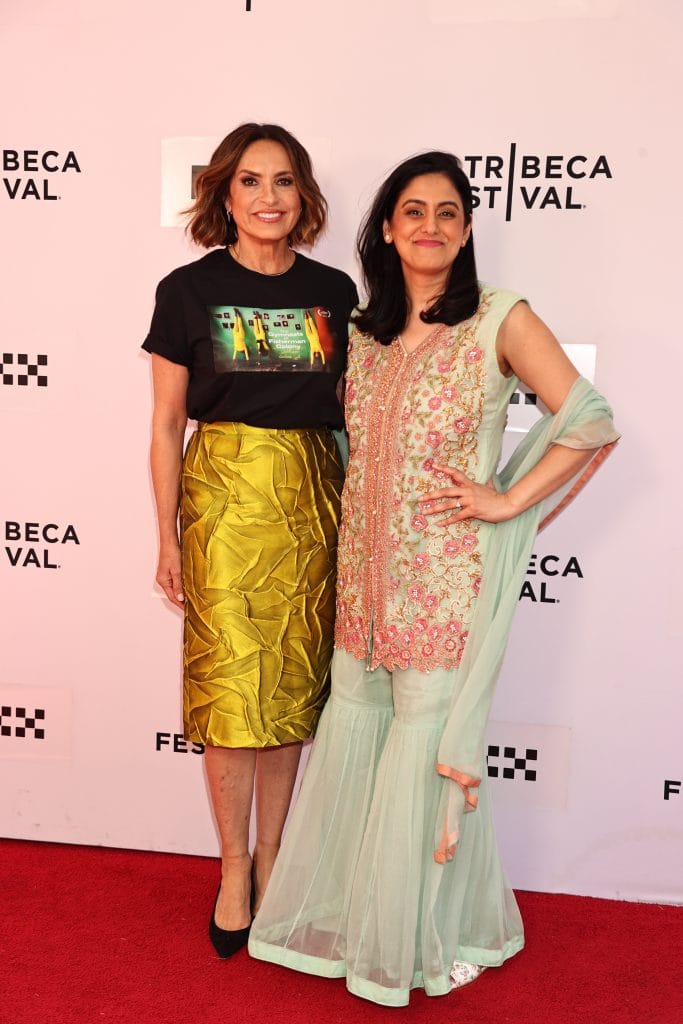
A 2023 paper on female participation in sports in Pakistan found that up to 42 per cent of female athletes face significant religious and socio-cultural limitations, in addition to parental influence and lack of access to proper sporting facilities.
Pakistan, she said, faces numerous structural challenges and sports, especially the participation of women, have rarely been a national priority.
Yet she also pointed out another reality: communities stepping in where institutions do not. “What we do see in Pakistan are a lot of people and communities stepping up,” she said.
In Machar Colony, that role was played by the school run by Hasan and the individuals who created opportunities where none existed. “The school became a place of hope for them.”
Also read: In Pakistan Economic Survey, ‘stability’ appeared over 100 times. Growth ‘lowest in history’
A question of representation
Nosheen’s film was made against all odds. Challenges went far beyond storytelling. Production crews promised equipment they did not actually possess, camera packages failed to arrive, specialised gear had to be purchased abroad and transported into Pakistan, and the equipment then had to be stored under carefully controlled temperatures.
Yet those complications became part of the experience. The film, she said, had always been a community effort.
Then came the standing ovation at Tribeca. It is among the world’s most prestigious film festivals, showcasing more than 600 screenings with its official selection curated from nearly 14,000 submissions across the globe.
As documentary funding shrinks worldwide, Nosheen is realistic about the challenges facing independent filmmakers. She recalls telling filmmaking students that the onus lies on them to convince the world on why art matters. But it is also a question of who gets to tell the stories.
For years, she said, she noticed how brown women and Muslim women were portrayed on screen. The depictions often focused on suffering, conflict and victimhood. What seemed absent were ordinary human emotions–joy, laughter and complexity.
“If you see what’s out there, we never laugh, we never cry, we never have joy,” she said. “We’re shown as boring people.”
The answer, she concluded, was straightforward. “If we’re not happy with the way the world tells our story, then we have to start telling our own stories,” she added.
That belief runs through every frame of The Gymnasts of Fisherman Colony. The film is not simply about gymnastics.
It is about citizenship, identity, gender and belonging. It is about girls discovering power in places where little power is expected. It is about communities that have been overlooked, finding visibility.
And, perhaps most importantly, it is about a teenager from Karachi who walked into a movie theatre for the first time, watched her own life unfold on a giant screen and understood that her story mattered.
As Tahera says in the documentary, it is proof that ‘girls can push the boundaries with respect and dignity’.
(Edited by Saptak Datta)