



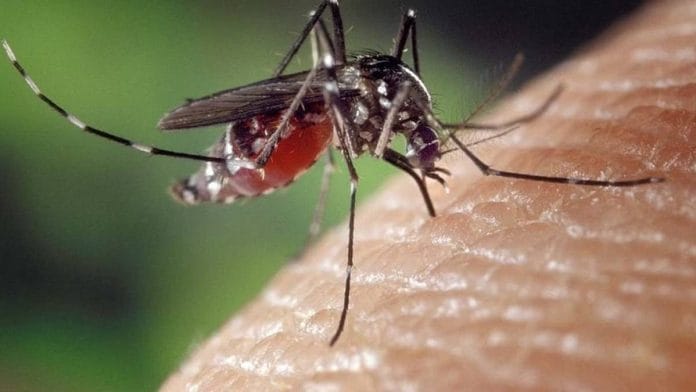
New Delhi: Different species of mosquitoes may prefer different people, a recent study found. Research shows mosquitoes play favourites among humans, leaving some more vulnerable to mosquito bites than others.
The Florida International University study measured the attractiveness of three different species of mosquitoes toward 119 human participants. Mosquito species involved in the study included Aedes aegypti, Aedes albopictus, and Culex quinquefasciatus. These are responsible for spreading diseases such as dengue, Zika and West Nile virus.
The study titled ‘Individual humans are more attractive to certain mosquito species’ was published in ScienceDirect on August 21 this year.
Yellow fever mosquito more drawn to men than women
Volunteers for the study were asked to place an arm at the end of a long sealed tube. Mosquitoes were released on the other end, with researchers counting how many flew towards each arm. None of the participants were bitten.
In results that surprised the team, researchers found that no one volunteer ranked as most attractive for all three species of mosquitoes. No one ranked as least attractive for all three either.
The Ae. aegypti mosquito, commonly known as the yellow-fever mosquito, was slightly more attracted to male than female participants, the study found. The other two species did not display such a preference.
Also read: Do peptides really boost brainpower? They’re the new kings of DIY medicine
Different species prefer different odours
Two mosquito species displayed a preference for people who lacked certain off-putting odours. The Asian tiger mosquito, or Aedes albopictus, on the other hand, was drawn to people with more appealing odours.
The study found three types of skin bacteria in all the people that were most attractive to mosquitoes. These bacteria help in creating body odour. These bacteria were not found in the least attractive people.
Identifying the types of odor mosquitoes find attractive can help create more effective repellents.
Highlighting the study’s limitations, the team states that results may differ in real-world conditions, since this study was conducted in a controlled lab environment with people from one city.
(Edited by Ratan Priya)