





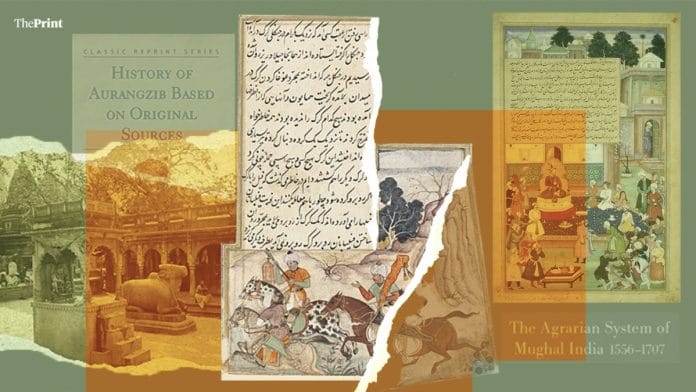


New Delhi: As the first Battle of Panipat marked its 500th anniversary in April, one stark and enduring truth remains: the contested legacy of the Mughal Empire in the new India.
How Indians read Mughal rule is changing, and is being pulled toward two ends of the spectrum. Either they were great syncretic integrators and patrons of art, culture, and food. Or they were Islamic bigots who imposed jizya, forced conversions, and demolished Hindu temples.
But how has historiography itself changed? The old Mughal historians such as Irfan Habib, William Irvine, and Jadunath Sarkar have given way to a new crop of writers such as Audrey Truschke, Ira Mukhoty, and Ebba Koch. Just in the past decade, there has been a volley of new scholarship as the Mughal era has been thrown into the heart of India’s new political battleground. What remains of the empire and culture that held sway for almost 331 years across North India and even trickled into South India?
The fight is no longer confined to archives or university departments, but has seeped into textbooks, cinema, street names, and even cuisine. Historians accuse each other of either romanticising or demonising the Mughals.
Some historians call for greater “objectivity” — such as Swapna Liddle, who argues that Mughals should be “delinked from current political agendas” — but the very nature of historiography is restless and changeable. History is constantly reinterpreted through the politics and anxieties of its time.
As public historian Eric Chopra, founder of the history platform itihāsology, puts it, “the goal is not to arrive at a final, immutable conclusion, but to keep opening newer questions and conversations.”
For historian Vikram Sampath, author of Waiting for Shiva: Unearthing the Truth of Kashi’s Gyan Vapi (2024), the older framing emerged from a post-Partition need to reimagine India as a plural civilisation rather than “a wounded religious nation-state”. In this reimagining, he argues, political truths were suppressed and camouflaged.
“The edifice of national unity cannot rest on the shaky foundations of whitewashed, manufactured history,” Sampath, who is also the founder of FIHCR, an organisation that promotes a civilisational reading of Indian history, told ThePrint.
In a similar vein, Aabhas Maldahiyar, author of Babur: The Quest for Hindustan (2025), describes the present moment as a “collapse of monopolised interpretation”.
“The friction is not because these facts are newly invented, but because they are newly audible,” he said.
Also Read: Glorifying Mughals understandable in 1947. Today, we must face historical truths
Romancing the Mughals
From the 1923 silent film Nurjehan to K Asif’s 1960 classic Mughal-E-Azam, the Mughals remained ever-present in 20th-century popular culture, as lovers, poets, builders of marble dreams. At least some of that afterlife stemmed from a British project to rehabilitate perceptions of Mughals.
Once they had ousted the last Mughal, the British Raj later spent considerable effort using these medieval rulers as a cultural bridge. British appropriation of Mughal imperial customs and diplomacy led to a widespread romanticisation. Even Delhi’s lush avenues were named after the Mughals by British authorities, and large portions of Lutyens’ Delhi incorporated Mughal features like chhajjas and terrace gardens.
Even after the British were gone, an institutional reverence for the Mughals persisted.
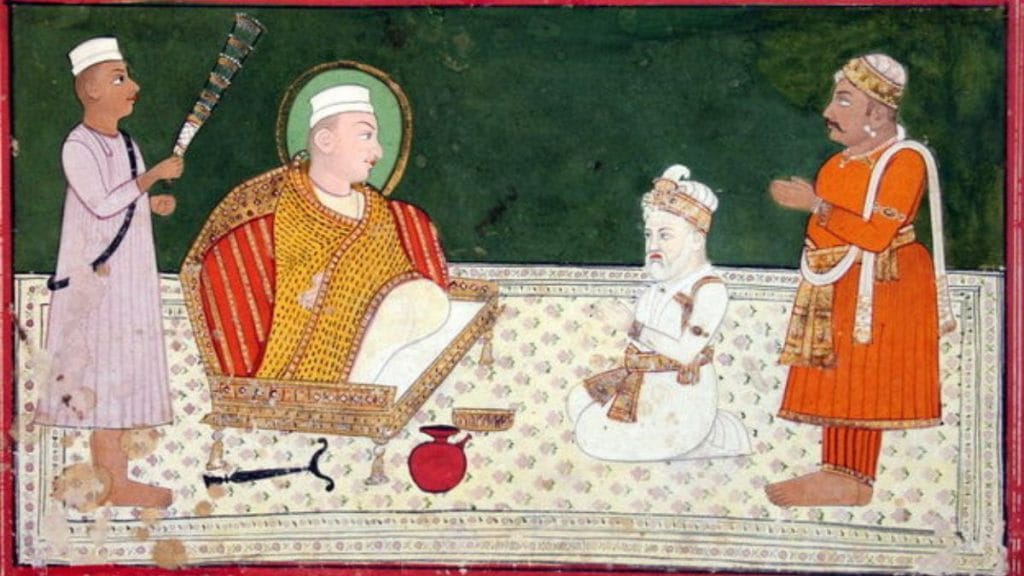
Bipin Chandra’s 1971 NCERT Class 12 textbook, Modern India—edited by Romila Thapar and Satish Chandra, among others—begins its chapter on the decline of the Mughals by noting that even as British rule took hold, the empire commanded great respect: “When a mighty empire like that of the Great Mughals decays and falls, it is because many factors and forces have been at work.”
The book traced the weakening of the empire to Aurangzeb’s policies, his conflicts with the Rajputs, administrative challenges in Delhi, and his religious orthodoxy.
The Mughals and their stories were part of the popular imagination— tales of Akbar-Birbal-Tansen, the doomed love stories of Salim-Anarkali and Mumtaz-Shah Jahan, the secular impulse of Babur despite his conquests, and the idea of benign rulers who promoted Ganga-Jamuni culture and built edifices all Indians could be proud of.
In the aftermath of Partition, there was a very clear intent or at least an impulse to romanticise specific Mughal rulers. Akbar especially was seen to embody the way that the Nehruvian elite wanted to see themselves, essentially straddling the Islamicate and Hindu worlds
-Anirudh Kanisetti, historian
It’s a viewpoint that still has its votaries. In a recent blog, Aligarh Muslim University history professor Syed Ali Nadeem Rezavi described this memory as a weapon against divisiveness, not nostalgia.
“To remember the Mughals is to remember that secularism and pluralism are not Western impositions but indigenous achievements. To forget them, or to reduce them to caricatures of foreign despots, is to willfully blind ourselves to the very civilisatory memory that made the idea of a composite, inclusive India possible. That memory is not nostalgia; it is a weapon,” he wrote.
But the post-Partition consensus has been systematically dismantled, especially in the last decade. Streets have been renamed, new excavations have been ordered at mosque sites from Varanasi to Sambhal, films such as Chhaava cast Aurangzeb as the central villain, and the textbook chapters on the Mughals have been rewritten.
Cracks in the ‘consensus’
This morphing of Mughals into modern-day influencers had moorings in a post-Partition wave of scholarship.
“In the aftermath of Partition, there was a very clear intent or at least an impulse to romanticise specific Mughal rulers,” said Anirudh Kanisetti, author of books such as Lords of Earth and Sea: A History of the Chola Empire. “Akbar especially was seen to embody the way that the Nehruvian elite wanted to see themselves, essentially straddling the Islamicate and Hindu worlds.”
But as the Nehruvian political landscape gave way to present-day conflicts, cracks started to appear in the rose-tinted lens through which the Indian public viewed the Mughal empire. The largest fracture point was the demolition of the Babri Masjid in 1992. Cinematic attempts to soften the Mughal image, like Ashutosh Gowariker’s 2008 period drama Jodhaa Akbar, were met with protests and demands for a ban. Instead of Akbar-Birbal, the dominant tales are of Babur the invader and Aurangzeb the tyrant.
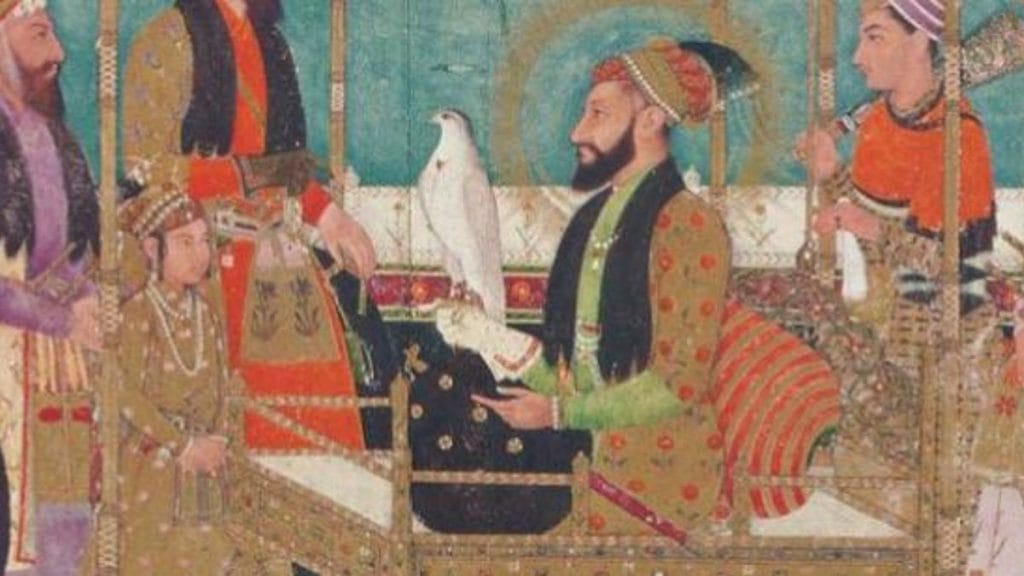
In this polarised environment, the different readings of history that reach the public feed directly into ideological contests.
Yet, as Aabhas Maldahiyar argues, true history owes allegiance neither to the political Left nor the Right: “Its only loyalty is to evidence.”
The evidence has never fit neat good-evil binaries, and historians have always debated it. Irfan Habib, for instance, studied original tax documents for his seminal 1963 work The Agrarian System of Mughal India. Influenced by Marxism, he saw the Mughal empire as a bureaucratic, militarised state that succeeded through surplus extraction — a system that ultimately shaped its social structure and led to its collapse. Meanwhile, contemporaries like Bipin Chandra contended that though religious policies like jizya played a role, the real reason for decline lay in the power-seeking nobility. Yet, a parallel strand of scholarship that focused more stridently on the destruction of Hindu temples under Mughal rule was not taken seriously by the academic establishment.
Political mythmaking begins when selective facts are detached from context and turned into civilisational morality tales to be used and misused by all political dispensations
-Vikram Sampath
In 1991, Sita Ram Goel, author of The Story of Islamic Imperialism in India (1982), wrote an impassioned letter to Romila Thapar about being dismissed by ‘Marxist professors’. He argued that the “theology of Islam” offered the “only straight-forward and satisfactory explanation” of why Muslim rulers destroyed Hindu places of worship.
This conclusion, he said, came from Islamic inscriptions and “eighty histories written by Muslims” over a period of more than 1,000 years.
“We have added no editorial comments and given no communal twist to the events that took place. All along, we have kept to the actual language used by the Muslim historians…. We wonder if the professors will dismiss as a mere listing of dates the evidence we have presented,” he wrote.
Well before this too, early 20th-century scholars such as Sir Jadunath Sarkar had blamed the empire’s collapse on the moral decay of its rulers and a rise in orthodox Islamic policies. Often maligned by both sides, his work was instrumental in shaping the famous Aurangzeb-Shivaji binary.
Maldahiyar argues that many such voices were intentionally dismissed as “communal” after 1947 because they “disrupted the emerging ideological consensus of the state.”
Aurangzeb vs Dara Shikoh
The central gladiatorial combat in today’s Mughal argument is Dara Shikoh versus Aurangzeb. Within this Cain-and-Abel frame is the question of the ‘ideal Muslim’ as imagined by the current power elite.
Over the past few decades, the Mughal legacy has come under the microscope, especially the transgressions of Aurangzeb. The sixth Mughal emperor famously reversed previous policies of pluralism, ordered the destruction of temples, and reimposed the jizya tax on non-Muslims. As legal disputes over sites such as Gyanvapi Mosque bubble, so does the political discourse around the architect of their destruction.
At the same time, there has been a resurgence of interest in Dara Shikoh, Aurangzeb’s elder brother who translated the Upanishads into Persian. He has been the subject of recent biographies by Avik Chanda and Supriya Gandhi, and in 2017 the Modi government renamed a Delhi road after him.

In the Aurangzeb-Dara Shikoh binary, the loudest voice is Audrey Truschke. The American historian and Rutgers professor has consistently put forth archival evidence that reads to her critics as defence — or apologia — for Aurangzeb.
Her 2017 book Aurangzeb: The Man and the Myth challenged the conventional villain-hero reading— the idea that Dara was the “lost hope for India”, she has written, is a British invention. At the 2019 Jaipur Literature Festival, she argued that Dara, had he become emperor, would have been just as “disastrous” and “cruel and prone to violence” as his brother.
Her readings have made Truschke one of the most attacked historians in the Indian public sphere — accused by Indian scholars of “Hinduphobia” and of Mughal-washing medieval India.
“A balanced and correct history of the Mughals is not a compromise between historians who study them honestly and Hindu nationalists who demonise them for their own hateful ends. You need to listen to the former as evidence-based scholars and disregard the latter as far-right, mythology-driven radicals,” she told ThePrint.
Mughal legacy is not a score to settle, according to her.
“The Mughals made India in many ways, and that legacy of historical impact — which does not trade in glory, horror, or any combination of the two — is not contested among historians,” she added.
On the other end of the debate is Vikram Sampath. In his 2024 book Waiting for Shiva: Unearthing the Truth of Kashi’s Gyan Vapi, he argues against Truschke’s “sanitised” view of the Mughal emperor. Sampath also portrays the emperor as a religious bigot. According to his book, the temple destruction carried out by Aurangzeb is an “open wound” in India’s history.
A balanced and correct history of the Mughals is not a compromise between historians who study them honestly and Hindu nationalists who demonise them for their own hateful ends. You need to listen to the former as evidence-based scholars and disregard the latter as far-right, mythology-driven radicals
-Audrey Truschke
The question then arises: which reading is true, or at least more correct?
Sampath asserts that distinguishing fact from fiction requires methodological discipline rather than emotional or ideological certainty. He divides historical claims into three categories — documented events from contemporary sources, interpretation, and political mythmaking.
“Political mythmaking begins when selective facts are detached from context and turned into civilisational morality tales to be used and misused by all political dispensations,” he said.
But even original texts may not be devoid of bias, according to Kanisetti. For example, the Akbarnama, the official chronicle of Akbar’s reign, was written by his courtier Abul Fazl and should be read accordingly. Historical people, Kanisetti argues, were still people with their own ideals and propagandistic viewpoints.
“Just because somebody was writing in the 1600s doesn’t mean that they were writing objective truth,” he pointed out.
Also Read: How pragmatic calculations shaped Mughal rule in medieval West Bengal and Tamil Nadu
The defining Mughal of 21st-century India
Perhaps more than any other Mughal, it is Aurangzeb who fires up passions today, and not in a good way. His name comes up everywhere from street politics and cinema to cabinet statements.
The longest-reigning Mughal emperor has been in the news again since 2022, when rising disputes over Varanasi’s Gyanvapi mosque — built over the destroyed Kashi Vishwanath temple — made him the centre of modern political debate.
In March 2025, Maharashtra Chief Minister Devendra Fadnavis blamed riots in Nagpur on tensions stirred by the Vicky Kaushal-starrer Chhaava, in which Chhatrapati Sambhaji Maharaj — Shivaji’s son — battles the tyrannical Aurangzeb. Tensions escalated after right-wing protestors demanded the demolition of Aurangzeb’s tomb in nearby Khuldabad.
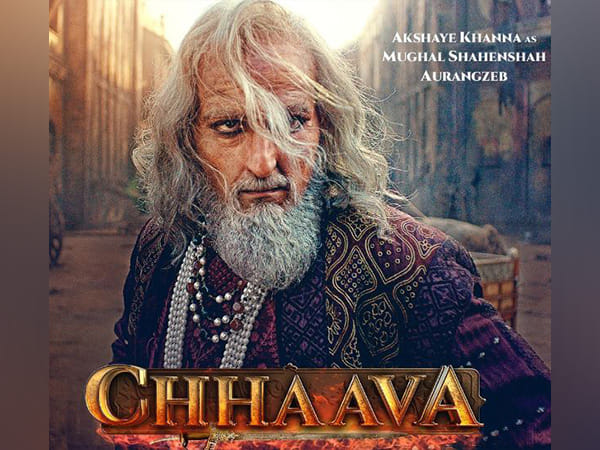
Some historians have argued in favour of this kind of re-examination as a form of righting past wrongs.
“We should not whitewash history to suit our present needs with the caveat that we are not holding today’s communities responsible for the barbarians of the past, nor should they glorify them,” said Sampath, speaking on the violence in Nagpur over the tomb at the Rising Bharat Summit 2025.
Previously, on the removal of Mughals from school history textbooks, Sampath said one cannot forget the past.
“People should know everything. They need to know what Tipu Sultan and Aurangzeb did,” he added.
For Rezavi, Aurangzeb’s use of religion as a political tool paved the way for modern leaders to do the same — but he was, in many ways, an aberration from his predecessors.
But Maldahiyar offers the opposite interpretation. Aurangzeb, to him, was not a rupture from Mughal tradition but a reassertion of tendencies that had always existed within the empire.
Temples, tombs, tandoors
Even as Mughlai cuisine and motifs dominate markets and the Taj Mahal remains one of the most visited monuments in the world, the legacy of the empire has been visibly downgraded over the last decade.
The most recent instance was Uttar Pradesh’s One District, One Cuisine list this month, which highlights only vegetarian dishes and leaves out Mughlai paratha, korma, sheermal, and kebab — arguably staples in the state since the Mughal era.
Even the Taj Mahal has faced similar attempts at being kept out of sight. Despite being a massive revenue generator — almost Rs 297 crore — the monument to love was conspicuously absent from the Uttar Pradesh Tourism Department’s 2017 32-page booklet titled ‘Uttar Pradesh Tourism: Its High Potential’. Although, in what many viewed as a course correction, the Taj Mahal featured in the UP government’s official calendar for 2018 for the month of July.
Around the same time, Bharatiya Janata Party MLA Sangeet Som questioned the monument’s place in Indian history. Another BJP leader, Vinay Katiyar, claimed that the 17th-century marble tomb was built by Shah Jahan after destroying a Hindu temple known as “Tajo Mahalaya”, which housed a shivling. This theory was initially floated in a 1989 book, Taj Mahal: The True Story, by Purushottam Nagesh Oak, who had started an organisation called the Institute for Rewriting Indian History in the 1960s.
However, UP Chief Minister Yogi Adityanath, commenting on the controversy, said that the how and the who regarding the building of the monument did not matter.
“It was made by the saputs (sons) of Bharat Mata through their khoon and pasina. It is famous across the world for its architecture,” Adityanath added.
Writing for ThePrint, Hilal Ahmed of the Centre for the Study of Developing Societies (CSDS) has argued that the Taj Mahal row is just another front of the debate on temple desecration by Muslim rulers — one being weaponised, he contends, to “achieve the larger objective of establishing a Hindu Rashtra”.
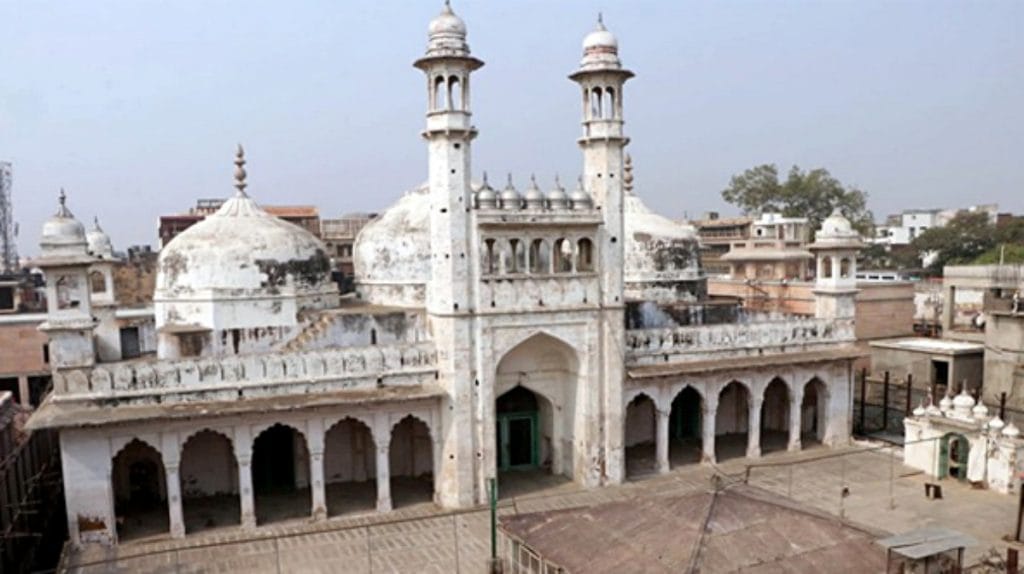
The Taj is only one of many sites of historical contestation. In November 2024, a court-ordered ASI survey of Sambhal’s Shahi Jama Masjid, prompted by a petition claiming that Babur had built it over a Harihar temple, led to protests in which five Muslim men were killed. Similar petitions are pending over the Gyanvapi mosque in Varanasi, the Shahi Idgah in Mathura, and the Bhojshala complex in Dhar.
Indigenous vs invaders
If the Mughals are being cast as invaders, there is also a concerted push to shine the spotlight on Hindu warrior kings such as Vikramaditya, Suheldev, and Agrasen. There is fresh interest in ‘indigenous’ rulers and kingdoms such as the Ahoms, Rajputs, and Guptas.
Indeed, historians such as Krishnokoli Hazra, Head of the Department of History at Loreto College, have pointed out that Indian historiography has long over-indexed on large north Indian empires at the expense of regional kingdoms.
But what is happening now goes beyond that academic correction. It is also about framing the Mughals as what Liddle calls an “alien and destructive force”, including in politics.
Soon after assuming office in 2014, Prime Minister Narendra Modi spoke of India’s centuries of “slavery” under Mughal rule.
“The mentality of 1,200 years of slavery continues to haunt us. It is often a challenge for us to hold our heads high when speaking to someone of even slightly elevated stature,” he said.
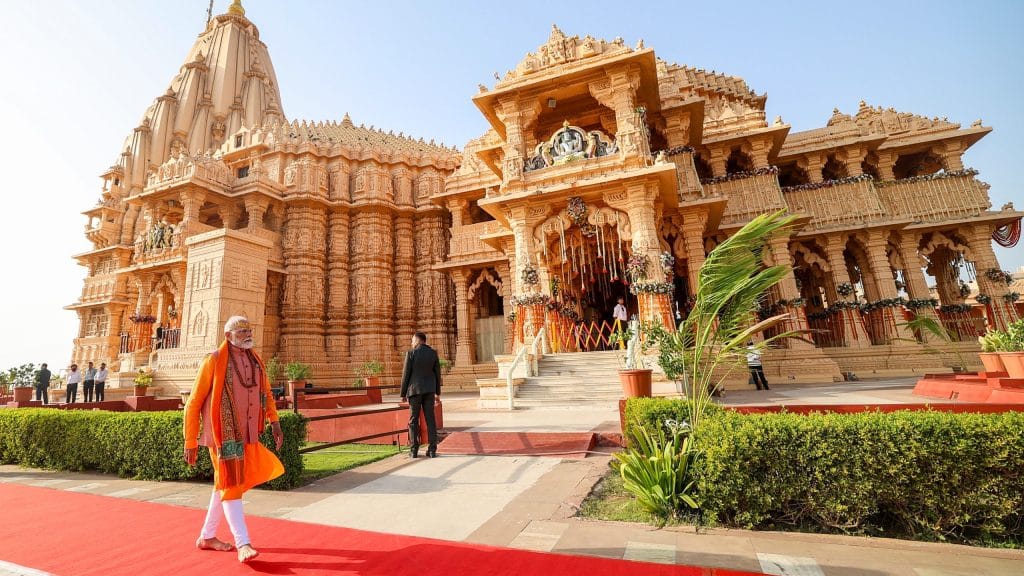
Earlier this year, on a visit to the Somnath Temple, he said that from Ghazni to Aurangzeb, all religious fundamentalists had tried to destroy the temple — and that the “true history of hatred, atrocity and terror was hidden”. On 11 May, he returned for the Somnath Amrut Mahotsav and again invoked the “invaders” who tried to destroy the shrine.
But the disavowal can only go so far. The cultural significance and grandeur of the Mughals have produced cracks in the animosity, or at least forced a retelling that folds them into a more palatable Indian narrative.
Inaugurating the Humayun’s Tomb Museum in 2024, Culture Minister Gajendra Singh Shekhawat said the museum epitomised ‘Vikas bhi Virasat bhi’ — development as well as heritage. He linked it to Modi once saying that every point of India’s present was linked to a “glorious past”— in this case a Mughal tomb.
The Mughals themselves were no strangers to contradictions. During Itihāsology’s exclusive night at the National Museum last month, Chopra pointed to a painting of Jahangir holding an image of the Virgin Mary. The emperor, he explained, was seeking spiritual legitimacy as a “cosmopolitan ruler”.
History cannot be reduced to marble domes or battlefields alone, according to Maldahiyar.
“It must account for both the beauty that empires created and the opportunities that may have been lost along the way,” he added.
In a recent article, The Economist asked a burning question: What have the Mughals ever done for us? It listed the sitar, syncretism, tandoors, and more before delivering the punchline: “They brought the BJP to power”.
Razing buildings and renaming streets is one thing, it argued, but eradicating a culture that “permeated India’s blood and soil” was a more difficult task.
“That, then, is the best answer to their question of what the Mughals have ever done for them. They gave political Hinduism its eternal, indispensable villain,” the article concluded.
Relearning history, rewriting legacy
On 21 April 1526, Babur used gunpowder and field artillery to defeat Ibrahim Lodi at the First Battle of Panipat, ending the Delhi Sultanate and establishing Mughal rule.
AMU history professor Rezavi has written that it should be remembered solely as a case study in “tactical genius overcoming political isolation” and not the start of a religious war. In the same article for the Indian Express, he described the ensuing Mughal rule as a period of “cultural flowering” and syncretism, and said this was the real anniversary worth commemorating.
Let a fourteen-year-old encounter history not through sanitised summaries, but through the words of those who lived and wrote it. But evidence without context becomes ammunition rather than education. Insist on historiography as a method, not ideology
-Aabhas Maldahiyar
Half a millennium on, the ideological battle has advanced deeper into school textbooks. Back in 2022, Hazra in an op-ed for ThePrint noted that though Indian textbooks didn’t have a Muslim bias, they did have a Mughal one. This, she wrote, stemmed from a colonial-era lens that equated advanced civilisation only with massive, centralised states. But there have been palpable changes in some textbooks over the years, often with contradictory portrayals of the Mughals across them.
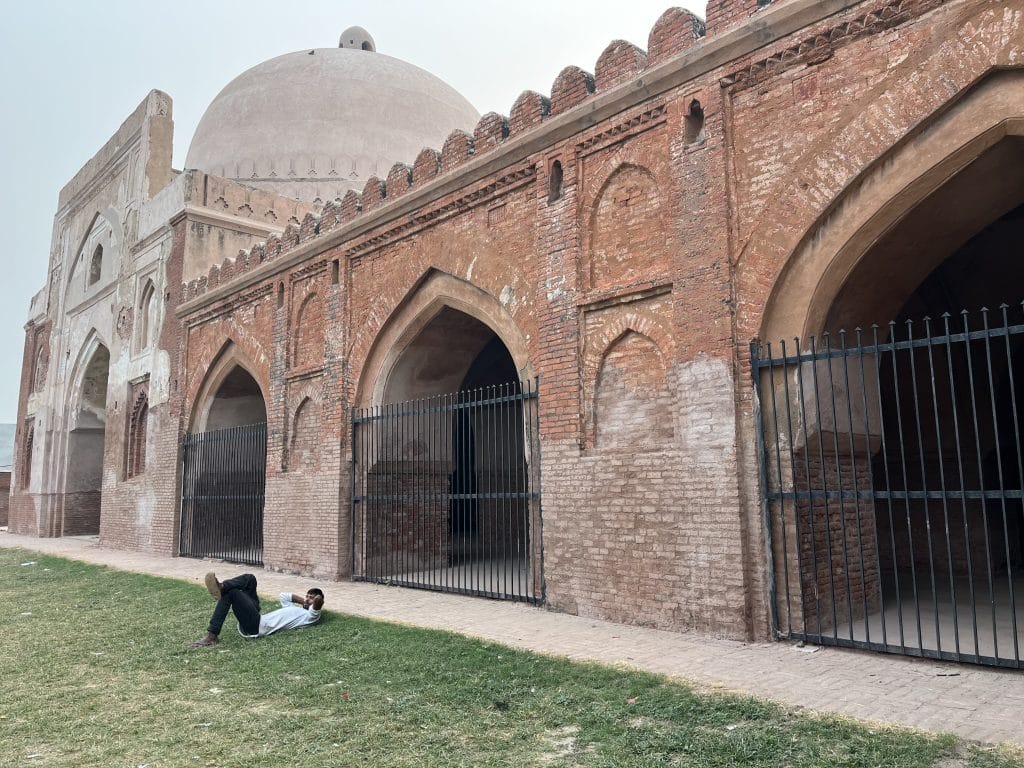
The 2024-2025 NCERT Class 7 textbook opens its Mughal chapter by acknowledging the empire’s lasting cultural footprint, noting that India’s Prime Ministers still deliver Independence Day speeches from the ramparts of the Red Fort.
But the new 2026-2027 Class 8 textbook, titled Reshaping India’s Political Map, strikes an ominous note. It tells readers about invaders who used violence to convert people.
“Many of these invaders were Central Asian—Turkic or Afghan. They were drawn to India not only for her reputed riches and for territorial ambitions, but also often to spread, by force of violence if necessary, their own versions of their religion,” the 2026-2027 introduction reads.
Babur is described as a “ruthless conqueror” who built “towers of skulls”, though it concedes he was also “cultured” and “intellectually curious”. Akbar’s reign is dubbed a “blend of brutality and tolerance”, and the victory message attributed to him after the siege and jauhar at Chittorgarh is quoted: “With the help of our bloodthirsty sword, we have erased the signs of infidelity from their minds and have destroyed temples in those places and also all over Hindustan.”
Meanwhile, Aurangzeb’s farmans (edicts) are used to establish a clear religious motive for his tyranny.
In the midst of these contrary teachings, how might a 14- or 15-year-old interpret the Mughals?
For Liddle, the answer starts with what not to do— stop conflating Mughal with Muslim.
“If we see the Mughals as a ruling dynasty of the past and nothing more, they get de-linked from current political agendas, and can be studied objectively,” she said.
Clean prescriptions don’t hold much weight for Sampath, though.
He says that for educators “the key is neither sanitisation nor moral theatre.” He argues that students should have the necessary tools to learn that the Mughal empire was built through military conquests, the same as most others.
His caveat is that fraught topics such as jizya, temple desecration, and punishments to those who resisted conversions should be taught with a sense of proportion and context. And that a corrected public history would not replace one orthodoxy and distortion with another.
Maldahiyar wants to go further still — skip the summaries, hand students the originals.
“Let a fourteen-year-old encounter history not through sanitised summaries, but through the words of those who lived and wrote it. But evidence without context becomes ammunition rather than education. Insist on historiography as a method, not ideology,” he said, adding that students should be taught how to read primary sources themselves in the languages in which they were written and also be encouraged to debate. “Truth is not propaganda. Suppressing truth is. The task of education is not to manufacture admiration or resentment.”
Also Read: To understand Mughal history, look at the wives and daughters. Not just male rulers
Whose history is it?
Where historians also disagree is on who holds the keys to history.
Some say it is best left to the credentialed experts. Liddle, for one, warns against “writers of popular history”.
But for Sampath, gatekeeping is part of the problem.
“History is nowadays felt to be too important to be left only to the historian, and everyone wants to have a say or have a stake in it,” he said.
Public history should “broaden the frame”, according to him. “It would include the voices of imperial elites and those who resisted them, as also subaltern voices.”
Between the two poles are historians who repose their faith in the disciplined study of multiple sources. Chopra says no single document ever reveals the whole truth; what’s needed is “the painstaking task of comparing multiple sources, their biases, and their context.”
Rezavi suggests it is best to stick to the source materials.
“Our past has both types of things, bad, black and white, as it is in the case of our own life,” he said.
For Kanisetti, all of this misses the larger point. The trouble today, he argues, is not the push of any one ideology but a long-standing lack of knowing “how to think about history”.
“Equip students with the ability to understand how history worked and how historians reconstruct it… So much of the debate over public history in this country is focused on fixing the textbooks, but educating oneself about history is a citizen’s responsibility and should not end in school,” he said.
The only certainty is that Mughal history refuses easy reading. The Mughals could still have more battles left in them.
(Edited by Asavari Singh)
Maybe first let everyone read books like sapiens and how people unnecessarily fight for myths they created. Let them learn that spirituality is different from organized religion and that religion has always been exploited by rulers for their own ends.
That development of yore just like today also had its own set of victims who were denied justice.
That the good things like culture, civilizational refinement, accomplishments in art or architecture are the products of human ingenuity and can/should be enjoyed by everyone.