






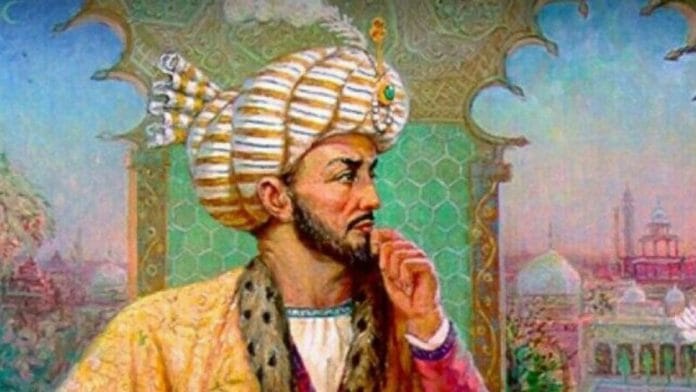


The Mughal legacy has changed because the questions we ask of history have changed. For a long time after independence, mainstream Indian public history, as also popular media, tended to emphasise the Mughals as empire-builders, patrons of art and architecture, and contributors to a composite Indo-Islamic culture. Akbar’s court, miniature painting, Hindustani music, Persianate administration, Urdu’s evolution, and monuments like the Taj Mahal became central to this romanticised story.
Inherent in this narrative building was the assumption that a disproportionate romanticisation of the Mughals was an essential prerequisite for social amity in a modern, plural India. By doing this, somewhere subliminally, one was hanging the albatross of these excesses on people today, which, I always maintain, is wrong, and communities of today are not responsible for the atrocities of the past. By converse logic, today’s communities, too, should not valorise barbarians, invaders and despots just because they share the same faith.
One can understand the need to do this in 1947 when the nation was born of a bloody partition on Islamic lines. But today, after eight decades, we are mature enough to look our history in the eye and make peace with the truths that stare us in our faces.
I think, today, the focus has widened. Public debate increasingly asks—who paid for imperial splendour? What happened to communities that resisted? How should we remember rulers who could be both sophisticated patrons and violent conquerors? The Mughal past has become a contest because history itself has become tied and deeply enmeshed in questions of identity, legitimacy, and belonging in modern India.
Politics of legitimacy
It is rather ironic that the very founder of the dynasty, Babar, who descended from Timur on the paternal side and the Mongol emperor Genghis Khan on the maternal side, looked down upon the latter.
Timur himself, who was Turkic and Persianised, despised what he saw as raw, lawless Mongol steppe culture. He did not follow the old Mongol tribal order, but needed Mongol legitimacy. Babar inherited the same strategy. In his memoirs, the Babarnama, Babar frequently contrasts his own Timurid cultural refinement with what he regarded as the roughness of the steppe life of the Mongols, while simultaneously asserting his descent from Genghis Khan to support and legitimise his claims to sovereignty.
The popular nomenclature that Timur and even Babar used for themselves was ‘Timurid Gurkaniya’, the son-in-law of the house of Genghis Khan. Babar or his successors never titled themselves as the Mughals, but called themselves Gurkani, Timurid, or simply Padshah. The term ‘Mughal’ (from Mongol), however, became popular as a loose ethnic label for Central Asian Muslims, after its usage by the Afghans, later Europeans and Indians.
Though Babar established the Mughal Empire in India, he had little love for the country or its people. His heart ached for his hometown in Central Asia—the hills of Fargana, the blue domes and glittering minarets of Samarqand and Kabul, where, by his own choice, he was buried.
In the Babarnama, he writes: “The country and towns of Hindustan are extremely ugly…Hindustan is a country that has few pleasures to recommend it. The people are not handsome. They have no idea of the charms of friendly society, of frankly mixing together, or of familiar intercourse; they have no genius, no comprehension of mind, no politeness of manner, no kindness or fellow-feeling, no ingenuity or mechanical invention in planning or executing their handicraft works, no skill or knowledge in design or architecture; they have no good horses, no good flesh, no good food or bread in their bazars, no baths or colleges, no candles, no torches, not a candlestick. The chief excellency of Hindustan is that it is a large country, and has an abundance of gold and silver.”
That India was a wealthy country with abundant gold and silver was the only reason to remain in it and exploit its resources, by his own admission. During his conquests, entire populations of cities and towns were wiped out, and women as well as children were enslaved.
The early Mughal nobility, especially under Babur and Humayun, mainly consisted of people from Central Asia (Turanis) and Persia (Iranis). These nobles held important positions in the empire and helped the rulers in administration and military matters. However, as the empire expanded in India, it became necessary to include people from different regions. This change became more visible during the reign of Akbar.
He appointed non-Muslims to the military aristocracy and high administrative offices. For instance, Rajputs were given high ranks in the administration and army, and many became close allies of the emperor. Indian Muslim converts and other local groups were also included in the nobility. Yet, according to the Ain-i-Akbari, Akbar’s biography by his court historian Abul Fazl, about 70 per cent of Akbar’s nobles were foreign by origin. Though later emperors like Shah Jahan tried hard to emphasise the Central Asian affiliations of the Mughal dynasty, it had no adverse effect on the position of the Iranians under him.
The greater part of Aurangzeb’s nobility, according to French travellers like François Bernier and Jean-Baptiste Tavernier, consisted of Iranians who occupied the highest posts in the Mughal Empire. Thus, Indian Muslims, even after conversion, did not ascend to any great heights in Mughal administration.
The difficulty is that the Mughal empire, like most empires, resists moral simplicity. Akbar abolished the jizya tax on non-Muslims and incorporated Rajputs into the imperial elite, while Aurangzeb reinstated the jizya and ordered large-scale temple destruction. But the same Akbar’s reign’s first half was marred by religious bigotry with his identification as a ghazi or holy warrior for Islam.
Especially, during the conquest of Chittorgarh in Rajasthan, which he besieged for more than five months, some 30,000 civilians were ordered to be slaughtered. Many Rajput women, as was their practice of self-defence to not fall into the hands of the Muslim invaders, committed Jauhar or mass self-immolation.
After Chittorgarh’s conquest, he sent out a message of victory: “We have succeeded in occupying several forts and towns belonging to the infidels (kafirs or non-believers of Islam) and have established Islam there. With the help of our bloodthirsty sword, we have erased the signs of infidelity from their minds and have destroyed temples in those places and also all over Hindustan.”
But as his empire grew, he realised that to stabilise his empire, he needed to use the political strategy of matrimonial alliances with princesses of neighbouring states, including Hindu Rajputs. As his rule progressed, he followed the policy of sulh-i-kul, literally meaning peace with all and universal tolerance of all faiths, through inter-religious dialogues at the Ibadat Khana or Worship Hall began to be held.
Hindu officials were appointed to senior positions in the administration. That he regretted what he did is evident in the dialogue he had with his court historian and biographer, Abul Fazl: “Formerly, I persecuted men into conformity with my faith and deemed it Islam. As I grew in knowledge, I was overwhelmed with shame. Not being a Muslim myself, it was unmet (i.e. incorrect) to force others to become such. What constancy is to be expected from proselytes (converted people) on compulsion?”
Also read: A Jain merchant’s diary of daily life under Mughal rulers Akbar, Jahangir & Shah Jahan
Imperial violence
The Taj Mahal is undoubtedly a beautiful symbol of Indo-Islamic architecture and a cynosure of the eyes of visitors to India. Yet, when the Taj Mahal was being built, a devastating famine raged in his empire in the Deccan from 1630 to 1632. Close to 7.4 million people had succumbed to the Deccan Famine. Part of the reason for the famine, too, was Shah Jahan’s invasion of the fertile region of Malwa, where some of his commanders had rebelled and joined hands with the Deccan Sultans.
Shah Jahan’s army laid the entire Deccan region to waste by burning down all the crops. People were still taxed to contribute to the building of the Taj Mahal, a tomb in memory of his wife Mumtaz Mahal. The Mughal Emperors levied the highest taxes, and for peasants, more than half of their produce was taken as revenue. The Vijayanagara rulers, by comparison, took one-sixth of the produce, which was almost four times less than that of the Mughals.
Why is it that under the Mughals, we see not a single university of international repute, like say what the Guptas established at Nalanda, or centres for public healthcare like what the Cholas established, ever come up? Did the Mughals also give their daughters in marriage to Rajput princes to cement political and religious harmony, or was it always the other way round? After all, syncretism is not a one-way street.
Coupled with this was the constant scourge of iconoclasm and religious intolerance, barring a few decades or so of Akbar’s munificence. The most infamous of them is, of course, the much-reviled Aurangzeb. On his coronation in 1669 after a bloody war of succession, Aurangzeb proclaimed that Islamic laws were to be enforced across the length and breadth of his empire. These included curbing heresy and infidelity, ban of intoxicants and liquor, forbiddance of music and dance from the royal court, banning the use of astrological almanacks, and the observance of birthday festivities and so on.
He issued orders to the governors of all the provinces to demolish the schools and temples of the infidels, and with the utmost urgency, to put down the teaching and the public practice of the religion of the non-Muslims. Besides innumerable temples across India being demolished, prominent ones like the Kashi Vishwanath in Varanasi, Keshav Dev at Mathura, Somnath at Prabhas Patan and others were pulled down, as also Jain temples and Sikh gurudwaras. Even the loyal State of Jaipur was not spared, and some 66 temples were razed to the ground at Amber.
Being a devout Sunni Muslim, his brutality was also shown toward other Muslim sects, some Sufis and Zoroastrians (the Parsis). The Jizya was reimposed on the Hindus in 1679, so that, being unable to pay these heavy taxes, Hindus would choose to convert to Islam. Many of these episodes are etched in public memory and consciousness and keep raising their head every so often.
But this contestation of Mughal supremacy that we see now is not entirely new. Even during Mughal rule, the empire was bitterly contested. Rajput rebellions, Sikh resistance, Maratha expansion, peasant uprisings, and court chroniclers themselves reveal ongoing tensions.
Also read: To understand Mughal history, look at the wives and daughters. Not just male rulers
Beyond identity battles
Under Jahangir, seeds of enmity were sown between the Mughals and the Sikhs, as the fifth Guru of the Sikhs, Arjan Dev, was ordered to be executed in 1606. The brutal treatment meted out by Aurangzeb and his successors, for religious, as also political reasons, to the Sikh Gurus like Tegh Bahadur and Guru Gobind Singh, the young sons of the last Guru Gobind Singh, or Banda Singh Bahadur and his son, Sambhaji Maharaj, and others, is all part of the court chronicle of the Mughals themselves.
Undoubtedly, British colonial historians later amplified certain narratives to justify colonial rule as a civilising force in this barbaric, warring conglomerate of a nation. What is different now is the scale and speed of public engagement. Social media, electoral politics, and popular culture have collapsed the distance between academic history and mass emotional identity.
Yet, in popular imagination shaped by iconic films like Mughal-e-Azam (or later Jodha Akbar, which was hotly contested), the Mughal emperor or their sons come across like these happy, romantic, feather-trotting princes, Salim. Documented events are those supported by contemporaneous evidence, ranging from darbari farmans, court chronicles, inscriptions, revenue records, foreign travellers’ accounts, archaeology and regional literature. Interpretation begins when historians critique their sources and ask why those events happened and what they meant. While interpreting these contemporary sources, when we state today that court chroniclers exaggerated the temple destruction acts of the ruler, that in itself is deeply problematic.
That a virtue is made of a crime, and to prove one’s Islamic credentials, the ruler had to document how many temples he broke, idols smashed, or infidels killed or converted. The theological sanction for such acts and those being seen as virtuous begs for a deeper introspection into how we interpret these acts. These are, after all, not just medieval acts in a violent, pre-modern society. When the magnificent Bamiyan Buddhas were razed in full public and media gaze, or the wanton acts of idol destruction continue in Bangladesh or Pakistan even today, these do not just remain distant problems of history, but very real, contemporary issues to tackle.
But all attempts, as are made sometimes nowadays, to erase dynasties like the Mughals from the historical narrative, are foolish to say the least. We cannot, after all, choose our past; it has already occurred. An objective and broader canvas that includes every aspect of a particular rule must learn to coexist if it has to be an honest historical narrative.
One would have to discuss architectural splendours alongside brutal and excessive taxation; exquisite literature alongside barbaric warfare, syncretism alongside sectarian conflict and targeted iconoclasm. These are not mutually exclusive, and in the real world, they actually can co-exist. It would also distinguish between evidence and retrospective political projection.
One should also know that the Mughals created durable administrative systems, influenced language and aesthetics, expanded trade networks, and shaped the Indian subcontinent’s political culture profoundly, even as deeply problematic religious bigotry, discrimination, intolerance and iconoclasm also operated as an integral part of state policy, and consequently deeply wounded the Indian civilisation—one does not negate the other.
I feel that the 500th anniversary of Panipat is a useful moment precisely because it forces these questions into the open. Babar’s victory in 1526 did not simply begin a dynasty. It began centuries of political, cultural and demographic transformation whose consequences are still emotionally alive and hotly contested even today.
The goal of revisiting that past should not be to settle identity battles once and for all. It should be to become more historically literate, more comfortable with ambiguity and more resistant to narratives that demand uncomplicated heroes and villains.
Vikram Sampath is an author, historian, Fellow of Royal Historical Society UK and Founder of the Foundation for Indian Historical and Cultural Research. His X handle is @vikramsampath.
Views are personal.
(Edited by Saptak Datta)
Its naïve (simple, if you want to read it charitably) to consoder greatness = good. Great is a neutral to the nature of deeds. Many so-called “Greats” lay claim to equal share of noble and terrible deeds.
Well said, Vikram. We don’t have to choose one over the other but accept it all in totality. In my view, the usage of ‘and’ is better than ‘but’.
Equally, we should not demonise the Mughals. To be judged by the standards of other rulers of those times. Great patrons of the arts, left behind many fine monuments.