





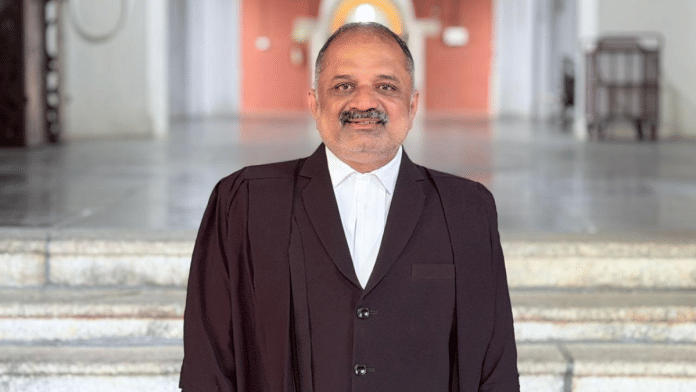


New Delhi: In the Madras High Court, A.G. Perarivalan now stands in a lawyer’s robes, decades after he stood in the witness stand as a teenager accused in one of India’s most high-profile assassination cases.
Arrested at the age of 19 in connection with the 1991 suicide attack targeting then former prime minister Rajiv Gandhi, Perarivalan spent more than 30 years in prison, including his time on death row. In 2022, the Supreme Court ordered his release using its extraordinary powers under Article 142 of the Constitution.
Although his incarceration ended, his engagement with the law did not stop there.
At 54, Perarivalan has returned to the court, this time as a lawyer shaped by the years he spent navigating the twists and turns in the legal system.
In 1998, a Terrorist and Disruptive Activities (TADA) court convicted Perarivalan of procuring batteries that the Liberation Tigers of Tamil Eelam (LTTE) used in the bomb to kill Rajiv Gandhi. The Supreme Court upheld the judgment convicting him, a year later, in 1999, while simultaneously striking down the TADA charges against him. Subsequently, Perarivalan remained on death row until 2014. The Supreme Court commuted his death sentence on account of an 11-year delay in deciding his mercy petition, in 2022.
Perarivalan said his decision to study law was born out of experience, not aspiration. “My own suffering is what made me learn law,” Perarivalan told ThePrint, after enrolling with the Bar Association of Tamil Nadu and Puducherry as a lawyer in the last week of April.
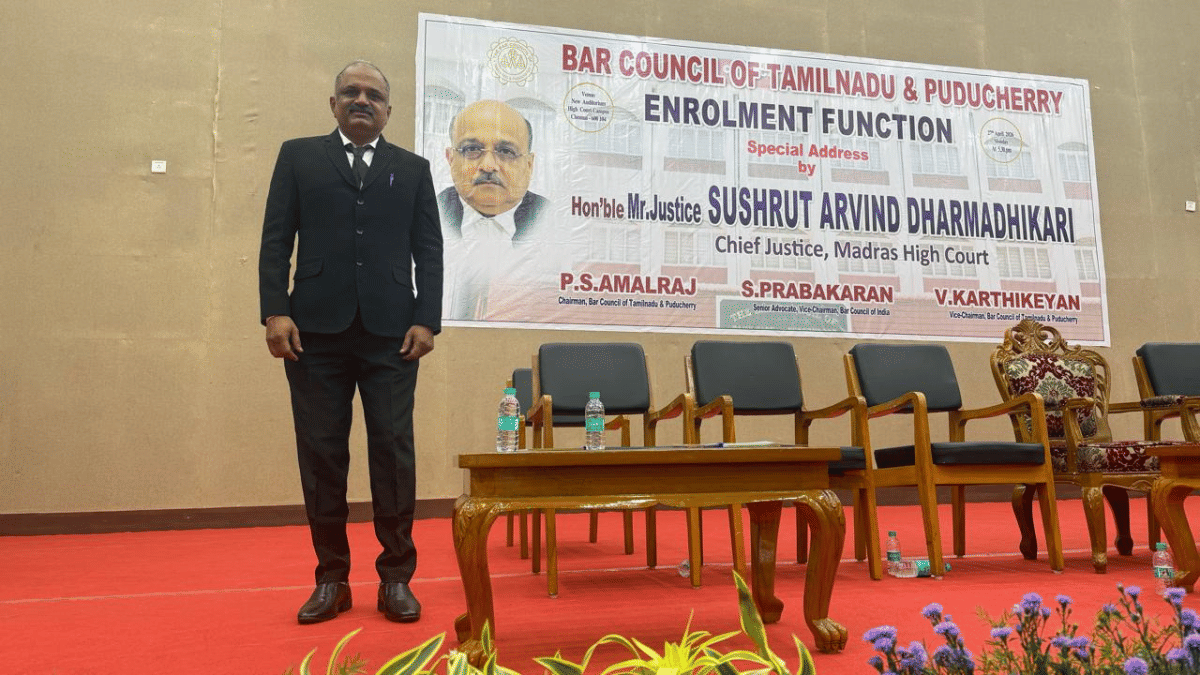
During his 31 years in prison, he encountered inmates who were unable to pursue appeals or secure competent legal representation due to poverty. As a result, many undertrials were stuck in a system they did not understand and could not access. Perarivalan told ThePrint that his main objective was to fight for the rights of such prisoners.
Although prevailing prison rules at the time prevented him from formally studying law or any other professional course, Perarivalan said he began reading extensively, learning about legal rights, procedures and the system that decided the course of his life.
Looking back at his arrest, Perarivalan told ThePrint that he was taken for questioning by the police, who assured him that he would be released shortly. Despite his family cooperating with the police and trusting the process, he said that he later realised his custody period exceeded what the law permits. “At that age, we believed nothing would happen if we had done nothing wrong,” he said, adding that his naivety proved costly.
His case, according to Perarivalan, was built on presumption.
“My background in electronics was used to link me to the construction of an explosive device. They built a story around that,” he said, referring to the Diploma in Electronics and Communication Engineering he had at the time of his arrest.
While the prosecution alleged that Perarivalan procured the 9-volt battery used in the bomb for the suicide attack, he maintained that the authorities never established his intent or knowledge of how the battery was used. “Buying a battery is not an offence. It becomes one only if you knowingly facilitate a crime,” he said.
Years later, a key development complicated the case further. In 2017, the police officer who recorded Perarivalan’s confession stated in an affidavit that he had not recorded it accurately. “That omission changed everything,” he said, alleging that this was used as the basis to further keep him in custody until 2022.
“In many places, people still see me as guilty,” he said, adding that India’s justice system may be imperfect but is still indispensable.
Perarivalan’s primary concern, however, is inequality in legal access. “Legal outcomes are often shaped by economic means. If you have money, you can engage good lawyers. If you don’t, you struggle.” This disparity, he said, undermines the principle of equality before the law.
Underlining that the death penalty is not necessary, Perarivalan said that in countries like the US, post-conviction review systems have helped overturn wrongful convictions. “We need something similar.”
When asked what message he would like to give to the general public at large, the hopeful lawyer said, “If you have not done anything wrong and you keep fighting, you will win one day.”
(Edited by Tony Rai)
Also Read: Take care, Rajiv Gandhi told Prabhakaran. Even gave bulletproof vest before Sri Lanka Accord
This man is shining the light on our justice system. When the CJI calls youths as cockroaches and termites, where is the hope?