



New Delhi: Ethanol’s history as a fuel is almost as old as the automobile itself—from powering engines in the 1860s to Henry Ford’s first car, the Quadricycle, in 1896. Its use declined during the US Prohibition era, when ethanol was heavily regulated because of its chemical similarity to drinking alcohol.
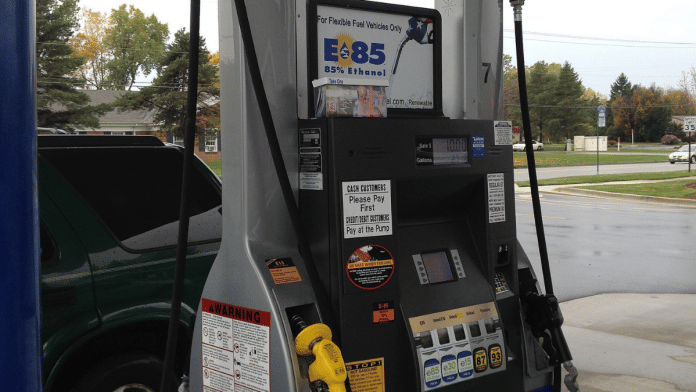
Last year, E20 (20 per cent ethanol-blended fuel) became the norm in Indian petrol pumps, with the government reaching its blending target five years in advance. Currently, the fuel standards for E22 to E30 have also been notified, and the government has introduced E85 in certain retail outlets across the country.
Despite the Union Petroleum and Natural Gas Ministry’s assurance that ethanol-blended petroleum was rolled out only after being tested for Indian vehicles, citizens continue to raise concerns about reduced mileage and long-term vehicle damage.
“There’s nothing new about E20 technology—it has been around since the early 1900s,” said Tutu Dhawan, an automobile expert based in Delhi. “During WW1 and WW2, people were forced to use anything but petrol to keep their cars moving; ethanol was used back then too.”
India isn’t the first country to experiment with ethanol-blended fuel. Brazil, the US, Thailand, Canada, and France have all rolled out their own blending policies and timelines, driven by goals ranging from cleaner air and energy security to supporting agriculture.
ThePrint takes a look at the ethanol-blending policies of each country, the reasons behind them, and the public reaction.
1. United States
Ford was one of the pioneers of building automobile engines that could run on ethanol. His first car, the quadricycle in 1896, ran entirely on ethanol. The Ford T Model car, introduced in 1908, was a flexi-fuel vehicle in which the engine could run on kerosene, petroleum, ethanol, or a mix of the three.
While 5-10 per cent ethanol was blended into fuel from the 1930s onward by companies such as Standard Oil, official American policy did not take up ethanol blending in petrol as a practice until 1978. The Energy Tax Act defined ‘gasohol’ as petrol, or gasoline, with 10 per cent ethanol blended in it, and it was offered as an alternative to pure petrol.
Slowly, the US began offering three kinds of ethanol-blended fuels—E10, E15, and E85, with the choice resting with consumers. The push for ethanol-blending in the country, aside from energy security, was also motivated by clean air standards, since ethanol causes fewer emissions than standard petrol. Currently, the US is the largest producer of fuel ethanol in the world, followed by Brazil.
However, this push for ethanol was not without criticism. In 2012, the American Automobile Association (AAA) warned users that E15 fuel could cause damage to motorcycle engines. Some automobile experts defended the E15 blended fuel, while others claimed that more testing was required before rolling out the fuel.
Currently, US standards state that E10 fuel can be used in every petrol-powered vehicle. Most of the US’ petrol is E10 blended fuel, according to the Department of Energy.
But for E15 and E85, the US Environment Protection Agency lays down specific standards that say vehicles need to be either 2001 or later models, or flex-fuel vehicles (FFVs) to be able to use those fuels.
Also read: Go easy on protein. Researchers say excess intake can shorten your life
2. Brazil
Brazil is the second global leader in producing, using, and exporting sugarcane-produced ethanol. Officially, its ethanol-blending programme, ProÁlcool, was launched in 1975 after the global oil crisis in 1973.
But earlier in 1931 too, Brazil had introduced a mandatory baseline ethanol blending of 5 per cent in all petroleum imports to support the domestic sugar economy.
From 1975 to 1979 onward, the programme was more standardised as the country introduced a slew of measures to take ethanol blending in petroleum up to 20 per cent. At the same time, Brazil also introduced changes in the automobile manufacturing industry to keep up with its ethanol-blending targets. In 1980, the country had its first neat ethanol-powered car, and later in the decade, most of the new cars sold were ethanol-powered.
“Through the programme, the government provided subsidies, incentives, and tax breaks to reduce the costs of production and increase the competitiveness of ethanol,” said a report about Brazil’s ProAlcool.
However, Brazil’s ethanol policy suffered a setback in 1989, when international oil prices fell, and sugar prices rose—thus leading to an ethanol shortage. Consumers with pure ethanol cars (E100) could no longer buy fuel for their vehicles, and the crisis led to a huge decline in the demand for both ethanol and ethanol-only cars. The country eventually ended the ProAlcool programme in 1990.
In 2003, though, the country introduced FFVs that could run on either ethanol or petroleum or a combination of both, starting a new era of ethanol-blended fuel. Now, each consumer has a choice between the standard E27 fuel (27 per cent ethanol-blended petroleum) or E100 (100 per cent ethanol fuel) for their cars, depending on which fuel is cost-effective.
The country adapted both its vehicles and its fuel infrastructure around ethanol. Currently in Brazil, E100 fuel is often 30-35 per cent cheaper than E27 blend, making it an affordable alternative for consumers.
3. Thailand
In Asia, Thailand was one of first countries to roll out E10 systematically in 2003, which was similar to the US’ gasohol, with 10 per cent ethanol blended into regular petrol.
The initial push came from increased support for the rural economy—cassava and molasses production—since most of Thailand’s ethanol came from those crops. However, Thailand’s ethanol policy spent a decade providing consumers an option between E10 and regular petrol, before slowly phasing out pure petrol for blended fuel by 2013.
“Ethanol consumption is promoted through the use of incentives provided by the State Oil Fund, making gasohol 20 to 40% cheaper than regular gasoline,” said a report by Asia-Pacific Economic Cooperation (APEC).
Moreover, Thailand also provides subsidies for the production of FFVs that can work on E85 fuel.
Within Thailand too, not all ethanol-blended fuels get the same demand from customers. Reports in Bangkok Post from 2023 explain how E20 sees lesser demand, as customers fear engine damage, despite it being priced lower than E10.
Also read: What is Madden-Julian Oscillation? Its current phase is bad news for Indian monsoon
4. Canada
The North American country started its ethanol blending programme in 2010, after the Renewable Fuels Regulation mandated 5 per cent ethanol blending. However, the ethanol-petrol mix is different in certain regions, such as Ontario. The state passed the E10 mandate in 2020, which changed to E11 in 2025. The blending is expected to grow to E13 by 2028, and finally to E15 by 2030.
For consumers, Canada offers a choice between using E15 or E85 fuel, but E5 is the standard blend in all petrol available at Canadian pumps.
“The aim of the Canadian government in implementing biofuel targets (ethanol blending targets) was to reduce the greenhouse gas emissions of the economy,” said the APEC report.
However, the report added that an increase in the nationwide ethanol-blending target seems unlikely due to adverse terrain and weather conditions in northern Canada. Ethanol as a fuel has a higher octane rating, meaning it can handle more pressure and prevents ‘knocking’, which happens when a fuel ‘bursts’ too soon and hurts the engine in the process.
Despite that, ethanol-blended fuel sometimes causes issues during the engine’s starting—called a ‘cold start’. Fuel needs to turn from liquid to vapour to ignite the engine, and ethanol needs warmer temperatures to vapourise, as compared to petrol. This ‘cold start’ problem appears largely during Canadian winters, and the APEC report states that higher ethanol blends countrywide will not be possible without making changes to vehicles.
5. European Union/France
The European Union does not have a unified ethanol-blending mandate. However, it does have renewable energy and emissions targets for each country. France is one of the largest ethanol consumers in the EU, and its nationwide ethanol-blended fuel programme began in 2009, with the SP95-E10.
The E10 fuel was provided as an option alongside regular petrol for consumers in 2009. It steadily gained importance in the country and is the highest-selling fuel currently.
According to a French news report, E10 was promoted as being compatible with all vehicle types produced after the year 2000, but the higher blended versions such as E85 were only compatible with flex-fuel vehicles. E85 is made up of 60-85 per cent ethanol, depending on the season in which it is being sold—like Canada, French vehicles too face a ‘cold start’ problem in winters.
In 2018, France also took unique legal measures by introducing the E85 conversion kit, a box that can be added to cars, bikes, and even jet skis to adjust their engines for E85. Since E85 is significantly cheaper than petrol, this allowed more consumers to adapt to the higher blend without needing to purchase a new car.
(Edited by Prasanna Bachchhav)