





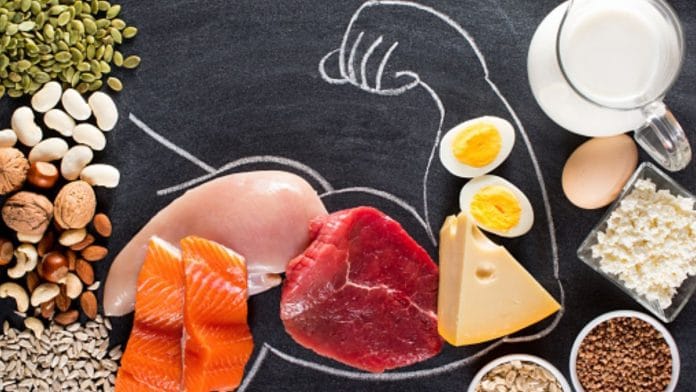


New Delhi: Protein is a gym rat’s favourite companion, and also the latest buzzword in the food and beverage industry. But while the nutrient indeed helps pack some muscles, going overboard with it can shorten your life, according to a recent review of over 350 studies.
The review, published in the journal Cell Press Blue on 31 July, found out that restricting protein intake can have several benefits — especially for people with a sedentary lifestyle — including improved metabolism and reduced cellular damage.
For the review, researchers from the University of Wisconsin-Madison in the US looked at over 350 scientific studies. They spotted several biological mechanisms that explained why going easy on protein can improve overall health and slow down ageing in some individuals.
“It’s absolutely crystal clear that there are benefits of protein to muscle growth and exercise response of active individuals,” said Dudley Lamming, the paper’s corresponding author. “But because most people are relatively sedentary, many people are likely consuming more protein than they actually need, which probably has negative health consequences.”
Also read: Protein became fashionable in India only when it stopped looking like an egg
Personalising recommendations
One of the important factors behind the benefits of low protein intake is a hormone called FGF21, or fibroblast growth factor 21. When protein consumption goes down, the levels of FGF21 hormone increases in the body. This results in improved sugar regulation, reduced inflammation, and better energy expenditure.
Studies conducted on mice have shown that higher levels of FGF21 hormone can increase lifespan. And this effect was more noticeable in male mice than in female mice.
Besides the hormone, researchers also examined the role of certain amino acids, the building blocks of protein, in ageing. It was observed that excessive consumption of methionine, isoleucine, and valine could encourage ageing by activating certain biological pathways. Moreover, it can increase the risk of inflammation, obesity, and other conditions linked to ageing.
When someone restricts their protein intake, the body switches into autophagy mode, which is a cellular self-cleaning mechanism that helps remove damaged cell parts, keeping the cells young.
The researchers underlined that exercise can help direct protein toward healthy muscle growth, preventing any adverse health impact.
“Recent recommendations have encouraged people to eat more protein, but they’ve also encouraged people to exercise more,” Lamming said. “We probably need to personalize protein recommendations based not just on age, but also on how physically active people are.”