



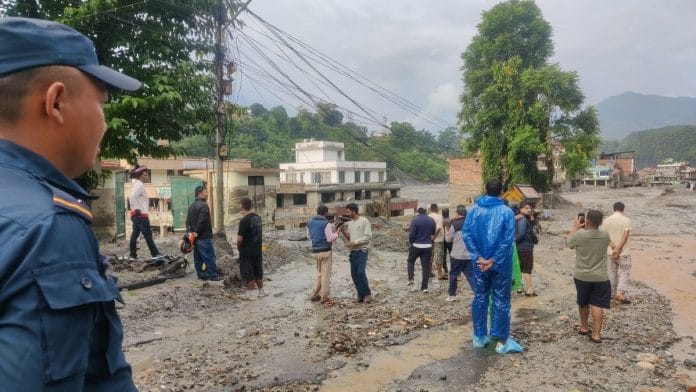
Kathmandu: An 11-member specialised team from India carried out reconnaissance activities in Rasuwa district to aid Nepal in the rescue operations after the 26 August floods.
The Indian Embassy in Nepal said that the team arrived on Friday night and spent Saturday in Rasuwa, the flood-affected district, to understand how workers stuck in the hydropower tunnels in the Upper Trishuli region can be rescued.
The Indian Embassy also confirmed that 88 Indian workers have been rescued from various tunnel projects in the Upper Trishuli region until now, by the Nepal Army.
The Prime Minister of Nepal’s Office on Saturday evening posted on X that a joint team of 82 personnel, from Nepal Army, Nepal Armed Police, and Nepal Police were working on digging the tunnel entrance for rescue operations at the Trishuli 3 ‘A’ Hydropower Project in Rasuwa, which got blocked with silt after the floods. The post also said that the team from India has arrived and will provide additional assistance in the rescue.
Meanwhile, the Nepal Foreign Minister Shishir Khanal held a press conference on Saturday afternoon, providing updates on rescue operations and clarifying that Nepal has not rejected foreign aid.
“We have seen some false reports circulating in national and foreign media that Nepal has rejected international assistance and support,” said Khanal. “The scale of devastation is extremely huge, and support and assistance are required, not just in the phase of rescue and relief, but more so in the phase of reconstruction.
Apart from India, a specialised team from China has also arrived to help with tunnel rescue operations.
The 26 August floods in Nepal due to a glacial portion collapse in the Lhenge Khola river in Tibet led to over 630 deaths, with over 2400 people missing. The main affected districts are Rasuwa, Nuwakot and Dhading, along the Trishuli river basin. The access roads to certain areas of Rasuwa and Nuwakot have been destroyed, due to which most of the rescue operations are being conducted via helicopters.
While the Nepal Army and police are conducting rescue and relief operations across the three districts, there are many families still waiting for people trapped in the hydropower project tunnels across Rasuwa and Nuwakot. The Trishuli 3 ‘A’ is just one of around 10 different projects which have been affected by the floods.
An important hydropower region
According to the Independent Power Producers’ Association, Nepal (IPPAN), around 934 workers in hydropower tunnel projects are out of contact since the floods occurred, said a report in Kathmandu Post. The Trishuli river basin is an important hydropower and infrastructure region, and many of the missing people, as well as survivors, were working on projects right on the river before it flooded. ThePrint has reached out to IPPAN to confirm these figures.
Many families of tunnel workers are currently at Bidur, in Nuwakot, at the Nepal Army rescue operations headquarters, to register the names of their missing relatives and await their arrival on the Army’s helicopters.
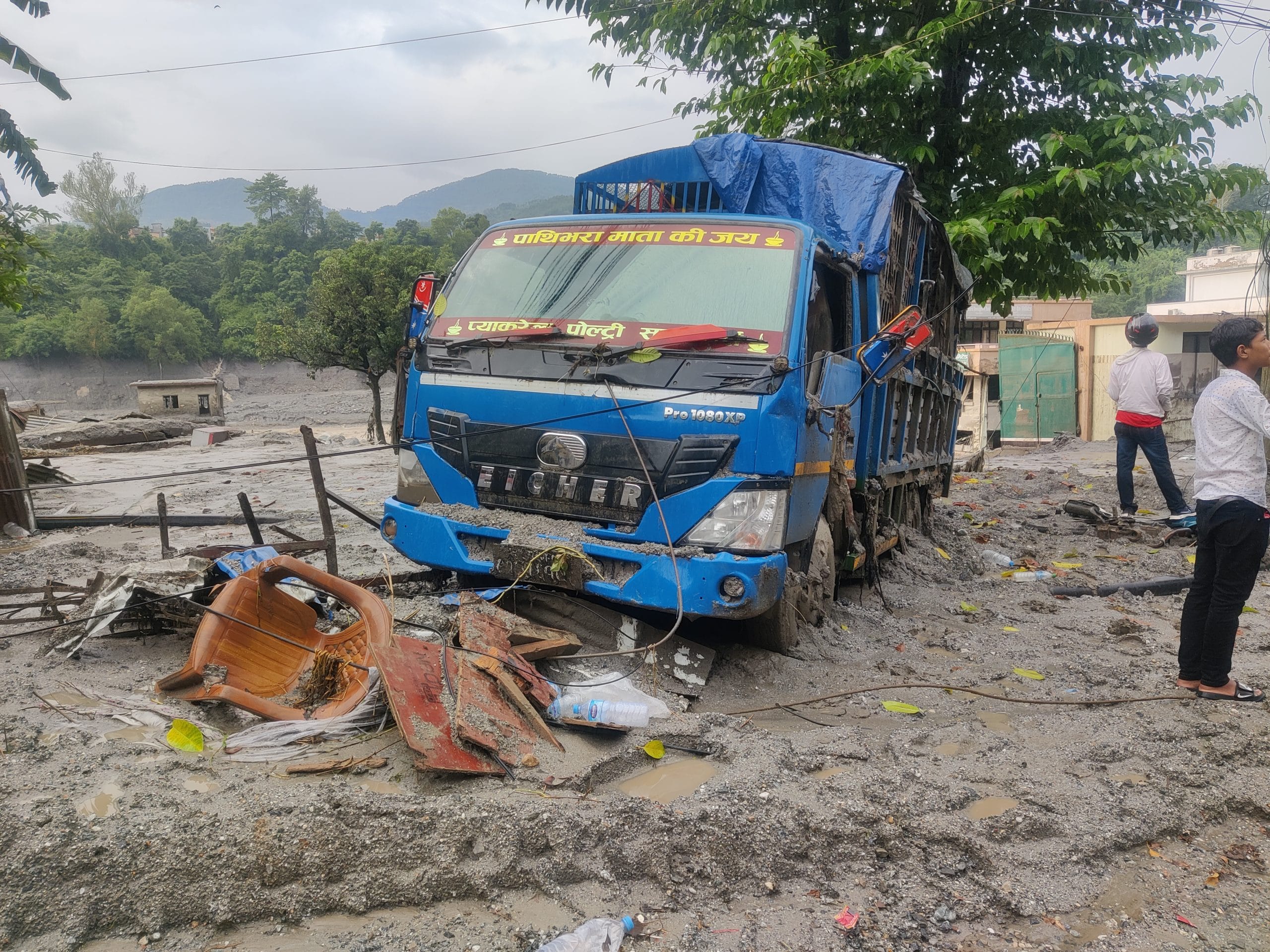
“I told them my husband is stuck in a tunnel; he was a civil engineer with a Korean company, Doshan,” said Savita Shrestha Adhikari, a 40-year-old woman from Bidur. “They told me they are rescuing him, but I doubt they’ve even gone to the tunnel yet,” she added.
Adhikari’s husband is among 52 people stuck in the tunnel in the Mailung region of Rasuwa, and she last spoke to him at 8 AM on 26 August, like she did every morning, before he reported for duty. Since then, he has been untraceable.
During his press conference, the Nepal Foreign Minister said that they have requested assistance from foreign governments in certain specific and specialised areas, such as opening tunnels to aid their search and rescue efforts.
Meanwhile, he also said that India, China, Japan and Australia have sent aid and relief materials, as well as support in the form of forensic and DNA analysis technologies. He added that given the number of foreign nationals that are missing in the floods, the Foreign Affairs Ministry has set up a control room and to coordinate and communicate with different embassies and help in the search and rescue of foreign nationals.