


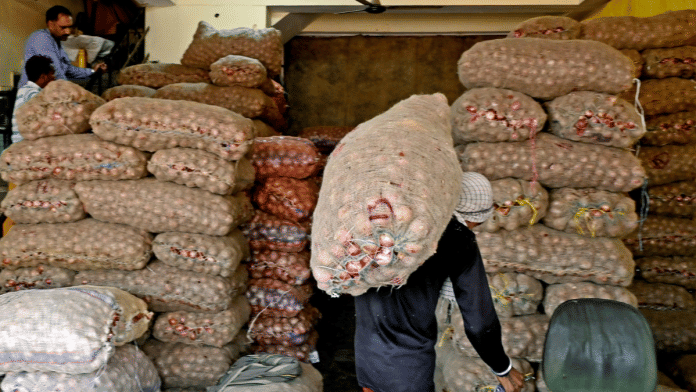
New Delhi: Upon visiting any sabziwala’s cart this week, one will observe potatoes and onions, two longstanding staples, placed side by side. These items are typically purchased, cooked, and transported together in the same cloth bag. However, in October, their prices diverged significantly.
The price of onions increased by 116 percent compared to the previous year, whereas the price of potatoes decreased by 14 percent. This disparity in price changes contributes to the recent rise in India’s retail inflation, which exceeded 6 percent last month, although this inflationary trend may not persist.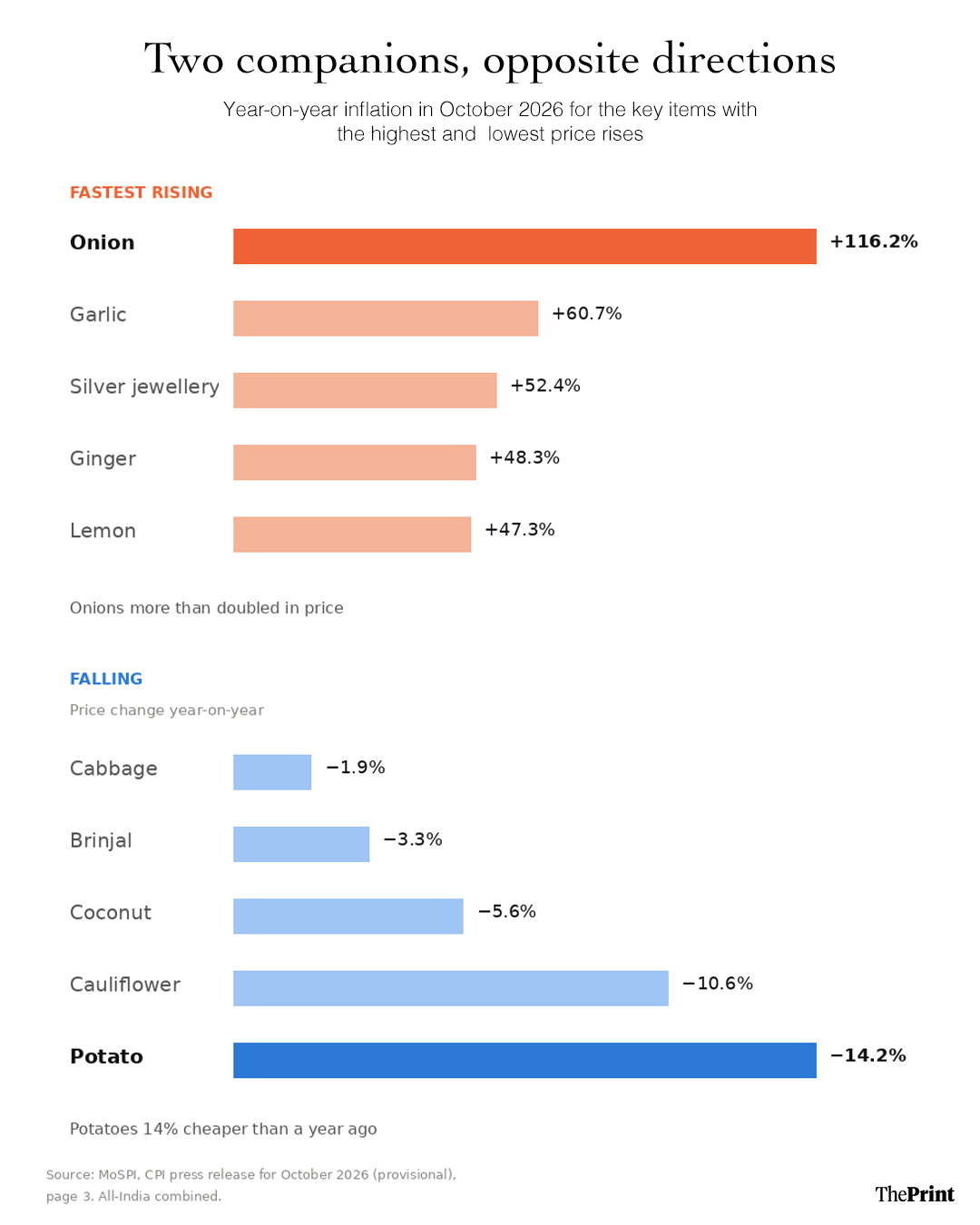
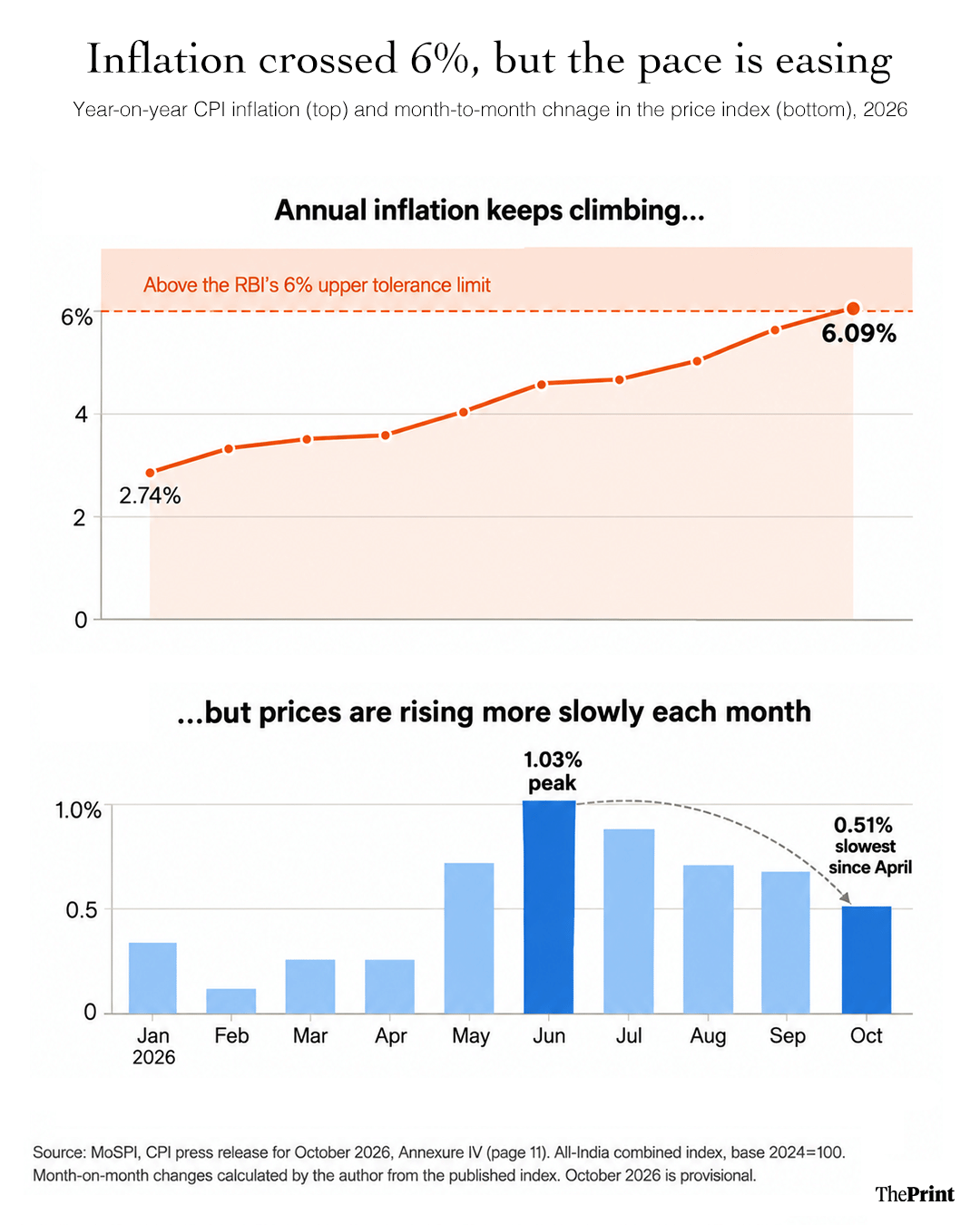
Data published by the National Statistics Office on 12 November indicate that retail inflation increased to 6.09 percent in October, up from 5.54 percent in September. This marks the first time retail inflation has exceeded the Reserve Bank of India’s (RBI) 6 percent upper tolerance limit since the introduction of the new series with the base year 2024.
Food inflation rose to 8.94 percent, with rural households, which allocate a larger portion of their budgets to food, experiencing a higher rate of 6.63 percent compared to 5.41 percent in urban areas. A report by ThePrint last month highlighted that India’s inflation is more closely related to onion storage practices than to an overheated economy, and the October data test this hypothesis.
A home for the potato, a shed for the onion
Disparities in storage conditions across vegetables significantly influence their availability and price stability. According to a FICCI–Grant Thornton Bharat report from September, India’s cold storage capacity is estimated at 40.22 million tonnes. However, approximately 75 percent of this capacity is dedicated to a single crop—potatoes.
Consequently, potatoes benefit from refrigerated storage, whereas onions are primarily stored in ventilated sheds on farms. This lack of adequate storage causes a portion of each onion harvest to sprout or rot, leaving minimal reserves when supply diminishes.
The challenges in the onion market were worsened by last year’s surplus. Through much of 2025, wholesale onion prices remained low, prompting farmers to delay sales in anticipation of higher prices. Trade reports from Nashik indicate that growers reduced summer onion planting this year in response.
This situation exemplifies the cobweb cycle, a concept described by economists since the 1930s, where farmers base planting decisions on the previous season’s prices, leading to alternating periods of surplus and scarcity. Hence, part of the 116 percent price increase observed in October can be attributed to the previous year’s low-price base.
Efforts to relieve the situation are progressing slowly. Kharif onions from Karnataka and Andhra Pradesh are entering the market in increasing volumes, supplemented by imports from Egypt and government buffer stock releases. However, these measures have not yet achieved the scale necessary to significantly reduce prices.
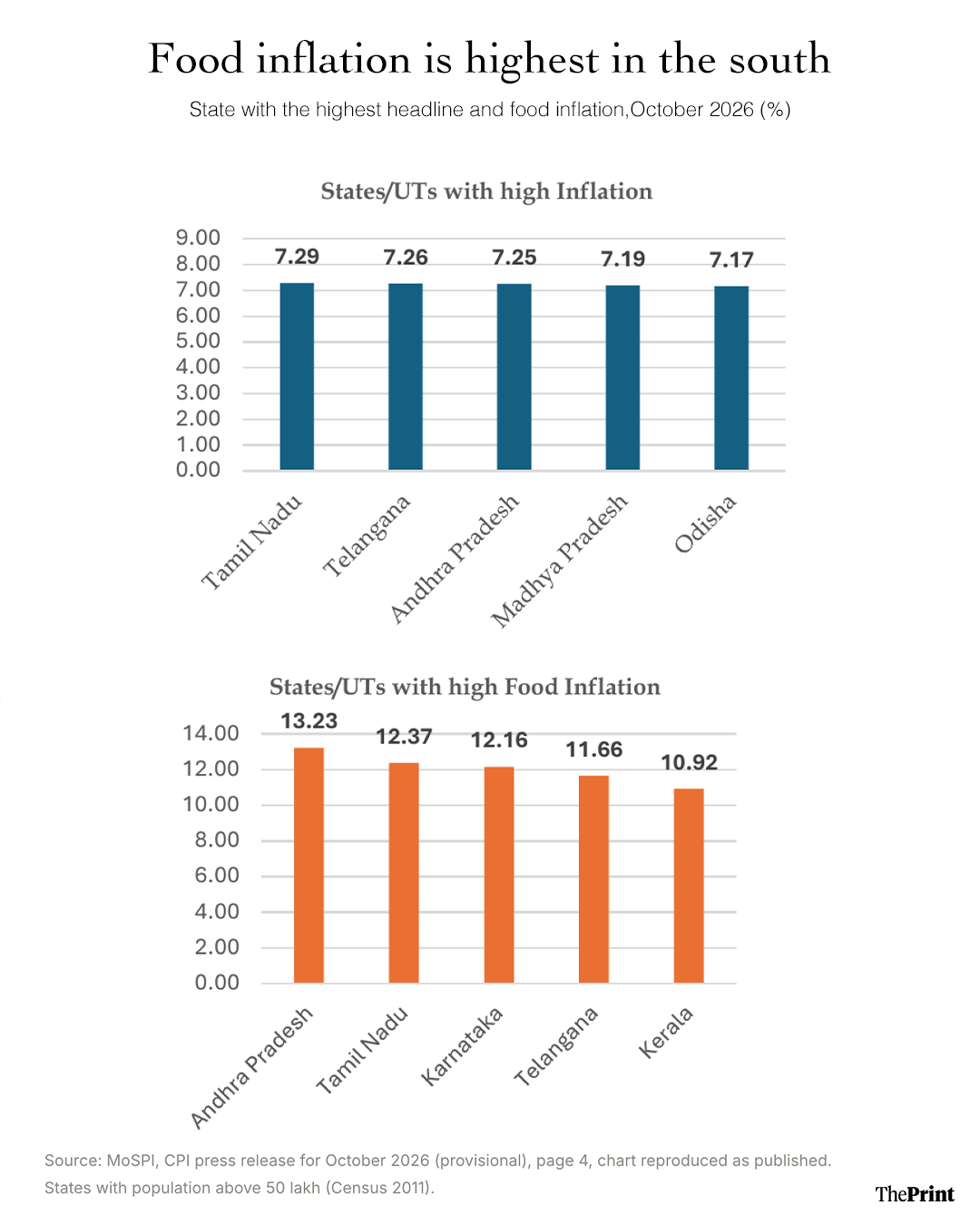
The impact is most pronounced in southern India, where all five states with the highest food inflation in October are located. Nonetheless, the Ministry of Statistics and Programme Implementation (MoSPI) advises caution, as state-level data are based on limited samples.
The guests who left early
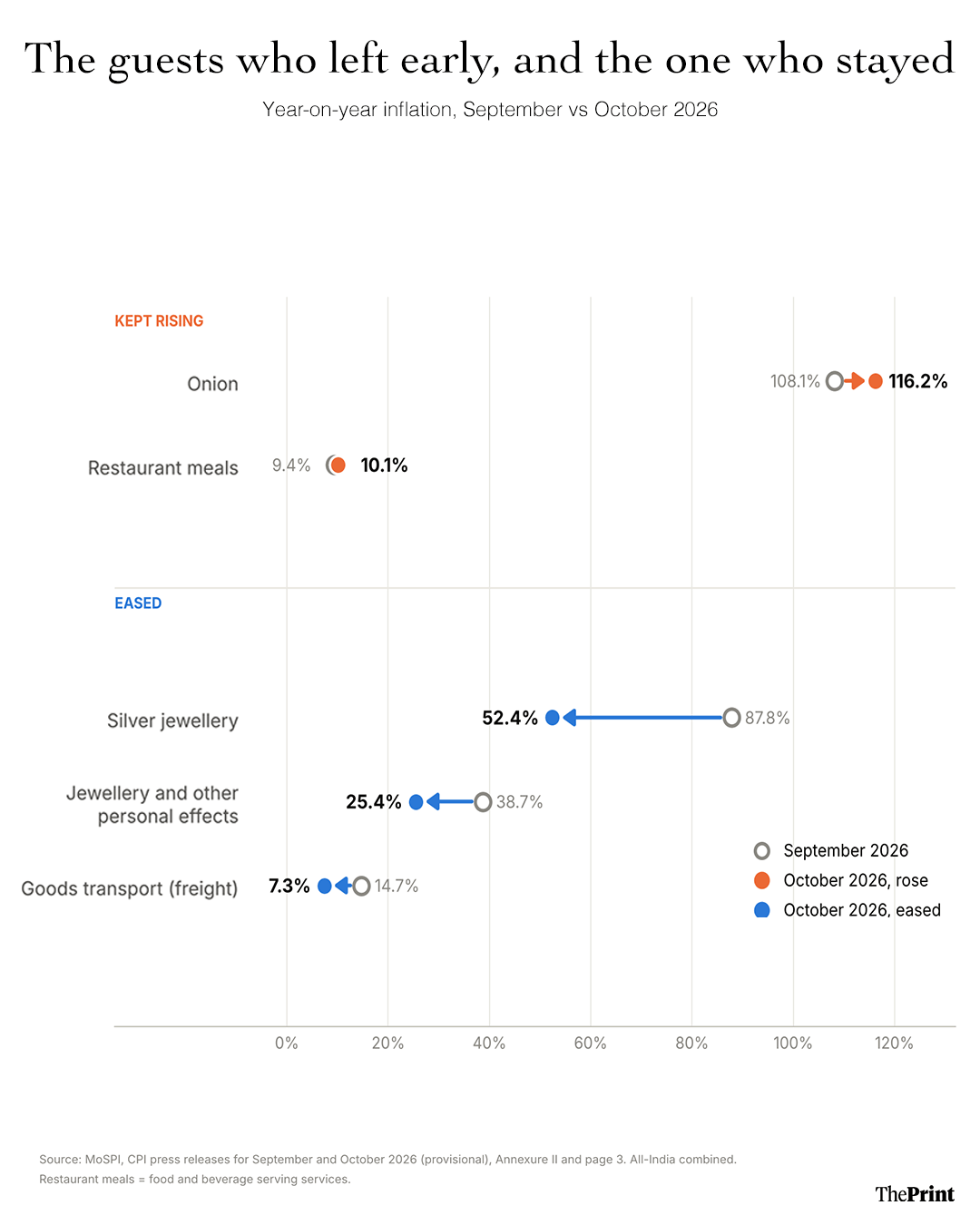
While onion prices remain a persistent factor, two other elements have declined. The inflation rate for silver jewellery decreased significantly from 87.8 percent in September to 52.4 percent in October, and the index for jewellery and other personal effects also declined over the month.
Additionally, freight inflation was reduced by half, from 14.73 percent to 7.34 percent. This reduction was not due to a decrease in haulage costs but rather to stabilising prices, with the high costs of the previous October providing a favourable comparison.
In their influential 1995 paper, Laurence Ball and N. Gregory Mankiw demonstrated that when a select few prices rise significantly while the majority remain stable, the average price level rises in the short term due to the immediate impact of these substantial increases. This phenomenon represents a shock to relative prices rather than economic overheating, and the remaining components of the price basket align with this observation.
Current data indicate that rent inflation is at 2.36 percent, health services at 2.05 percent, and communication services at 1.96 percent. Furthermore, the rate of price increases is decelerating, with prices rising by 0.51 percent between September and October—the slowest monthly increase since April and down from the 1.03 percent rise observed in June. This suggests that the economy is moderating its pace, although it has not yet begun to contract.
What the RBI does in December
The RBI is closely monitoring a particular factor, and it sits on the restaurant table. Inflation in the food and beverage service sector increased from 9.39 percent to 10.09 percent. When a dhaba adjusts the price of its thali, it is not merely reflecting a single month’s vegetable costs but revising its entire menu, which tends to decrease slowly. Central bankers refer to this as a second-round effect, where a supply shock begins to influence wages and expectations, distinguishing between a shock to overlook and one necessitating intervention.
The arithmetic of the forthcoming months intensifies the dilemma. Prices remained relatively stable in November and December 2025, so unless they increase by less than approximately 0.12 percent per month over the next two months, inflation will average above 6 percent for the October to December quarter. Under the RBI Act, the central bank’s target to maintain inflation within the 2–6 percent range is considered missed only after three consecutive quarters, initiating a timeline rather than triggering an immediate alarm.
The RBI’s Monetary Policy Committee increased the repo rate by 25 basis points to 5.5 percent on 7 October, marking the first hike since February 2023, and will convene again from 2 to 4 December, prior to the release of November’s data. The rationale for another rate hike is based on headline inflation exceeding 6 percent, restaurant prices indicating second-round effects, and the need to stabilise the rupee.
On the other hand, the argument for maintaining the current rate is equally compelling: monthly price increases are decelerating, rent and health costs remain stable, kharif supply is arriving, and the impact of October’s hike is still unfolding.
The RBI projected an annual inflation rate of 5.2 percent, and with April to October averaging about 4.7 percent, this projection already suggests inflation nearing 6 percent for the remaining months, indicating that October aligns more with the plan than with an unexpected development. Either a cautious pause or a final minor hike would be justifiable, contingent on whether November’s data reveals a decline in onion prices.
Regardless of the committee’s decision, its influence is limited to the farm gate. Higher rates can temper demand and stabilise expectations, but they cannot construct infrastructure to protect onions from spoilage. India has invested decades in providing potato storage, and the current price reflects the benefits of these measures. Extending similar storage facilities to onions, particularly near the districts where they are cultivated, would make these staple vegetables available throughout the seasons.
(Edited by Chingkheinganbi Mayengbam)