


New Delhi: Employment among rural women has improved, but younger women aged 15–29 have seen little improvement, according to the latest Periodic Labour Force Survey (PLFS) data released Tuesday by the Ministry of Statistics and Programme Implementation.
The unemployment rate among younger rural women also rose in the July–September quarter, an analysis of the data shows.
Conducted by the National Statistics Office (NSO), the survey tracks employment, unemployment and labour force participation among people aged 15 and above across India.
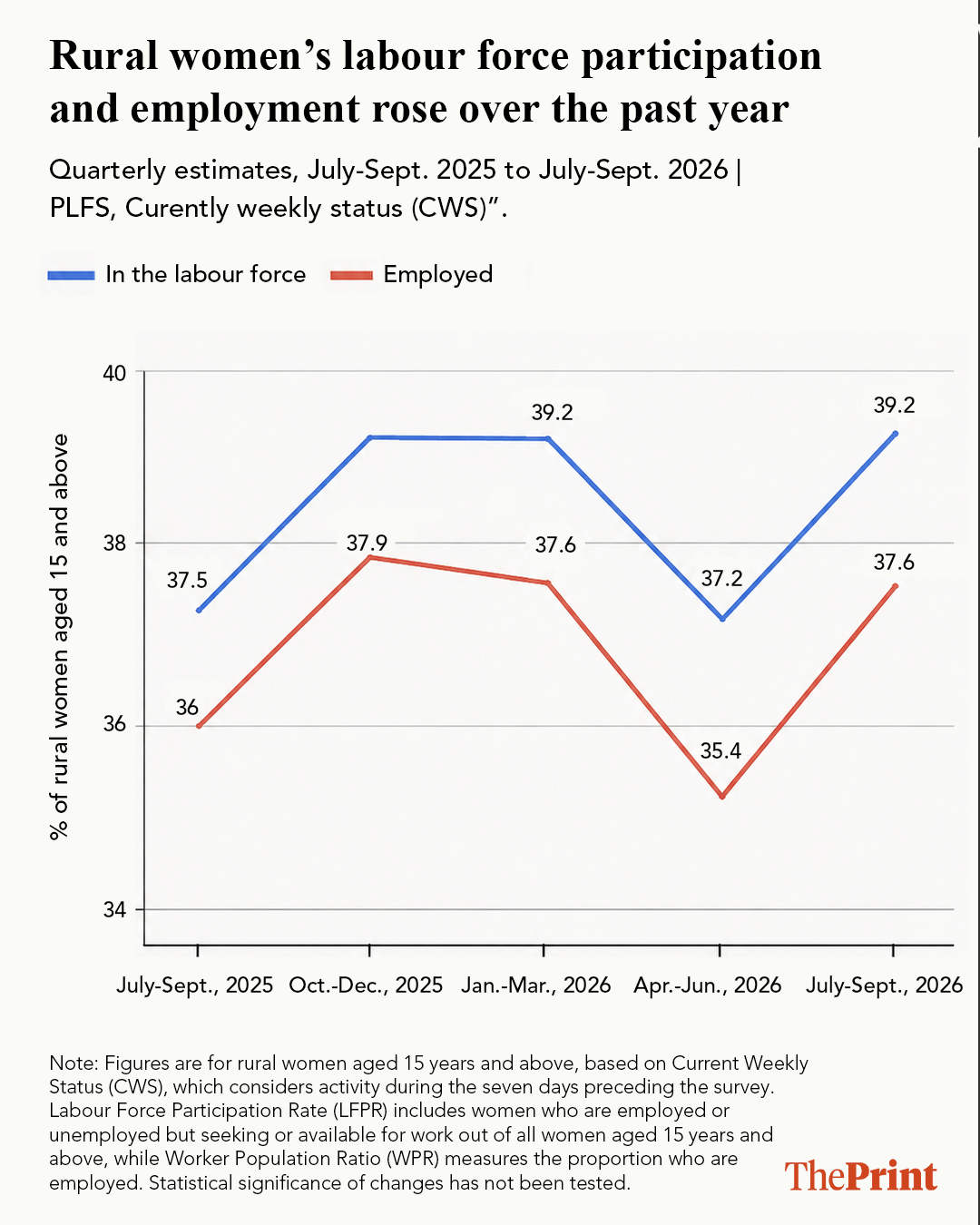
During the July–September 2026 quarter, 39.2 percent of rural women aged 15 and above were part of the labour force, meaning they were either employed or unemployed but seeking or available for work. This was an increase of 1.7 percentage points from 37.5 percent in the same quarter last year.
The employment rate among rural women also rose, from 36 percent to 37.6 percent over the same period. Both indicators improved from the previous quarter, April–June 2026, when labour force participation stood at 37.2 percent and the employment rate at 35.4 percent.
Younger rural women see little improvement
The gains were not reflected among younger rural women aged 15–29. Only 18.4 percent were employed as of the July–September quarter 2026, virtually unchanged from 18.5 percent a year earlier and well below the overall rate of 37.6 percent among rural women.
Their labour force participation rate also barely changed, edging up from 21.3 percent to 21.8 percent. This was a much smaller increase than the 1.7 percentage-point rise recorded among rural women overall.
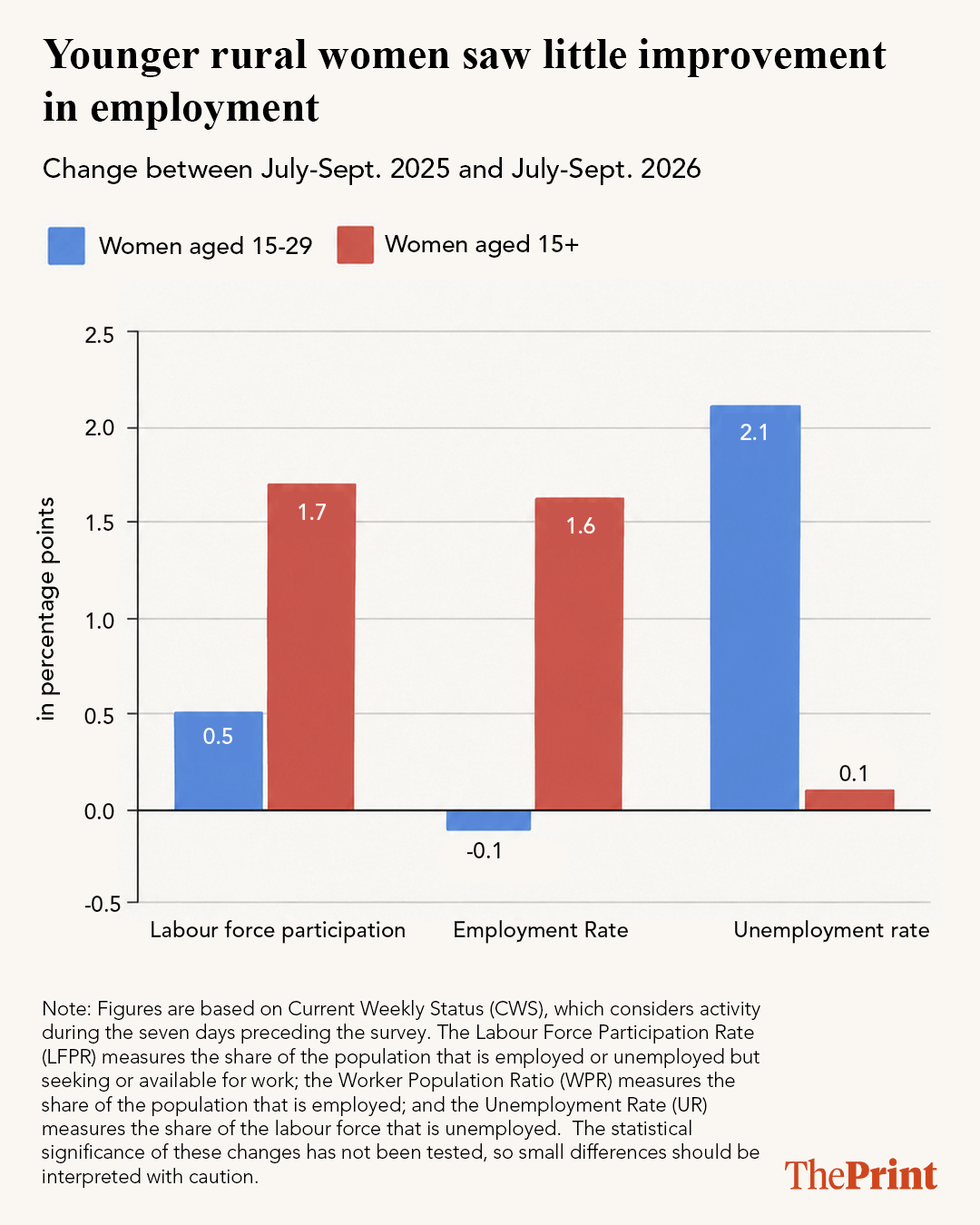
Meanwhile, the unemployment rate among younger rural women increased from 13.3 percent to 15.4 percent. Among rural women aged 15 and above, it edged up from 4 percent to 4.1 percent.
In other words, around 15 in every 100 younger rural women participating in the labour force survey were unemployed, compared with 13 a year earlier.
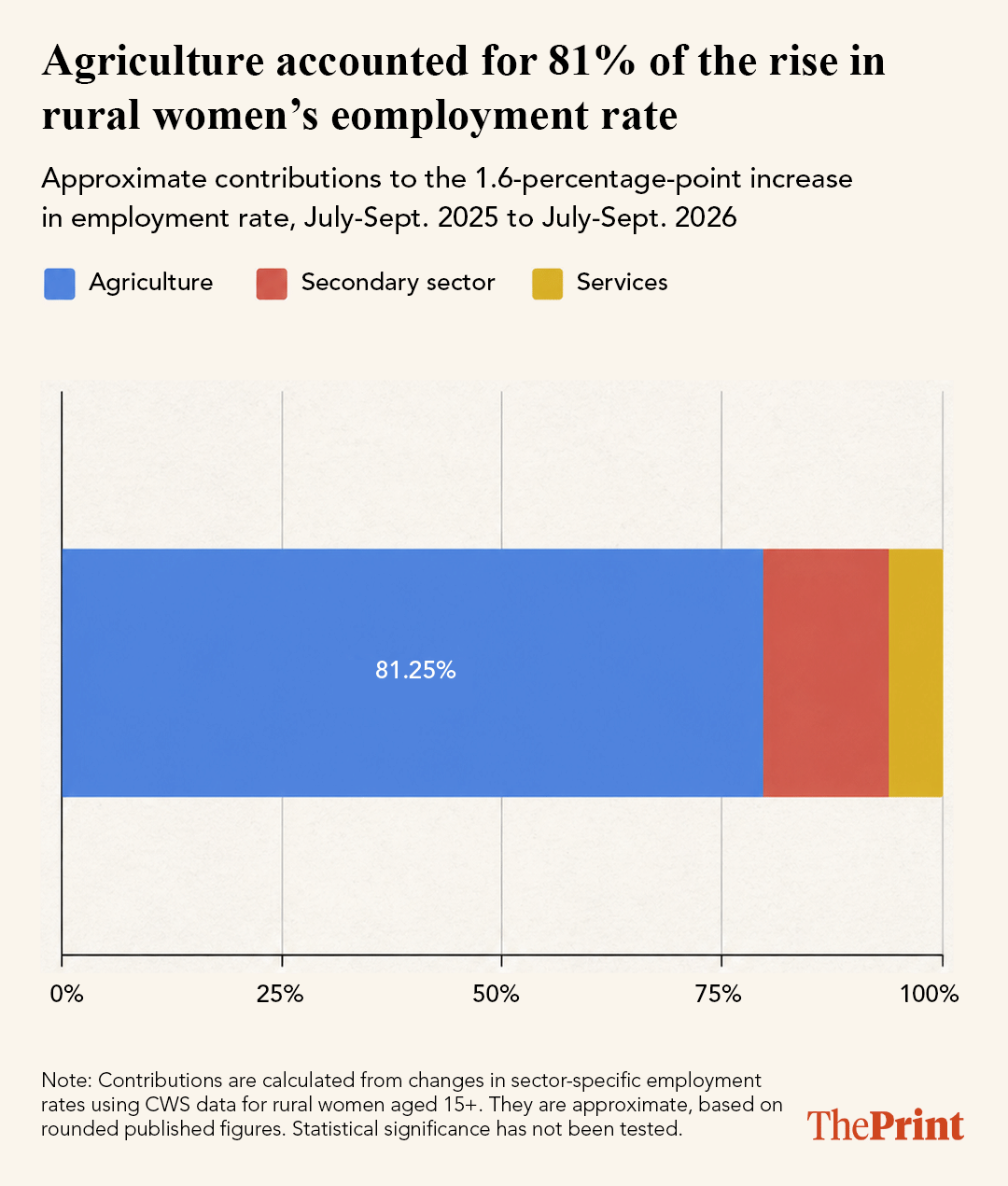
Agriculture accounted for 81.25 percent of the increase in the employment rate among rural women between July–September 2025 and the corresponding quarter this year. The secondary and services sectors recorded much smaller increases at 13.75 percent and 5 percent respectively.
Rural men’s employment shows different pattern
Unlike rural women, whose employment remained heavily concentrated in agriculture, rural men saw the sector’s share of employment decline over the past year.
The proportion of employed rural men working in agriculture fell from 49.2 percent in July–September 2025 to 47.2 percent in the same quarter this year.
Over the same period, the share employed in the secondary sector, which includes manufacturing and construction, rose from 25.9 percent to 27.4 percent. The services sector also recorded a smaller increase, from 24.9 percent to 25.4 percent.
These shifts occurred even as the overall employment rate among rural men remained largely unchanged at around 75 percent.
(Edited by Chingkheinganbi Mayengbam)
Also Read: The invisible economy of unpaid care work in India—how women are kept out of the workforce