





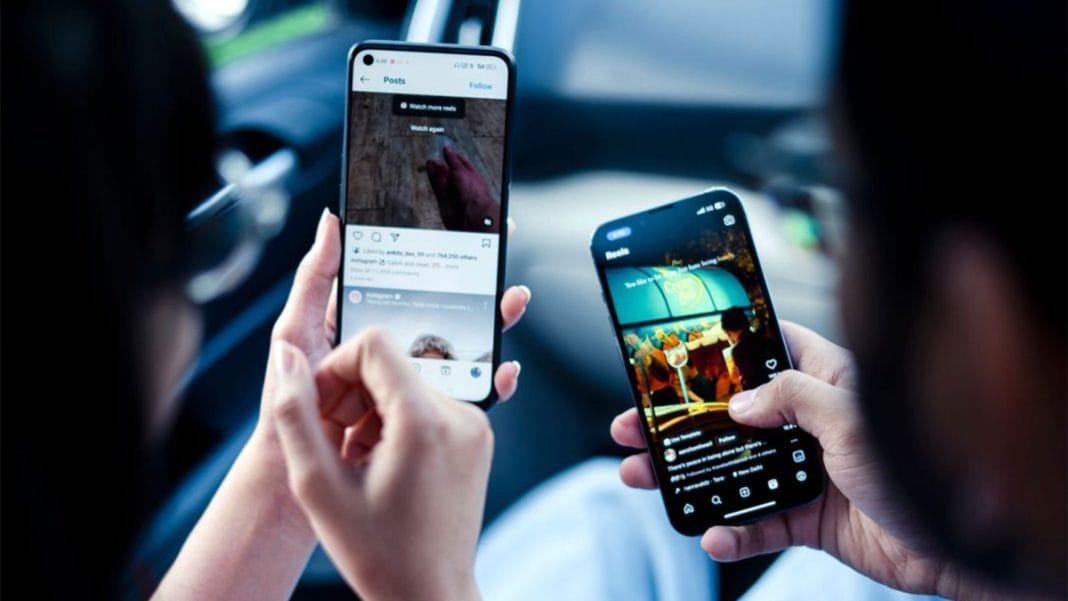


You open Instagram for five minutes. The first video is funny, the second is strangely similar, the third is a song you had been meaning to find. Then comes a video about a place you were talking about with a friend. Somewhere between the seventh and the twelfth reel, you realise you are no longer choosing what to watch. You are simply being shown what comes next, and somehow it keeps getting it right.
We tend to imagine algorithms as complicated lines of code operating somewhere behind the screens. In reality, some of the most influential algorithms in our lives are constantly studying our smallest decisions—what we click, skip, search, replay, pause on, purchase and share. They don’t need to announce what we like, our behaviour tells them. This is what makes recommendation algorithms so powerful. They are not predicting what we might want, they are building increasingly detailed guesses about who we are. And sometimes those guesses know us better than we realise.
A recommendation system does not necessarily need to understand why you watch a particular video. It only needs to notice that you watched it until the end. It can compare that behaviour with millions of other users and find patterns invisible to any individual person. Slowly, your feed becomes less like a window to the Internet, and more like a mirror constructed from your own behaviour.
Research has already shown how deeply this personalisation of platforms uses information such as likes, clicks, posts and other online behaviour to categorise users and deliver targeted content and advertising. The convenience is undeniable. The algorithm saves us time. It finds us music when we don’t know what to search for, it recommends films when we cannot decide what to watch. It helps us discover creators, products and ideas we might never have encountered ourselves.
But convenience has a hidden cost—serendipity. Discovering something unexpected was a part of the Internet’s magic. You could stumble across an idea or a song you never searched for or an opinion that challenged you. Algorithms are increasingly good at removing the unnecessary. The problem is that the unnecessary is sometimes exactly what we need. If a system learns that you like a particular kind of content it has little reason to repeatedly show you something completely different.
Personalisation, and therefore the narrow world presented to us, creates an information environment shaped around what algorithms predict we will engage with. Researchers and technology experts have long raised concerns that this can reduce exposure to unfamiliar ideas and create digital silos. This matters because attention is not neutral. The longer we stay, the more opportunities there are to show us advertisements, recommendations and sponsored content.
The business model of much of the digital world depends on turning human attention into something economically valuable. So, the algorithm has a question to answer. Not necessarily what would make this person happiest, not even what would make this person better informed. Often the more commercially useful question is simply what will keep this person here? That distinction changes everything.
A platform can learn that outrage keeps someone watching longer than calm discussion. It can learn that certain images make us pause. It can learn that a particular type of headline makes us click, and once a system becomes good at predicting behaviour, prediction and influence begin to sit remarkably close together.
This does not mean that algorithms control us like puppets. That is too simplistic. We still make choices. We can close the app. Search for something ourselves or deliberately expose ourselves to unfamiliar ideas. With the choices we make online are increasingly being made inside an environment designed around predictions of behaviour. That is a subtle kind of power.
Imagine walking into a library where the books on the shelves change every time you look away. Every morning the librarian rearranges the shelves according to what they think you will enjoy. You would still technically be free to choose any book. But what you see would no longer be an accident. That is increasingly how the digital world works.
The unsettling question then is not whether the algorithm knows what you want. It is how it learned, and perhaps an even more uncomfortable question follows—if we spent years and years teaching machines what makes us stop, click, buy and watch, when the same machines decide what we encounter next, where does prediction end and influence begin? The algorithm may not be perfect, but it doesn’t have to be. It only has to know us well enough to make the next choice feel like ours. And that may be the most sophisticated form of influence of all.
Amaira Vadhera is a student of Sat Paul Mittal School, Ludhiana. Views are personal.
Also read: How Hindi can learn from China’s Mandarin diplomacy and global soft power