







The US ‘handling’ of war in Iran, and Trump’s ‘Project Freedom’ has sparked a cold war between the allies, the US & Saudi Arabia. According to reports, in May, Saudi Arabia denied US, military access for Project Freedom, the operation to open Strait of Hormuz. However, Saudi Arabia eventually backed down after US threatened to block delivery of interceptors.
But the incident has led to a wider standoff between the two countries.
In Episode 1857 of Cut The Clutter, ThePrint Editor-in-Chief Shekhar Gupta explains what triggered this rift between Trump & Saudi Crown Prince, why it is significant, what’s next for US & Saudi Arabia ties and how a new Middle East Security architecture is now taking shape.
Here is the transcript, edited for clarity.
The Iran-US ceasefire is more or less holding in the Middle East but it looks like another little war is breaking out. This is not a hot war, it may be a cold war, but it’s a significant one. And that’s between a client and patron. You can say between two partners or two allies but it’s also a client-patron relationship, which is the US and Saudi Arabia. Over the last three days, stories have come out in all prominent Western media outlets.
The Wall Street Journal, Financial Times, New York Times, everywhere now, not denied anywhere, that, on 3 May, Trump decided to launch his operation to escort all shipping, merchant shipping, out of the Strait of Hormuz. He called it Operation Project Freedom. And he said, forget the Iranians.The US armed forces will escort all shipping. These are international waters. So we will ensure freedom of navigation through international waters. Iranians will not be allowed to interfere.
Once he announced that on May 4, that was the first day of that operation. First day of that operation, and as the The Wall Street Journal describes rather dramatically, as hundreds of aircraft and helicopters were about to take off to support this operation, they got word from the Saudi government.
Saudis said you cannot carry out this operation using your bases in our country. Now, without those bases, Americans could not have carried out this operation effectively.
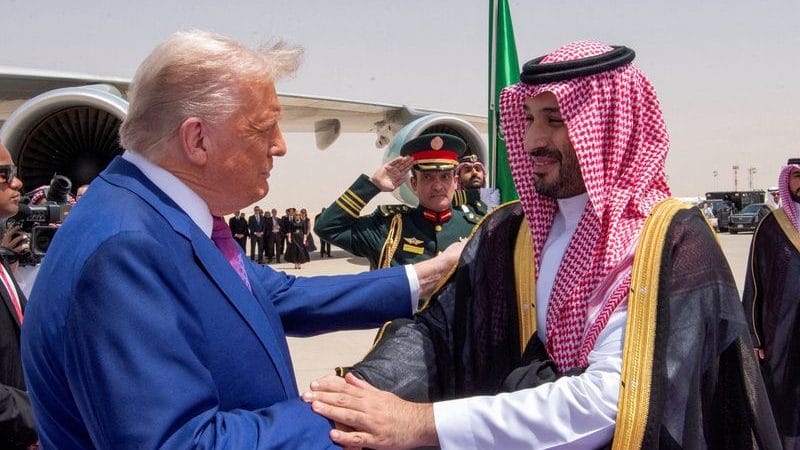
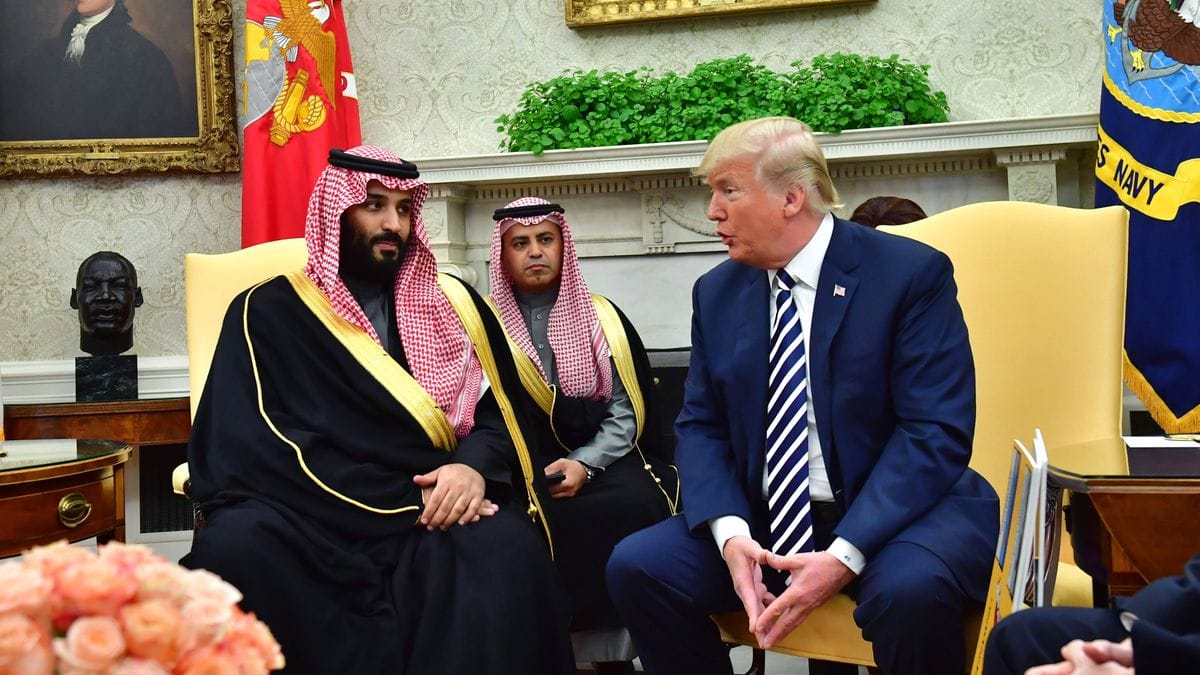
Particularly, if those bases were withdrawn at the last moment. So what that did was, that pretty much killed that idea. Now, that led to angry phone calls between Donald Trump and Mohammed bin Salman, the Saudi crown prince.
They had several calls over the next three days. It got to such an extent that Trump got really furious. And he said, if you don’t let my planes and my assets use our bases in your territory, then I am stopping the supply of replenishment of the interceptor missiles that you’ve already used trying to stop Iranian ballistic missiles and drones. Because these are very expensive. They are in short supply. You are running out of them all the time.
Saudis, Kuwaitis, Bahrainis, the Emiratis and the Israelis, they were all burning them up in very quick time because Iran was firing so many missiles and so many drones that they needed to be resupplied. Americans were picking them out of Okinawa. They were picking them out of supplies meant for Ukraine. These were Patriot and THAAD missiles.
So, because Saudi Arabia had also burned quite a few of them, the US now said, we will take our time replenishing your supplies. And that caused panic on the Saudi side. This was not a friendly fight.
Saudis then said, alright, but couple of days later, you can use our bases. The Americans also calmed down on the replenishment.
Also Read: Why the US-Iran peace deal doesn’t solve India’s energy vulnerabilities
However, by this time, the idea that Trump will break the Iranian blockade of the Strait of Hormuz was gone. Now, there is another route being worked out. And for now, the Iranians are not routinely attacking shipping from there. As I speak, almost all of India’s ships, or most of our major ships, first of all the LPG ships came out because LPG was in short supply, 12 or so LPG ships came out. And the rest more or less have all come out.
So, shipping is coming out because the ceasefire is holding. However, Trump’s dadagiri (bullying) at that point, that I will reopen the Strait and I will keep it open and thereby deny Iran this bargaining chip.
Because Iran is now holding this Sword of Damocles over global economy, saying that if we get too angry, we will find some way or the other of interrupting this shipping. What happens is, if shipping, even if you get most of the ships out, even if 19 out of 20 get out, one gets it, insurance for everybody goes up, every mariner’s family starts worrying and every company starts worrying. And that’s when energy prices start going up.
That power Iran still retains. And the Trump administration would now blame Saudi Arabia for having played a role in that. Now, this is a complex story.
And as we do with complex stories, I’m trying to simplify it to the extent I can. And then, as we go along, if we have the time left, I will tell you a little bit about how we got here. How we got here in the sense of how did the Middle East get here in terms of the nations that the Middle East has, the boundaries that the Middle East has, the solidarity that they’ve had, at least on the Arab side, all this while, and how that solidarity is strained now. And how the two eyes play such a crucial role, such a critical role.
The two eyes opposed to each other, that is Iran and Israel, play a critical role. Also, after what has happened now, after the experience of this West Asian war, and then this break of trust between Saudi Arabia, the strongest Arab country, the strongest of the GCC countries, how strong it is, I will tell you.
Saudi Arabia’s defence budget this year, for a population of 3.5 crore only, is about $83.2 billion. Last year was also just a little bit less than that.
That effectively makes Saudi defense spending about the same as Indian defence spending. And if you think of the Indian defence spending, India has a very large wage bill, salary bill, because India has a very large Army, given the size of India’s borders. India also has a very large pension bill, and India has two very difficult nuclear-armed adversaries.
And India has a population of 145 crore, but a country of 3.5 crore with no active enemy, with no active enemy and with full protection from the Americans, which is guaranteed in terms of the basing rights that the Americans got in 1945 after the FDR meeting with King Saud, the first king of Saudi Arabia or the founder of Saudi Arabia. That has been the guarantee for Saudi Arabia’s defence, and yet Saudi Arabia has been spending this kind of money on its military forces. And yet, when they got hit a couple of times by Iranian missiles, they lost the will to fight. Because you might have as many missiles, fighter planes, guns, tanks, submarines, whatever, ammunition. You might have all of that to fight, but if you lack one thing, you cannot fight. And that one thing is the will to fight.
The will to fight to take casualties and to take attrition or damage. That is something Iran has shown now they have an enormous ability to deal with. They can take an enormous amount of attrition and keep hitting back in spite of the damage they are suffering.
All the Gulf Arab countries, the GCC countries, with the exception of UAE, showed in this crisis that they did not have the stomach for this fight. Qatar spends a lot of money on defence. Kuwait too.
In fact, Kuwait’s defence is good enough for them to have shot down three American F-15Es, even if they were friendly fighters, within seconds over their own skies. So all of these countries have very modern armies, but they have no will to fight, and they have no inclination or no stomach to take any attrition. And that has other complex issues there because their populations are not necessarily happy with these alliances with the Americans and the Western world on one hand and by implication with Israel.
Because we all know, and every citizen of these Arab countries also knows, that no Israeli fighter plane, bomber, can go over Iran without crossing the airspace of these Arab countries, particularly Jordan, Saudi Arabia. So in a way, these countries are complicit with Israel as well. Some of them are signatories of the Abraham Accords also, Bahrain, UAE, within the GCC zone, and then you have Morocco and Sudan.
Although Sudan’s joining of Abraham Accords has not been fully implemented, because Sudan’s been having its own civil war, where Saudi Arabia and UAE are caught up on the opposite sides. Saudi Arabia is with the old Sudan government, and UAE is helping the RSF.
RSF is the so-called Rapid Support Forces, which is headed by a warlord who used to be a former general.
So the two countries are also indirectly at odds with each other or fighting a proxy war in Sudan. It’s in this mess that Saudi Arabia has decided to distance itself from the Americans. However, it’s not easy. It’s not easy. Both sides are saying everything’s okay. U.S. State Department, the White House has said our relationship has never been better.
But the fact is that while Trump, J.D. Vance, Steve Whitkoff, they all spoke with Mohammed bin Salman in those three days, May 4 onwards when he denied rights for the Americans to use the bases. Marco Rubio, who traveled in the Gulf last week and went to three of the hardest hit countries in that war, that is Bahrain, Kuwait, and UAE, he skipped Saudi Arabia, the largest of these nations. And that was a signal. And it followed Mohammed bin Salman excusing himself from the G7 summit in France, in Avion in France, because he did not want to run into Trump. That relationship has now become quite fraught, whatever the pretence.
Also Read: US believed Israel was planning to assassinate top Iranian negotiators as talks underway: NYT
It had not started out like that. It had started out quite well. In fact, Trump’s first foreign visit was to Saudi Arabia. Remember the sword dance the Saudis organized for him, so much pomp. Also, Saudi royal family, a fund owned by the Crown Prince Mohammed bin Salman, MBS, invested $2 billion in a company controlled by Jared Kushner, Trump’s son-in-law, and also peacemaker and negotiator at large. All of that had gone on all right.
And Saudi Arabia had continued being among the largest buyers of American weapons. In fact, until a couple of years back, Saudi Arabia used to be the largest importer of weapons in the world. If it’s today not the largest or maybe the second or the third largest, that’s only because it has bought a lot of the capital equipment, heavy systems, and does not need to buy anymore.
It’s now buying replenishments or buying more ammunition or buying more add-ons. One phase of military buildup is over because capital assets have been bought. If you want to buy six quadrants of fighter planes, you buy six quadrants of fighter planes or this many missiles.
Then you buy what you consume or what you want to accumulate. If you want to keep more war wastage reserves or what is called as WWRs, you know, armed forces love acronyms. Now what’s happened in this case is that one, the Americans have always known that the Arabs, the Gulf Arabs depend on them for security. However much they might buy for their armed forces because they don’t have the willingness to fight nor enough people to fight. Saudi Arabia may have 3.5 crore people, which is not a lot. Iran is about 9.2. UAE, which showed the most fight in this case, is just 1.3 million, 13 lakh, of its own people.
The rest are people like us, the Indians, the Pakistanis, the Filipinos, the Bangladeshis, the expatriates who work there and who made it their temporary home. They are not citizens, they cannot, and they are not about to join the UAE army to fight for them. Nor would the expatriates do this in Qatar, which is just over 3 million people or other countries that have small populations.
Iran itself has about one and a half times the population of all the GCC countries put together. Iran has also had an experience of fighting. They fought a very bloody war over eight years with Iraq. It’s a revolutionary government there. They also don’t particularly care how much damage they suffered. Their Supreme Leader got killed. They still continued fighting. Now, on the other hand, across the Gulf, see how complex this politics is. These rulers have aligned themselves with the US, and by implication, with Israel.
The two have signed Abraham Accords and recognized Israel, as by the way have Turkey and Egypt and Jordan, but the others also, they may not say so. They meet the Israelis.
So they’ve been working together. Now their population knows what’s going on. And if you find so much sympathy for the Palestinian cause, even in India, all over Europe, then you can also imagine that within Arab populations also there is sympathy.
And they are also furious over what’s happening in Gaza, what’s happening in the West Bank, the very fact that the idea of a two-state solution right now seems to be forgotten. So these Arab countries, Saudi Arabia has been the first to make it evident, they are very concerned that if they continue to be seen to be complicit, if they continue to be complicit with the Americans and Israelis in fighting with Iran, then their own people might turn on them. They might get angry. They have the fear of Muslim brotherhood. If there’s anything that these rulers are afraid of, that is Muslim brotherhood, which is all Muslims coming together under the umbrella of Islam and saying, who are these guys ruling us? These are illegitimate rulers. And that might spark off another Arab Spring kind of process.
That is what they are most afraid of. When the Saudis went and signed up with the Pakistanis for their defence, who were they trying to defend themselves against? They do not expect the Pakistanis to defend them against the Iranians. The Pakistanis cannot.
And Pakistanis under no circumstances will get into a fight with Iran, no matter however much the Saudis might pay them. That is to protect themselves from their own people and from any subversion that might take place in their own countries if the regimes become more unpopular. What the Saudis have done in this case is the Saudis have gone ahead and made their own deals with Iran. Their own deals with Iran to say that, look, we are talking to the Americans. They are on one side. We are not in the fight with the Americans and Israelis against you. We live in the same neighborhood. Let’s find a modus vivendi, peace with each other. You don’t bother us, we don’t bother you. You want a little bit of money, I will come and invest in your country. I will free up your resources.
It is like paying protection money. So what the Saudi Arabians are doing right now with the Iranians is paying protection money. So the principle being that, look, this is a bully in your neighborhood. You don’t have the ability or the willingness to fight that bully. The patron who you had trusted to keep that bully off your backs, that patron, one, cannot guarantee that in the process you will not suffer some damage. And second, that patron is also not very consistent. In fact, the patron can vacillate. The patron’s management of the war has been chaotic. One social post comes and says, I’m going to war. Next one says, I’m not going to war. Third one says, you will cease to exist. Fourth one says, you have reformed. You and I will have a great peace deal. So all of that the Saudis worry about. And they believe that the Americans, or Trump in particular, does not have sound judgment.
Also Read:Iran-US MoU is an opportunity for India. Or forget the $5-trillion economy
And this distress goes back to Trump 1. It was under Trump 1 during his first presidency in 2019 that Iranian or Iranian proxies, maybe Houthis, drones and missiles struck Saudi oil fields on 14 September 2019. Saudis would have then expected the Americans to come to their defence and retaliate against the Iranians. But the Americans did not do that.
So that distrust goes back that far. Then again, in the current situation, we know what happened in March. While talking at a business conference in Miami, Trump was holding forth, and he said something like, Mohammed bin Salman had ended up ‘kissing my ass’.
Now, this is Arab culture, and these are royals. Their whole authority is about form and form is their substance. If they get insulted like this or slighted like this by their main patron, they are deeply aware of the implications this might have in their public opinion.
And they are not about to check their public opinion. They are not about to hold an election. It’s not as if there will be an election tomorrow and people can vent by changing the government because peaceful changes of government cannot take place in these countries. Dictators or dictatorial regimes, no matter where their power comes from, they are much more conscious of their ego, their supposed or visible self-respect, and its symbols. These are among the many reasons why Saudis seem to have got tired and given up. So they concluded it’s better to buy peace in the neighborhood, maybe pay the bully, or even suck up to the bully a little bit, than to do this or kiss the ass of a very distant patron who is moody.
Sometimes he’s there, sometimes he’s not there. So in the New York Times story, I have a quote from Hussein Ibish. Hussein Ibish is a scholar at Arab Gulf States Institute in Washington, DC and I’m reading the full quote for you.
Now, if you’ve been following Peanuts comics, I know it’s my generation, so many of the Gen-Z would say, what is that, Charlie Brown, Peanuts comics? It’s familiar enough. And there’s a situation there where Lucy holds the football, invites Charlie Brown to kick it, and when Charlie Brown hits, she pulls the ball away and Charlie Brown goes flying.
So he’s using that simile to say that Trump is walking the Saudis into a war, then getting out of the war, so Saudis end up like Charlie Brown and that is something that they do not want. And that’s the reason they are finding their own protection.
And their way of finding that protection is to go and make their own deal with Iran and get the Pakistanis to come and sit at their critical infrastructure units. So effectively, what the Saudis are doing is, while they might keep on buying weapons from America, investing in Trump’s son-in-law’s company or Steve Whitkoff’s son’s company, etc., at the same time, they are also directly and indirectly paying protection money to Iran and also to Pakistan. In the case of the first, Iran, it’s a bit like paying what in Calcutta would be called the padamastan, the local tariff for bullying.
In Mumbai, it will be like the local or the reigning underworld king. Now, that is not to protect these from Iranian attacks, but that’s also to tell the Iranians that, look, we’ve done this deal with you through the Pakistanis. The Pakistanis are also here.
You definitely don’t want to harm the Pakistanis as well. To that extent, the presence of the Pakistanis there becomes a better, a more reliable guarantee of protection to the Saudis, not because they are going to fight, but just because they are there and they are the mediators. That becomes better than having American fighting forces who are carrying out active combat with Iran because in active combat, if Iran fires a hundred missiles, maybe five percent will come and hit something.
That is not something that any of these Arab states wants to see and definitely that’s not something that the Saudis want to see because their own stakes are the highest. And remember, this comes after that visit, as I told you, the sword dance visit. And Trump also said there’s no issue about the assassination of Jamal Khashoggi, the columnist, who was assassinated and cut into pieces in the Saudi consulate in Turkey.
Now, something as major as this is not going to end here. And it’s not as if normalcy will be restored because Trump also is not going to forget this, nor will the Saudis. Saudis have found their own modus vivendi with Iran through Pakistan.
So that’s a done deal for them. They think they are safe. They have no intention and they have no fire in the belly. They are not going to fight the Iranians. It’s over for them.
Also Read:Iran-US peace talks have come at a critical time for India, writes global media
What will the Americans do? What will Trump do? So from whatever indications I see, particularly from Western American media, it is that America will now increasingly thin out its presence in Saudi Arabia and increase its presence in those countries which were more invested in the fight. That is Kuwait, Bahrain, UAE, Israel and Jordan. So to that extent, within the GCC, there will be a split.
Now that split started some time back. Some time back when MBZ, the ruler of UAE, wanted a more aggressive approach towards Iran. In fact, his forces, while he has a very small country and very small population, his forces were actively fighting with the Iranians.
UAE also has agreements because they believe that three of their islands in the larger extended Strait of Hormuz region have been under illegal Iranian occupation for a long time and they might have been hoping that by the end of this war, they will get those islands back. So the ruler of UAE wanted a more aggressive approach. The rulers of Saudi Arabia wanted to make a deal with the Iranians and that led to a split between the two.
And that is what finally resulted in UAE walking out of the OPEC. That is what finally led to UAE walking out of OPEC in April. And that left GCC weakened as an alliance.
As we go ahead, we know that America is going to have its midterms in November. Very critical for Trump in case he loses the Congress. Not the Congress. In case he loses Congress or he loses the Senate, then life will change for him. He may spend the rest of his term just fighting cases against him. Or Netanyahu, his elections are coming up in October.
If he loses, there will be one picture. If he doesn’t lose, there will be another. However, you can be sure that even if he loses, his successor will not have a softer view of Iran.
If anything, all his opponents, all his rivals in the election campaign are accusing him of having made Israel’s security or Israel’s security decisions too dependent on America. And they are saying that under Netanyahu, Israel has lost its autonomy over strategic decisions. So going ahead, you may find, for example, India, UAE, Israel. Remember, India, UAE and Israel are the two I’s and one U of I2U2. The US being the other two.
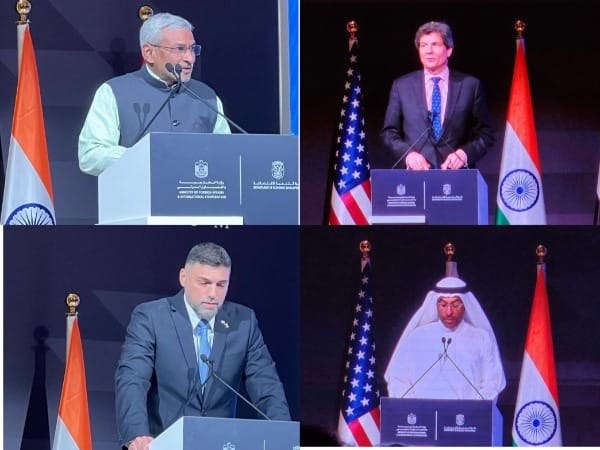
You can see these four countries working more closely together across the Middle East.
Then the Saudis will look at their own options. They cannot go too far away from the US. But at this point, their trust is broken and they’ve shown that they don’t want to risk being at odds with Iran. That’s become quite evident. In the process, the Israelis will decide which way are they headed. Do the Americans get a nuclear deal with Iran or not? That’s convincing enough for the Israelis.
Or can Trump now get a deal with the Iranians that is effectively, at least visibly better than Obama’s JCPOA, which he’s been cursing all the while and which he had dumped as soon as he came to power the last time. All these questions are up in the air as a new Middle East security architecture comes into being. That is where Iran and Oman are talking.
They might talk of a service fee. They will not call it at all. A service charge or a tax for managing the Strait Of Hormuz.
It’s unlikely that the world opinion will accept it. But all of these things will now go on and the chances are that the Iranians, now that they’ve got the ceasefire and they’ve seen quite clearly that Trump has no intention unless he’s forced, he has no intention of coming back to war at least to a full-fledged war. He might carry a few punitive campaigns but not a full-fledged war.
They will keep on dragging these negotiations particularly when it comes to the nuclear issue and that is where the Israelis will act at some point of time. So this story is by no means over. It’s also true that to understand what’s happening now, to understand how we’ve reached where we are, we have to know how it all started.
It’s all a matter of a hundred years. Just a hundred years. 1926 is when Saudi Arabia in a way was founded. That evolution is fascinating because this is the region that’s been the locus of global instability if not for a hundred years then I would say for the first ten of those hundred years and after that give it a twenty year break and then for the remaining seventy years. To understand this, we have to figure out how these countries came into being, where did they come from how did these colonial possessions became new nations, what kind of nationalism evolved there, and all of these, that is if you really stretch this and add Turkey and Yemen and Iraq, countries which are not currently at war with their neighbors, maybe Yemen is at war within itself but if you add them all up, it is just about fifty crore people. That is if you include Egypt and maybe on the outside Turkey as well.
Also Read:Iran to halt talks with US over Israeli assault in Lebanon, reports Iranian state media