





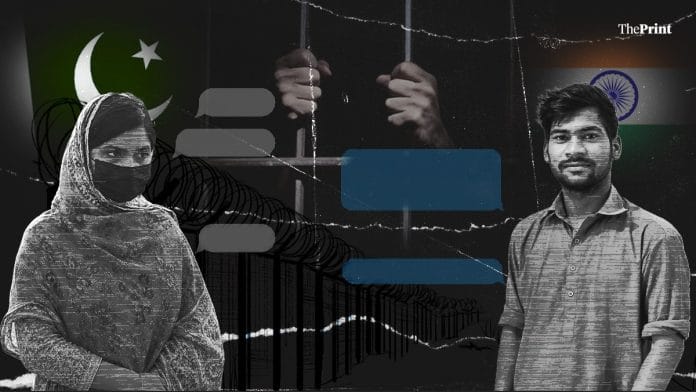

Aligarh: It was 1 am on a September night in 2024. Badal Babu reached the fence near the Attari-Wagah border from Delhi. There were no security personnel around. He paused, scanned the area, then threw his shoes, one by one, into the darkness to check for sensors or explosives.
Nothing happened. The lean-bodied teenager then crawled under the electric border wires. Within minutes, he had crossed into Pakistan—carrying no luggage, no official ID, no visa and no ticket. He had only his love for a woman he had met on Facebook. He was 19.
Undetected by the border patrols, he walked all night to a nearby village. In the morning, Badal boarded a public bus to reach the Mandi Bahauddin district of Pakistan, around 200 km away from Lahore, and 170 km from the border.
What made Badal abandon his family in Aligarh and a job in Delhi was a two-year-old Facebook romance with a woman identified as Sana Rani. But the love story didn’t pan out the way Badal had imagined.
Sana refused his proposal. Her mother was not okay with her marrying an Indian citizen. She was also not happy that Badal came from a hand-to-mouth family.
Now, Badal found he couldn’t return through official channels as he carried no ID. So, he decided to work for the next few months. He began grazing cattle for a villager in the district. The woman’s family, understanding his circumstances, including his financial difficulties, allowed him to stay with them until he could find a way to return. He was living quietly.
But one December day, it changed. His native Aligarh accent slipped out in a conversation, revealing his Indian identity to the local residents. It led him to the police station, and then into a prison.
On 27 December 2024, Badal, who was in Punjab province of Pakistan, was arrested under Sections 13 and 14 of the Foreigners Act, 1946, at the Saddar Mandi Bahauddin Police Station.
Since then, his family has been running from pillar to post, pleading with officials and speaking to lawyers in an effort to bring him back. They have spent most of their savings trying to secure his return.
Badal was remanded to judicial custody on 28 December 2024. He was convicted on 30 April 2025, and sentenced to one year’s rigorous imprisonment with a fine of 5,000 Pakistani rupees.
Badal’s lawyer in Pakistan, Fiyaz Ramay, told ThePrint the case is now stuck in diplomatic limbo.
Speaking to ThePrint from Lahore, he said there is no evidence on record to suggest that he is an Indian agent or engaged in any activity prejudicial to the security of the State. “His only alleged offence is that of illegal entry into Pakistan, in violation of the applicable immigration laws,” Fiyaz said.
Fiyaz said the sentence was completed in December 2025. Having exhausted almost everything, the family’s hope now rests on government intervention.
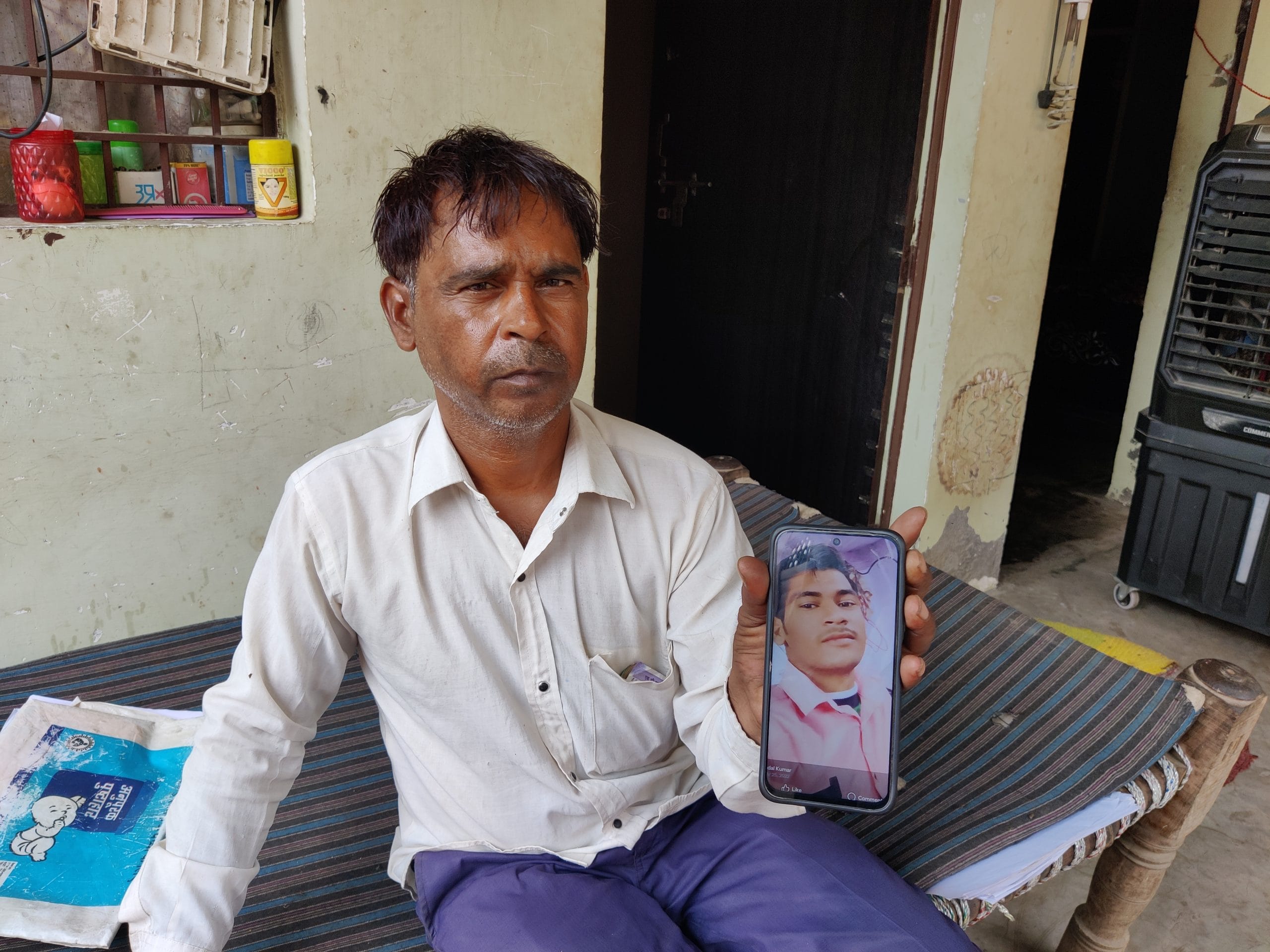
“I have walked to every single government building, have sat down in front of officers, joined my hands, and requested them to bring him back. We have spent close to Rs 3 lakh in legal fees, and that was beyond our means. Now, I am waiting for the government to respond,” Kripal Singh, Badal’s father, told ThePrint.
Also read: No official Track II talks with Pakistan, events held in private capacity’—Foreign Secretary Misri
‘A soft-spoken boy’
Back in 2022, relatives began approaching Gayatri and Kripal with marriage proposals for Badal. He was living away from home, had a stable job in Delhi and, as many families saw it, was in a position to settle down.
“When we asked Badal (about the marriage), he refused. He said first he wants to get our entire house plastered. He wants to save as much as he can so his elder brother can get married,” his father Kripal Singh said.
Badal was barely 17-years-old and was his family’s only hope. The same year, just like any ordinary person, Badal made friends on Facebook. Sana Rani was one of them. This was in 2022.
They chatted on the platform and grew fond of each other. The love grew—from Facebook to WhatsApp, and from texts to audio to video calls.
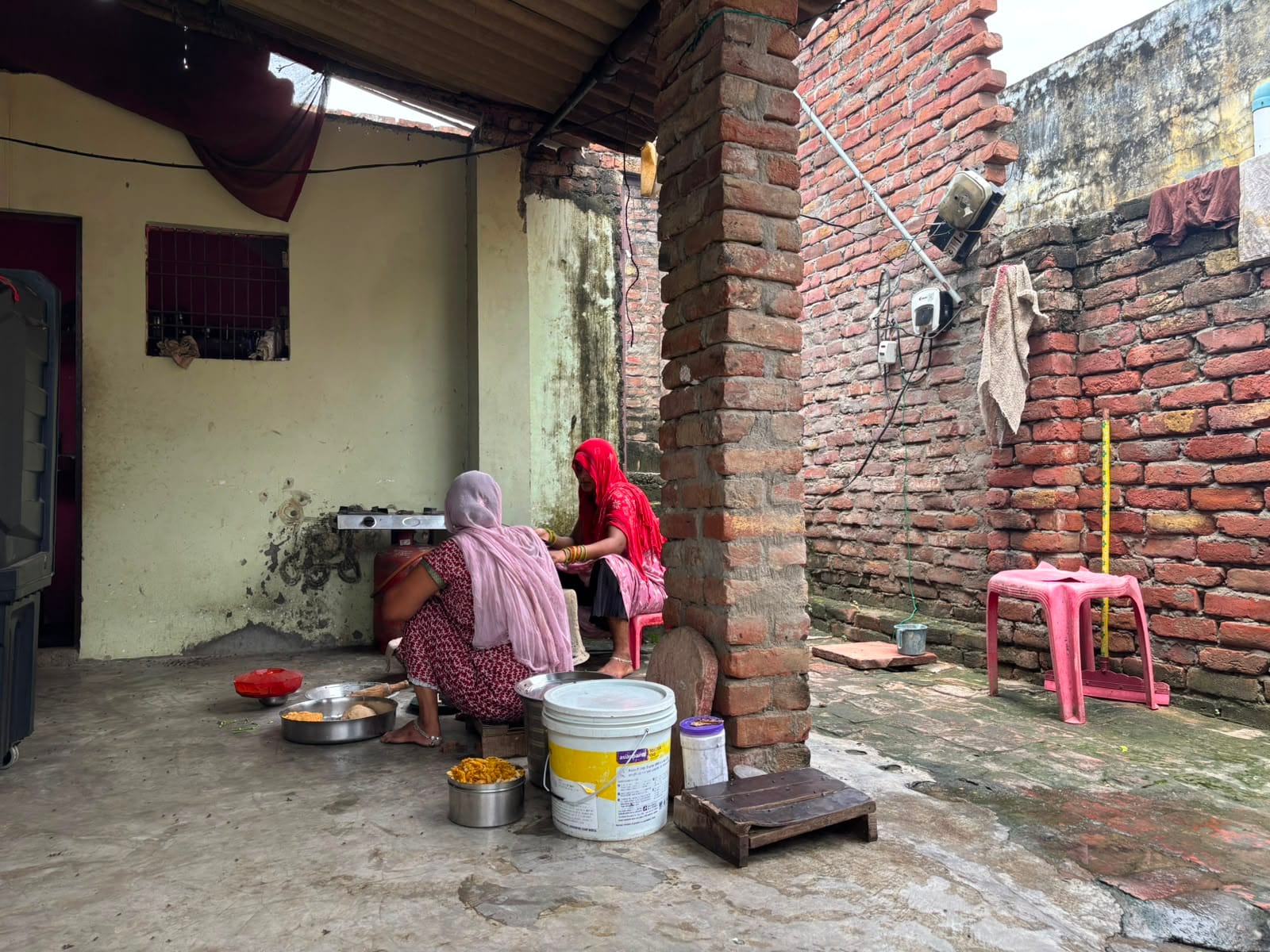
Badal’s family was oblivious. “We did not know who Sana was. Badal never disclosed. You know how young children hide details about who they love,” Gayatri says.
Two years later, in 2024, Sana asked Badal if he would marry her. Smitten, and probably unaware of the legal and practical consequences of crossing an international border—especially the Radcliffe Line—Badal agreed.
In August 2024, after celebrating Rakshabandhan and exchanging gifts, Badal told his mother he had to return to Delhi for work. “He just left. That was the last time I saw my son.”
Days later, Badal crossed the border, leaving everything behind — his home, his valuables, clothes, money, and all his government IDs.
He did not call his family for weeks. A day before Diwali, though, he did. But it was a different number, his mother recalls. He told the family he wouldn’t come home this time due to work.
“The video call seemed normal. He showed other workers at the site. I don’t remember noticing the phone number. Now that I can recall, it was a +92 number (Pakistan’s country code).”
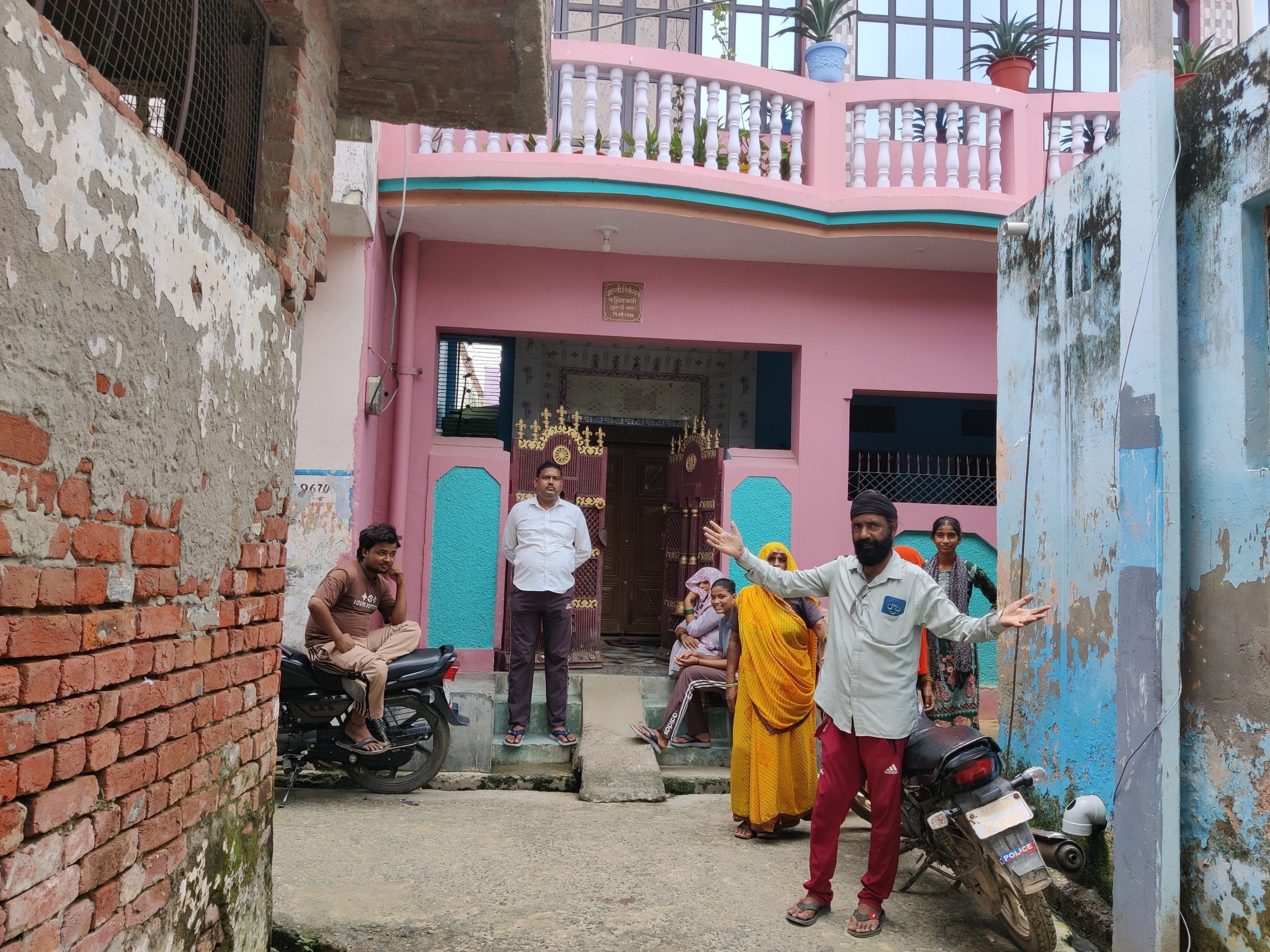
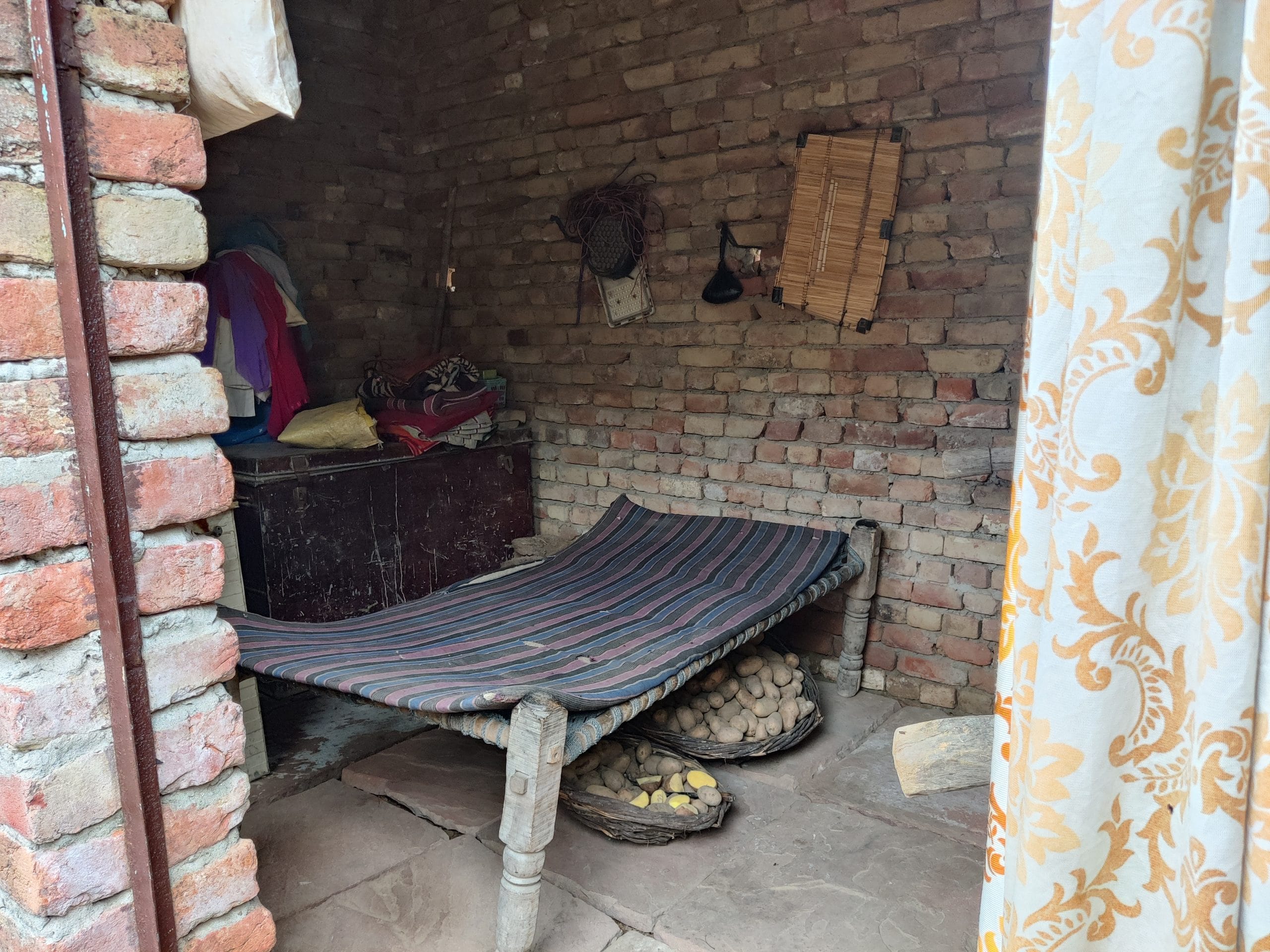
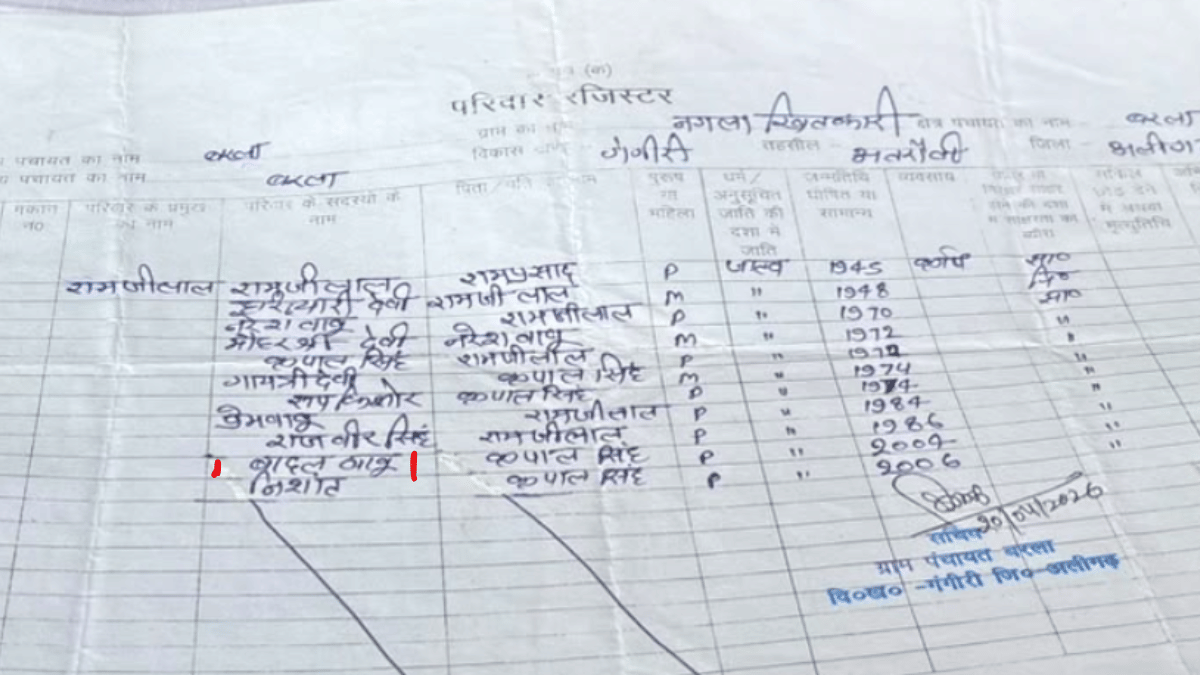
Badal’s native home lies in Nagla Khitkari village, located in Barla, far from the main city of Aligarh. This quiet town has fields, cattle, and most people work as either labourers or e-rickshaw operators, like his father. But Badal managed to secure a tailoring job in an industrial factory in Delhi.
His father said he contacted as many people as he could to secure Badal’s return. “My son got a well-paying job. He was earning Rs 15,000 and sending Rs 10,000 back home. He managed all our finances,” Kripal said.
Gayatri and Kripal have three other children—two sons and a daughter. Badal’s sister and elder brother are now married, and the younger brother is looking for a job.
In his Nagla Khitkari village, people say Badal is a “soft-spoken boy”.
“He wouldn’t argue with anybody; he was very calm. He was ‘dil-phenk’. He would get clothes for everyone from Delhi. He wouldn’t check the price tag. He would trust people quickly. Maybe…this is why he was cheated?” a resident of the village told ThePrint.
TV mics, cameras, production vans enter village
When Badal did not contact his family for weeks after leaving his home that Rakshabandhan day in August 2024, they thought he must be busy.
“We were wondering why Badal isn’t calling us, why is he not visiting us. He wasn’t even sending us any money, but we thought he must be busy, so we got back to living the usual way,” Kripal adds.
But the normalcy shattered on the cold evening of 29 December, 2024, when a fleet of media vehicles and TV reporters from Haryana, Uttar Pradesh, and Delhi entered the narrow lanes the family lived in.
Kripal was away. Gayatri panicked. She thought his son had committed some crime. “The TV reporters pointed a mic in my face. They asked me, ‘apka Badal kahan hai? (Where is your son Badal?)’ I replied ‘Dilli’ and I don’t remember what happened after that.”
It has been almost 19 months since. Gayatri remembers a few sentences she heard that confusing evening. “One reporter told me, ‘Badal is in Pakistan’. Another asked me why he went there. Who is behind this? Did you know he is in Pakistan?”
She recalls being puzzled, confused, not knowing what to even make of the questions. All she remembered was her son stitching shirts, taking measurements.
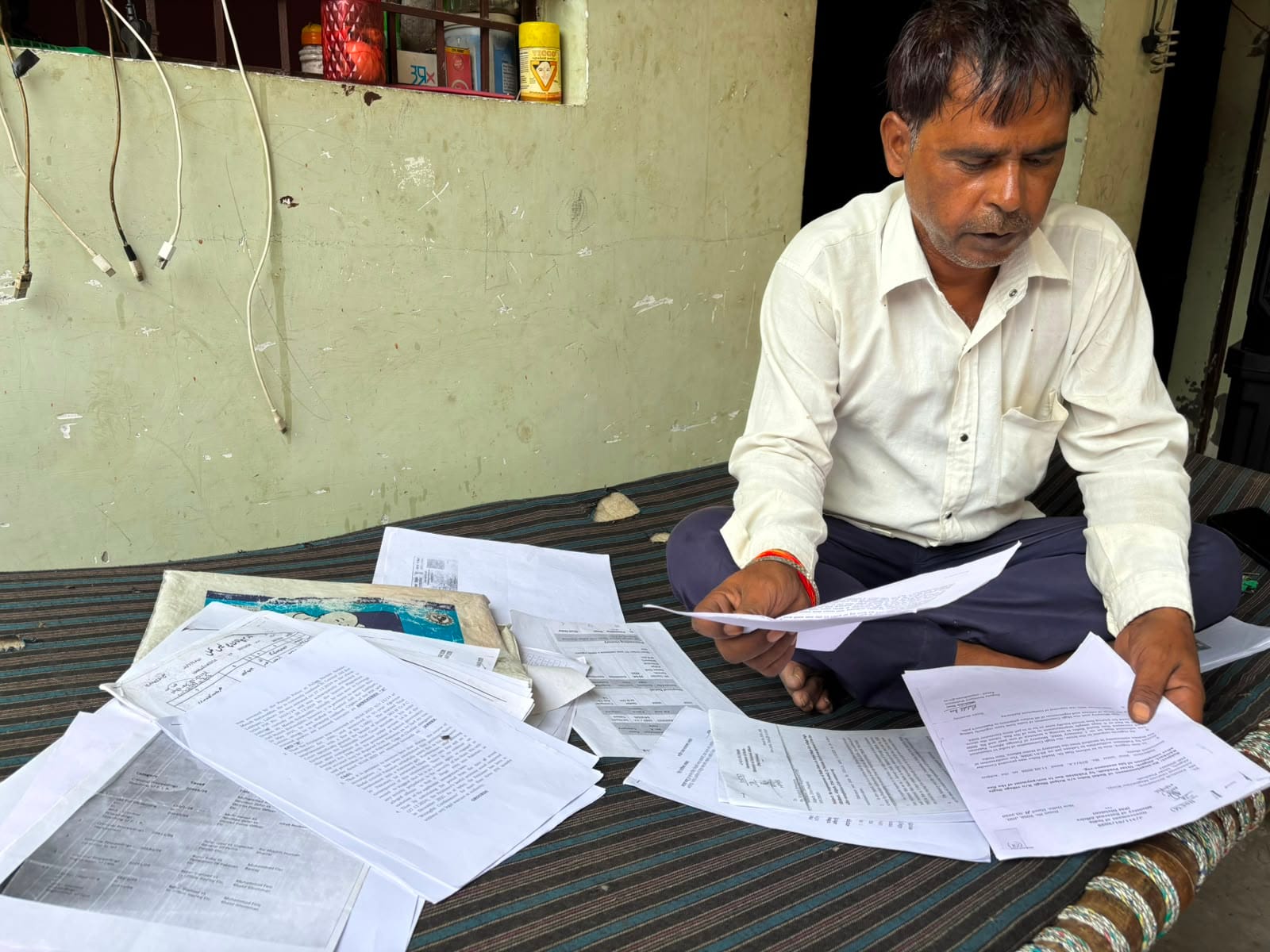
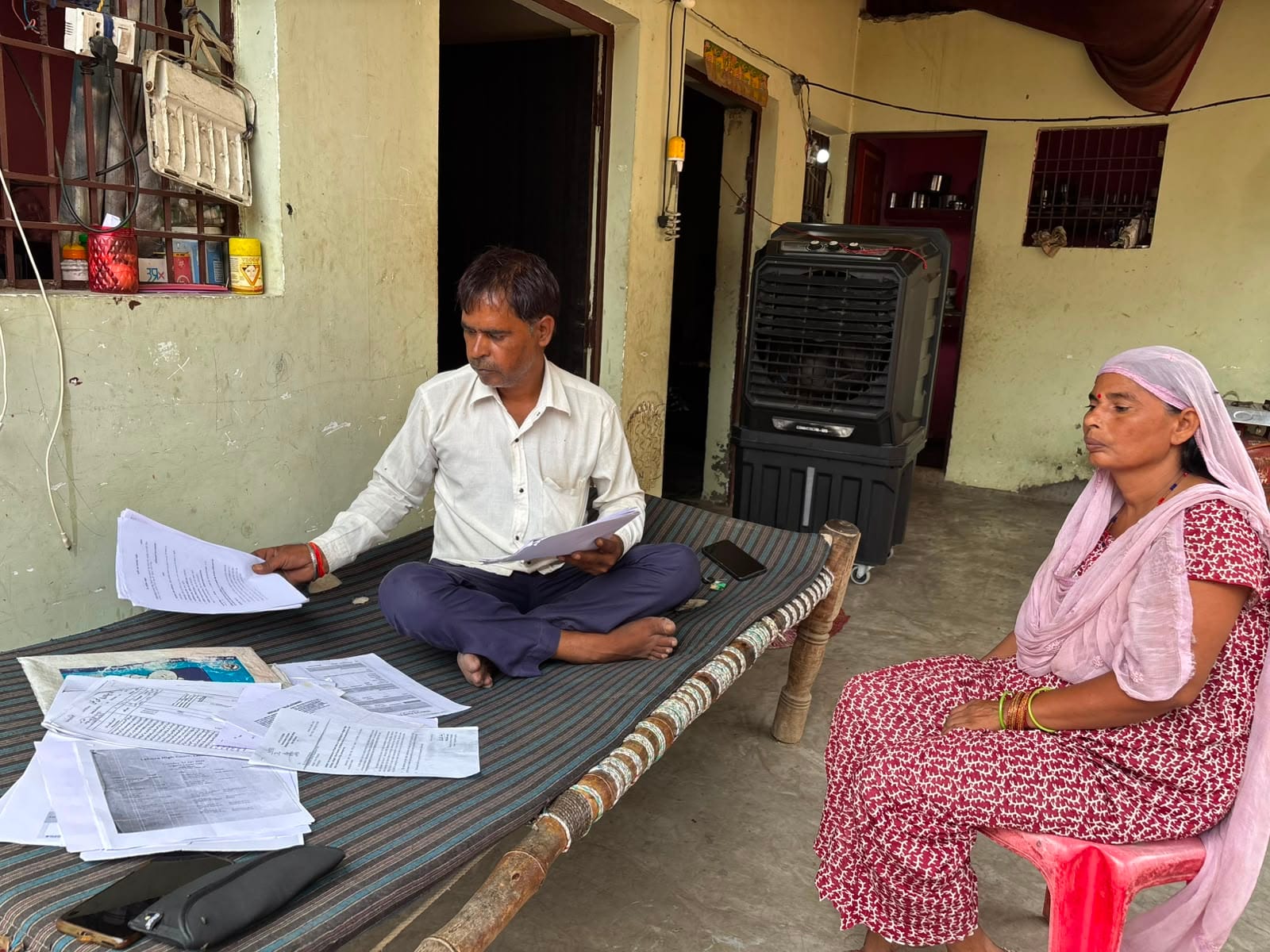
“We found out that Badal was in a Pakistani jail through the reporters,” Kripal says. And that is the day their struggle began. The family brought out a plastic folder containing all of Badal’s official IDs that he left behind in his room.
Crossing the border
Within the next few days, the family managed to get in touch with Fiyaz Ramay. He told ThePrint over a phone call that Badal told him that he came to an area near Wagah Border that was far away from main villages.
“It was late at night around 1 am, and he wasn’t carrying any bags. To avoid any suspicion, he threw a shoe to check if there were any bombs or detectors. Then he did it again. When all was clear and no security personnel was in sight, he managed to dip and cross from under the wires. He walked till the nearest village, from where he could board a bus to Mandi Bahauddin, where Sana lived.”
Ramay said that when he finally reached Sana, he met her mother as well. Badal’s family claims that Sana was not happy with Badal. “Her mother didn’t want her to marry him. He also had no money,” according to Gayatri.
Since Badal had no ID, it was not possible for him to return through official channels. So, Badal began working as a cattle grazer at a house in the same village, earning a paltry sum that he used to support himself.
Kripal says it was the morning of 27 December 2024 when Badal, while grazing the goats, came under suspicion. “The family, at whose house he worked, asked Badal who he was, what he was doing. In our thick khadi boli, he replied, ‘kucchu nai (nothing).’ This led the Pakistanis to suspect that he wasn’t one of their own. The language was different,” Kripal said.
After repeated questions by residents of the entire village, he accepted that he was Indian.
Subsequently, they called the local Punjab Police. He was arrested under Sections 13 and 14 of the Foreigners Act, 1946 at the Saddar Mandi Bahhaudin Police Station.
The chargesheet
According to court records shared with ThePrint, Badal was remanded to judicial custody on 28 December 2024, a day after he was arrested.
The chargesheet says, “On 27.12.2024 at about 07:20 PM, within area (that) falls within the territorial jurisdiction of P.S. Saddar, you, the accused was apprehended being Indian National and present in Pakistan without any visa or permission, hence, you have committed an offence under section 13 of the Foreigner Act 1946 punishable u/s 14 of the Ibd Act which is within the cognizance of this court (sic).”
Badal pleaded guilty, as per the court records.
In an order dated April 30, Senior Civil Judge-cum-Magistrate (Criminal Division) Mandi Bahauddin, Usman Sarwar, said that, in view of the confession, the offence under Section 13 of the Foreigners Act, 1946, was established.
“Therefore, accused is held guilty and convicted under Section 14 of the Foreigner Act, 1946, however, in victory of repentant and remorseful conduct of the accused, this Court takes a lenient view and sentence him with one year R.I. alongwith fine of Rs.5,000. In case of default of payment of fine, he shall further undergo for the period of 05 days S.I. Benefit of Section 382-B Cr.P.C is given to the accused.”
Further, the order said, “After the completion of the above period of sentence u/s 14-B of the Foreigners Act, 1946 with the pennission of Federal Gout, the accused may be departed from Pakistan, as he had no visa or permission to stay in Pakistan. Case property, if any, be dealt with in accordance with law.”
After the completion of his sentence, he was moved to the Central Jail Kot Lakhpat, Lahore.
“There is no official treaty or agreement, so we need the central government’s permission. Here, the Federal government decides the release. The Interior Ministry of Pakistan, which is similar to India’s Home Ministry, decides the deportation. After we filed a petition in the High Court, we were told the Federal Committee is looking into the matter. So now, we are awaiting India’s Ministry of External Affairs’ response,” Fiyez said.
On 23 March 2026, Deputy Secretary (Pakistan desk) Rishabh Deo of the MEA had written to Kinshuk Srivastava, the Additional District Magistrate (City) Aligarh, UP, regarding Badal’s case.
According to the letter, Badal was provided Consular Access by Pakistan authorities in Lahore jail on 29 January 2026. It says the confirmation of his Indian nationality is awaited from the Ministry of Home Affairs.
“The High Commission of India in Islamabad has informed that as on 1 January 2026, the Ministry of Foreign Affairs, Pakistan had conveyed that Badal Babu is serving a sentence of one year and Rs. 5000 PKR in fine or 5 days simple imprisonment in lieu of the fine. Given the above, the need for paying a fine would hardly arise as he is in jail since December 2024,” said the letter accessed by ThePrint.
It further said, “The Ministry and the High Commission of India have been regularly taking up the issue of release and repatriation of all Indian prisoners in Pakistan’s jails. This issue is with the approval of the Competent Authority.”
The family said they have paid the fine through the lawyer.
On 1 July this year, India and Pakistan exchanged, through diplomatic channels simultaneously in New Delhi and Islamabad, the lists of civil prisoners and fishermen in each other’s custody.
“Under the provisions of the Agreement on Consular Access signed between India and Pakistan in 2008, such lists are exchanged every year on 1 January and on 1 July,” the MEA said.
Badal’s family told ThePrint they were not informed if his name was on the list.
The audio call
Fiyaz said it was difficult for Badal to communicate with his family while imprisoned because he had to file an application with the court seeking permission for Badal to speak to them.
“Even for his counsel to access him, we have to either get a card, or you have to take permission from the Home Secretary.”
Back in Aligarh, Badal’s family is finding it hard to deal with his absence. “Badal ki bohot kami mehsus hoti hai (I miss him dearly),” Gayatri tears up.
Since he left the home in August 2024, the family has only spoken to him 4-5 times—no conversation more than five minutes.
“I last spoke to him on 12 August. He asked me, ‘Maa, how are you?’ He told me he was sick. He wasn’t able to find any medicines. I heard his voice, and it broke my heart. My son made a mistake, but will he stay in prison all his life?
(Edited by Ajeet Tiwari)
Also read: India demands consular access to 13 prisoners held by Pakistan as both countries swap prisoner lists