



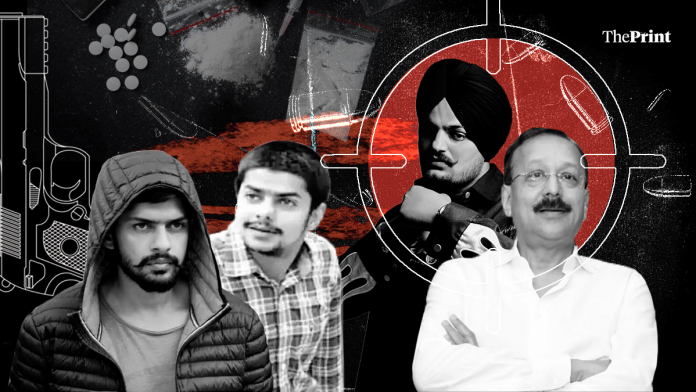
New Delhi: The probe in two of the most sensational murder cases in recent years—singer Sidhu Moosewala’s in Punjab in 2022 and NCP leader Baba Siddiqui’s in Mumbai in 2024—have hit a roadblock with a Union Home Ministry order restricting the movement of accused gangster Anmol Bishnoi from the Tihar Jail on public order and safety grounds.
Anmol, the 25-year-old younger brother of incarcerated gangster Lawrence Bishnoi, is wanted in both these cases. But neither the Punjab Police SIT probing the Moosewala case nor the Mumbai Police crime branch investigating the Baba Siddiqui case, has been able to secure his custody to take the probes forward.
Anmol Bishnoi was deported from the United States in November 2025, and has since remained in Delhi’s Tihar Jail. Anmol faces 18 cases, including Baba Siddiqui and Sidhu Moosewala murder cases.
After deportation, he was taken into custody by the National Investigation Agency as part of a probe into the larger gangster syndicate case registered by the NIA in 2022.
The Punjab police SIT and Mumbai Police Crime Branch’s inability to take Anmol’s physical custody is nearly a repeat of what happened with his brother Lawrence Bishnoi—the Mumbai Police were denied his custody in the Baba Siddiqui case due to a similar MHA order first issued in August 2023, and renewed in August 2024 and then August 2025 as well.
Wanted in multiple cases, Lawrence Bishnoi is lodged in Ahmedabad’s high-security Sabarmati Jail.
The MHA order
On 5 December last year, the Ministry of Home Affairs issued an order under section 303 of the Bharatiya Nagarik Suraksha Sanhita (BNSS), 2023, that restrained Anmol’s movements from his current prison. This came nearly five months after a similar order was issued by the MHA for Lawrence Bishnoi.
The particular provision empowers governments, both at the centre as well as at the state level, to direct that specific prisoners or groups of prisoners not be removed from their current jails. It overrides prisoner transfer orders under Section 302 to protect public order and safety.
According to court filings—both in Mumbai and Mansa—Anmol’s movement is restricted by the MHA order dated 5 December that bars his movement out of the Tihar jail for a period of one year or until the completion of the trial in the particular case, whichever is earlier.
Even before the MHA’s order, Anmol’s custody and security has been a point of scrutiny even in the past when a special NIA court had to hold its proceedings at the agency’s headquarters in Delhi due to supposed threats against him from Pakistani gangster Shahzad Bhatti.
Discussing the implications and ambit of Section 303 of the BNSS, senior advocate Vikas Pahwa said that the State is well within its rights to restrict a prisoner’s movement. However, he said that the specific power should be applied only in cases of a likelihood of disturbance of public order and in the public interest generally.
However, he suggested that the exercise of such power should not be structured in a manner which unnecessarily impedes the administration of criminal justice in other cases where his presence is required.
“If there is a genuine and demonstrable security apprehension in physically transporting an accused from one State to another, the State is certainly entitled to address that apprehension. But modern criminal procedure also provides alternatives,” Pahwa told ThePrint.
Meanwhile, the Mumbai Police Crime Branch’s inability to secure his custody in the Baba Sidiquie case drew the court’s ire. The Mumbai court judge even initiated proceedings to issue a show-cause notice to the investigating officer in the case for not securing Anmol’s custody.
The court had ordered the Mumbai crime branch to take Anmol into custody and produce virtually from Tihar Jail—which the investigating officer argued was not feasible.
The Baba Siddiqui case
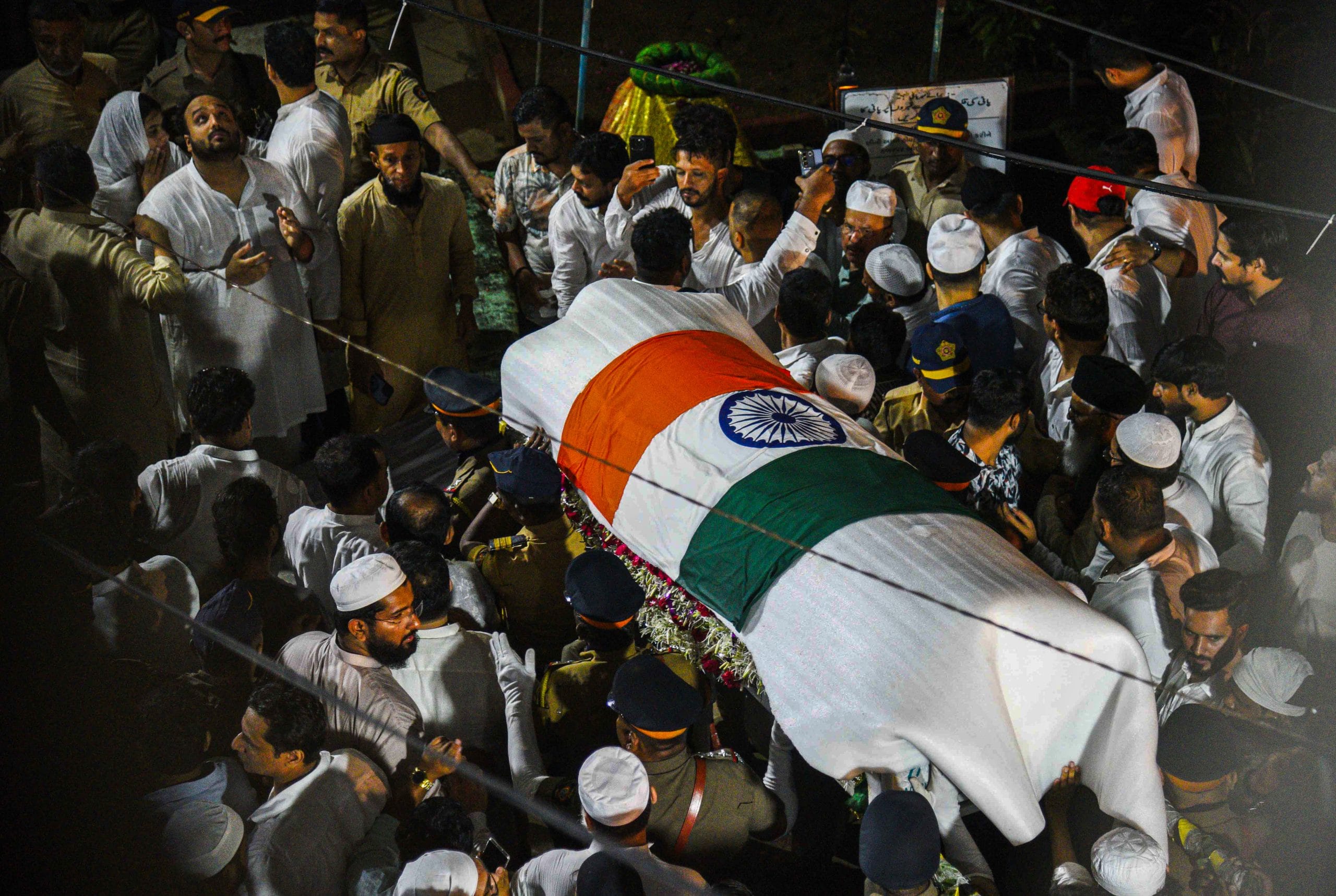
NCP leader Baba Ziauddin Siddique was fatally shot near his car in October 2024 while he was leaving his son’s office in Mumbai. During investigation, Anmol Bishnoi emerged as the main conspirator in the killing of the 66-year-old ruling alliance politician.
As part of its probe into the chilling murder, the Mumbai Crime Branch has arrested and charged 27 people accused for carrying out a recce and executing the killing.
Anmol was declared an absconding accused along with his aides Shubham Lonkar and Jishan Akhtar when the court framed charges in the case in February this year.
Last month, Siddiqui’s wife, Shezeen Siddiqui, approached the court seeking appropriate directions to the investigating officer to take custody of Anmol Bishnoi to unearth the larger conspiracy behind her husband’s killing.In her plea.
Shezeen alleged that the investigating officer was hesitant to take Anmol into custody because of “external pressure” and that he would have to ensure that the larger conspiracy was unravelled.
“Once the whereabouts of an accused who is wanted in a case comes to the knowledge of an investigation agency, it is their first bounden duty to take steps to obtain the custody of such an accused, to find out the missing links in the investigation through his interrogation, on the basis of which to collect the further material furthering and strengthening the case further so that the ends of justice are met,” Shezeen said in her plea moved through her counsel, Trivankumar Karnani.
“However, in the present case the investigating agency is following the evasive steps and procedures, thereby adversely affecting the trial because of the external pressures and wanting to avoid to bring the actual main culprits behind the scene on record,” she had further alleged, prompting the special MCOCA court in Mumbai to instruct the crime branch to take Anmol’ custody.
In the order, the special court instructed the crime branch to explore the option of interrogating Anmol at Tihar jail and secure his production before the court via video conferencing.
The court pulled up the investigating officer—an ACP-rank officer— earlier last week for not exploring the option of virtually producing him and instead opting to seek his physical custody from Delhi’s Tihar jail despite his awareness of the MHA’s restraining order.
The court asked the IO in the case to explain why a show-cause notice should not be issued against him.

In his response, the ACP-rank officer argued that custodial interrogation has been recognised as the “most effective method”, and it is “very much essential” in Anmol’s case.
The investigating officer then said not all facets of the investigation can be conducted by way of virtual production before the court, and listed nine reasons why Anmol’s physical custody is required.
“That Section 303(1) of the BNSS specifically empowers the State Government or the Central Government to direct that a person shall not be removed from the prison in which he is confined, and the provision further expressly stipulates that, so long as such an order remains in force, no order made even under Section 302 of the BNSS, whether made before or after the Government’s order shall have effect in respect of such person,” the investigating officer submitted in his response, a copy of which ThePrint has seen.
“Thus the order dated 05.12.2025 has thus created an express legal embargo against obtaining physical custody of the accused and as stated earlier the physical custody of the Accused is very much essential for carrying out effective interrogation and without which the investigating agency will be handicapped in carrying out further investigation in the said offence,” he further argued.
“Thus the inability of the investigating agency to secure the presence/custody of the accused was, therefore, not occasioned by any inaction, negligence, or deliberate omission on the part of the Investigating Officer, but by reason of the statutory prohibition operating against the investigating agency,” he further said in his defence.
A similar situation had emerged in 2024, when Maharashtra’s Home Department had also sent a request to the MHA for a review of the policy and a reminder to enable the Mumbai crime branch to take Lawrence Bishnoi into custody. However, it yielded no results.
Pahwa suggested that modern criminal procedure enables a trial to continue without the physical presence of the accused, including through audio-video electronic means.
Section 303 should, therefore, be viewed as a mechanism for regulating a prisoner’s movement, not as a means of delaying or disabling criminal trials, he said.
Where physical production is prohibited for legitimate security reasons, every legally available technological and judicial mechanism should be utilised to ensure that the criminal process continues, he said.
Otherwise, a provision intended to protect public interest may, paradoxically, operate against another equally important facet of public interest, the timely administration of criminal justice, according to him.
Moosewala case: Anmol’s plea of self-production
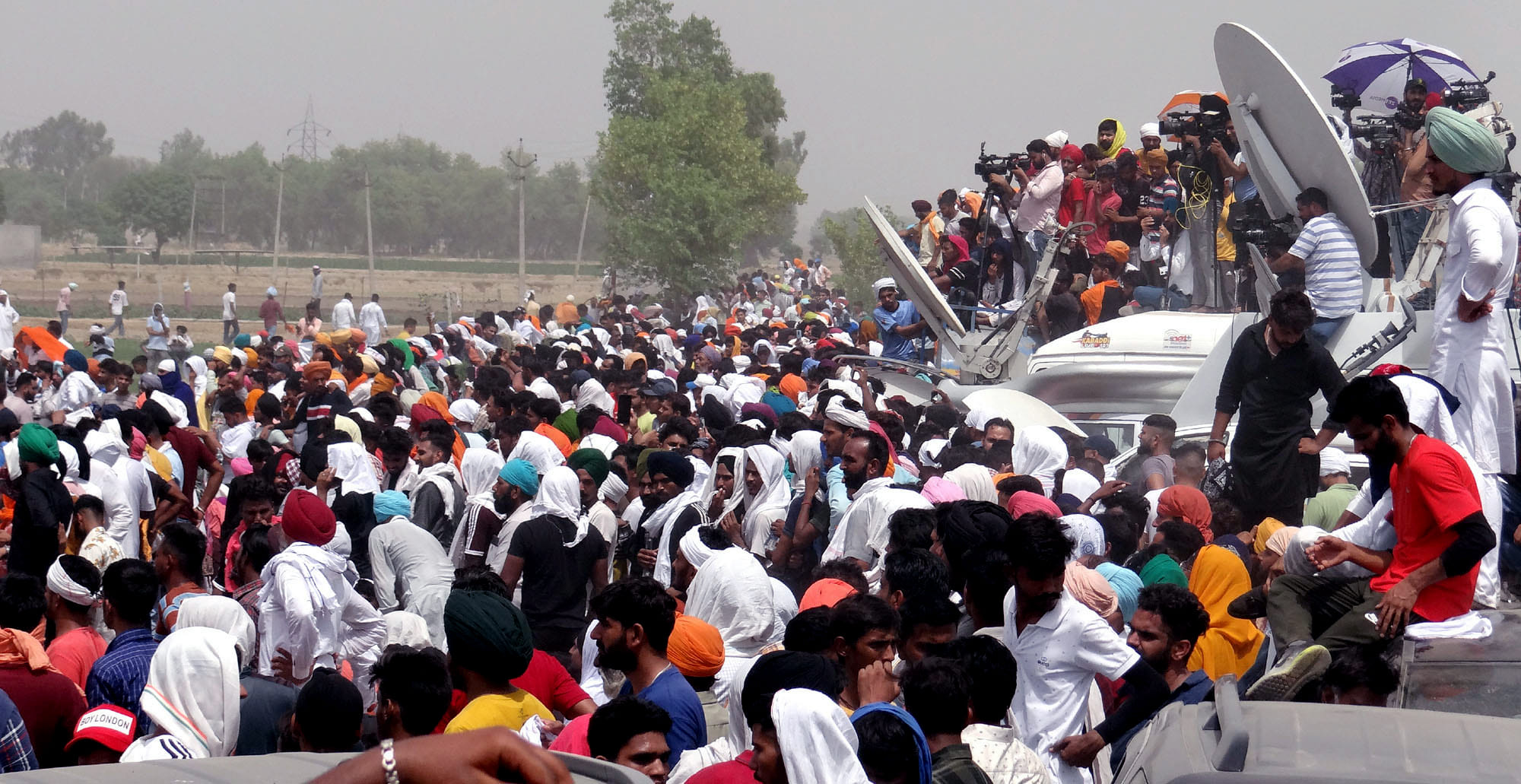
Sidhu Moosewala, a popular Punjabi singer, was gunned on 29 May 2022, when unidentified gunmen intercepted and fired heavily on his SUV at Jawaharke village of Mansa district. He was 28.
He was killed as part of an alleged conspiracy hatched by the gangster syndicate of Bishnoi, Goldy Brar, and Jaggu Bhagwanpuria. Moosewala had contested the 2022 assembly elections on a Congress ticket.
Anmol is also wanted in the case and has sought to produce himself before the court in “interest of justice”.
Lawrence Bishnoi was taken into custody for questioning by the Punjab Police SIT probing the case before his movement from the Sabarmati jail was restricted by the MHA’s order.
Sources in the Punjab Police said that attempts were made to take Anmol’s custody too, but they were blocked by the court, citing the MHA order.
Contrary to the developments in the Baba Siddiqui murder case, Anmol himself has moved a plea in the Mansa court seeking issuance of a production warrant in the Moosewala case. The prosecution has not yet filed a reply to Anmol’s plea submitted in February this year.
In the plea, Anmol argued that he has been confined at Delhi’s Tihar jail for a sufficiently long time and this fact is well within the knowledge of the Mansa district police, which so far “has failed to obtain the arrest warrants” to arrest him in the present case, as a result of which, the trial against him could not be commenced.
“That it is desirable and in the interest of justice that the production warrants of the accused/applicant Anmol Bishnoi may be issued to the Superintendent of Central Jail No.04, Tihar Jail, Delhi for his production before this Hon’ble Court and the accused/applicant may be taken into custody in the present case so that the trial against the applicant may be commenced,” Anmol further said in his plea.
(Edited by Ajeet Tiwari)