







There is a question that the history and philosophy of science has not adequately confronted, “what precisely is lost when war destroys the conditions under which science is practised?” We have extensive literature on how science is made, on the social organisation of laboratories, the role of tacit knowledge, the formation of scientific communities, and the slow accumulation of what Michael Polanyi called the republic of science. We have rather less to say, as a discipline, about how science is unmade. The arc of conflict from Kharkiv to Sana’a to Aleppo makes that omission no longer defensible.
In Kharkiv, missile strikes have left Karazin University’s physics faculty, a department in the tradition of Nobel laureate Lev Landau, without a single intact building; in Sana’a, Yemen’s disease surveillance system has collapsed so completely that the country now has only a handful of working PCR machines. What gets reported is the strike count and the case count, never the disappearance of the research culture itself, and that gap in perception is the real casualty.
The default answer that war destroys infrastructure, displaces personnel, and interrupts research programmes is essentially true but not sufficient. It treats scientific knowledge as a stock of information that can, in principle, be warehoused, evacuated, and reinstalled elsewhere when conditions permit. This is a category error of some consequence. Scientific knowledge is not simply a collection of propositions. It is, as historians of science have argued at length since the 1970s, a form of practice: Embodied, distributed across communities, dependent on instruments and institutions, and reproduced through apprenticeship structures that take generations to establish.
When Karazin University in Kharkiv fell silent in the spring of 2022, its physicists fleeing westward, its laboratories abandoned, what was lost was not a database. It was a living epistemic community— something more intangible that takes centuries to build.
The particular culture of inquiry, the seminars and mentoring relationships and institutional memory that accumulate only across time and cannot be reconstructed by funding and ferocious exhortation alone. The distinction matters enormously for how we think about recovery, and for how we assign moral weight to the destruction of scientific institutions in wartime.
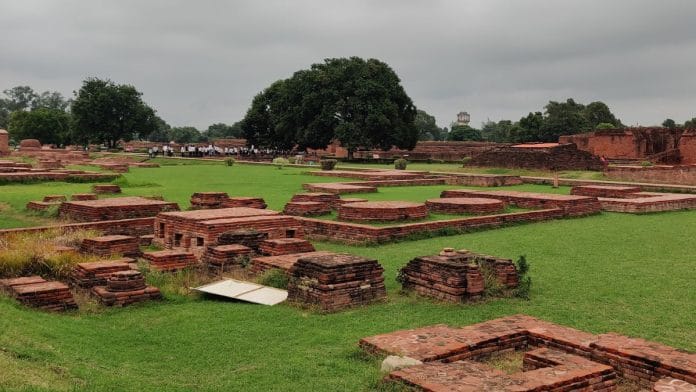
The historical record bears this out with unwelcome consistency. Nalanda’s destruction in 1193 offers an earlier instance of the same pattern: A monastic university that had drawn scholars from across Asia for seven centuries, its library said to have burned for months, was not simply a casualty of conquest but the termination of a transmission network whose like would not be reconstituted.
The Mongol sack of Baghdad in 1258 is the archetype, not merely for its violence but for its specificity. The House of Wisdom represented a particular configuration of translation practices, patronage networks, and accumulated commentary traditions that had taken centuries to assemble. Its destruction did not simply interrupt Islamic science; it eliminated the institutional conditions under which that particular form of science had been possible. Whether the legend of the Tigris running black with ink is literally true is less important than what it encodes. The intuition, evidently deep in historical memory, that the destruction of written knowledge is a civilisational wound of a different order from other forms of physical destruction.
The Library of Alexandria functions similarly in Western historiography, whatever the actual circumstances of its end. These are not merely stories about books being burned. They are stories about the collapse of the conditions of possibility for inquiry.
The twentieth century gave us a more analytically tractable version of the same phenomenon. The Nazi persecution and expulsion of Jewish scientists produced what historians of science have called one of the most consequential involuntary migrations of intellectual capital in modern history. Albert Einstein and Leo Szilard were among those driven out in 1933 by the racial laws; Lise Meitner, whose Austrian citizenship initially protected her, was forced to flee in 1938 following the Anschluss. James Franck’s case is more illuminating still. As a decorated veteran of the First World War, he was legally exempt from the 1933 legislation barring Jews from civil service positions and could have retained his Göttingen professorship. He resigned it anyway, voluntarily, on 17 April 1933, in a letter of protest against a regime he refused to serve.
The Allied powers received, largely as a consequence of racial ideology and the moral revulsion it provoked, a generation of physicists and chemists whose contributions proved decisive both to the war’s outcome and to the subsequent architecture of American scientific dominance.
Niels Bohr’s case is instructive for its differences. He did not flee pre-war persecution but escaped occupied Denmark in 1943 under immediate threat of arrest, reaching the Manhattan Project in its latter stages by a route entirely different from his German-Jewish colleagues. The variation matters precisely because it illustrates that the redrawing of science’s geography in wartime not as a single phenomenon but a constellation of related displacements, structurally distinct and epistemically consequential in different ways.
Also read: Indian science was never apolitical, says Hyderabad panel on space and vaccine stories
A structure of loss
What these cases share, and what the current conflicts across the Gulf region and West Asian arc replicate with distinctly modern characteristics, is a three-tiered structure of loss that is worth disaggregating with some care.
The first tier is material and immediate. The physical destruction of laboratories, instruments, specimens, data repositories, and the accumulated record of prior research. This is the most visible form of loss and the easiest to partially document. Yemen’s biological survey data on endemic species, water quality, disease vectors have been lost or rendered inaccessible in ways whose consequences for environmental recovery will compound for decades. In Syria, the civil war that erupted in 2011 disrupted and destroyed archaeological and geological surveys along with the researchers who had conducted them. Aleppo University, once the country’s second-largest institution, was struck repeatedly; the University of Damascus was struck by mortar fire in March 2013, killing students in its Faculty of Architecture. It continued to operate under conditions of intermittent bombardment throughout the conflict. These are not merely logistical setbacks. They represent the destruction of the material substrate without which certain forms of inquiry simply cannot proceed.
The second tier is generational and concerns the reproduction of scientific communities over time. The students who should have become the next cohort of scientists, physicians, and engineers are instead refugees, soldiers, or casualties. Education systems that took decades to build are dismantled in months. Yemen’s universities, including Sana’a University and the University of Aden, have operated under conditions of extreme duress since the Saudi-led intervention in 2015. Faculty salaries in Houthi-controlled areas collapsed after 2016; the Sana’a Center for Strategic Studies documented in 2024 that one professor starved to death in his apartment. UNESCO’s Executive Board has reported in 2025 that over fifty universities and higher education institutions have been closed or damaged. University World News reported, as early as 2018, that Yemen’s scientific research had been left crippled, its steadily growing scholarly output effectively suspended. The country is producing a generation of nominal graduates who lack the practical scientific foundation to rebuild collapsed healthcare and infrastructure systems, a compound catastrophe in which the war simultaneously destroys existing capacity and forecloses the formation of future capacity.
The third tier is the most philosophically significant and the hardest to quantify. It is the destruction of what might be called the tacit infrastructure of science. Working in the tradition that Polanyi opened, Harry Collins drew a fundamental distinction between knowledge that can be encoded in formal accounts and transmitted as instruction, and the tacit knowledge that resides in communities of practitioners and can only be acquired by sustained contact with them. Destroy the community, and that expertise is not merely dormant; it is gone. The attempts by Syrian diaspora scientists to maintain research communities in exile, coordinating across institutions to preserve knowledge that had nowhere else to go, constituted an admirable act of collective institutional resistance. It was also an implicit admission that the tacit infrastructure within Syria itself had collapsed. You cannot digitise an entire community. You cannot archive the relationship between a supervisor and a doctoral student, the particular way that problems are identified and evaluated within an institution, the unwritten norms that govern what counts as a good research question.
A doctoral student in Aleppo who spent three years learning to read a particular instrument’s quirks under a specific supervisor’s mentorship does not transfer that competence by moving to Berlin with a laptop of saved data. The informal seminar where a junior researcher first learns which questions are considered serious and which are dismissed as naive, the corridor conversation that redirects a failing experiment, the unstated hierarchy of which findings merit a paper and which a footnote, none of this travels. It is reconstituted, if at all, only by years of renewed proximity between people who no longer share an institution.
Against this three-tiered analysis, the dominant response of the international scientific community, however well-intentioned, reveals a structural inadequacy rooted in a misunderstanding of what science actually is.
Programmes such as Scholars at Risk and the Council for At-Risk Academics have provided genuine lifelines to individual researchers. They deserve greater funding. But they operate on a model that implicitly treats science as a set of individual cognitive capacities that can be disaggregated from their institutional context and transplanted into new soil. When an entire national scientific ecosystem is destroyed, as it has been in Yemen, as it was in Syria, as it was in Iraq following the 2003 invasion, the evacuation of individual scholars to European or American universities preserves only some of the most mobile elements of that ecosystem. The community from which they came continues to disintegrate. The rescue of persons, while important, is not the same as the preservation of science.
Also read: Mughals failed India in science. Just see what Europe did between 1526 and 1757
Protect institutions, not just individuals
There is a counter-narrative that arises periodically in these discussions and must be addressed directly. The argument that war, historically, has accelerated scientific progress. The two World Wars did produce remarkable technological advances, but this argument confounds the perspective of belligerents, whose scientific infrastructure remained intact with the perspective of societies subjected to industrial-scale violence. The accelerationist thesis applies to societies that bomb, not to societies that are bombed. For the latter, there is no compensatory windfall. There is only the compounding loss of institutions, people, and the possibilities that those institutions and people might have realised. The argument also purchases its conclusion too cheaply by focusing on applied technology, while ignoring the devastation to basic science and the permanent redirection of inquiry toward military ends, a redirection whose costs, distributed across generations and disciplines, cannot be straightforwardly netted against the radar sets and the antibiotics.
What follows then, normatively, from this analysis? Three imperatives seem clear. The protection of scientific and educational institutions must be elevated from formal aspiration to genuine operational priority within international humanitarian law. The 1954 Hague Convention for the Protection of Cultural Property provides a legal framework whose enforcement record is, to put it charitably, poor. Documenting violations and imposing meaningful consequences on belligerents who target universities and laboratories requires political will that the international community has not so far demonstrated.
Second, the preservation of scientific knowledge in conflict zones demands more systematic treatment. Not merely digitisation as an afterthought, but the proactive documentation of ongoing research and data before its destruction becomes irreversible.
Third, and most importantly, the international scientific community must reconceive the scale and structure of its support for displaced scholars, not as the rescue of prominent individuals but as the deliberate maintenance of communities, the tacit infrastructure without which individual brilliance cannot become collective science.
None of this will be sufficient. The compound interest of scientific knowledge, the way each discovery enables subsequent discoveries, each trained researcher trains future researchers, each functioning institution attracts the resources that sustain further institutions, means that losses caused by warfare accumulate over timescales that far exceed the duration of any given conflict. Countries that spend a decade at war do not merely pause their scientific development, the foundations on which future development would have rested are actively destroyed, and the cost compounds across generations in ways that no reconstruction programme has ever fully reversed.
The deepest point is also the oldest one. Science, in its aspiration if not always its practice, represents civilisation’s most sustained attempt to produce knowledge. It transcends the parochialism of tribe, nation-state, and historical moment. It is that universalism—however contested, however incompletely realised—that makes the destruction of scientific infrastructure an assault not merely on a particular people’s knowledge but on the very premise that knowledge can grow across human divisions.
The House of Wisdom burned in 1258 in the service of a violence that did not understand what it was destroying. The same cannot be said of the missiles that struck Kharkiv, the bombardments that gutted Aleppo, or the starvation policies that emptied Yemen’s laboratories. We destroy these things knowingly, or we permit their destruction through an indifference that, at this point in history, can no longer claim the excuse of ignorance.
We have spent a century building a moral and legal architecture around the destruction of people: War crimes tribunals, genocide conventions; on the principle that a human life, once ended, cannot be restored. Nothing comparable exists for the destruction of the conditions that produce knowledge, because we have never believed science needed that protection. Buildings can be rebuilt, funding restored, surely knowledge, unlike a life, is renewable.
That assumption is false. A scientific community does not regenerate once the violence stops; its temporal logic is closer to extinction. The seminar culture at Karazin, the supervisory lineages in Aleppo, the accumulated judgement of what counts as a serious question in Sana’a, these have a half-life measured in generations, not years. Once the population that carries them is dispersed, killed, or starved, the thing itself does not return, even if every scientist survives and every laboratory is rebuilt to its original blueprint.
The real comparison, then, is not between bombing a university and bombing a hospital, but between bombing a university and burning a species’ last breeding population. Both look, in the moment, like a building on fire. Only one is reversible. That equivalence sounds excessive only because we have never been asked to take seriously the idea that a form of collective human knowing could be made extinct, and the silence around Kharkiv, Aleppo, and Sana’a suggests we are still not ready to.
Pranav Sharma is a historian of science who lives and writes from New Delhi, India and Paro, Bhutan. Views are personal.
(Edited by Theres Sudeep)