



I was woken up by the persistent buzzing of my phone on an otherwise quaint Delhi morning: some 238 notifications across different queer WhatsApp groups. The last time queer groups had buzzed like this was when some community leaders had decided to visit Israel in June 2026—so I knew someone, somewhere had messed up. I got up, made my morning coffee to marinate my brain for the tea and went sifting through the notifications.
The message that started this buzzing was an Instagram post by Yes We Exist, an LGBTQIA+ rights watchdog. The post broke the story of a PIL filed in the Supreme Court by the Women’s Declaration International India (WDI India), the India chapter of a UK-based organisation, which argued that trans women receiving the same protections as cis women was somehow a detriment to the rights of the latter. While WDI flaunts an international resume of anti-trans advocacy, this argument—that trans women having access to the spaces/protections reserved for cis women is somehow detrimental to cis women—has been gaining traction in Indian discourse, too. A few months ago, Orhan Awatramani, aka Orry, on his pick-me tirade on KK Creates’ podcast, sermonised how he (as a cis gay man) was not comfortable with trans women in the women’s washroom. It’s a Western culture war issue that, up until now, had just not reached India—a country that has been a home to some of the oldest transgender communities in the world.
What’s common between WDI and Orry—other than being Western imports to a land that has centuries of trans histories etched into its milieu—is their complete misunderstanding of gender. Theorist Judith Butler, in their seminal work Gender Trouble (1990), called it ‘performative’. Gender is a mishmash of cultural, historical, and social symbols condensed onto the human body—conveying its gender (and sex). While an elongated neck through stacks of neck rings might convey a woman to the Kayan people of Myanmar, a person with long hair, a bindi, an elegantly draped sari, and restrictive bodily comportments would obviously convey a woman to someone from India.
“There is no gender identity behind the expressions of gender; that identity is performatively constituted by the very ‘expressions’ that are said to be its results,” Butler wrote.
So gender is not “women have long hair and wear a bindi” but “people with long hair and a bindi are conveying (and constituting) a woman through their presentation”. As the second-wave feminists would put it, one is not born but becomes a woman.
The core of the trans–exclusionary arguments by WDI, Orry, and the likes is the belief that the gender of trans women is not as ‘real’ as our cisgender counterparts—that trans women are imposters of womanhood—and that inclusion of trans women into the womanfold upsets the modesty of cis women somehow.
‘Indian women ought to be modest’
The 2000s were indeed an iconic decade. The cultural changes brought in by Manmohan Singh’s 1991 economic liberalisation were in full swing. Western media had started populating the conscience of the Indian middle class (read: uppered caste) through the many new private TV channels. This was the time when India met Poo from K3G. It was when DJ Doll started remixing old Bollywood classics, and it was when the cultural backlash against these scantily clad divas would situate them amid an old colonial question from India’s past—‘the question of women’. It was an enquiry with a singular answer: the Indian woman ought to be modest.
Womanhood in India has a peculiar relationship to modesty. It is a relationship moulded by the social realities of caste and colonisation. Partha Chatterjee, in his essay ‘Colonialism, Nationalism and Colonised Women: The Contest in India’ (1989), unpacks this peculiar relationship.
The nationalist freedom movement needed an idea of India that the masses could rally behind. This idea could not be to copy the British coloniser, as that was understood to be an erasure of Indian-ness. So, Indian-ness got divided into two distinct spheres: material and spiritual. The material sphere represented science, technology, economy, industry—the ‘masculine’ of the two spheres—the one where the British supposedly dominated. But in the other, spiritual, ‘feminine’ sphere, the nationalist freedom movement identified its superiority over the coloniser.
“Nationalism was not simply about a political struggle for power: it related the question of the political independence of the nation to virtually every aspect of the material and spiritual life of the people. In every case, there was a problem of selecting what to take from the West and what to reject,” Chatterjee wrote.
While the nationalist movement recognised the superior technology, economy, and industry of the West and saw the need to develop the material (masculine) sphere, the spiritual (feminine) sphere necessitated protection.
“In the world, imitation of and adaptation to Western norms was a necessity; at home, they were tantamount to annihilation of one’s very identity,” Chatterjee wrote, explaining the zeitgeist of the time.
Home became a bastion of spiritual/inner self, and women stopped being humans and were deified to goddesses. This deification was limited to upper caste women, of course. As most Dalit-Bahujan-Adivasi women had to work outside of their home—an outside that was tainted by the material (masculine) sphere—they were deemed coarse, vulgar, loud, and quarrelsome.
In fact, for middle-class women, an outer display of their inner spirituality—of their modesty—became what made them a “good and respectable” woman. It was through this outer display—the bindi, the drape of the sari, the way of walking and talking, and taking space in society—through her Indian-ness, that the middle-class woman was allowed outside of the house. This display of modesty by middle-class women, the marker of India’s superiority in the spiritual sphere over the coloniser, became an integral part of Indian-ness.
It is this modesty that was outraged by the scantily clad divas of the 2000s Bollywood remixes. It is this modesty that is called into question when a 15-year-old girl abuses the prime minister, and it is this modesty whose ghosts haunt Indian women to this day. A tryst with destiny indeed.
However, gender, as Butler theorised it, is performative. This performativity of modesty—of the inner spirituality—the gender performance of the Bharatiya Nari, has interesting origins.
Also read: Bilkis Bano case and the moral cost of putting community before conscience
Performing the ‘Bharatiya Nari’
The time was 1853 to 1931. Mumbai was still Bombay, Chhatrapati Shivaji Maharaj Terminus was still Victoria Terminus, and all through there to Grant Road, live theatre companies started shaping the entertainment capital that the city is today. These theatre companies were springing up at an interesting time. The nationalist freedom movement had started taking root in the minds of the middle class, numbers of whom were swelling suburban centres such as Bombay, and they were looking to be entertained.
It raised an issue for the theatre companies: Who would play the women characters? An entire two centuries after professional women actors appeared in England, cis Indian women performing in public (the masculine sphere) was considered extremely taboo. While there existed cis women from various courtesan castes performing for an aristocratic audience in courts and salons (think Heeramandi, think Chandramukhi), the public nature of these theatre company stages made performing on them extremely unprestigious. So who were to play these women characters? Who were to be the ‘woman in public’? The transvestite performers.
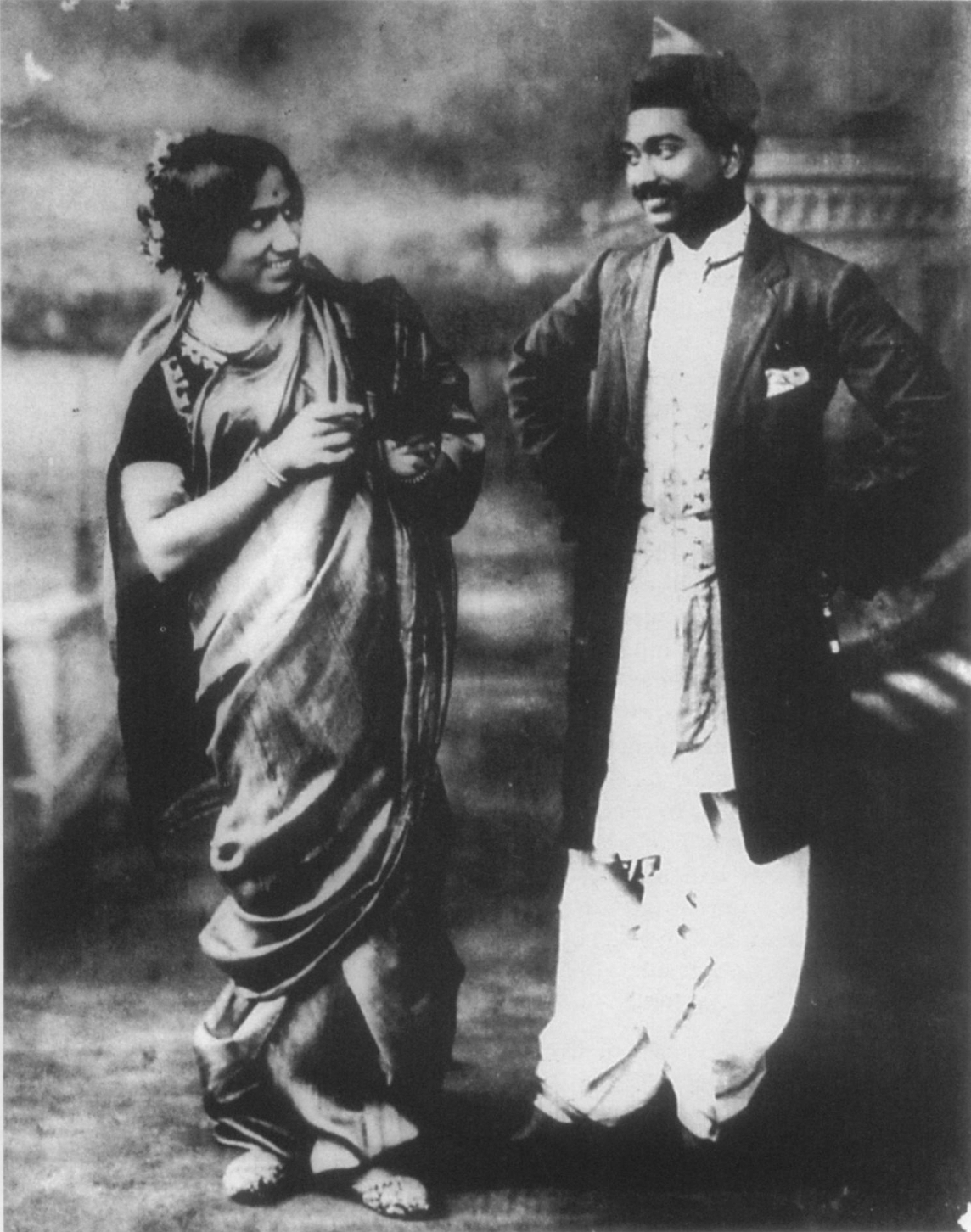
Owing to the nationalist zeitgeist of the time and its intellectual hold on middle-class families, the performativity of womanhood that these transvestite performers created was that of the modest Indian woman, the Bharatiya Nari. Kathryn Hansen, in her paper ‘Making Women Visible: Gender and Race Cross-Dressing in the Parsi Theatre’ (1999), discusses how the imitation of femininity these transvestite divas created on theatre stages became a way for cis women to navigate public spaces respectably.
“The appearance of propriety conveyed through specific gestures and features of dress became the passport to mobility (for cis women). This fortified self-image, ironically based on an attitude of vulnerability (read modesty), was most convincingly modelled by the female impersonator,” Hansen wrote.
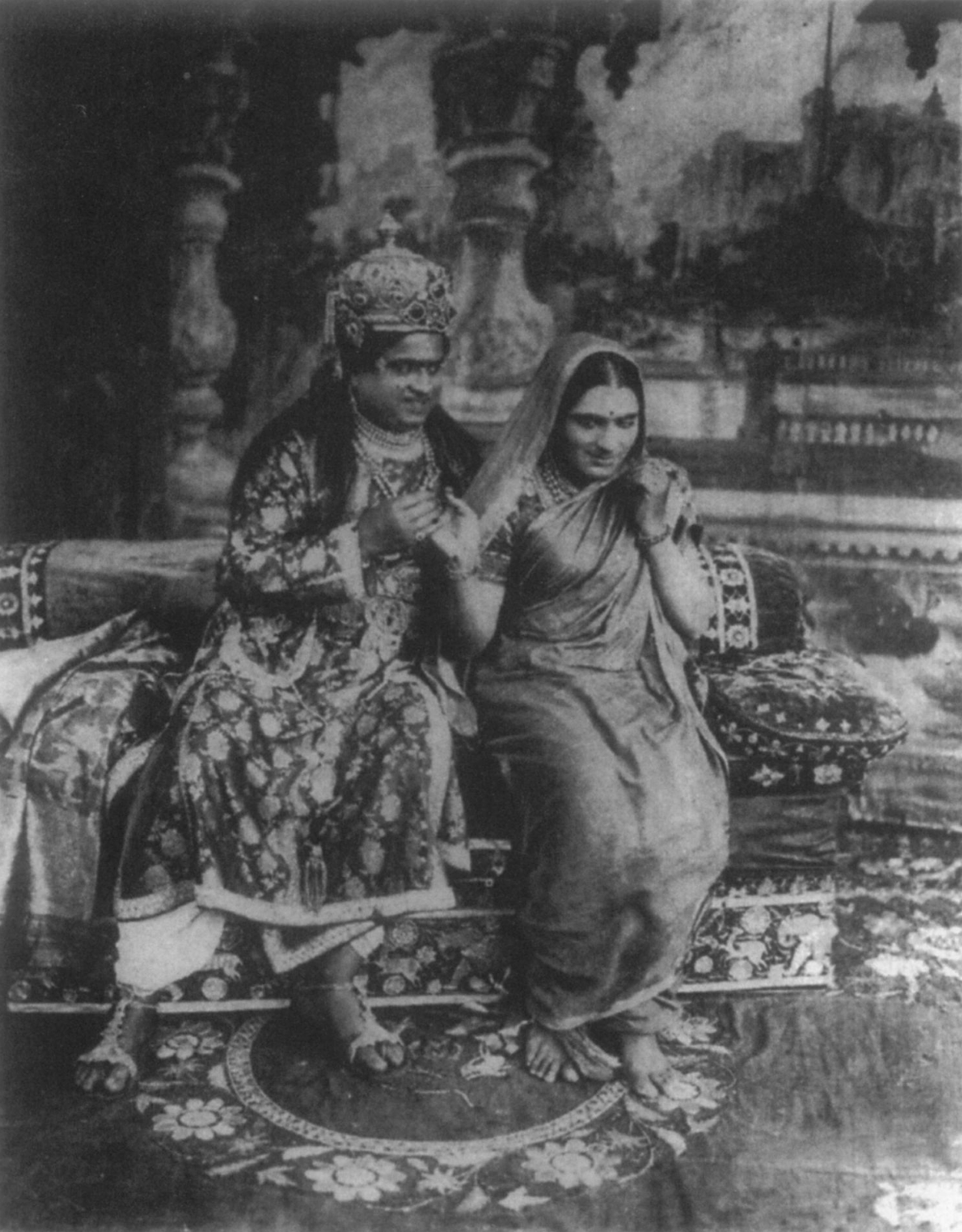
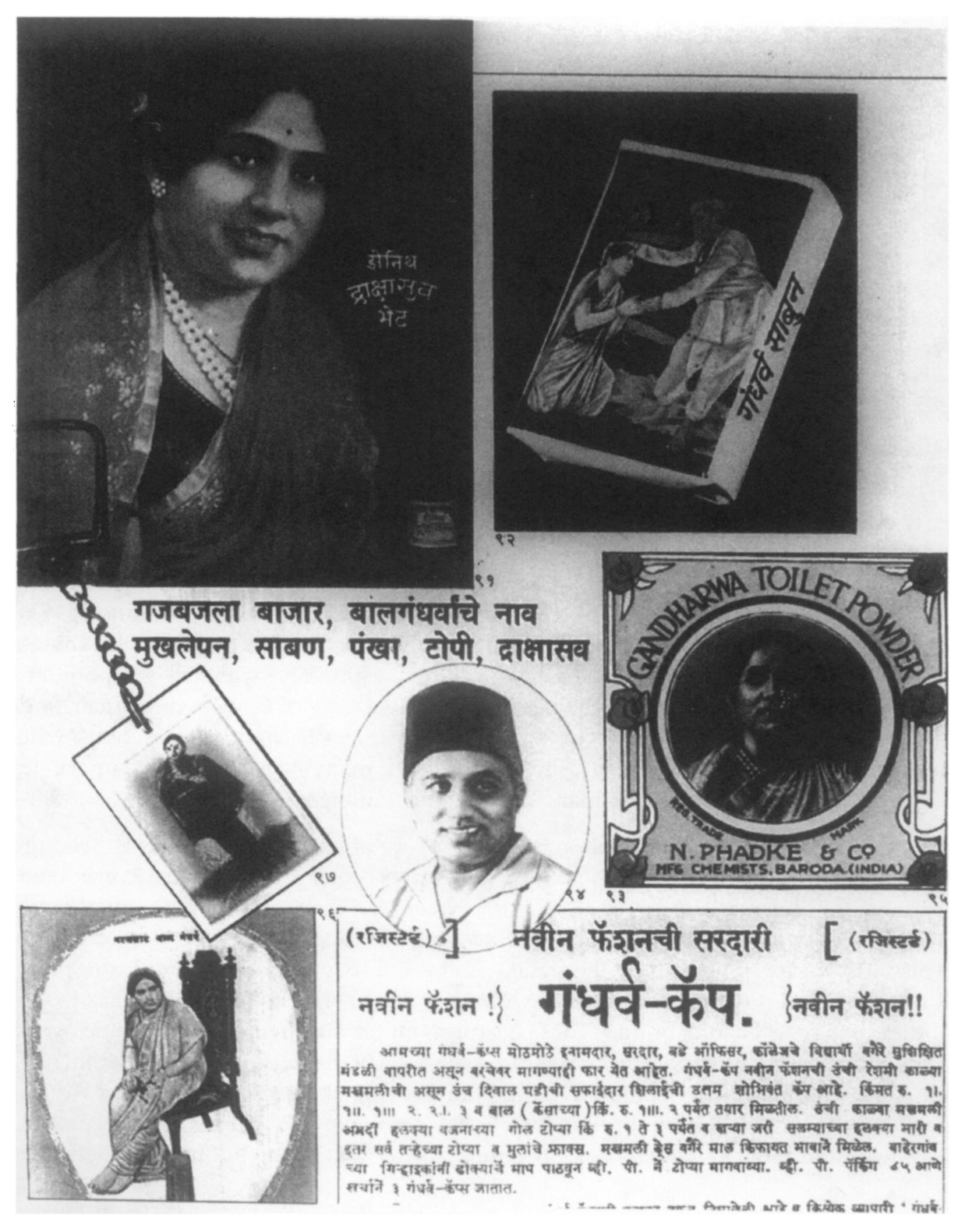
These transvestite performers taught this performativity throughout the subcontinent. Beginning in the 1870s, theatrical companies routinely travelled from Chennai to Sri Lanka, Kolkata to Myanmar, Punjab to Peshawar, and everywhere in between. Local theatre companies soon sprang up in these places, modelled after the ones in Bombay. Some transvestite performers such as Jayshankar Sundari and Bal Gandharva became so popular that their photos would be printed on the packaging of soaps, tonic bottles, keychains, and other feminine products—thereby cementing the image of the Bharatiya Nari in the minds of middle-class women across India.
Everything we understand as the performativity of respectable Indian womanhood—from the neatly braided hair to the jasmine gajra to the bindi to the nosepin to the conservative drapes of the sari to the restricted bodily comportments—is modelled after the characters these dolls performed on the theatre company stages. As time went on and it became acceptable for cis women to perform onstage, it was this same performativity that they adopted.
“Female impersonators structured the space into which female performers were to insert themselves, effecting the transition from stigmatised older practices to the newly consolidated Indian Woman (bharatiya nari) of the nationalists,” Hansen wrote.
It is this Bharatiya Nari that later Ekta Kapoor monopolised through the ‘K’ titled TV shows. She is the Geetanjali in Animal, the Preeti in Kabir Singh, the phantasmic submissive trad-waifu who keeps parampara, pratishtha, and anushasan firmly knotted in the pallu of her saffron sari to the dejected men’s rights keyboard warrior who sees himself in Kabir Singh.
Also read: India’s men have found new reasons to kill for honour—road rage to parking disputes
The curse of transsexuality
The phenomenon is not unique to India. Performativity of womanhood often originates in trans and queer spaces. Things that we now consider natural expressions of womanhood, such as acrylic nails, makeup contouring, hair extensions, lip lining, cut-crease eyeshadow, and a ton more, all originated in the black and brown trans ballroom scene in the US. It also gave us the entire Gen Z girliepop lingo, from ‘slay’ and ‘werk’ to ‘serve’, ‘giving’, and ‘clock it’. What would the influencers do without the transsexuals?
The curse of transsexuality is not being ‘born in the wrong body’, as the narrative would have you believe. The curse is that the bodies which originate countless forms of feminine expressions are considered unworthy of that very creation once it is co-opted and ‘naturalised’ on a cis body. The curse is that for cis women to be women, trans women must be policed out of the cultural inheritance of their foremothers. The curse is that for a cis woman to be a woman, a trans woman must stop being one. Pitting women against women—the oldest trick of the patriarchy.
Katyayini Saksham is a writer and transgender activist. She is on Instagram @katyayinisaksham. Views are personal.
(Edited by Prasanna Bachchhav)