


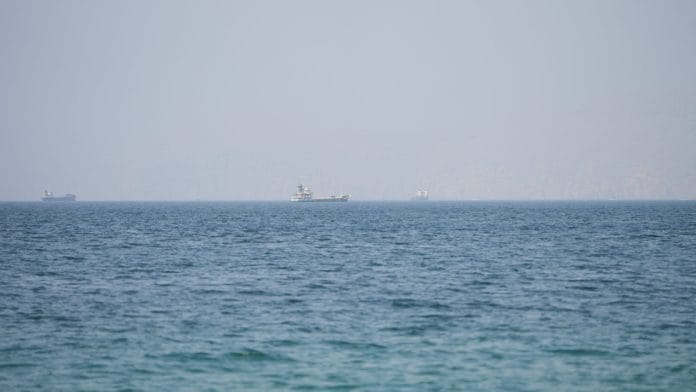
New Delhi: The near-closure of the Strait of Hormuz during the West Asia conflict has triggered the biggest oil supply shock in modern history, cutting global supplies by as much as 16.1 million barrels per day at the peak of the disruption and resulting in cumulative losses of 2.8 billion barrels of oil from the Gulf by November.
The disruption has hit shipments from the world’s largest oil producers and exposed the vulnerability of global energy supplies to a single shipping route. The International Energy Agency (IEA) has warned that the crisis could have lasting effects on global energy markets and the way countries secure their supplies.
“The disruption to energy flows through the Strait of Hormuz in 2026 has been the largest energy supply shock that the world has faced and–as of November–it is not over,” the IEA said in its World Energy Outlook 2026, released Thursday.
Before the conflict, around 20 million barrels per day (mb/d) of oil passed through the Strait, comprising approximately 15 mb/d of crude oil and 5 mb/d of petroleum products. This represented around 20 percent of globally traded oil. However, shipments through the waterway collapsed to an average of around 3 mb/d during March, April and May.
The disruption also affected natural gas supplies, with around 320 million cubic metres per day of gas flows from the Gulf impacted at the peak. The supplies of fertilisers, aluminium, sulphur and helium were also disrupted, raising concerns for industrial production and food security.
Also Read: West Asia crisis hits India’s Gulf oil shipping edge, tanker freight costs up 5x. All eyes on Hormuz
Inventories cushion impact
The global oil market initially absorbed much of the supply shock through high inventories, emergency stock releases, alternative export routes and additional supplies from producers outside the Gulf.
Saudi Arabia and the United Arab Emirates redirected some oil exports through alternative routes, including the East-West pipeline, to Yanbu on the Red Sea and the UAE pipeline to Fujairah. However, these routes could not fully compensate for the loss of shipments through the Strait of Hormuz.
The IEA also said the disruption had removed one of the traditional safety nets for oil markets—spare production capacity held by major Gulf producers.
Governments and companies drew on stored oil to maintain supplies. The IEA coordinated the release of 400 million barrels from emergency reserves, its largest-ever collective stock release.
But global observed oil inventories declined by around 460 million barrels between March and the end of October, including commercial stock withdrawals and emergency reserve releases.
The IEA said global oil inventories stood at 8.3 billion barrels in February 2026, enough to cover 80 days of consumption on paper. However, the amount of oil that countries can actually use is lower because refineries and distribution networks need to keep some stocks to continue operating.
Consumers face higher prices and fuel shortages
As the disruption continues, the burden is increasingly shifting to consumers through higher prices and shortages of certain fuels.
Diesel and jet fuel have been particularly affected, while shortages of petrochemical feedstocks and liquified petroleum gas (LPG) used for cooking have added to the pressure. The diesel prices in Europe and the United States crossed $200 per barrel in September, reaching record levels, cites IEA.
The IEA expects global oil demand to fall by around 2.7 mb/d in 2026, marking its first annual decline since 2020. The demand for natural gas is also projected to fall by around 1.5 percent, or 65 billion cubic metres.
According to the IEA, the impact has been particularly severe for Asian countries. Before the conflict, around 80 percent of the oil and nearly 90 percent of the LNG passing through the Strait of Hormuz was destined for Asia.
The disruption to LNG supplies is harder to address because, unlike oil, there are no alternative routes for transporting gas from Qatar and the UAE to international markets. Around 110 billion cubic metres of gas passed through the Strait in 2025.
The damage to Qatar’s Ras Laffan facility has also removed more than 17 billion cubic metres a year of production capacity, with restoration expected to take around three years.
Reduced dependence on Strait of Hormuz
The crisis is likely to accelerate efforts by oil producers and importing countries to reduce dependence on the Strait through alternative pipelines, diversified suppliers and lower fuel consumption.
The IEA estimates that around 8 mb/d of pipeline capacity currently exists to transport oil from the Gulf without passing through the Strait of Hormuz. Another 7 mb/d is under construction or proposed. If all these projects are completed and operate at their maximum effective capacity, the volume of oil that can bypass the Strait could rise to around 15 mb/d by 2035.
However, reducing dependence on the Strait will not diminish West Asia’s importance in global oil markets. The IEA said the region would remain the world’s largest oil exporter. It also cautioned that alternative routes could face security threats if instability in the region continues. The crisis has underlined the need for countries to diversify their energy suppliers and transport routes, and reduce reliance on any single fuel source. It could also encourage greater use of domestically available energy resources and speed up the shift towards electricity.
(Edited by Amrtansh Arora)
Also Read: EXCLUSIVE: Post-midterm US policy on Iran, Russia to shape energy markets—S&P India Content head