


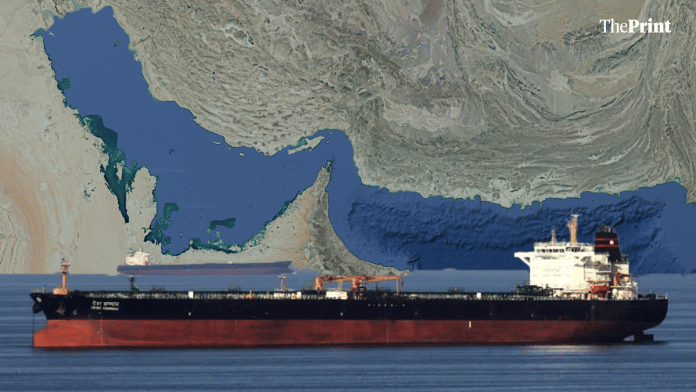
New Delhi: The West Asia conflict has sharply increased the cost of transporting crude oil to India, with tanker freight rates on some routes rising to nearly five times their February levels. The surge has eroded the traditional shipping-cost advantage India enjoyed of sourcing oil from the Gulf and made supplies from alternative producers more expensive.
Freight rates for crude shipments from Fujairah port in the UAE to India’s west coast surged to $7.51 per barrel in October, compared with $1.57 per barrel in late February, marking a 377 percent increase, said Anshika Prajapati, Lead Analyst, Liquid Bulk at Drewry Maritime Research, a maritime consultancy. In just a month, rates on this route nearly doubled, rising from $4.76 per barrel in September to $7.51 in October. This reflected growing reliance on ship-to-ship (STS) transfers in the Gulf of Oman to move crude while avoiding disrupted shipping corridors.
Before the conflict, shipping Gulf crude to India was among the cheapest oil trades globally because of the short sailing distance. Freight for Saudi and other Gulf crude shipments on Suezmax tankers, which can carry around 1 million barrels of oil, typically stood at around $0.95 per barrel in January-February. War-risk insurance premiums were also relatively low, at 0.1-0.25 percent of a vessel’s value.
The disruption has fundamentally changed this cost equation.
“Historically, Gulf suppliers benefited from lower freight costs, while Atlantic Basin suppliers typically paid several times more. The current crisis has narrowed crude price differentials, temporarily making some Gulf cargoes less competitive,” Prajapati told ThePrint.
For Indian refiners, the increase comes amid changing crude sourcing patterns, with purchases from Russia, the US, West Africa and Latin America supplementing traditional Gulf supplies.
India’s crude imports are estimated to have reached 5.6 million barrels per day (bpd) in October, a record high, according to data from energy intelligence firm Kpler. Russian crude arrivals rose by around 100,000 bpd month-on-month to 1.97 million bpd, accounting for approximately 35 percent of India’s total imports. However, this remained significantly below July’s peak of 2.82 million bpd, when Russia accounted for 55 percent of India’s crude purchases.
Shipping Russian crude has also become substantially more expensive.
Freight costs for Russian crude shipments from the Baltic Sea ports of Primorsk and Ust-Luga to India’s west coast rose from approximately $8-12 per barrel before the start of the US-Iran war to around $25-30 or more per barrel in October, nearly a threefold increase, Prajapati said. These ports account for around 90 percent of India’s Russian crude imports.
Longer routes, fewer available tankers
A major driver of higher freight costs is the diversion of vessels away from high-risk shipping corridors. The conflict has disrupted shipping through the Strait of Hormuz, which previously handled around 20 percent of global oil supplies, forcing shipping companies and energy producers to reassess transportation routes.
The heightened risks have also reduced the number of vessels willing to operate in and around the Gulf, tightening tanker availability. The disruption extends beyond West Asia, with very large crude carrier (VLCC) freight rates on the West Africa-to-Asia route also climbing to record levels.
Prajapati said diversions around the Cape of Good Hope in South Africa were another factor driving up tanker freight rates. “When tankers avoid Suez or disrupted West Asia corridors, voyages lengthen significantly,” she said.
Vessels taking the longer route around the Cape have to cover an additional 3,500-4,000 nautical miles, adding 10-14 sailing days. This increases fuel consumption and reduces the number of voyages a tanker can undertake, effectively taking shipping capacity out of the market.
Higher freight costs are also affecting India’s refined petroleum exports. Product tankers face similar war-risk premiums and vessel-availability constraints. India is an important supplier of diesel to Europe, which remains dependent on imported middle distillates following the reduction in Russian product supplies.
However, longer voyages, higher bunker fuel expenses and rising freight rates have increased the delivered cost of Indian diesel in European markets, potentially affecting the competitiveness of Indian refiners.
The disruption is also influencing India’s gas imports. As uncertainty over the Strait of Hormuz increased, Indian buyers stepped up spot purchases of liquefied natural gas (LNG) and liquefied petroleum gas (LPG) from alternative suppliers, including the US.
These supplies, however, involve longer voyages and greater vessel utilisation. A growing share of US-to-Asia LPG shipments is being routed around the Cape of Good Hope, tightening the availability of very large gas carriers (VLGCs) and pushing up freight costs.
Freight outlook hinges on Hormuz
The outlook for shipping costs will depend largely on whether normal commercial shipping through the Strait of Hormuz resumes in 2027.
“If the Hormuz transit normalises next year, the freight rates will ease from their current high as more vessels return to Gulf trade and war-risk premiums gradually decline,” Prajapati said.
However, prolonged geopolitical tensions and continued disruption to oil flows could keep freight rates elevated, particularly if more crude cargoes remain stranded or require alternative shipping arrangements.
The expected addition of new vessels to the global tanker fleet in 2027 could ease some of this pressure by improving vessel availability and moderating freight rates.
For India, higher freight costs increase the delivered price of imported crude, lengthen inventory cycles and raise refiners’ working capital requirements.
The conflict has also made crude supply diversification more expensive for India, as sourcing oil from alternative producers often involves longer shipping routes and higher transportation costs.
(Edited by Chingkheinganbi Mayengbam)
Also Read: Trump’s Russian oil waiver may boost India’s winter supplies, but crude prices unlikely to fall