




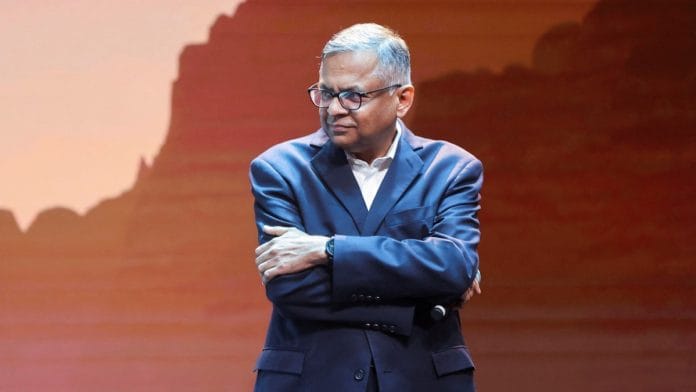

Tata Sons’ board recently voted 4:1 in favour of re-appointing N Chandrasekaran as executive chairman. Tata Trusts, which collectively own nearly 66 per cent of Tata Sons, have two nominee directors on the Tata Sons board: Noel Tata and Venu Srinivasan. Venu Srinivasan voted for the re-appointment, and Noel Tata voted against it, sparking India’s ongoing high-profile boardroom battle.
Given the intensely legal nature of the dispute, much of the commentary seems to arrive at the same destination: if the two sides cannot agree, the courts will eventually determine the outcome. While this conclusion is technically correct, it assumes that litigation will resolve the uncertainty over Tata Sons’ leadership.
India’s experience with shareholder litigation has been less comforting. Taking the dispute to court could prolong and compound the uncertainty that litigation is expected to resolve. Indeed, the bulk of shareholder disputes litigated before Indian courts get settled before reaching a conclusion. Those that don’t, such as Tata Sons’ previous battle with Cyrus Mistry, undergo an arduous journey of appeals and remands through various levels of the judiciary.
A battle over three lines
The overall governance instability at Tata Sons has several undercurrents: a succession battle for chairmanship and the discord regarding Tata Trusts’ influence on the conglomerate’s governance; a RBI order compelling Tata Sons to list itself; and disputes between Tata Trusts and the indebted Shapoorji Pallonji group likely seeking a reasonably priced exit.
The immediate boardroom battle over Chandrasekaran’s reappointment, however, is confined to an interpretation of Article 121 of Tata Sons’ articles of association. The Article stipulates that matters requiring a majority decision of the board must also receive the affirmative vote of a majority of Tata Trusts’ nominee directors. It then provides that, in the event of an equality of votes, the chairman has a casting vote. The dispute is, therefore, whether the chairperson could have exercised his casting vote to break the deadlock between the two Tata Trusts nominees, and override Noel’s dissenting vote.
There are other disagreements on interpretation, too. One concerns whether the above process must be followed when an incumbent chairman is being reappointed. Another questions whether Chandrasekaran’s public announcement in August that he would not seek another term precluded his subsequent reappointment. If and when the battle does reach the court, more disagreements are certain to emerge.
Also read: Climate change has a cost. Balen Shah’s UNGA speech shows Nepal wants the world to pay
What happens when shareholders litigate in India
Shareholder disputes are often litigated before the National Company Law Tribunal (NCLT) as “oppression and mismanagement” cases—whereby typically a shareholder alleges that the company is mismanaged or that the petitioning shareholder is being oppressed at the hands of the other shareholders, usually the majority.
Using data from TheProfesseer’s Courts Data Lab, we found that 5,491 oppression and mismanagement cases have been filed before the NCLT since 2020. Of these, 2,367 cases were decided, for which the median case lasted 805 days (a little over two years) and involved 18 hearings. A quarter of these cases lasted longer than 1,491 days—more than four years—and involved 30 or more hearings.
These median durations take into account only the cases that were decided, or only about 50 per cent of the cases in the study. A more accurate picture emerges if we also take into account the pending cases. Using a statistical approach called survival techniques, it is possible to estimate the probability of an oppression and mismanagement case getting decided at different points in time. We found that about 51 per cent of such cases remain pending even after five years.
The story gets more complicated from here. In most such cases, parties also file separate applications for securing interim relief of varying kinds—such as blocking the company’s bank accounts or requiring the court’s approval for material board decisions. We found that the median oppression and mismanagement case generated three such sub-cases.
Now, the NCLT’s decisions on such interim applications can themselves be appealed to the National Company Law Appellate Tribunal (NCLAT) and thereafter to the Supreme Court. For example, we found that of the 959 oppression and mismanagement matters at the NCLAT in the dataset, 82 per cent concerned interim orders. At the Supreme Court, 164 of 227 such matters—about 72 per cent—concerned interim orders. In sum, litigation often generates litigation, with parties frequently travelling back and forth within the judicial hierarchy even before the underlying shareholder dispute has been finally decided on its merits.
The clearest picture comes from 34 main oppression and mismanagement cases that we were able to trace through the entire hierarchy—from the NCLT to the NCLAT and finally to the Supreme Court. Their median lifecycle was 4.3 years, and each case generated about 30 sub-cases throughout its lifecycle. The earlier Cyrus Mistry litigation, which began after Mistry’s removal as Tata Sons’ chairman in October 2016 and ended with the Supreme Court’s judgment in March 2021, is remarkably close to this median. The Tata board has, in other words, experienced this predicament before.
Depending on their precise legal nature, shareholder disputes may also be filed in civil courts. For instance, the legal validity of a board decision may end up before a civil court. Using TheProfesseer’s Courts Data Lab, we identified 72 shareholder disputes at the Bombay High Court and the Delhi High Court to measure their case lifecycle. For 50 per cent of these suits that had been disposed of, the median duration is 2 years, 6 months. Nearly 50 per cent of such suits remain pending even after five years. And this does not even account for the appellate levels.
Negative externalities for the Tata conglomerate
It would be tempting to dismiss the current dispute as a clash between the board members and the majority shareholders of an unlisted holding company. After all, its operating companies have their own boards and their own legal personalities. A dispute at Tata Sons does not legally disable the boards of TCS, Tata Motors, Tata Steel, Titan, or other Tata companies from operating their businesses. Even so, there are negative externalities for the conglomerate emanating from an unpredictable governance structure at the holding company level that looks set for a protracted high-stakes litigation. Several channels of externalities are immediately obvious.
The first of these is strategy and capital allocation. The Tata group is making long-duration investments across businesses ranging from aviation and automobiles to electronics and semiconductors. Those decisions require assumptions about group priorities, leadership, and the availability of capital that extend far beyond the fate of any single board meeting.
The second channel is management. The immediate disagreement concerns the tenure of Tata Sons’ current chairman. The larger governance question concerns whether the company has a robust and predictable mechanism for determining who leads the group. Managers further down the corporate structure need to make decisions today based on strategies that may take years to execute. If there is no predictability about who eventually leads, risk aversion takes hold.
The third channel is investors. Public shareholders of listed Tata companies have no say in the composition of the Tata Sons board. They did not draft Article 121. They cannot determine whether Tata Trusts and the Tata Sons board litigate, negotiate, or settle their disagreement. Yet they are economically exposed to decisions made by their companies’ promoter. Lenders, employees, and long-term business counterparties make decisions that depend, to varying degrees, on stability in the group’s strategy and leadership.
The fourth channel is the government. Tata companies operate and invest in sectors of considerable policy importance. The government’s legitimate interest is not in determining whether Noel or the Tata Sons board has the better interpretation of Article 121. It is in whether the governance arrangements of some of India’s largest companies are capable of producing reasonably predictable decision-making.
Also read: Five things PM Modi can do for his legacy but won’t
Most disputes get settled
There is another striking feature of shareholder litigation. In a separate dataset of disposed oppression and mismanagement matters before the NCLT, 41.7 per cent were settled and another 18.7 per cent withdrawn. This suggests that shareholders often bargain in the shadow of the law. Litigation establishes what each party could plausibly obtain if the dispute were adjudicated. Interim remedies alter bargaining power. The parties themselves can then negotiate a solution rather than waiting for a tribunal to impose one.
For an ongoing corporate relationship, that may sometimes be considerably more valuable than winning a judgment. This raises an obvious question for Tata Sons: if the dispute is ultimately about how the parties understand the allocation of powers under Tata Sons’ own constitutional documents, must they really spend years litigating to discover an answer that they could agree among themselves?
None of this means that parties should surrender legal rights merely because litigation is inconvenient. There will be shareholder disputes in which adjudication is unavoidable. Courts and tribunals exist precisely because legal rights sometimes require authoritative determination. But litigation should not be romanticised as a machine into which corporate uncertainty enters and legal certainty emerges.
A negotiated agreement does not require either side to concede that its interpretation of Article 121 was wrong. The parties can clarify how the provision will operate, agree upon the process for this succession and, more importantly, remove the ambiguity for future successions. Certainty now is better than a judgment delivered several years from now.
The events of the last few days tempt us to ask which side will win if the Tata Sons battle reaches court. For the Tata group—and for everyone economically connected to it—the more important question may be whether it should reach court at all.
Umakanth Varottil is a corporate law professor at the Faculty of Law, National University of Singapore. Bhargavi Zaveri-Shah is the co-founder and CEO of The Professeer. She tweets @bhargavizaveri. Views are personal.
The authors thank Srikanth Rajkumar and Gokul Sunoj for their research assistance.
(Edited by Prasanna Bachchhav)