




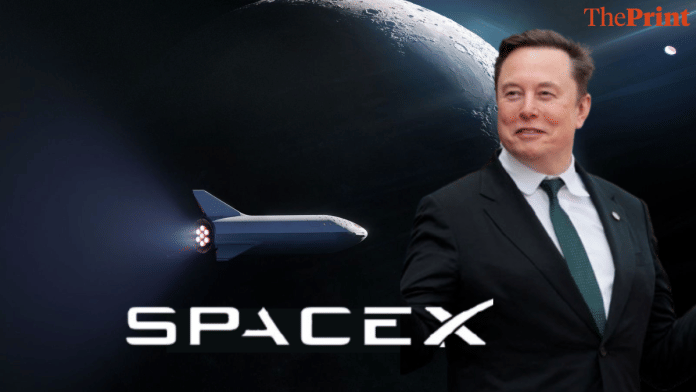

In 2022, Elon Musk took Twitter private because public markets, he argued, could not appreciate its long-term vision. Four years later, Twitter—or rather X—has returned to public markets. Not through its own IPO. Not because it became profitable. But because it has been folded into one of the world’s most valuable private companies, SpaceX, which went public earlier this month.
Ordinarily, when a company returns to public investors after years in private hands, investors get to value that company and decide whether its turnaround succeeded or failed. In X’s case, that moment never arrived. Instead, the company disappeared into xAI, and xAI disappeared into SpaceX.
This is not the first time markets have seen unrelated or weak businesses packaged with stronger ones. Bankers have long understood that difficult assets become easier to sell when they are pooled with better ones. Mortgage-backed securities worked on precisely that intuition: investors bought the pool rather than each underlying loan. Corporate finance has its own version. Combine an underperforming business with an exceptional one, encourage investors to value the package rather than its constituent parts, allowing the weaker asset to acquire a valuation it might never have commanded on its own.
Folding an underperforming, founder-controlled social media platform into one of the world’s most valued space and satellite companies has important governance implications for the shareholders of SpaceX and the consumers of X, arguably the world’s most influential social media platform.
The promise to revive Twitter
After Musk bought Twitter promising to revive its fortunes, he overhauled the product, renamed it X, introduced paid features, restricted previously free functionalities and repeatedly assured users and investors that a turnaround was underway. Yet, X emerged as a platform that many users found to be more expensive and far less enjoyable, even as its financial performance remained under a cloud. As the user experience deteriorated due to the type of content promoted on the platform and glitches with the interface, millions of users left the platform. Instead of demonstrating that X could once again stand on its own, Musk has chosen to bundle it with SpaceX.
The chronology is instructive: Musk acquired Twitter for roughly $44 billion in 2022 and took it private. Over the next few years, advertising revenues reportedly fell sharply, the company underwent repeated restructuring, banks struggled to syndicate acquisition debt, and Musk continued to promise that profitability was around the corner. In 2025, X was merged into xAI. From that point on, X effectively ceased to exist as a separately observable business. In 2026, xAI itself was merged into SpaceX.
Twitter generated over $5 billion of revenue before Musk acquired it. By 2023, while audited financial statements were no longer available, industry estimates suggested revenues had fallen to roughly $3.4 billion. In 2024, Fidelity — a key institutional shareholder in Twitter — had repeatedly marked down its investment until it implied a valuation close to 20 per cent of Musk’s purchase price. By 2025, when it was merged with xAI, valuing the social media platform by itself became almost impossible.
SpaceX’s filing too does not disclose X’s financial performance separately. Instead, it aggregates X with Grok, enterprise AI offerings, subscriptions, APIs and data licensing into a single AI segment.
Who bailed out X?
Conglomerates have long argued that combining businesses creates economies of scale, scope and capital allocation efficiencies. This is the fundamental logic of corporate mergers and restructuring, which allows both the creation and re-distribution of value. SpaceX bundles a range of businesses including launching rockets, providing wireless connectivity through space satellites, building AI data centers in space, training foundational AI models, and also running the social media platform, X.
The bundling of unrelated businesses tends to raise questions about the value associated with the bundled business verticals. In particular, bundling X with SpaceX stands out because, unlike the typical public merger, both X and SpaceX are substantially founder-owned. This gives it much more of a bail-out flavour. Had SpaceX acquired X from an unrelated seller, the transaction would have been negotiated at arm’s length and investors could have judged whether SpaceX overpaid. But common-control mergers work differently. Because the same controller sits on both sides of the transaction, there is no independent market price against which outsiders can evaluate the exchange. That makes disclosure far more important.
Given the absence of standalone financial disclosures and the resulting opacity around the value that each business brings to the table, the jury is out on whether the public shareholders of SpaceX, in effect, subsidised the owners of X.
Can X remain an independent public square?
Elon Musk’s acquisition of Twitter has always posed a key governance question for the social media platform: to what extent are X’s moderation policies influenced by Elon Musk’s personal preferences or his other financial interests. The bundling of X into SpaceX intensifies this governance conflict.
Twitter and X built their reputation as a platform for unconstrained speech and scepticism of government power. SpaceX, by contrast, depends heavily on government contracts, licences, security clearances and regulatory approvals. One business historically claimed to challenge governments; the other depends on maintaining close relationships with them. Whether those incentives can comfortably coexist within a single listed company has received remarkably little attention.
Overselling founder-led eco-systems
Finally, one of the dominant characteristics of the SpaceX IPO filing is its irrepressible techno-optimism. In some sections, the document reads more as a science fiction vision for the future and less like a set of disclosures before an IPO; very much in line with Musk’s public rhetoric. The 300+ page document starts out with over ten pages of pictures of space and rockets. The company’s mission is “…to build the systems and technologies necessary to make life multiplanetary, to understand the true nature of the universe, and to extend the light of consciousness to the stars.” The vast majority of SpaceX’s Total Addressable Market seems to depend on Enterprise Applications of its AI technology, with a special focus on orbital data centres, none of which exist right now. A truly staggering number of low probability events (technological breakthroughs, regulatory approvals, exponential growth of AI services demand, etc.) would have to occursequentially for all of these forecasts to become reality. Simultaneously ambitious and delusional, the filing tells a compelling story of what SpaceX could become if everything goes right.
Investors in SpaceX did not buy just a rocket company, a satellite company, or a social media platform. The promise is that rockets launch satellites, satellites generate cash, X provides distribution and real-time data, AI monetises both, and each business reinforces the others. In fact, the thesis that these businesses are synergistic is yet to be proven. Even if these synergies are real, no one can confidently measure the value generated by each. That said, the “commanding heights” of SpaceX’s trillion-dollar valuation suggests that investors are comfortable buying into a founder-led ecosystem.
This surge of confidence in founder-led ecosystems creates new challenges for securities regulators. For decades, they have focused on whether promoters moved money between companies they controlled. The SpaceX IPO suggests the next generation of governance problems may arise before any money moves at all. In an age of founder-led ecosystems, the most consequential corporate governance decision may simply be deciding which companies belong inside the listed entity—and who should pay for them. As the world watches the rocket contrails behind Twitter’s launch into space, those left standing in the remains of its public square will be forced to think about whether such organizations should be subjected to such astronomical aspirations.
Rohit Chandra is an Assistant Professor at IIT Delhi’s School of Public Policy. He tweets @rohitreads. Bhargavi Zaveri-Shah is the co-founder and CEO of The Professeer. She tweets @bhargavizaveri. Views are personal.
(Edited by Prashant Dixit)