





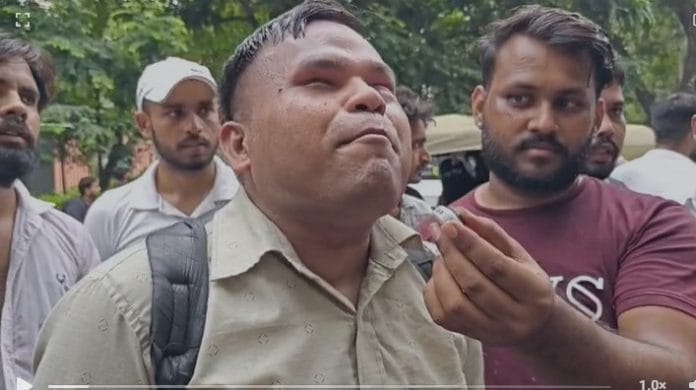


New Delhi: Gaurav could not see tear gas drifting through the streets, or the water cannons pushing back protesters outside Parliament. But the visually impaired MA student of Hindi literature, who had travelled by train to Delhi, was clear about why he was here.
“This is a disservice to the nation. We are students, and we are here for students. Gareeb janta ko marne ke liye chhod diya. Jis janta pe gas ke gole maar rahe hain, unse hi bheekh maangte hain votes ki (They have left the poor public to die. They beg for votes from the very people they are firing tear gas shells at),” he said Monday, slamming the Modi government of turning its back on the people.
By noon, Delhi had turned into a maze of barricades, with roads teeming with riot police and restless crowds. Students carrying backpacks, opposition leaders raising slogans, and ordinary citizens waving placards converged on the capital’s streets.
As the protesters attempted to march towards Parliament despite prohibitory orders, tear gas hung in the air, water cannons roared to life, and the police wielded batons to push the crowd back. Yet, the slogans—and the resolve for reform—refused to die.
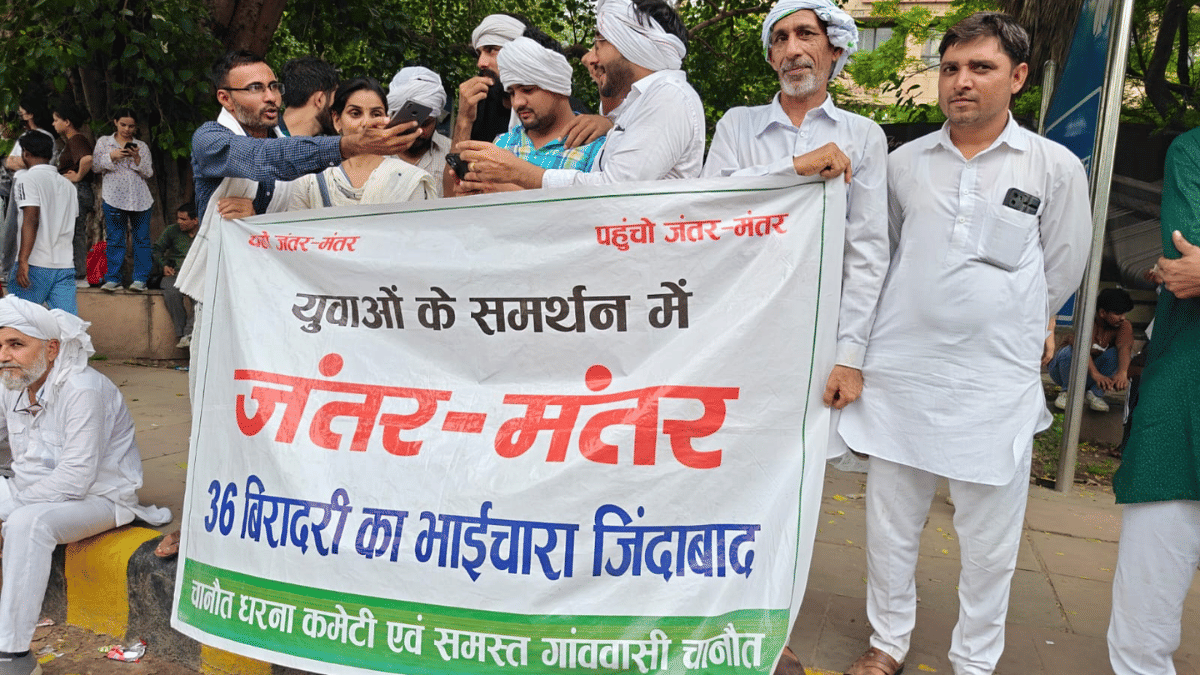
The protest was not confined to students, or political leaders and workers. As the crowds swelled at Jantar Mantar, khap leaders and villagers from neighbouring states arrived carrying banners expressing solidarity with the youth. Dressed largely in white kurta-pyjamas and turbans, many had travelled overnight, skipped work, or spent their meagre savings to be at the protest site.
Among those walking alongside Gaurav were Suman and her husband Ashutosh, aged 65 and 67. Their children are settled abroad, but the couple said they felt compelled to stand up for families who could not afford the same opportunities.
“We could afford to send our children abroad. The ones who can’t—we are here for them. This is not how a democracy works. We pay taxes, so we have every right to ask questions,” Suman asserted.
Leaning on a walking stick and peering through thick spectacles, 72-year-old Krishan said he had come for the sake of his grandchildren.
“What is the government’s love for (Education Minister Dharmendra) Pradhan? He has underperformed. We want him gone. Why can’t the government understand something as basic as that?” he asked.
Pradhan’s resignation in the wake of the NEET (National Eligibility-cum-Entrance Test ) paper leak is among the core demands of the Cockroach Janta Party (CJP) and its supporters.
For Raman, a 31-year-old IT professional, attending the march meant taking a day’s leave from work. “We are here for the students and for the future. This is not the country where I would want my children to grow up.”
School students also joined in and chimed with the protesters. A Class 10 student from Delhi’s Rohini said he had joined because of climate activist Sonam Wangchuk, who is now being monitored by doctors in the state-run Safdarjung Hospital, and believed the government must answer.
Conversations with protesters revealed recurring anxieties: the lack of quality jobs, the spiralling cost of higher education and the repeated paper leaks that have disrupted recruitment examinations, particularly for government jobs.
Many like Shaila had found each other through social media. WhatsApp groups and online communities helped strangers coordinate overnight train journeys, share accommodation, arrange meeting points, and travel together to Delhi.
The Mumbai-based consultant took leave from work, boarded an overnight train to Delhi and planned to return the very same night. “I cannot be apolitical right now. Anyone who loves their country should be here. I have come alone but I have made many friends,” she explained.
Interestingly, many students insisted they had not come to support the CJP or any political outfit.
“We don’t care about (CJP founder Abhijeet) Dipke. This is about us. This is about Sonam sir, who sat on a hunger strike for us. We don’t know what the CJP is up to—they may or may not deserve our trust. We are here for reforms,” one of the students said.
As dusk settled over Jantar Mantar, the slogans grew fainter but the conversations did not. What began as a march called by the Cockroach Janta Party had, by the end of the day, evolved into a much broader public agitation.
In Delhi’s unforgiving heat and amid heavy security, the national capital witnessed one of its largest student-led mobilisations in the recent years, drawing students, political leaders, activists and ordinary citizens united by demands for accountability and change.
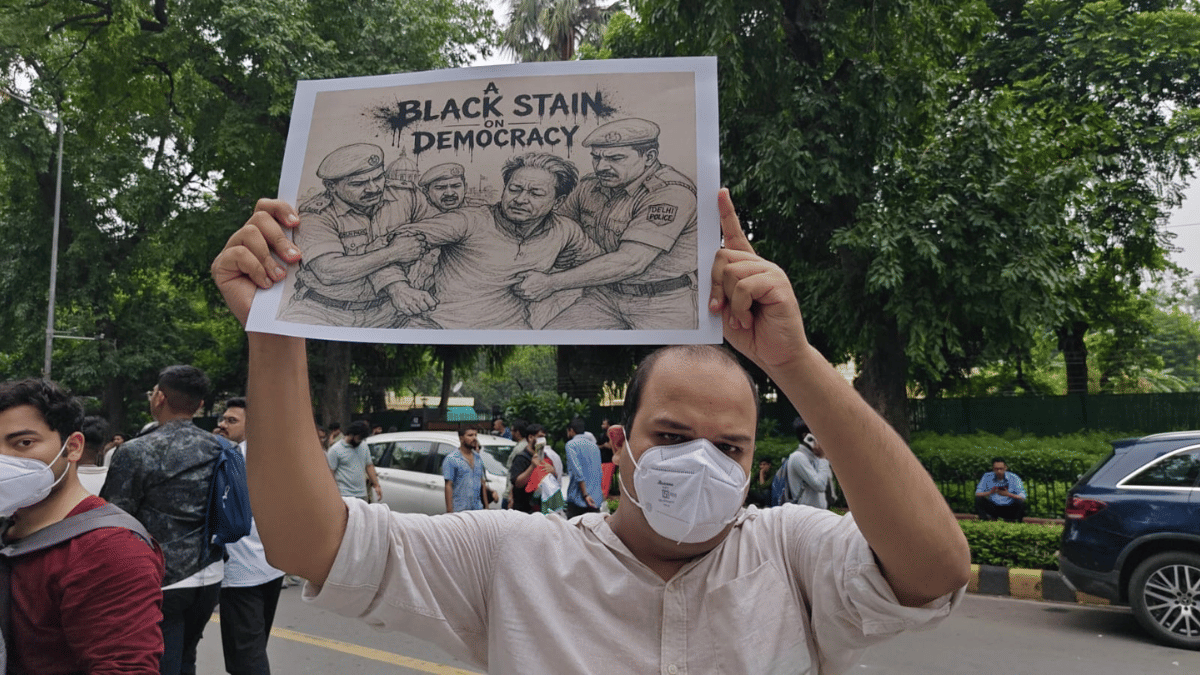
The chants that reverberated through Delhi’s streets found an echo inside Parliament, with the movement outgrowing its organisers to become a wider expression of public discontent. For many who gathered, the turnout suggested that Sonam Wangchuk’s three-week hunger strike had succeeded in pushing education reforms into the national conversation.
Whether Monday’s mobilisation ultimately results in policy changes remains uncertain, but it brought together an unlikely coalition of parents worried about the next generation, students like Gaurav anxious about their future, working professionals like Shaila and Raman who took leave to march, and elderly citizens like Suman, Ashutosh, and Krishan who believed silence was no longer an option.