







It’s been a good election season for Prime Minister Narendra Modi. Nobody can dismiss the BJP as a cow belt party after two stunning victories in Assam and West Bengal.
Of the two, Bengal is the one that really matters. For more than a decade, sensing that the CPI(M) and Congress were collapsing in West Bengal, Modi and Union Home Minister Amit Shah have been trying their best to win over Bengal and fill the vacuum. This time, after 15 years of Trinamool Congress (TMC) and its supremo Mamata Banerjee, the voters of West Bengal finally decided that it was time for a change and voted the BJP in.
You could see the BJP victory as a natural consequence of anti-incumbency, but almost everyone read much more into it. For the BJP, it was confirmation that the party now had a national character. For many in the TMC, it was a stolen victory, attributable to the SIR exercise, which led to the removal of many Trinamool voters from the rolls and various other forms of rigging. And for India’s so-called secular-liberal establishment, it was an utter disaster, the collapse of the last bastion of pluralism and liberal values.
All of these interpretations were rooted in fact, yet none of them was entirely accurate. Yes, the BJP’s popularity has spread much beyond the Hindi belt, but the ‘national’ party may be overstating the case. As the elections in Tamil Nadu and Kerala demonstrated, the BJP does not count for much in many Southern states.
Beyond SIR factor
The SIR exercise may well have been a cynical ploy by a partisan Election Commission to disenfranchise many of TMC’s Muslim voters, but the extent of the BJP’s victory suggests that the results went far beyond any SIR factor. The numbers may have been lower, but the BJP would have won anyway. And the ‘last bastion of liberalism’ stuff embodies a paradox which I have written about before.
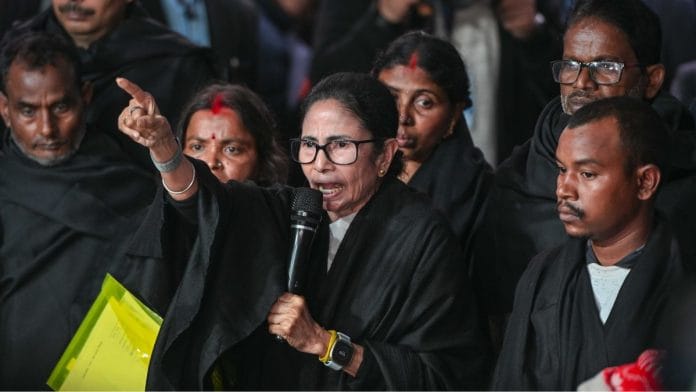
Mamata is a fighter who is widely admired for her courage in standing up to the power of a central government that was determined to do everything it could to bring her down. And she has always refused to be cowed down by the forces of Hindu communalism.
But while she is a liberal heroine in the rest of the country, the people of Bengal have been much more ambivalent. They are concerned about the corruption and thuggery that have become part of TMC’s style of governance. And what liberals outside of Bengal see as her secular outlook is perceived by many Hindus in Bengal as a calculated ploy to earn the votes of Bengal’s substantial Muslim minority.
Everywhere I have been in Kolkata over the last two years, the same stories have been told and retold: about how Bangladeshis are being illegally sheltered in West Bengal and moved into constituencies where the TMC needs a winning majority. About how unsavoury thugs have received governmental patronage only because they are Muslims, and Mamata needs them for her vote bank.
These stories come from educated people who are not Muslim-haters and whom I have always known to be solidly secular. A few months ago, I anchored The Telegraph debate at the solidly upper-middle-class Calcutta Club.
At the beginning of the debate, I polled the audience to ask who they would vote for in the Assembly election. Over two-thirds said they would vote for the BJP. The debate was also about the forthcoming election, and any speaker who attacked TMC was applauded and loudly cheered. At the end of the debate, I polled the audience again. This time, three-fourths said they would vote for the BJP.
Journalists learn not to read too much into anecdotes and personal experience, so I was wary of coming to any conclusions based on the debate or the stories told by the people I met, but when I went back to Kolkata on election eve, I found that the anti-TMC mood had spread. Even people who wanted nothing to do with a Hindu Rashtra said they would vote for the BJP because they were fed up of the ‘goondagardi’ and the corruption.
I can’t say whether TMC’s defeat was attributable to this kind of feeling — perhaps this was just the view within Kolkata’s Hindu middle-class — but I was surprised by how confident TMC was of winning the election. The sort of anti-TMC feeling I had come across was dismissed as being of no consequence. The rural areas were solidly behind Mamata, I was assured.
But clearly they were not, as these results demonstrate. And while we need more time to look closely at the numbers, there is some evidence that TMC did not even get the level of Muslim support it had counted on.
Also read: Why Bangladesh played a big role in BJP’s West Bengal win
Not so good news
So perhaps the Bengal result was inevitable. But any election that has a strong communal component is always a cause for concern. The BJP’s triumph in Assam is a vote of confidence in Chief Minister Himanta Biswa Sarma, who is now as popular as and perhaps even more powerful than Uttar Pradesh Chief Minister Yogi Adityanath, in his capacity as a Hindutva hero.
When men like Adityanath say and do things that are anti-Muslim, they can be ascribed to a lifetime of support to Hindutva. But with Sarma, it is more complicated. He spent many years in the Congress and, by his own account, only left after being humiliated by Rahul Gandhi, who fed biscuits to his dog and ignored Sarma during a crucial meeting. Till that time, Sarma was being talked about as a future Congress chief minister of Assam.
But after switching sides and becoming a BJP chief minister of Assam, Sarma has outdone Adityanath in his aggressive advocacy of Hindutva. Many of the disparaging things he has said about Muslims have never been said before by any chief minister. Does he believe them? Did he feel this way when he was in Congress? Or is he just saying them now to appeal to a communal Hindu constituency?
Whatever the answer, it is worrying that the BJP’s rise in the east is because of what its leader in Bengal, Suvendu Adhikari, calls ‘Hindu consolidation.’ If the BJP wins by consolidating anti-Muslim feeling, it is not good news for unity and communal harmony in India.
At a national level, Modi has been able to tone down the Hindutva rhetoric and shift the narrative to governance and development. But as the victories in the East demonstrate, his state units still rely on Hindu-Muslim conflicts and tensions.
At some stage, Modi will have to decide what the BJP stands for. Does it only stand for governance in Delhi? And does it need to depend on religious polarisation in the states?
That’s what these results suggest.
Vir Sanghvi is a print and television journalist and talk show host. He tweets @virsanghvi. Views are personal.
(Edited by Saptak Datta)
Vir Sanghavi, the Author of this post is not in his senses calling BJP’s strategy as communal. He is blind to blatant Muslim appeasement done by Mamta Banerjee. I was about to subscribe to your Newspaper , but after reading this Opinion, I am retracting, because you are giving space to misleading journalists
Is religious plarisation a one way street ? Seems to be mentioned only in context of the Hindus when they vote for one side, but is never mentioned when Muslims vote for just one party , which has been happening since ages in India.
This is a sad day for India as a country. We have always thrived on a diversity of ideas and thoughts. That has been our strength. It was good to see a strong alternative to Congress emerge in the 1990s. It would be equally wonderful to see strong alternatives to the BJP and bring back inclusive politics.
There is a new government in Bangladesh, with which our government is trying to rebuild friendship and trust. The public discourse the column refers to has led to the High Commissioner ( acting, there will soon be Mr Dinesh Trivedi ) being summoned. At some stage, the external diplomatic costs of polarising domestic rhetoric will have to be totted up.
As a principle, would not kick a person when she is down. This is a rough day in the life of a politician who has been a tenacious fighter all her life. So perhaps a decent interval should pass before the dissections begin.