





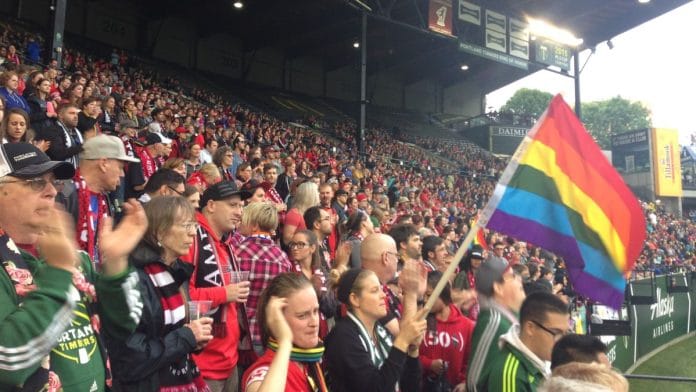


FIFA has allowed pride flags in the stands for the Egypt versus Iran match during the 2026 World Cup in Seattle, despite opposition from the two player nations where homosexuality is criminalised — potentially punishable by death in Iran. The decision has caused a stir online, with some fans arguing queerness has no place on the field. And yet, FIFA has held firm on its principle of inclusivity.
It is a welcome move on the surface, but symbolic solidarity and a few pride flags hardly translate to systematic change on the ground.
Football has always shared a complicated relationship with LGBTQIA+ issues. Homophobia remains deeply pervasive among fans, as evidenced by the backlash to this very match. Social media and stadium chatter have often overflowed with derogatory comments, revealing not just resistance to Pride symbols but a broader discomfort with queer visibility in the sport.
One need only look at what happened recently in Toronto during this World Cup, where a German supporter named Alex was brutally beaten after his group waved a rainbow flag following Germany’s match. The assault started with homophobic slurs from a group of young men and left Alex, who is straight but stood up for his friend, with serious injuries and a $5,000 medical bill.
The problem, however, runs deeper still than isolated incidents.
A deeper problem
Mexico fans have turned homophobic chants into a recurring embarrassment across multiple World Cups and qualifiers, earning fines from FIFA that have clearly failed to change behaviour. LGBTQIA+ supporter groups across various leagues regularly report frequent slurs in the stands, even in supposedly family-friendly sections.
While some studies suggest fans theoretically oppose homophobia, the reality in stadiums and online forums tells a far messier story. Casual bigotry persists, undermining any claim that the game has fully evolved into a truly inclusive space.
Complicating matters further is the undercurrent of Islamophobia in some fan responses. Segments of the audience are framing this fixture as a “win” against “Islamic” countries like Egypt and Iran, using it to score geopolitical points rather than genuinely addressing queerphobia. While Iran’s laws, which can impose the death penalty, and Egypt’s repressive stance are issues that deserve condemnation, selective outrage does little to tackle the larger, universal problem.
True solidarity requires confronting prejudice everywhere, not just when it conveniently aligns with existing cultural or political tensions.
The absence of openly gay footballers at the elite level is another damning indictment. Decades after other sports have seen meaningful breakthroughs, men’s football lags significantly behind. Justin Fashanu came out in 1990 as the first British professional and faced such intense hostility and isolation that it contributed to his suicide. In more recent years, openly queer players like Josh Cavallo (who came out in 2021), Jake Daniels, and Jakub Jankto have appeared, but they remain rare exceptions who have endured death threats and toxic environments upon coming out.
Compare this to rugby, where openly gay rugby players are paving the way for inclusivity in the league, breaking down historical barriers. Pioneers like Ian Roberts—the first high-profile Australian international to come out—and Gareth Thomas, who had faced real challenges, have inspired active and retired professionals globally to share their truth.
Ice hockey has also seen more out players at various professional levels despite its own macho reputation.
For example, Luke Prokop, a defensive player, made history in 2021 by coming out, becoming the first active player under an NHL contract (with the Nashville Predators) to publicly identify as gay.
Also read: Norway’s Viking Row celebrations in World Cup show why football is the ultimate team sport
FIFA’s little interference
In football, however, the toxic mix of hyper-masculine culture, intense media scrutiny, and fan hostility stifles queer representation. Young queer players see no clear pathway, no visible role models, and little institutional protection.
Furthermore, FIFA has done little to speak out against the 11 participant countries, including Egypt, Iran, Saudi Arabia, and others, that effectively ban gay footballers through criminalisation and discrimination. FIFA’s statutes explicitly oppose discrimination, yet enforcement is frustratingly selective. The organisation has clashed with teams over political armbands in the past, but stops short of suspensions or disqualifications.
Pride flags are symbolic of queer liberation, but they are not a substitute for it. Until openly gay players can thrive without fear and homophobia is confronted head-on rather than tiptoed around, football’s claims of universality remain frustratingly hollow.
(Edited by Saptak Datta)