






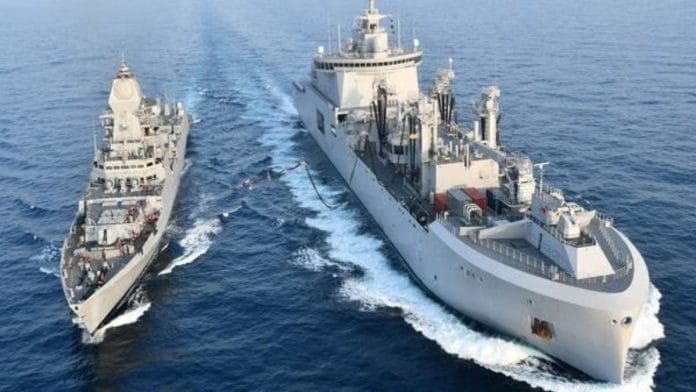


India’s conception of the Indo-Pacific has evolved over the past decade. What began as an academic construct linking the Indian and Pacific Oceans has increasingly become the organising maritime geography of India’s external engagement. In Indian strategic thinking, the Indo-Pacific now largely represents a continuous maritime space stretching from Africa’s eastern coastline to the western Pacific. Whatever the shifting vocabulary elsewhere, it remains the enduring strategic geography for India, Japan, and Australia.
Prime Minister Narendra Modi’s six-day visit to Indonesia, Australia, and New Zealand from 6 to 11 July is best viewed together rather than as three separate bilateral visits. It comes immediately after Japanese Prime Minister Sanae Takaichi’s visit to India, which reaffirmed the enduring place of the Indo-Pacific in Japanese strategic thinking. Modi’s three-country tour reflects India’s continuing effort to deepen partnerships across the eastern Indo-Pacific with countries that shape its maritime future.
The tour’s agenda spans trade, critical minerals, defence, maritime security, education, and diaspora engagement. More broadly, it reflects India’s Vision MAHASAGAR, extending the earlier SAGAR framework from the Indian Ocean to the wider Indo-Pacific. Indonesia, Australia, and New Zealand occupy important positions across this expanded maritime geography, sitting astride the sea lanes, supply chains, and strategic partnerships through which India’s economic and security interests increasingly intersect with the Pacific.
Indonesia, a key maritime partner
Geography alone makes Indonesia strategically significant for India. Straddling the Malacca, Sunda, and Lombok Straits, it dominates the maritime crossroads between the Indian and Pacific Oceans. For India, whose trade and energy supplies depend heavily upon these sea lanes, Indonesia is not merely an ASEAN partner but a pivotal Indo-Pacific state.
This would be PM Modi’s fourth visit to Indonesia, and his first State Visit since 2018, signaling the growing relevance of the relationship to India. India’s bilateral ties with Indonesia have acquired greater depth since the 2018 Comprehensive Strategic Partnership, through expanding defence exchanges, coordinated naval activities, and growing cooperation in maritime domain awareness. Connectivity around Sabang, the Indonesian port at the Malacca Strait entrance, illustrates the strategic convergence between the two countries even as its commercial development has proceeded cautiously.
Indonesia’s importance in global critical-mineral supply chains, particularly nickel, adds a significant dimension to discussions expected to review cooperation in defence, maritime security, trade, energy, space, pharmaceuticals, and connectivity. As India seeks resilience in battery manufacturing and electric-vehicle supply chains, cooperation with Indonesia assumes growing importance for India’s clean energy transition. India increasingly views Indonesia as a key maritime partner connecting the Indian and Pacific Oceans, not just through an ASEAN lens.
India-Australia ties
Australia is the second stop on the tour. It would be PM Modi’s third visit to Australia, after 2014 and 2023. Over the past decade, India-Australia relations have undergone remarkable transformation. Once constrained by differences over nuclear policy, the partnership today encompasses defence, maritime security, logistics cooperation, critical minerals, education, clean energy, technology, and trade.
That transformation is reflected in the fact that Australia, which imposed sanctions following India’s 1998 nuclear tests, now acknowledges India as a “top-tier security partner” in its National Defence Strategy 2026. That description builds upon the 2022 Economic Cooperation and Trade Agreement, the Comprehensive Strategic Partnership formalised in 2020, and the growing tempo of defence cooperation through the Quad and MALABAR exercises.
Bilateral talks with Prime Minister Anthony Albanese are expected to focus on trade, defence cooperation, critical minerals, supply-chain resilience, and education, while working toward the early conclusion of a Comprehensive Economic Cooperation Agreement. Australia is a close security partner across the eastern Indo-Pacific through the Quad and wider maritime cooperation. The Quad agenda has evolved beyond an early emphasis on strategic balancing to encompass public goods, technology cooperation, health security, and maritime domain awareness.
New Zealand’s interests
The New Zealand visit extends India’s engagement into the South Pacific. Recent high-level exchanges, notably President Draupadi Murmu’s 2024 visit and Prime Minister Christopher Luxon’s 2025 visit to India, have consolidated ties. PM Modi’s visit, the first by an Indian Prime Minister in four decades, builds on that recent momentum. Both countries share an interest in a stable maritime order and open sea lanes across the wider Indo-Pacific.
Today, India’s relations with New Zealand rest on expanding economic, educational, security, and people-to-people foundations. A Free Trade Area Agreement signed in April this year will facilitate trade in goods and services, professional mobility, investment, and wider economic engagement. Cooperation in defence, agriculture, education, disaster management, counter-terrorism, and sports offers untapped potential. The visit falls in a year with symbolic weight: the centenary of India-New Zealand sporting ties, dating from the 1926 tour of the Indian hockey team.
Also read: US is retreating from the Indian Ocean. It has done this before, and regretted it
An expanding policy
Taken together, the three visits illustrate a broader approach. India’s Indo-Pacific policy is no longer confined to articulating principles or participating in regional forums. It increasingly rests upon a network of bilateral partnerships extending across the maritime space from the eastern Indian Ocean into the Pacific.
Each destination advances a different dimension of India’s Indo-Pacific strategy. Indonesia anchors the maritime gateway between the two oceans. Australia consolidates one of India’s closest strategic partnerships in the region. New Zealand extends India’s engagement into the Pacific. Together they reinforce India’s strategic reach across the wider Indo-Pacific. Across all three countries, fast-growing Indian-origin communities serve as informal bridges for trade, investment, education, cultural, and technological cooperation.
As geopolitical competition intensifies and maritime supply chains become ever more central to economic security, geography has returned to the forefront of international politics. India’s geography has long made it the principal resident maritime power in the Indian Ocean. It now seeks sustained partnerships across the wider Indo-Pacific. That maritime expanse is no longer merely an analytical construct in Indian thinking but the geography through which India increasingly pursues shared strategic interests. In that sense, the tour is less about three bilateral relationships than about India’s steady emergence as a leading maritime partner across the wider Indo-Pacific.
Ajai Malhotra is a Distinguished Fellow, TERI, and former Indian Ambassador to Russia, Kuwait, UN/New York, Romania, Albania, and Moldova. Views are personal.
(Edited by Aamaan Alam Khan)