






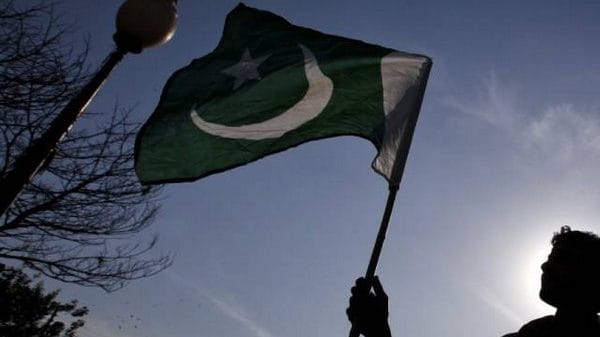


Pakistan seems to be living through several seasons at once. Abroad, Field Marshal Asim Munir and his chosen few speak the language of mediation, performing the role of an indispensable interlocutor. Islamabad frequently multi-aligns Washington, Tehran, Riyadh and Beijing with élan without alienating either. Yet beyond its manicured visage, seasons change faster. Guns have not fallen silent in Balochistan or Khyber Pakhtunkhwa, the border with Afghanistan periodically becomes a battlefield, and the pine-covered mountain roads once smelling of wet earth in Pakistan-occupied Kashmir are filled with bullets, funerals and an internet blackout. The country is at once both the sum of its manoeuvres and the prisoner of its sinful statecraft.
This is why Asfandyar Mir’s argument in Foreign Affairs—“Pakistan Won the War in Iran”—is both persuasive and incomplete. Pakistan did help produce the temporary ceasefire in April and host the highest-level direct contact between the United States and Iran since 1979—credit where due. But the story is not about Pakistan’s emergence as a stabilising middle power. It is practising what may be called ‘geopolitical arbitrage’: exploiting the different prices that rival capitals place on Pakistan’s access, geography, military manpower and diplomatic ambiguity or flexibility.
Ahmed Bux Jamali and Mehmood Hussain describe this as “pragmatic hedging”: maximising returns from China and the US while cultivating a zero-enemy posture. But hedging sounds too passé for Munir’s Pakistan. This is brokerage with epaulettes. Steven David’s classic idea of “omnibalancing” is more useful: rulers align not merely against foreign threats but to manage dangers to their own survival. Pakistan’s external activism, then, cannot be separated from its military establishment’s search for money, legitimacy and indispensability in an unstable home.
There is also an element of performance anxiety. Munir, like his predecessors, relentlessly pursues the idea that only the army can make Pakistan legible to the world. In her book Military Inc (2007), Ayesha Siddiqa described the Pakistani Army as an institution whose power rests on its economic empire; others have shown how this military tutelage has stunted civilian autonomy. Foreign policy has become another military enterprise. Every invitation, defence contract and handshake validates Rawalpindi’s claim that civilians may be allowed to partially govern Pakistan, but it’s the army that can sell it. Mediation doubles as regime maintenance, staged before patrons and Pakistanis alike.
Situational Statecraft
The Gulf-disarray offers ideal conditions for this arbitrage. The Saudi-Pakistan Strategic Mutual Defence Agreement from September 2025 declares aggression against one an aggression against both. During the US-Iran war, Pakistan reportedly deployed around 8,000 troops, JF-17 aircraft, drones and an HQ-9 air-defence system in aid to Saudi Arabia. Kuwait, too, has now ratified a five-year agreement with Pakistan, originally signed in 2023, covering training, intelligence, logistics and defence technology—but containing no explicit troop-deployment guarantee.
One interpretation is that Pakistan’s diplomatic stock has risen. More importantly, Gulf security itself is being modularised. Saudi Arabia wants collective deterrence and has proposed a maritime coalition supported by Pakistan, Turkey and Egypt. The United Arab Emirates, Saudi Arabia and Qatar have sought Ukraine’s battlefield-tested, inexpensive counter-drone expertise. None is abandoning American weapons or presence; but all are reducing singular dependency on the US through overlapping, cost-effective arrangements. Pakistan fits this architecture because it bundles trained personnel, operational experience and access to affordable Chinese and Turkish sub-systems and platforms. Reports that Chinese MANPADS destined for Iran may transit through Pakistan—denied by both Beijing and Islamabad—illustrate the possibilities and dangers of the South Asian nation becoming everybody’s passageway.
However, this role is not new. Pakistani airmen helped build Gulf air forces; Pakistani pilots and advisers served in Saudi Arabia and the UAE, with deployments to the kingdom at times having exceeded 10,000 personnel. More than 11,000 Pakistani troops defended Saudi borders and religious sites during the 1990-91 Gulf War. Yet the relationship has limits: Pakistan refused to join the Saudi-led Yemen intervention in 2015. While it would be simplistic to describe Pakistani soldiers merely as mercenaries, the bargain is unmistakable. Pakistan supplies security labour and strategic reassurance; Gulf patrons provide deposits, oil facilities and financial bail-outs.
Also Read: Logistics is the new frontier of weaponised interdependence. China has the upper hand
Brokerage abroad, coercion at home
The paradox is that the broker abroad remains a cruel, coercive state at home. For decades it has been so that the army’s ideology prefers enduring risk to accepting an unsatisfactory status quo. The same logic also travels inward. Pakistan recorded 3,417 violence-linked fatalities in 2025, a 34 per cent annual increase and its worst year in a decade—Khyber Pakhtunkhwa and Balochistan accounted for more than 96 per cent. The economy grew by 3.7 per cent in FY2025-26, but remains inside a $7-billion IMF programme, with public debt around 68.5 per cent of GDP. Long story short, diplomatic agility coexists with structural fragility.
The current crackdown in Pakistan-occupied Kashmir exposes this contradiction most brutally. The Jammu Kashmir Joint Awami Action Committee ( JAAC) began in 2023 with demands for cheaper flour, electricity priced against locally generated hydropower, and an end to elite privileges. Its expanded agenda now seeks abolition or restructuring of the 12 assembly seats reserved for refugees living elsewhere in Pakistan—12 of 45 directly elected seats, and 12 of the 53-member full House. Protesters argue that these constituencies enable Islamabad to engineer governments in Muzaffarabad. But Islamabad, in no mood to let go of this control, instead calls the protesters “state-enemies”. Casualty figures remain contested under the communications blackout. Reuters conservatively estimated around 30 deaths since June; JAAC now alleges dozens more dead and hundreds more wounded.
What is beyond dispute is the political gravity of this revolt. Baloch and Pashtun dissent has long been dismissed by the Punjabi establishment as peripheral. But not with Kashmir. Pakistan has spent decades centre- piecing its shah rag, or jugular vein. However, when the supposed vein itself rejects the centre’s control, the state’s existential metaphor begins to look absurd.
India has sharpened its response, especially after Defence Minister Khwaja Asif accused Indian agencies of backing JAAC. New Delhi’s legal position is not new: the unanimous 1994 Parliament resolution demanded that Pakistan vacate the occupied territories. But Gilgit-Baltistan remained largely absent from Indian strategic discourse until Rajnath Singh’s 2022 declaration that India’s journey to resolve the question of Kashmir would be complete only after “reaching Gilgit and Baltistan”. Even now, most Indians conflate that region with the so-called Azad Kashmir, ignoring their different institutions, populations and grievances.
The distinction matters because that is where Beijing enters the picture.
Also Read: Geopolitics is back. We are again grappling with 19th-century questions
Gilgit-Baltistan and the China factor
Gilgit-Baltistan is the China Pakistan Economic Corridor (CPEC)’s northern throat. The Karakoram Highway enters Pakistan from Xinjiang through Khunjerab; travels across Punjab and Sindh reaching Gwadar in Balochistan, which is the corridor’s end point. China has watched armed groups attack its interests from Gwadar to Dasu, where five Chinese engineers were killed during an unprecedented attack in 2024. Instability now shadows the northern corridor as well. A 68-day traders’ protest halted Khunjerab traffic in 2025. In 2026, electoral and dam-compensation protests blocked the highway once again.
Regarding finances, Beijing has not invested one neat, verifiable lump sum: the CPEC portfolio is commonly valued above $60 billion, mixing commitments, loans and private power projects. Nor is it a completed corridor. One assessment counted only 38 of nearly 90 proposed projects completed, with 23 still under construction and roughly a third untouched. Andrew Small has called China Pakistan’s greatest economic hope and trusted military partner; and that logic will further explain why the CPEC might still prevail. Packaged anew, the two sides launched the CPEC 2.0 in 2025, which promises five corridors—growth, livelihood, innovation, green development and regional connectivity—alongside the Karakoram Highway realignment, industrial zones and the delayed ML-1 railway.
Despite the region’s chronic instability, China is unlikely to surrender this route and access to the Arabian Sea. Persistent violence may instead produce demands for a more visible Chinese security posture: deeper intelligence coordination, hardened enclaves, private protection and perhaps eventually a larger official presence in the form of an outpost. That prospect should concern both India and the US.
Yet, apprehensions around “Balkanisation” of Pakistan remain improbable for many of the same reasons outlined above. China, Turkey, the US, Gulf money and Pakistan’s army all possess strong incentives to prevent state fracture, even while the domestic reforms and strategic course correction required to stabilise the society may be indefinitely postponed. For all practical reasons then, New Delhi should expect a flailing Pakistan, punching above its weight internationally and cracking down on its populations internally—regenerating cross-border infiltration into India—all for its own survival.
Pakistan is, thus, neither a miraculous winner of global instability nor an imminent ruin. It is a state monetising disorder while being consumed by disorder; mediating wars overseas while militarising politics at home; offering corridors to others while closing roads to its own citizens. In today’s upended order, muddles can become leverage and puddles may reflect grand ambition. But no performative can indefinitely reconcile mediation outside with repression within. Eventually, the mountains return the echo.
Swasti Rao is a Consulting Editor (International and Strategic Affairs) at ThePrint. She tweets @swasrao. Views are personal.
(Edited by Insha Jalil Waziri)