




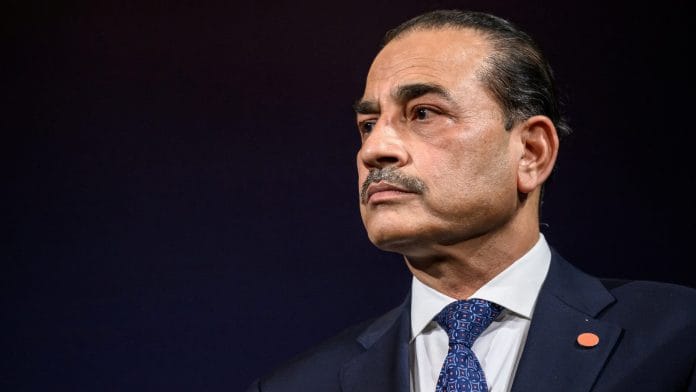

Pakistan’s Planning Minister Ahsan Iqbal recently said the country must create 15 more provinces or establish 160 fully empowered district governments to address the deterioration of social indicators. Plans seem to be already afoot. Ever since Interior Minister Mohsin Naqvi called for an administrative reset, the debate over new provinces has only intensified.
A new province will come with its own set of institutions – a new assembly, a new chief minister heading a new executive, and a new bargaining space within Pakistan’s federalism. But chances are it will inherit the same old problems, reopening old Pandora’s boxes while creating entirely new ones.
This time, the stated rationale for provincial reorganisation is that the current system of governance has “collapsed” and thus requires new administrative units, as remarked by Field Marshal Asim Munir’s current blue-eyed boy Naqvi. There is no clarity as to what the 28th Amendment, ostensibly aimed at restructuring Pakistan’s federal character, would exactly entail.
Media reports, commentators and Pakistani ministers have only telegraphed the possibilities: Would it mean the creation of new provinces, or new administrative units? Or would it revise the National Financial Commission Award in a way that gives the centre more fiscal powers than the provinces to meet its own needs? Or would it instead carry provisions for devolution of powers from provincial capitals to local governments, cementing the latter as the third-tier of government in the federation of Pakistan?
Also read: Pakistan’s paradox under Asim Munir: A broker for the world, a bruised state for citizens
Great minds and Field Marshals think alike
A little over 56 years ago, in July 1970, General Yahya Khan, then President and Chief Martial Law Administrator (CMLA) of Pakistan, abolished the One Unit scheme, 15 years after it came into effect. Implemented in October 1955, it integrated all four provinces of West Pakistan into one united province, while the East Bengal province was to remain a separate unit called East Pakistan (now Bangladesh).
In the words of another general, Ayub Khan, who is often credited with having devised the scheme and who writes in his Friends Not Masters, “The existence of different provinces organized on linguistic and racial lines facilitated political maneuvering by unscrupulous elements to the serious detriment of the economic and strategic interests of the area. The One Unit Bill was intended to put an end to all this and to enable the whole of West Pakistan to develop and progress on a uniform pattern”.
Whether West Pakistan developed “uniformly” is a question that hardly needs deep scrutiny. By the time the scheme was abolished in 1970, resentment had deepened in the provinces, not least Balochistan and Sindh, over the continued domination of the Punjabi elite, a grievance that persists even today. And in its efforts to counter the numerical and political superiority of East Pakistan, which was the true motive behind the scheme, the One Unit formula only hastened the liberation of East Pakistan.
A man who gave Pakistan its many firsts, Ayub Khan was the first CMLA, as well as its first Field Marshal. The second Field Marshal in the annals of Pakistan’s history would be Army Chief General Asim Munir, who self-anointed himself to the five-star rank in May 2025 following the four-day India-Pakistan war. And like the first Field Marshal, the second appears to be mulling a reorganisation of Pakistan’s federal and provincial character with the 28th Amendment.
Effectively, if One Unit was designed to subsume all ethnic and linguistic identities under the banner of a unitary state so that no single identity could become powerful enough to challenge the centre, then whispers now drifting from Pakistan about its much-speculated 28th Amendment suggest a similar instinct: diffuse provincial identities, subjugate provincial autonomy, take away as much resources as possible from provincial control, and centralise authority at the federal level.
“But creating One Unit would not do away with provincialism. And the problems of inter-provincial rivalries persisted. And even in their death throes, the provincial assemblies showed signs of deep discord…”, observed Shuja Nawaz in his acclaimed book on the Pakistan army’s history, Crossed Swords. Similarly, creating new provinces will not necessarily do away with bad governance and enhance service delivery to the citizenry of Pakistan, especially at the grassroots.
The watershed 18th Amendment, passed in 2010, shaped Pakistan’s current centre-province equation and is instructive in this regard. Though it ensured the devolution of a great many powers from the federal to the provincial level, provinces have been loath to devolve further authority to local governments (LGs). This is despite Article 140-A of Pakistan’s Constitution calling on the provinces to establish local governments and devolve political, administrative and financial responsibility. The 18th Amendment, then, awaits implementation in its true spirit.
Consequently, some Pakistani observers have argued for decentralisation rather than new provinces. Adding more of the same provincial administrative layer risks duplicating the same governance maladies. But if the afflictions are corrected, then the system may not just yield the desired effects, but could also serve as a blueprint for any administrative restructuring; this applies in general. As it stands, Pakistan does not have a provincial role model. Its most developed province, Punjab, is also a source of discontentment for the other three provinces, because its development comes at their expense.
Also read: Munir’s latest power grab is proof of his paranoia. Dictatorship and delusion go together
Will Munir trump again?
Resistance from Sindh and, in particular, the Pakistan People’s Party (PPP) is growing, but the latter is accused of pursuing a dual policy of resisting Sindh’s division while showing a “soft corner” for Punjab’s split. The Jamiat Ulema-e-Islam-Fazl (JUI-F) chief, Maulana Fazlur Rehman, has said as much while remonstrating against the imposition of new provinces without debate and lamenting the silence of the ruling Pakistan Muslim League-Nawaz (PML-N) on the matter. The balance of power, however, has never been so heavily tilted against political parties in Pakistan’s recent history.
Emboldened by his status, Munir may try to muscle through the 28th Amendment. He has overseen a slew of amendments from the 26th to the 27th that were passed hastily, diluting the powers of the judiciary to damaging proportions and ensuring that Munir enjoys greater primacy than before. Without formally imposing martial law, these amendments have ensured Munir’s takeover of the country through what can be deemed a soft coup via constitutional means.
Munir himself has given Pakistan several firsts of his own. More prominently, he oversaw the creation of a Federal Constitutional Court, superseding the Supreme Court, became the country’s first Chief of Defence Forces (CDF), took over operational command across the Army, Navy and the Air Force, and has now taken on the power to ‘hire, fire and retire’ personnel at will. But despite these novelties, Munir evidently suffers from the same narcissistic tendency to leave an imprint on Pakistan’s federal and geographical map that gripped the country’s first Field Marshal. This need has historically triumphed over Pakistan’s genuine federal needs and will likely triumph again. Munir wants his ‘One Unit’ moment. But if it comes close to fruition, then it risks becoming a rallying point for anti-Munir agitation – of the kind he has arguably not faced thus far, given its non-Pakistan Tehreek-e-Insaaf (PTI) origins.
The irony of riding the crest of a wave is that it is also when you are most vulnerable to falling and drowning. Good for Munir, he has ensured he can swim if he falls with the lifelong immunity he has granted himself.
Bantirani Patro is a staff writer at ThePrint. She tweets @bantirani_patro. Views are personal.
(Edited by Prashant Dixit)