



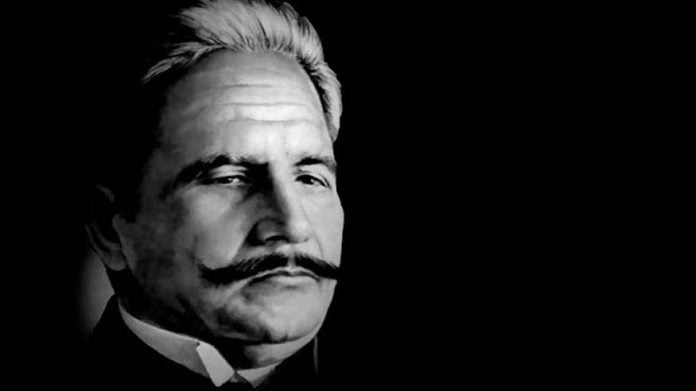
Muhammad Iqbal’s evolving ideas on nation, nationalism, and minority identity mark a defining trajectory in 20th century South Asian intellectual history. His prose, correspondence, and speeches, especially from 1930–38 (last eight years of Iqbal’s life), trace a striking journey from early patriotism for an undivided India to a searching critique of territorial nationalism and, ultimately, an articulation of a distinct political identity for Indian Muslims, which Jinnah would actualise through the creation of Pakistan in 1947.
Rooted in his critique of Western modernity, Iqbal saw territorial nationalism as a European import that displaced universal moral orders with state-centred allegiance. In Speeches, Writings and Statements of Iqbal (1944), compiled by Latif Ahmad Sherwani (pseudonym Shamloo), Iqbal argued that nationalism turned the patria into a secular deity, demanding absolute loyalty and fracturing human solidarity into competing, chauvinistic nation-states.
In the Indian subcontinent, Iqbal saw territorial nationalism as a distinctive structural problem. In a society divided by religion, culture and social differences, reducing political identity to geography, he argued, risked subjecting vulnerable communities to numerical majoritarianism. This position shaped his 1935–36 debate with Jawaharlal Nehru in Modern Review and subsequent public statements, as examined by Adeel Hussain and Tripurdaman Singh in Nehru: The Debates That Defined India (2021).
Nehru, by contrast, defended a secular, civic Indian nationalism, viewing economic transformation and anti-imperialist unity as the central imperatives of the independence movement. He regarded religious identity as primarily personal and expected its political significance to diminish with modern economic development. Nehru’s interventions included “Orthodox of All Religions Unite!” and “The Solidarity of Islam”.
Iqbal rejected this framework, arguing that Nehru’s secular nationalism misunderstood Islam — which he saw not as a private creed, but as an integrated social, legal and ethical order. As Hussain and Singh (2021) show, Iqbal maintained that separating religion from the state would not ensure neutrality but would instead place political power in the hands of the Hindu majority under secular democracy. For Iqbal, harmony required not erasing religious identities, but politically recognising them through sovereign, autonomous territorial units.
Yet, as Pervez Hoodbhoy argues in Pakistan: Origins, Identity and Future (2023), particularly in the chapter “Poet-Preacher-Politician”, Iqbal’s position contained a striking ideological asymmetry. He rejected territorial nationalism in a united, Hindu-majority India as a vehicle for Hindu domination, while endorsing political self-determination and sovereign statehood where Muslims constituted a majority. His attempt to defend this distinction in his correspondence with Edward John Thompson in 1933-34 remains unconvincing.
In his debate with Nehru, Iqbal effectively recast Muslim-majority statehood as something fundamentally different from the European nation-state. It was a necessary legal framework for implementing the Shariat and realising the ethical ideals of the Islamic community. As he put it, “It becomes a problem for Muslims only in countries where they happen to be in a minority,” whereas “in majority countries Islam accommodates nationalism,” since “Islam and nationalism are practically identical.”
Also read: Allama Iqbal is the poet everyone quotes and no one understands. He’s beyond ownership
A Muslim state and its minorities
A central tension in Iqbal’s framework concerned the status of non-Muslim minorities, particularly Hindus, within a Muslim-majority polity. He maintained that their civil, cultural and religious rights could be protected through Islamic jurisprudence, communal autonomy and reciprocal safeguards, with religious communities functioning as distinct legal and political entities rather than being absorbed into a homogenising secular citizenship.
Yet, as Hoodbhoy (2023) demonstrates, this framework contained a fundamental asymmetry. A Muslim-majority state would derive its ultimate moral, legal and constitutional legitimacy from Islamic principles, leaving non-Muslim minorities in a secondary, albeit protected, position — analogous, in classical terms, to the protected (Zimmi) but unequal status. Hindus could retain cultural and religious freedoms, but they would remain structurally excluded from determining the polity’s foundational ideology and constitutional direction.
This exclusionary principle would be made explicit by Maududi (1903–79) in Lahore in October 1939. MS Agwani’s 1994 essay (p. 261) elaborates: “Non-Muslims could also live within the confines of Maududi’s ‘theodemocratic’ and totalitarian Islamic State, but only as subjects (zimmis) with ‘specific rights and privileges’. However, ‘they will not in any case be allowed to influence the policy of the State in as much as the Islamic State belongs to the party which believes in the particular ideology inculcated by Islam’.” The term “theodemocracy” was coined by Joseph Smith in 1844, when he was running for the US presidential election. Almost a century later, Maududi adapted it.
Iqbal mobilised funds to hire Jinnah for Ilmuddin’s legal defence. Iqbal, an elected member of the Punjab Legislative Council from the Lahore City constituency, was part of the delegation that met the governor in November 1929 and persuaded him to exhume Ilmuddin’s body and shift it from Mianwali to Lahore. The young Muslim carpenter had killed Lahore publisher Mahashe Rajpal on 6 April 1929 over the pamphlet Rangeela Rasul (1923), deemed blasphemous, and was hanged on 31 October that year.
The legal battle around the pamphlet, Rajpal’s acquittal in January 1927, the Criminal Law Amendment Act that inserted Section 295A in September 1927 (while avoiding any mention of blasphemy), and the mobilisation for Ilmuddin helped solidify a distinct, politically conscious separatist Muslim subjectivity. In the 1930s, the nationalisation of the Shahidganj Mosque dispute in Lahore (1935) and the enactment of the Shariat Application Act, 1937, would further strengthen this separatist Muslim political subjectivity on the road to the creation of Pakistan.
The asymmetry is stark: the majoritarian hegemony Iqbal feared for Muslims in a united India was reproduced in his vision of a Muslim-majority state for non-Muslims. The same logic shaped his treatment of internal Islamic boundaries. In his writings on the Ahmadiyya (Qadiyanis), contemporaneous with his exchanges with Nehru, he adopted an uncompromisingly exclusionist stance, treating the finality of Muhammad’s prophethood as the essential boundary of the Ummah and any challenge to it as a threat to Muslim solidarity and legal coherence.
He therefore advocated the ‘constitutional exclusion of Ahmadis,’ including excommunication and legal suppression (Qadianis and Orthodox Muslims) and urged the colonial state to recognise them as a non-Muslim minority. His position reveals a broader principle: religious communities, in his conception, possessed the authority to define their own boundaries—but that principle could also become an instrument of exclusion. With Shias, by contrast, Iqbal generally subordinated sectarian differences to a broader political unity, prioritizing a consolidated Muslim political bloc over theological uniformity.
Also read: Muhammad Iqbal wasn’t against democracy or a casteist. Don’t misinterpret his work
Philosopher in theory, politician in practice
This tension exposes a central contradiction in Iqbal’s public persona: the gap between his self-image as a moral philosopher above politics and his practice as a political strategist. Nowhere is this clearer than in the opening of his landmark presidential address to the All-India Muslim League at Allahabad in December 1930, where he famously declared: “I lead no party; I follow no leader. I have given the best part of my life to a careful study of Islam, its law and polity, its culture, its history and its literature… I am not a politician in the ordinary sense of the word.”(Shamloo, ed. 1944, p. 3)
After disavowing political ambition and presenting himself as a detached philosopher, in the same address, Iqbal advanced one of modern South Asia’s most consequential political blueprints: the consolidation of Muslim-majority provinces in the North-West into a distinct political unit, within or outside the British Empire.
He said, “I would like to see the Punjab, North-West Frontier Province, Sindh and Baluchistan amalgamated into a single State. Self-government within the British Empire, or without the British Empire, the formation of a consolidated North-West Indian Muslim State appears to me to be the final destiny of the Muslims, at least of North-West India.”
Another contradiction in Iqbal’s thought emerged in his response to the Kemalist reforms in Turkey. In 1924, he lamented the destruction of a historic symbol of unified Islamic authority (Chaak Kar di Turk-e-Naadaan ne Khilafat Ki Qaba/ Saadgi Muslim Ki Dekh, Auron Ki Aiyyaari Bhi Dekh). Six years later, in chapter six of his Reconstruction (1930), he appeared to contradict this position, saying: “The Republican form of government is not only thoroughly consistent with the spirit of Islam, but has also become a necessity in view of the new forces that are set free in the world of Islam… Turkey’s ‘Ijtihad’ in this respect is that according to the spirit of Islam, the Caliphate or Imamate can be vested in a body of persons, or an elected Assembly.”
Once Islam acquired state power, Iqbal was comfortable with this arrangement, and his logic allowed for separate caliphal authorities, vested in elected bodies, across Muslim-majority countries (nation-states). At some point of time in history, there were, concurrently, three Caliphates, in Spain, in North Africa, and in Baghdad. Iqbal raised no discomfiture over it.
The same duality recurs in his 1933–34 exchanges with EJ Thompson (1886–1946). When challenged on the divisive implications of the Allahabad Address and his territorial proposals, Iqbal repeatedly recast them as a theoretical necessity for safeguarding Islamic values rather than as political separatism.
In practice, Iqbal’s interventions supplied the theoretical framework for political mobilisation. This became most explicit in his correspondence with Jinnah. Thirteen letters from 1936–37 survive, within a larger corpus of 29 letters. Jinnah’s replies are largely lost. (Muhammad Ashraf, 1943, Letters of Iqbal to Jinnah, with a Foreword from Jinnah.)
In his final months, Iqbal’s exclusionary conception of Muslim identity surfaced again in his exchange with Maulana Husain Ahmad Madani, whom he attacked for advocating Muttahida Qaumiyat (Composite Nationalism), equating his position with that of the Qadianis. Iqbal asserted that, “The truth is that … the conception of nationalism … has the same place which the rejection of the Finality of the Holy Prophet has in the minds of Qadianis” (Shamloo, 1944, p. 219; originally Ehsan, Lahore, 9 March 1938).
The 1937 Shariat Application Act further exposed the limits of Iqbal’s framework. When Jinnah steered this patriarchal and reactionary legislation through, Iqbal’s Reconstruction (1930) offered little to temper its un-Quranic provisions that denied women their scriptural inheritance rights. The Act helped construct a pan-Indian Muslim political community that Jinnah could mobilise towards Pakistan. Thus, this Act placed Muslim women in “double jeopardy”, as they could not inherit (despite scriptural sanction) agricultural land in Punjab and Uttar Pradesh, where a huge chunk of Muslim landlords lived (Julia Stephens, Governing Islam).
In “Orthodox of All Religions Unite!”, Nehru specifically asked Iqbal why the same inheritance laws were applicable to all religious communities, particularly in cases involving the property of Taluqdars. Nehru further asked: “If a Hindu steals a Muslim’s property, whose law [would be] applicable? Or in the case of adultery where the persons profess different religions?” Iqbal’s lengthy reply skipped these specific questions.
Also read: Allama Iqbal, his two-nation theory and the ideas in his poetry that were anti-national
Iqbal as Jinnah’s strategist
Historian VN Datta (1926-2020) notes in his 2002 essay, “Iqbal, Jinnah, and Partition: An Intimate Relationship,” that Iqbal’s letters reveal him as an ideological and political strategist of the Muslim League. He urged Jinnah to transform the League from an elite, landed organisation into a mass movement addressing Muslim peasants and workers, while simultaneously mobilising Muslim landed elites in Uttar Pradesh. For Iqbal, economic emancipation and preservation of Islam were inseparable: both required Muslim-majority states in north-western and eastern India.
Iqbal’s correspondence shows that this was no late conversion. Published letters record him advocating an Islamic state as early as October 1930 and assigning UP’s landed elites—the Kutchehry Milieu—a crucial role in establishing Pakistan. After the League’s rout in the 1937 provincial elections, he urged Jinnah to pursue this project. His interventions helped shape Jinnah’s transformation from the “ambassador of Hindu-Muslim unity” into the leader of the Pakistan movement, culminating in the Lahore Resolution of 1940, two years after Iqbal’s death. Kulliyat-i-Makatib-i-Iqbal, III (SMH Barani, 1993, p. 172) and Saheefa-i Iqbal (Younus Javed, ed., 1986, p. 77) thus document Iqbal’s engagement with religion-based territorial politics from October 1930, despite his professed political detachment in the opening of his Allahabad Address of December 1930.
His letters to Jinnah leave little ambiguity. On 20 March 1937, responding to Nehru’s address to the All India Convention of Congress Legislators’, he urged Jinnah to convene an All-India Muslim Convention in Delhi to assert that Muslims constituted a distinct political unit and that India’s problems could not be reduced to economics (Muhammad Ashraf, Letters of Iqbal to Jinnah, Lahore, 1943, p. 13). On 28 May 1937, he pressed the League to reach the masses, arguing that the only viable solution was the implementation of Islamic law, Shariat—impossible, he insisted, without Muslim state/states—and added that this had been his conviction for many years (Ashraf, 1943, p. 17).
Thus, Iqbal, the ‘combative constitutional thinker’, while rejecting ‘European-style homogenising territorial nationalism’, was seeking a Shariat-based state, effectively disregarding the equal citizenship rights of intra-Muslim and non-Muslim minorities in his proposed Muslim-majority states. This is what emerges from Adeel Husain’s Law and Muslim Political Thought.
Ultimately, Iqbal’s philosophy of nation and minority identity was marked by a persistent structural contradiction. He rejected Western territorial nationalism as divisive and secularising, insisting that the human community should rest on ethical and spiritual affinities rather than geography. Yet, confronted with colonial India’s political realities, he translated this anti-nationalism into a demand for Muslim regional sovereignty: universalism, he argued, required a Muslim political homeland beyond majority control.
What makes Iqbal’s political thought consequential is precisely the tension between his philosophical claims and political interventions. In 1930, he presented himself as a philosopher above politics even as he helped furnish the intellectual architecture of Partition. He demanded safeguards for Muslims against Hindu majoritarianism, yet envisaged non-Muslims—and, more decisively, Ahmadis—in a Muslim state as secondary, religiously defined minorities.
The irony of history is enduring. The Allama who rejected territorial nationalism helped supply the intellectual grammar of a separatist nationalism that produced Pakistan, less than a decade after his death.
With significant inputs from my student, Bhavuk Sharma
Professor Mohammad Sajjad teaches Modern and Contemporary History at Aligarh Muslim University. His X-handle is: @sajjadhist. Views are personal.
(Edited by Prashant Dixit)