






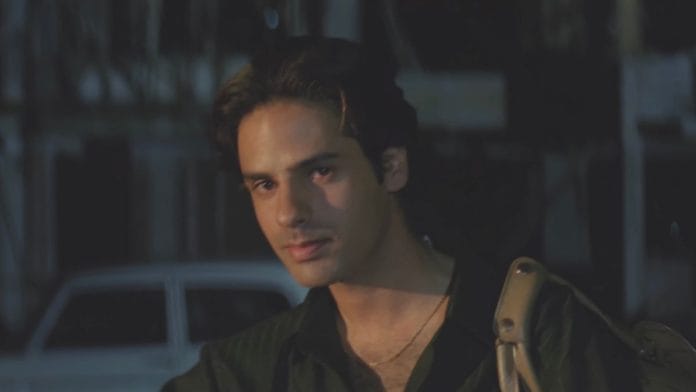


The internet is worried about Rahul Roy. Is the popular actor from the 1990s being held hostage? Is his mind being controlled? What plausible explanation exists for him to dance in the lawns of a semi-urban Maharashtra bungalow-for-hire with a woman in a pink saree? Don’t be ridiculous, he couldn’t possibly have arrived at that decision on his own.
Over the past couple of weeks, Roy’s well-being has been questioned by people who likely haven’t thought about him in years. The comments under the reels – on the account of a hitherto unknown anchor and content creator, Dr Vanita Ghadage Desai – do most of the worrying for us. “Blink twice if you’re being held.” “Someone please confirm he’s alive.” and “Is this AI?” Roy’s face has been parsed frame by frame by a cottage industry of Instagram vigilantes under a video in which the 60-year-old Bollywood actor is, by and large, just holding someone’s hand.
This is not the first time the Bollywood actor has featured in the videos of mid-range creators and influencers cosplaying their Bollywood fantasies. In March, a creator named Seema Singh posted a video with a mildly nonplussed Roy, dancing to the smash hit Tu Meri Zindagi Hai from Aashiqui (1990), Roy’s most famous film. That video has 3.3 million views. Last November, Roy made a stage appearance at the wedding of the niece of a prominent Patna tutor named RK Srivastava. The video has 221K likes and thousands of comments. Two weeks ago, Delhi socialite and reality show actor Puja Dua posted a cryptic reel with Roy, liked by 98.8K people, suggesting that she was playing his onscreen wife.
Despite the handwringing over the last couple of weeks, Desai’s low-concept, high-budget reels themselves are oddly disarming. The wardrobe is virginal whites, blooming pinks, floral yellows, and soft lavenders that belong in a second-standard classroom. In one turbulently edited “best of” video, Desai studies a framed photograph of Roy, only to find him standing behind her, a bouquet in his hands. They walk through the park in tandem, shyly averting their gazes when it all becomes a little too intense. The whole thing is choreographed to mimic a dreamy sequence from a Bollywood film of an era that no longer exists.
Some of these reels have crossed 1.1 million views; others from the same set sit comfortably in the hundreds of thousands. Her only other reel with Roy goes back to December 2024, an indication that they have clearly known each other for a while. Prior to her newfound celebrity, Desai’s Instagram profile is a mix of videos from stage shows she has anchored and selfies with VIPs, including Nirmala Sitharaman and Sharad Pawar.
In the fever dream that is your social media feed, an AI-generated archive page of a leading national newspaper delivers fake news at your feet, while dancing politicians attempt to pass off old videos as artificial. Somewhere in the middle distance, a near-infinite supply of podcast bros and astrogirls, protein peddlers and looksmaxxers, finance dudes and OnlyFans aspirants keeps you locked in.
This slow descent into madness is punctuated by the Desai-Roy production, a reminder of a softer era. The reels are so guileless, so chaste that they act – almost embarrassingly – like a palate cleanser.
Roy addressed the bullying (some of which came from other actors) with a moving note on Instagram, explaining that he had old financial and legal obligations to honour, from before the brain stroke he suffered in November 2020 while filming on location in Kargil. He added that being on set and remembering his lines and choreography helped him keep his mind active and his sense of purpose intact. “If you are truly so concerned, then help me find some genuine and decent work so I can pay for these cases. At least I am earning through hard work, not by mocking others… Yes, it may hurt a little sometimes, but you cannot break me,” Roy wrote in the post.
Desai’s post on Roy’s trolling was less placid. In a reel, she let the critics have it. Genuine fans, she explained, would have liked the reels and commented “nice things”. “Laat maar ke sorry nahi bolte” — you do not kick someone and then apologise. After Salman Khan, she announced, she was the only person who had stood by Rahul Roy, and would continue to do so until her last breath. Since then, she has posted several more videos with the actor.
Also read: Shah Rukh Khan is the modern guru for an anxious generation
The Royal Roy of the 1990s
What unifies these reels featuring Roy is one impulse, performed at very different scales. Celebrity used to be an access-controlled product, manufactured by a handful of studios and distributed through the theatre. This high-risk, high-reward game had gatekeepers at every door – magazines that anointed you, agents who negotiated on your behalf – and the audience was invited to look in, but only from the other side of the glass.
That access has now dissolved. Anyone with a smartphone is now a potential star. So how do you distinguish yourself from the herd? You borrow from the billionaire playbook and buy yourself celebrity by association. Everyone, at their own price point, is now staging their own version of the Ambani wedding. If the Ambanis can afford to bundle Beyoncé, Rihanna, and the rest of Bollywood onto a few private jets, a middle-aged influencer can at least pay for a ’90s superstar.
That slightly cynical understanding takes away from the impact Roy once had on the Indian imagination. In 1990, Roy was a relative outsider, with a very different physiognomy from the reigning Bollywood hero. He was the boyish face of Aashiqui, Mahesh Bhatt’s musical drama in which two ferociously good-looking teenagers loved each other to ruination against a wall of adult opposition. Main duniya bhula dunga teri chahat mein (I will forget the world for the love of you), they sing to a roomful of guests — particularly a furious Tom Alter.
Aashiqui’s love was sacrificial in temper and defiant in mood, bolstered by a banger album. It is hard to overstate what this film did to a young India on the cusp of liberalisation, and harder still to estimate the wreckage it inflicted on the pubescent imagination. The album – anchored by the lyrical Jaan-e-Jigar Jaaneman and Dheere Dheere Se – is still the soundtrack of the country’s small-town barbershops, panwaadis, and freight corridors.
In the 35 years since, Bollywood has done its best to retire the kind of complex man Roy played in that film, whose entire emotional repertoire was to suffer for love. At that suffering romantic hero, Bollywood has lobbed the swashbuckler, the selfish drunk and the brooder, the spy and the deshbhakt gangster, and a series of immature dudes that give you the ick. But no number of Animals or Dhurandhars or Raanjhanas – made by men and for men – have been able to dislodge the sweetness of Aashiqui’s leading man.
Just look at Mohit Suri’s filmography, built on restaging slight variations on that lover in different contexts. Suri made the sequel to Aashiqui in 2013. Saiyaara, last year’s musical drama, which earned more than Rs 400 crore, is only the most recent iteration.
The self-eviscerating Aashiqui hero refuses to be eviscerated himself. So when Roy steps onto a stage in Patna, he is accompanied by the full force of an emotional tradition.
Roy’s affection, SRK’s love
Which also raises the question of why this particular apparatus has stayed in vogue. For middle-aged Indian women of a certain demographic, marriage, no matter how affectionate, did not account for love. It was premised around logistics and domesticity that kept the household running. There were children to be raised and in-laws to be managed – and it was understood that the husband would be a partner in the project of life.
Shrayana Bhattacharya has written about this with great care in Desperately Seeking Shah Rukh. “India’s action heroes of the time hold little appeal for you… [You] stomp your feet and proclaim your undying faith in Shah Rukh. ‘No other hero can make heroines so happy,’ is your childish defence. Awed by how the women in all his song sequences glow, you start to realize that this is what you want: a man who can make a woman feel radiant. You believe that the love of an ideal man, like him, will make you as beautiful as a Bollywood actress.”
That’s the aspiration we now see dramatised in these reels. SRK’s love and Roy’s affection remain tenable because they are completely safe – and desexualised. These belong entirely to the women, who tend to these feelings in secret. Watching Roy plant a kiss on the forehead of someone who looks like them is to step into that private space for 90 seconds.
Marriage might be for domestic security, but love? Love is for Aashiqui’s Rahul Roy.
Karanjeet Kaur is a journalist, former editor of Arré, and a partner at TWO Design. She tweets @Kaju_Katri. Views are personal.
(Edited by Prashant Dixit)