



Today, we are unveiling flying cars and talking about AI, semiconductors, and green hydrogen as the sunrise industries of tomorrow. Every decade has its own sunrise industry, one that promises to transform economies and redefine the future. But agriculture is different. It is that one industry that will never have an expiry date. Even a hundred years from now, no matter how advanced the world becomes, countries will still depend on agriculture to feed their people.
A nation lacking food security can always be held hostage, as seen in the “ship-to-mouth” food crises post-Independence. It’s a matter of strategic autonomy. About 46 per cent of India’s workforce still works in agriculture. It is not a sunset industry that policymakers can afford to overlook. It is and shall remain a permanent pillar in an ever-changing economy.
Agriculture is not just an economic activity; but also an emotion. Our agricultural calendar has shaped our cultural calendar for generations. From Baisakhi to Pongal to Onam, celebrations around agriculture are common across the country. Assam, for instance, has three Bihus that celebrate different stages of the farming cycle. In Maharashtra, the festival of Bail Pola, or Bendur, is celebrated to honour the bullocks that have traditionally worked alongside farmers.
But agriculture’s importance goes far beyond tradition. Agriculture is the foundation of the economic building of India. We may keep adding new floors in the form of emerging industries, but the strength of the entire structure depends on how strong its foundation is. It feeds about 81 crore people under the National Food Security Act. And when we talk about Indian agriculture, we often limit the conversation to wheat and rice, overlooking the fact that India is the world’s largest milk producer, among the leading producers of fruits and vegetables, and a global leader in spice production, cultivating over 60 varieties.
Agriculture is exposed to factors beyond a farmer’s control. He can decide what to sow, but not when the monsoon arrives or whether El Niño disrupts it. Global conflicts add to this uncertainty. The West Asia conflict has brought the 3F challenge — fuel, fertilizer, and food — into focus. The Gulf accounts for 20-30 per cent of India’s urea imports, 30 per cent of DAP imports, and nearly half of its LNG imports, a key input for urea production. A conflict thousands of kilometres away can affect the cost of cultivation back home. We cannot control these external shocks, but we can prepare our agriculture to withstand them.
The monsoon problem
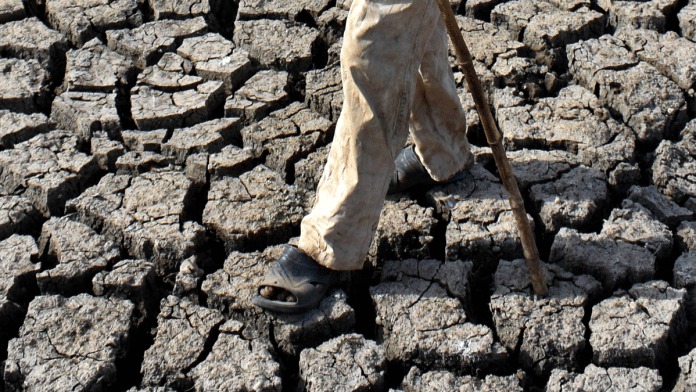
Maharashtra’s experience shows how erratic the monsoon has become. The state received 109.1 per cent of normal rainfall in 2025. Excess rainfall and floods damaged crops over 94.82 lakh hectares and affected 116.40 lakh farmers. The state government sanctioned Rs 9,022 crore in compensation to support those affected. This year, the situation has been the exact opposite. Between June and September, Maharashtra received 19 per cent less rainfall than normal, with the deficit reaching 39 per cent in Marathwada and 27 per cent in Vidarbha. Eventually, 308 of the state’s 358 talukas were declared drought-affected. The experience of these two years shows that farmers are having to deal with both ends of the weather crisis: excessive rainfall that destroys crops and deficient rainfall that leaves fields parched.
The scale of the present crisis is deeply concerning. The government’s crop-loss assessment across 37,496 villages in 304 drought-affected talukas found that crops on 14.15 million hectares had suffered losses exceeding 33 per cent. The stakes are particularly high for Maharashtra, where 43.2 per cent of the total workforce is engaged in agriculture and allied activities. The impact extends far beyond the state. Maharashtra is among India’s leading sugar producers and is the country’s largest producer of jowar, onions, grapes and pomegranates. It is also a leading producer of cotton, soybean, chana and tur, besides being a major contributor to organised milk procurement. A disruption in Maharashtra’s fields can send ripples across the country, affecting food security, farmers’ livelihoods, food markets, dairy supplies and industries such as textiles.
Maharashtra has a long history of acknowledging the challenges of its geography and climatic conditions, and the need for water conservation. A remarkable example of this is the hill forts built in the Maratha period. Their construction was for long sieges, so they paid a lot of attention to water storage and saving. Sinhagad Fort, for instance, has 48 rock-cut cisterns that collected rainwater and could store enough to last for months. Centuries later, the same understanding can be seen in the story of Hiware Bazar in Ahilyanagar district. Once nearly 90 per cent of its residents had left in the 1990s, the village began investing in watershed development, building contour trenches and water-harvesting structures. It also introduced water budgeting and changed its cropping patterns according to water availability. The results speak for themselves: its crop production did not fall in 2015, despite receiving around 50 per cent less rainfall than normal.
This is the direction in which we must take Maharashtra’s agriculture: towards climate-smart farming, where decisions on what to sow are based on soil conditions, water availability and weather forecasts, rather than habit alone. Millets and pulses, particularly in rain-fed regions, need greater attention. Maharashtra is already India’s second-largest millet-producing state, with 25.58 lakh tonnes produced in 2024-25. We must build on this strength.
Technology needs to be harnessed to power smart decision-making, Maharashtra’s MahaVISTAAR platform uses AI to provide farmers with crop specific and location specific advice on weather, market prices, pests and diseases, in Marathi and English, benefiting more than 30 lakh farmers. Under the Atal Bhujal Yojana, Maharashtra brought 2.63 lakh hectares under efficient water-use practices by March 2025, achieving 351 per cent of its original target of 75,000 hectares. Through PMKSY’s Per Drop More Crop programme, we are also expanding drip and sprinkler irrigation, while Jalyukt Shivar Abhiyan 2.0 is strengthening village-level water conservation and groundwater recharge. Beyond these local interventions, the state is pursuing larger river-linking projects to take water from surplus basins to drought-prone regions. The Wainganga–Nalganga and Tapi Recharge projects are envisaged to divert a combined 89 TMC of water. These efforts must translate into more water reaching farms and greater security for farmers across Maharashtra.
Also read: Eknath Shinde doesn’t have an ivory-tower mentality. He listens to the last person in the queue
Maharashtra’s efforts to mitigate rural distress
While a long-term vision is essential, we cannot lose sight of the distress farmers are facing today. For a farmer who has lost his crop this season, a future irrigation project or reform offers little immediate relief. Our government has therefore extended 12 standard drought-relief measures, including restructuring of crop loans, a halt on loan recovery, land revenue concessions, electricity relief for agricultural pumps and examination-fee waivers for students. Recognising that the fodder crisis is equally serious, the state Cabinet has approved the Maharashtra Fodder Development Policy, alongside directions to district collectors to establish fodder banks and arrange supplies from surplus districts to drought-hit regions. A provision of Rs 7,500 crore has also been approved for advance assistance of Rs 5,000 to eligible farmers. In addition, eligible farmer families receive Rs 6,000 annually under the Centre’s PM-KISAN scheme, with the Maharashtra government’s NaMo Shetkari Mahasanman Nidhi adding another Rs 6,000, taking the combined annual income support to Rs 12,000.
The fight against a disease cannot be limited to preventing future infections; those already infected must also receive treatment and care. Governance must remain connected to people, especially in difficult times. At the Dussehra rally, Deputy Chief Minister Eknath Shinde called upon Shiv Sainiks to reach drought-hit villages and stand alongside affected farming families. The outreach also included the distribution of sewing machines and cycles to women, support for the marriages of daughters from distressed farming families, and the dispatch of Diwali ration kits.
During his Diwali visit to Bhilpuri in Jalna, Shinde met farmer Ambadas Tangde, whose one-acre soybean crop had yielded just two sacks. Such encounters bring the realities of rural distress closer to policymaking. Maharashtra must build on its experience in water conservation and its expanding irrigation network to make farming less vulnerable to forces beyond a farmer’s control. Ultimately, the goal is to give farmers the confidence to plan their next season, knowing that one bad monsoon need not put their entire livelihood at risk.
The author is the national secretary and spokesperson of the Shiv Sena. She tweets @ShainaNC. Views are personal.
(Edited by Aamaan Alam Khan)