







Ask someone what they did in their free time yesterday, and you will get an answer shaped as much by who they are as by what their material realities are. My research, published recently in Leisure Studies and based on the National Statistical Office’s Time Use Survey (TUS) of India, 2024, set out to test a simple but under-examined idea: leisure in India is not just time left after work. It is a socially structured privilege, distributed unevenly along the lines of gender, caste, income, and education, much like everything else in Indian life.
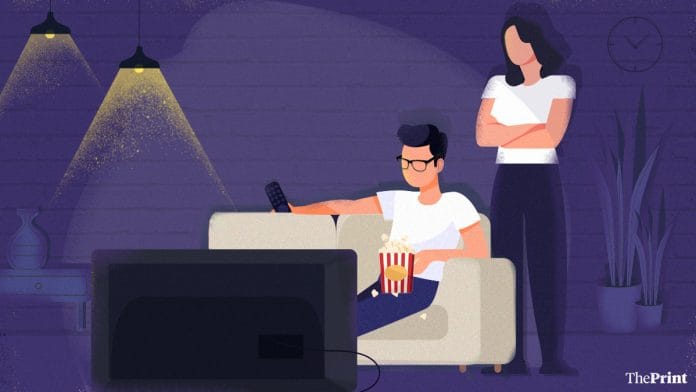
The finding that men and women don’t get equal rest will not surprise anyone who has watched how households actually run in India. But it is striking to see it confirmed in nationally representative data. Men are significantly more likely to spend their free time on active leisure, such as sports and exercise, and on hobbies. Women, by contrast, are more likely to be what I call “contemplators” and “recuperators”, people whose leisure time goes into praying, resting, reflecting, napping, and other forms of quiet recovery, along with watching television. The gap is not marginal. It shows up consistently, across income groups, across castes, and across the rural-urban divide, once every other factor is statistically accounted for.
Leisure that doesn’t look like leisure
Why does this matter? Because the kind of leisure people have access to says something about the quality of freedom they have over their own time.
Active leisure and hobbies require conditions that sound trivial but are anything but ordinary. They require uninterrupted blocks of time, freedom of movement outside the home, and social permission to be seen doing something purely for oneself. Contemplative and recuperative leisure, on the other hand, can be squeezed into the cracks of a day already full of domestic duties: a nap between chores, prayer in a corner of the house, half attention paid to a television while cooking. It is leisure that fits around obligation rather than leisure that interrupts it.
This is the pattern the data reveals for Indian women. Their leisure tends to be low intensity, home-based, and easily interrupted because the architecture of their days, built around unpaid care work, leaves little room for anything else. Television and rest are often the easiest forms of leisure to fit into a day already shaped by domestic responsibilities. Religious practice fits the same mould. It is one of the few forms of leisure that is culturally sanctioned for women even within domestic space, which may explain why contemplative leisure, prayer, quiet reflection, and rest shows up so strongly among women in the data. It is leisure that does not require leaving the house or asking permission to be elsewhere.
It doesn’t get better with education or income
Perhaps the most uncomfortable finding is that rising education and income do not close the gender gap in leisure. They simply reshape it. As people move up the income and education ladder, everyone’s leisure tends to shift away from prayer, rest, and socialising and toward hobbies, active pursuits, and media consumption. Time spent reading, exercising or engaging in religious practice as a matter of personal cultivation rises steadily with income. But the underlying gender pattern persists on every rung of that ladder.
In statistical terms, being a woman still significantly lowers the likelihood of engaging in active and hobby-based leisure, and significantly raises the likelihood of contemplative and recuperative leisure, even after controlling for education and income. What changes with income and education is not whether this gap exists, but what form it takes. As education and income rise, contemplative leisure, prayer, rest, quiet reflection actually recedes for everyone, women included, while time spent on mass media rises sharply.
So, a woman’s constrained leisure does not simply move from prayer to television as she grows more educated and better off; the two pull in opposite directions with income. What connects them is not a shared trend but a shared character. Both are activities that can be carried out passively, in fragments, alongside domestic responsibilities rather than instead of them, in a way that active leisure or hobbies cannot. A poorer, less educated woman’s constrained leisure is more likely to take the form of prayer, rest and naps. Among wealthier, more educated women, constrained leisure is more likely to take the form of watching television or using a phone while remaining available for household demands, whereas men in the same income and education bracket are more likely to report getting involved in sports, hobbies and other forms of active recreation.
The interaction between gender and caste sharpens this picture further: among upper caste and general category households — typically the more resourced group — the negative effect of being a woman on active leisure is actually the largest of any social group in the data. In other words, resources expand the total menu of leisure options available to a household, but they do not expand it equally for the man and the woman within that household. Educated, higher-income women are still more constrained than their male counterparts. They simply end up constrained within a more “modern” bundle of activities rather than a traditional one. The privilege of a hobby, it turns out, is not evenly available even to women who can, in principle, afford one. Money buys different leisure activities. It does not buy equal leisure.
Caste and occupation add further layers
Gender does not act alone. When I looked at how gender and caste interact, the picture became more layered. The gender gap in active leisure is actually widest among upper-caste and OBC households, and not narrowest, as one might assume given greater resources. Meanwhile, Scheduled Caste and Scheduled Tribe communities, men and women alike, lean more heavily on socialising: talking, gathering, community activity, perhaps because it is leisure that costs little and needs no infrastructure, no equipment, and no separate space. Interestingly, hobby-based leisure, such as games and pastime activities, is also somewhat more common among these communities than among upper caste groups, suggesting that where formal recreational infrastructure is scarce, people improvise their own low cost forms of enjoyment. Leisure inequality in India, in other words, is not one gap but several gaps stacked on top of each other.
Occupation compounds this further. Students and the unemployed report the most total leisure time in the survey, which is expected given fewer daily obligations. But domestic workers, those attending to unpaid household duties as their principal activity, also report high total leisure minutes. A closer look reveals that much of this time consists of recuperative activities, with rest and self care squeezed in around an unpredictable and physically demanding routine, while working men in regular salaried jobs are more likely to report active or hobby-based leisure. Casual wage labourers show a similar pattern. More free time on paper does not translate into freer time in practice.
Also read: Indian mothers’ care, sacrifices are glorified. TUS data reveals their invisible labour
Why this should worry policymakers
We tend to treat leisure as a private matter, something only individuals decide for themselves. But the data suggests that leisure reflects much larger structural failures, including the near total absence of affordable childcare, the invisibility of domestic labour in economic accounting, and labour markets that offer little predictability to informal and casual workers, who make up the bulk of India’s workforce.
If policy is serious about closing gender gaps, it cannot stop at getting women into paid work or classrooms. It must also ask what happens to their time after work: who gets to switch off, and who is simply switching tasks. Investments in care infrastructure and accessible childcare services would do more for women’s leisure than any awareness campaign about self-care. More predictable working hours and rest provisions for informal and casual workers — who currently absorb the greatest burden of recuperative, low autonomy leisure — would extend the same benefit to men and women in precarious work. Safe, affordable public spaces for recreation, especially in rural and marginalised areas where such infrastructure barely exists, would widen the kinds of leisure activities available to those currently confined to socialising as the only accessible option. None of these are soft, quality-of-life add-ons. They are prerequisites for something as basic as being able to rest without it being a stolen minute between duties.
This data reminds us that leisure is one of the last places we look for inequality, and one of the clearest places to find it. If we are willing to measure how a nation works, we should be equally willing to measure how it rests, and to ask, honestly, who is actually allowed to.
Sudeepto Das is a research scholar in economics at South Asian University, New Delhi. He tweets @SudeeptoNiloy. Views are personal.
(Edited by Aamaan Alam Khan)