







I am not Muslim. I do not wear the hijab. I am not religious either. I am, however, a feminist. I wondered briefly whether that gave me the right to write about what a Muslim woman chooses to put on her head. Then I remembered that feminism was never meant to be a conversation in which women could speak only about the forms of patriarchy they personally experience. I write about the hijab as a woman asking a larger question: who gets to decide what a woman’s body means?
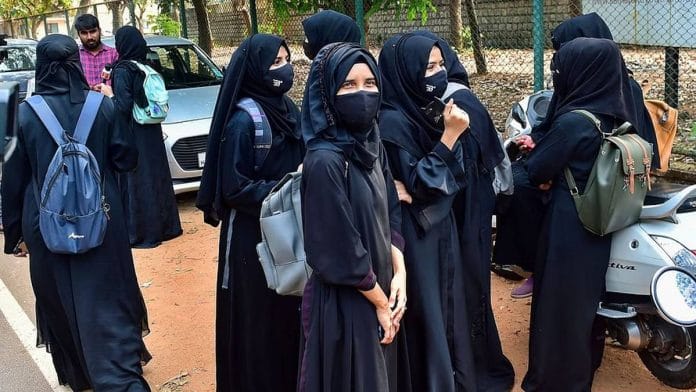
The Allahabad High Court’s Tuesday refusal to allow a schoolgirl to wear a hijab with her uniform has revived the argument that the garment is either an instrument of oppression or an expression of individual choice. The court held that the headscarf is not an essential Islamic practice and upheld the school’s right to enforce its uniform.
I would defend a woman’s right to wear the hijab even if I disagree with the idea behind it. The state has no business becoming the wardrobe department of women. A woman forced to cover her head is being coerced; a woman prevented from covering it is also being coerced. But recognising that does not require women to stop asking why women, across religions and centuries, have carried such a disproportionate burden of modesty.
And the language of “choice” has become too convenient in modern times.
A choice does not exist in a vacuum. Women choose within families, communities, histories and belief systems. They can’t make entirely genuine choices inside structures that were never designed to treat them equally. A woman may freely choose to leave her job to raise children; feminism can respect that decision while still asking why domesticity has historically been prescribed to women far more insistently than to men.
The hijab deserves the same scrutiny.
The trouble with celebrating the hijab as a matter of individual choice is that it assumes the existence of a choice in the first place. For millions of Muslim women, including in India, the decision is made within families that may determine whether a girl goes to school, whom she marries, whether she works, where she goes and what she wears.
Banu Mushtaq’s Heart Lamp, which won the International Booker Prize last year, is a reminder of how far removed these realities can be from the polished language of individual freedom. Across its stories, Muslim women negotiate marriage, polygamy, divorce, religious authority, family honour and economic dependence — forms of control that rarely arrive announcing themselves as coercion.
The women who dominate the modern hijab conversation — educated, urban, articulate and empowered to explain their choices on social media — are not necessarily representative of those for whom choice itself remains precarious. Even with all their education and empowerment, they remain conditioned to believe that all theological texts across religions written by men from a different era were looking out for women.
A choice means little if refusal carries a price.
The burden of modesty
The theological argument itself is more complicated than either side admits. Islamic scripture contains instructions to both men and women concerning modesty, chastity and conduct, and Muslim scholars have disagreed for centuries over precisely what those injunctions require. Many Muslim women understand the hijab as a religious obligation; others interpret modesty differently; millions do not wear it. I have no interest in telling a woman that her faith is invalid because she wears a piece of cloth.
But I do want to ask what that cloth has historically been made to signify.
The burden of modesty has never been evenly distributed. Men may be instructed to lower their gaze, but women’s bodies have been made repositories of family honour, sexual propriety and communal virtue. Women are asked to cover, conceal and regulate themselves because somebody else’s gaze is presumed to be a problem they must help solve.
When modesty becomes a woman’s obligation to make her body less visible, it is worth asking why her body became the problem in the first place.
This is hardly unique to Islam. Hindu women have lived under the ghoonghat; Victorian women were corseted into shapes that restricted their bodies in the name of femininity; or the ‘golden lotus’ feet obsession in China where their foot bones were broken to fit girls’ toes under the sole — women across cultures have been taught that decency resides in concealment. The forms change, but the principle survives: society feels entitled to legislate the appearance of women.
That does not make every woman who wears a hijab oppressed. But it makes the history of the garment impossible to ignore.
Also Read: Allahabad HC’s dismissal of student plea to wear hijab hinged on essential practices doctrine
Don’t forget Iran
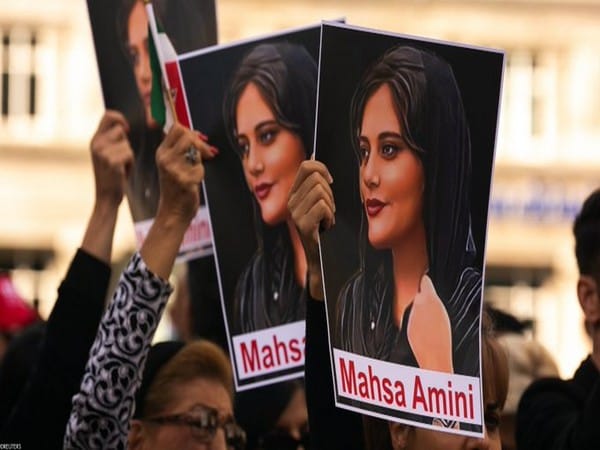
It becomes even harder to defend when we look beyond India. In Iran, 22-year-old Mahsa Jina Amini died in police custody in 2022 after being detained over Iran’s compulsory hijab rules. The protests that followed became a global revolt against the state’s right to dictate women’s appearance. In Afghanistan, the Taliban’s restrictions on women include compulsory dress codes alongside bans on secondary and higher education, severe limits on employment and movement, and systematic exclusion from public life.
India is not Iran or Afghanistan. Here, the hijab has become entangled with an altogether different politics: the BJP’s claim to be the liberator of Muslim women, conservative attempts to protect religious identity, and the communal anxiety attached to any visible marker of Muslimness. In this contest, women are perpetually spoken about and rarely listened to.
So naturally I find this celebration of the hijab as uncomplicated female empowerment somewhat bewildering. Hijabi influencers have transformed a garment associated with modesty into fashion, commerce and social-media identity. There is nothing inherently dishonest about that. But styling an old custom does not erase its history.
A corset can return as fashion; a ghoonghat can become an aesthetic; a hijab can be paired with sneakers and couture. Modern packaging does not automatically make an old social prescription modern just because it is being reclaimed as choice. Modernity also expects you to critically scrutinise, acknowledge the context in which the garment came about.
Feminism should be capable of holding two ideas at once: a woman has the right to make a choice, and that choice can still be shaped by patriarchy and conditioning.
The agency that women have now deserves a more nuanced language than simply asking whether she said yes.
The feminist project was never merely to replace one command with another: cover yourself with “this”, uncover yourself with “that”. It was to make the command itself obsolete.
Views are personal.
Feminism has gotten into your head and claimed your soul. That’s why you write such filth. What exactly do you know about Islam? What is your understanding of Sharia?
I can bet on it that you do not even know how many schools of jurisprudence exist in Islam. And here you are lecturing us on burqa and hijab.
Let me very clear on this. Just because we are a peaceful community it does not mean that you get to interfere in our affairs and mock our culture.
Let this be your first and last warning.