




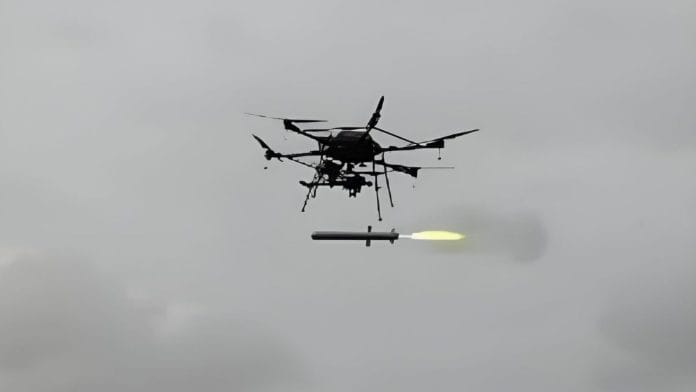

On the transparent battlefield, cheap drones and precision missiles are changing warfare faster than militaries can adapt. Drones cause 80 per cent of the personnel and weapon platform casualties in the Ukraine War, and missiles are crippling airbases, command centres, ammunition depots and energy infrastructure deep behind the frontline. Traditional air defence kinetic and electronic counter-measures are cost-prohibitive, particularly against much cheaper drones costing around $300-500 for the tactical drones and $20,000-50,000 for strategic drones.
While equally cheap fighter drones are redressing the balance against drones, there is no alternative to expensive air defence platforms against air and missile attacks. Consequently, long neglected passive counter air, missile, and drone counter measures have made an innovative comeback in Gaza, Lebanon, Ukraine and Iran wars.
Ideally, a judicious mix of both active and passive counter-measures is required, but Gaza and Iran have proved that survival against a superior adversary can be ensured with passive counter-measures.
Lessons for the Indian military
For the Indian Armed Forces, the lesson is stark. The next conflict with Pakistan or China will witness mass employment of drones, loitering munitions, cruise missiles and ballistic missiles across the tactical, operational and strategic spectrum. Frontline defences, artillery gun areas, ammunition dumps, fuel installations, bridges, railheads, airbases and logistics nodes will all come under persistent surveillance and attack. Transparency of the battlefield and the entire strategic depth compounds the vulnerability.
India is rightly focusing on active counter-measures such as air defence missiles/guns, fighter drones, jammers and lasers. But active systems alone cannot cope with large-scale drone and missile warfare. The economics are unsustainable. A drone costing Rs 50,000 cannot be countered repeatedly with interceptor missiles costing several lakhs or crores. Even advanced air defence systems struggle against saturation attacks involving drone swarms, decoys and simultaneous missile salvos.
The answer lies equally in passive defence — low-cost survivability measures that reduce vulnerability, absorb attacks and preserve combat power. In the absence of long-duration wars, India’s military thinking on battlefield protection remains rooted largely in the era of conventional artillery and occasional air attacks. Drone and precision missile warfare require an entirely new passive defence philosophy.
India, therefore, requires a layered passive defence architecture extending from forward trenches to strategic national infrastructure.
Traditional camouflage, concealment, dispersion and deception
In the era of short wars, traditional camouflage, concealment and deception have become a forgotten art. Any military man can accurately identify and plot all permanent defences and defence installations, even from commercial satellite maps/imagery. Thermal signatures picked up by thermal sensors of satellites/drones compound the vulnerability. The cost of precision missiles prevents massing of firepower like traditional artillery. The challenge for the defender is to prevent identification and location.
Ukraine and Iran wars have proven that natural and artificial camouflage, concealment, dispersion, deception and suppression of thermal, acoustic and electronic signals go a long way in the prevention of identification and location of targets. Technology also allows mass use of cheap fibre and inflatable decoys, complete with thermal and electronic signatures to divert and waste expensive precision missiles and all categories of drones.
US bases in the Persian Gulf disregarded the above tactical principle and paid a heavy price. Indian Armed Forces need to rediscover this forgotten art and culturally adopt it.
Also read: What do Chinese make of Su-57, RELOS & India-Russia defence ties? Marriage of necessity
Synthetic and metal nets
Conventional synthetic nets for defences, weapon platforms, vehicles, logistic installations and supply/movement routes have proved to be the cheapest and the most effective counter-measure against kamikaze or impact detonation drones. The propellers of the drones get ensnared, which stops the motor, rendering them ineffective or forcing premature detonation.
The scale at which these are being used is mind-boggling. All defences and static weapon platforms are covered with synthetic nets.
Individuals/small teams tactically moving on the battlefield carry quick to erect light synthetic nets. All logistics installations and supply/movement routes are protected by nets. This year alone, Ukraine aims to cover 4000 km of tactical roads with nets. Even cities are protecting critical power and other infrastructure with nets.
Synthetic and metallic cope cages and meshing are extensively used to protect tanks, Infantry Combat vehicles, guns and other weapon platforms. This is the most effective defence against First Person View drones, forcing premature detonation.
Needless to mention that the use of nets as an anti-drone measure requires specific techniques in terms of height and direction contingent on the angle of attack by drones.
From open-source photos and information, it is evident that the Indian Armed Forces use nets only as a traditional camouflage and concealment tool. Barring an odd image, even tanks and Infantry Combat Vehicles do not seem to be fitted with cope cages or metal nets. There were no reports of cheap Pakistani drones being ensnared by anti-drone nets during Operation Sindoor.
Most were shot down by very costly air defence missiles. For example, one Aakash missile costs Rs 2.5 crores. The cost of most modern air defence missiles used by India is similar. Vintage air defence missiles cost less but are now unreliable. Considering that Pakistan used nearly 600 attack drones, imagine the cost of interception, even if we assume that 20 per cent were shot down by cheaper air defence guns.
Nets are being extensively used over fruit orchards in India. Industry is already geared up to supply nets to the armed forces on a large scale. Mass use of synthetic and metallic nets by the armed forces and as a national civil defence measure is an inescapable requirement.
Also read: The Chetak & Cheetah fleet is ageing and dangerous. It’s high time to replace it
Subterranean warfare
One of the defining military trends of modern warfare is the return of subterranean survivability. The experience in the last five years, from Iran, Gaza, Lebanon and to some extent Ukraine, has demonstrated that the most effective defence against the air, missile and drone campaign of a superior adversary is the adoption of subterranean warfare.
Command posts, front-line defences, air/missile/drone/submarine bases and logistics have to go underground. Even the defence industry, producing critical systems, needs to go underground. Iran’s ability to maintain residual missile and drone capability as a deterrent despite the absence of an Air Force and a viable air defence capability is due to elaborate missile/drone tunnel bases created over the years.
The opening phase of future wars is likely to involve large-scale missile and drone strikes against tactical, operational and strategic military infrastructure, and critical industry. The physical protection of India’s Armed Forces does not cater for the transparent battlefield saturated with drones and precision-guided missiles. Even hardened aircraft shelters/bunkers are above ground.
Our defences and logistics installations stand out like sore thumbs, incapable of withstanding a high-end air, missile and drone campaign. Even the US paid a heavy price for not hardening its defences/bases in Gulf countries and had to vacate them in the face of a modest Iranian missile and drone campaign. There can never be enough air defence to defeat an air campaign.
India needs to develop a subterranean warfare doctrine and adopt it forthwith. Mountains are tailor-made for this warfare. Tunnel defences offer a pragmatic solution. India has the necessary expertise; all it requires is the will.
The most neglected aspect of India’s defence preparedness is the hardening of military infrastructure. Precision missiles are designed not merely to destroy frontline forces but to paralyse operational capability by attacking airbases, command centres, logistics hubs and fuel infrastructure. The opening phase of future wars is likely to involve large-scale missile strikes against Indian military infrastructure.
India’s existing hardened infrastructure remains inadequate for such a threat environment.
Also read: IAF isn’t India’s courier service—3 reasons it ideally shouldn’t fly NEET papers
The economics of survivability
The most important lesson of drone and missile warfare is economic.
The side that spends expensive interceptors against cheap drones will eventually exhaust itself. Passive defence reverses this equation.
A camouflage or anti-drone net, an underground shelter, an earth berm, a decoy vehicle or a hardened bunker may provide greater battlefield survivability than an expensive missile system alone. Passive measures are scalable, sustainable and continuously available without dependence on ammunition stocks.
India’s defence preparedness has traditionally prioritised offensive capability over survivability. Drone and missile warfare demand a correction. The next war may not be decided merely by who possesses superior firepower. It may instead depend on which military can survive persistent surveillance and sustained precision strikes while maintaining operational endurance.
India must therefore urgently launch a national military survivability programme focused on passive anti-drone and missile defences. This requires doctrinal reform, engineering innovation and organisational adaptation across all three services. Wars are increasingly becoming contests between detection and survival. The side that remains hidden, hardened and resilient will endure long enough to prevail. India cannot afford to learn this lesson after the next conflict begins.
Lt Gen H S Panag PVSM, AVSM (R) served in the Indian Army for 40 years. He was GOC in C Northern Command and Central Command. Post retirement, he was Member of Armed Forces Tribunal. Views are personal.
(Edited by Saptak Datta)
Socialist India cannot comprehend economic lessons.