






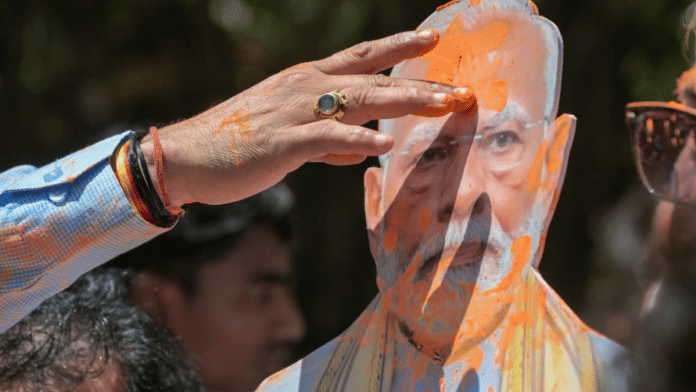

The tides had turned in 2019, but it took seven more years to breach the dam.
So momentous is the Bharatiya Janata Party’s victory in more than two-thirds of seats in the West Bengal legislative assembly that it will be dissected by academics and pollsters for the next few years to be understood properly.
Only the main currents of change can be deciphered at this point, a day after the results. What led to BJP’s emphatic win and such a drubbing of the Trinamool Congress (TMC)?
In the first instalment of this series, I pointed out three central factors that were expected to influence the results. These were the effects of the Special Intensive Revision (SIR) of electoral rolls, intervention by the Election Commission of India (ECI) on an unprecedented scale to ensure free and fair elections, and polarisation of voters.
The ECI factor
As far as the SIR is concerned, the only effect appears to be the removal of spurious entries in the electoral rolls, amounting to an astonishing 58 lakh. Since the management of the poll process is overarchingly dominated by the ruling party, it is reasonable to speculate that this removal affected the TMC more than other parties.
The impact of 27 lakh more people not being able to vote, as their names remained under adjudication as the poll commenced, is not clear. However, since no specific bias was found on the basis of community or party loyalty, it is unlikely that the overall results could have been much different.
Political parties remain at the centre of the discussions as they contest and thereafter win or lose. However, the ECI must be considered as the main player in the Bengal elections, which have attained an unmatched notoriety for violence during and after the polls. By continuing to shuffle bureaucrats at key positions before and during the polls, by efficient deployment of central forces and by micromanaging the poll process meticulously, the ECI ensured a level playing field for all the parties who had, until now, quite justifiably, complained about the different stages of the polling process being subverted by the ruling party. Moreover, the number of counting centres was reduced along with the tightening of security to prevent any foul play.
It was for the first time that Bengal did not witness any bloodshed during elections. From an average of 83 per cent, the voter turnout increased to over 92 per cent. What made this sharp increase unprecedented was not a reduction in the electoral base because of SIR. The number of voters increased by around 30 lakh despite the reduction in the total number of electors. People were keen to exercise their democratic right, aided by the sense of security provided by the ECI. Migrant workers travelled back to their home state in hordes. A greater share of women voted compared to men.
The stage was now truly set for a straightforward play of political factors without being obstructed by large-scale, organised intimidation or violence.
Beyond anti-incumbency
Compared to 2021, the number of votes received by the TMC declined by nearly 30 lakh. The BJP, on the other hand, increased its tally by over 63 lakh—obtaining 32 lakh more votes than the TMC. After hovering between 37-41 per cent vote share since 2019, BJP was able to increase its vote share to 45.84 per cent, a five percentage point increase from 2019. That made all the difference.
The change can be partly ascribed to anti-incumbency, but that is not the whole story. An opposition party obtaining 41 per cent vote share, just three percent less than the winner in 2019, reflects anti-incumbency. That it could cross the victory line after hovering around the threshold for seven years must have an explanation: voters being enabled to express their opinion fearlessly and unobstructed, through the ballot.
I had argued that anti-incumbency doesn’t work in Bengal the way it does in other states. The 2026 election points to the way elections were conducted and managed by the ruling party as being the main reason behind the anti-incumbency not being reflected in the results.
That, however, does not explain the sweep of the saffron brigade. It could as well have been a win by a narrow margin, but it wasn’t.
A quick analysis of the numbers throws up some fascinating trends that brought in the change at that scale.
Also read: BJP Bengal win dissolves the old Bhadralok order. It kept Dalits and their issues out
Consolidation, campaign shifts, and BJP’s final push
Perhaps the most critical trend was a consolidation of votes cast by Hindu voters. This is most strikingly visible in the increase in the BJP’s vote share in the constituencies with an overarching share of Muslim voters, such as those in Murshidabad, Malda, and Uttar Dinajpur districts. This, combined with other factors, propelled the BJP’s margin across the state. These factors include a movement of the Muslims away from the TMC in differing magnitudes in different areas toward the Left parties and the Congress, apart from other communal parties such as the All India Secular Front (AISF) and the recently formed Aam Janata Unnayan Party (AUJP).
Yet another factor likely to have had a serious impact on the results is the TMC’s constant emphasis on the cash transfer programmes as an alternative to employment generation. Its time-tested formula of a campaign strategy—primarily depicting the BJP as a party of outsiders—too fell flat, countered intelligently by the BJP. Although Prime Minister Narendra Modi and Home Minister Amit Shah remained the mainstay of BJP’s outreach programme, the local leadership played a far more active role compared to the previous elections. Their poll promises appeared realistic and appealing, and worked better than the earlier strategy of attacking Mamata Banerjee and poaching TMC leaders. These helped the BJP to remove the scepticism in the minds of the voters and crossover from being in the zone of uncertainty to having earned their trust.
The consolidation of Hindu votes, widespread concerns regarding lack of economic growth and lawlessness, several locality-specific grievances and further migration of votes from the Left parties and Congress toward the BJP ensured its victory in constituencies which were considered unbreachable, for instance Jadavpur and Bhabanipur in Kolkata. These factors worked equally effectively in rural and urban areas, in northern as well as southern Bengal, as evident from the changes in the districts of Bardhaman, Medinipur and Bankura region. The way Mamata Banerjee lost to Suvendu Adhikari for the second time, this time in her own constituency, shows how strongly these factors interplayed.
Victory being secured, the big question for the BJP now is about the next course of action. The strong mandate points to high expectations, which will not be easy to manage. The TMC still has a 40 per cent vote share and control of most of the municipalities, district administration and village panchayats, which the BJP can ignore only at its own peril, unless the former ruling party crumbles, being unable to absorb the shock of the defeat.
Although the BJP will need to hit the ground running, very few of its leaders have any experience in state administration. Moreover, the party will have to learn to negotiate with the bureaucracy from the state secretariat to the panchayat level. It will need a short-term plan to provide a sense of stable governance and efficient grievance management, apart from wading through these challenges.
In the immediate future, this might mean a strong involvement of the central government in managing the affairs of West Bengal, but the state leadership will have to scale up its game quickly on several fronts. It will be interesting to watch how the party sets up its cabinet and deploys its leaders at different levels for key posts. The window for managing the uncertain zone post the election victory might be narrower than perceived.
Chandrachur Ghose is an author, columnist, and public speaker. He is a Fellow of the Sir Jadunath Sarkar Fellowship for Indian History at the Foundation for Indian Historical and Cultural Research (FIHCR). He posts on X @ chandrachurg. Views are personal.
(Edited by Ratan Priya)