





Who would have thought that it would take Muhammad Ali Jinnah to resurrect Sheikh Mujibur Rahman in Bangladesh.
Two years ago, Bangladesh’s Gen Z not only brought down the Sheikh Hasina regime but also made her father’s legacy turn to dust. Literally so, as seven full-body sculptures of Bangladesh’s founding father Sheikh Mujib and a total of 1,492 sculptures, murals, and memorials dedicated to either him or the 1971 war of independence were pulled down or vandalised across 59 districts after 5 August 2024, when Hasina fled Bangladesh.
Dhanmondi 32, once Dhaka’s most famous address and Mujib’s personal residence where he was also assassinated, was set on fire and demolished.
Not just statues and houses, the marauding mob of mostly young men also lynched actor Shanto Khan, who had essayed the role of young Sheikh Mujib in the 2021 film Tungiparar Miya Bhai, along with his father Selim Khan, who had directed the film.
One would have thought that such rage against not just Sheikh Hasina but her father and their political party, the Bangladesh Awami League, would be the defining feature of Bangladesh’s politics at least in the immediate future.
Yet, two years down the line, even as Sheikh Hasina has announced her return to Bangladesh, there are strong indications that her father Sheikh Mujib will return to his rightful place in the nation’s collective memory. All thanks to the man Sheikh Mujib once looked up to and then loathed — Pakistan’s founding father, Muhammad Ali Jinnah.
A torn portrait, a raging debate
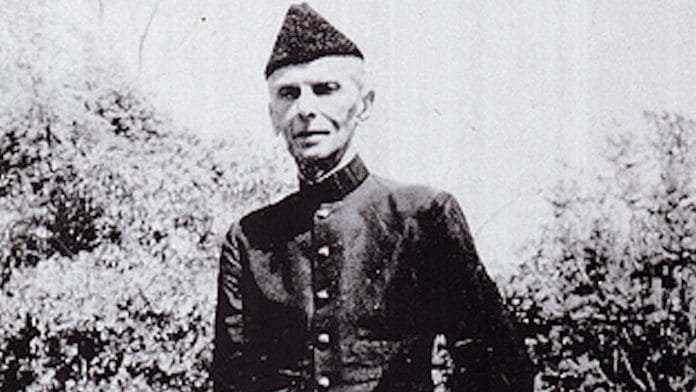
On 14 September, Bangladesh’s largest-selling English newspaper, The Daily Star, reported that Muhammad Abu Tayab, a student of Dhaka University’s Department of Urdu, entered the Dhaka University Central Students’ Union archive and smashed a frame containing a photograph of Jinnah. He then removed the photograph from the frame and tore it up.
“We have not forgotten 1971 or the Language Movement,” the paper reported Tayab as saying. Tayab asked why the “villain’s photograph” should remain at the archive and whether the students’ union manifesto had promised to “make Jinnah a hero”.
Tayab was not the only one to protest. Leaders and activists of the Students’ Federation of Bangladesh’s Dhaka University unit later handed Tayab a Dawn newspaper clipping featuring Jinnah, which he also tore up. “The federation later put up in the archive a photograph showing convicted 1971 war criminal and former Jamaat-e-Islami ameer Ghulam Azam being beaten with shoes by local people outside Baitul Mukarram in Dhaka on January 1, 1981,” The Daily Star reported.
After the students, the University Teachers’ Network condemned what they called “unauthorised and unlawful” renovations at the Dhaka University Central Students’ Union photo gallery from where several valuable photographs had been taken down, including those of “independence hero Sheikh Mujibur Rahman” and in their place a portrait of Muhammad Ali Jinnah had been installed.
On the removal of Sheikh Mujib’s photograph, the teachers’ network said, “Like any political leader, he is not beyond debate. However, removing his portrait from the museum at a time when resentment toward his daughter Sheikh Hasina is being projected onto him is not only insensitive but also a deliberate attempt to erase the true heroes from history.”
The anger inside Dhaka University over Jinnah’s portrait replacing Mujib’s is interesting to note as two years ago, it was the same Dhaka University from where the students’ uprising against the Sheikh Hasina government began.
It was on 5 June 2024, when students at Dhaka University staged a campus protest rejecting a high court verdict that had reinstated a 30 per cent civil service job quota for family members of 1971 independence war veterans.
That protest had snowballed into a mass uprising that eventually led to the fall of the Hasina regime. In post-Hasina Bangladesh, under the interim government led by Muhammad Yunus, not only was Hasina’s party banned, but many of the ideals of the 1971 war of independence were challenged.
In my 2025 book Inshallah Bangladesh: The Story of An Unfinished Revolution, I have written how anti-India sentiment was fuelled by members of the Bangladesh Jamaat-e-Islami, the National Citizen Party, and radical Islamist outfits and even by the Yunus administration itself even as an attempt was made to take Bangladesh closer to Pakistan.
Also read: Why diplomacy alone won’t work anymore for India-Bangladesh ties
Re-remembering Mujib
Choosing to gloss over his dismissal of Bengali identity, on 11 September 2024, Jinnah’s 76th death anniversary was commemorated at the National Press Club in Dhaka with Urdu songs and poetry. Speakers at the event highlighted that Pakistan would not have been created without him, and that without Pakistan, “Bangladesh too would not exist.”
Two years since then, the love affair with Jinnah seems to be waning. And as his legacy is being contested and the horrors of 1971 resurfacing, Mujib is being re-remembered.
Sangita Gazi, a lecturer at the Wharton School, University of Pennsylvania, told ThePrint that Jinnah’s role in the political creation of Pakistan is undeniable, but the trajectory from Pakistan’s founding to Bangladesh’s independence also makes his 1948 rejection of demands to recognise Bangla as a state language “part of the history of the political marginalisation that ultimately culminated in 1971”.
“Bangladesh emerged through its own nationalist struggle, with Sheikh Mujib at its political centre, and its historical narrative cannot be collapsed into the founding narrative of the state from which it separated,” Gazi said.
Bangladesh’s Gen Z is not a monolith. It may be too early for some to forget the excesses of the Hasina regime. But for those who are opposing attempts to normalise Jinnah in new Bangladesh, the fallback option by default is Sheikh Mujib, who began and won the war for self-determination in Bangladesh.
Deep Halder is an author and a contributing editor at ThePrint. He tweets @deepscribble. Views are personal.
(Edited by Aamaan Alam Khan)