








History often delivers its harshest judgements not through fiery speeches or political manifestos, but through the silent migration of capital.
Money possesses neither sentiment nor nationalism. It seeks stability, predictability, and opportunity.
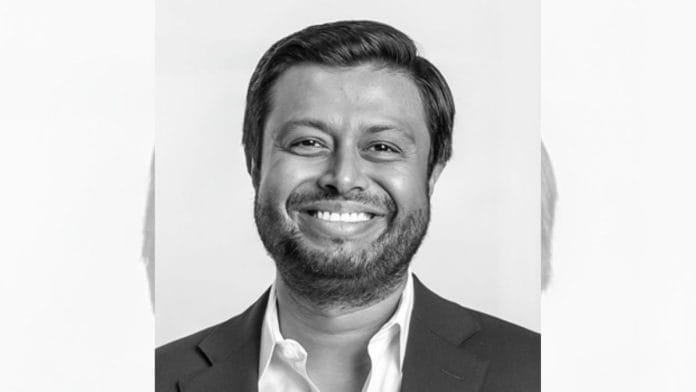
In that sense, the extraordinary journey of Bangladeshi-born entrepreneur Robin Khuda offers both inspiration and an uncomfortable lesson for Bangladesh.
Born in Dhaka and educated at Sher-e-Bangla Government High School and SOS Hermann Gmeiner College Dhaka before pursuing higher studies at the University of Technology Sydney (UTS), Robin Khuda epitomises the transformative power of knowledge and vision.
From his early career in cloud computing and telecommunications to leadership roles at SingTel Optus, Fujitsu, PIPE Networks, and NextDC, his journey culminated in the creation of AirTrunk, one of the Asia-Pacific region’s largest hyperscale data centre enterprises.
Today, AirTrunk operates across Australia, Japan, Hong Kong, Malaysia, and Singapore, and is building data centres in Saudi Arabia in partnership with Humain.
Yet perhaps the most striking chapter in Robin Khuda’s extraordinary saga lies not in Australia, but in neighbouring India.
While many in the Indian subcontinent remain trapped in sterile slogans and empty passions, Robin Khuda is investing tens of billions of dollars in India’s digital future.
His ambitious plans to establish nearly five gigawatts of hyperscale data-centre capacity in India represent one of the largest technology infrastructure undertakings in the region.
These investments are designed to power the artificial intelligence revolution and shape the architecture of the 21st-century digital economy.
Why not Bangladesh?
The answer is painful, but necessary.
Investors do not seek emotional attachment; they seek confidence. They seek legal certainty, institutional stability, infrastructure, policy continuity, and social harmony.
No amount of patriotic slogans can substitute for these indispensable prerequisites.
Had even a fraction of these investments found their way into Bangladesh, the country might have experienced a technological renaissance.
A multi-billion-dollar data ecosystem would have generated thousands of high-skilled jobs, transformed digital infrastructure, and positioned Bangladesh as a strategic hub in the global AI economy.
Yet investment is fundamentally a matter of trust.
Confidence cannot flourish amid uncertainty. Capital recoils from political turbulence, policy inconsistency, social unrest, and institutional fragility.
Entrepreneurs and multinational corporations evaluate risks with cold precision. They examine whether long-term projects can survive changing governments, shifting regulations, and societal disruptions.
Robin Khuda’s decision, therefore, should not be interpreted as a rejection of his homeland.
Rather, it serves as an uncomfortable but invaluable lesson. His choice reveals what the world sees when it assesses Bangladesh’s investment climate.
India, under its current economic strategy, has aggressively positioned itself as a destination for global technology capital.
The country’s leadership has focused on infrastructure, digital ecosystems, regulatory reforms, and partnerships with international corporations.
The results speak louder than speeches. Confidence attracts capital; capital attracts innovation; innovation generates prosperity.
Also read: Mamata Banerjee’s Osman Hadi killing speech has put India in a geopolitical mess
Capital has no birthplace
Bangladesh, too, possesses immense potential. Its youthful population, strategic location, and entrepreneurial spirit constitute powerful assets.
But potential alone does not create prosperity. Prosperity emerges when institutions inspire confidence and governance creates predictability.
Perhaps the most poignant aspect of Robin Khuda’s story lies in his philanthropy.
His generous contribution to the University of Technology Sydney to expand opportunities for women in science and technology reflects a belief in education and inclusion as engines of national progress.
Such investments remind us that societies advance not by restricting knowledge but by expanding it.
The story of Robin Khuda ultimately transcends one businessman or one country. It is a mirror held before Bangladesh itself.
Nations compete not merely for territory or prestige, but for trust. In the 21st century, confidence has become the most valuable currency.
If Bangladesh wishes to attract the Amazons, Googles, Microsofts — and indeed, its own sons and daughters — it must create an environment where vision feels secure, innovation feels welcome, and investment feels protected.
For capital has no birthplace. It has confidence.
And confidence, once lost, is infinitely harder to recover than billions of dollars.
Anwar A Khan is a Bangladeshi freedom fighter of 1971 and an independent political analyst based in Dhaka. He writes on politics and international affairs. Views are personal.
(Edited by Aamaan Alam Khan)