







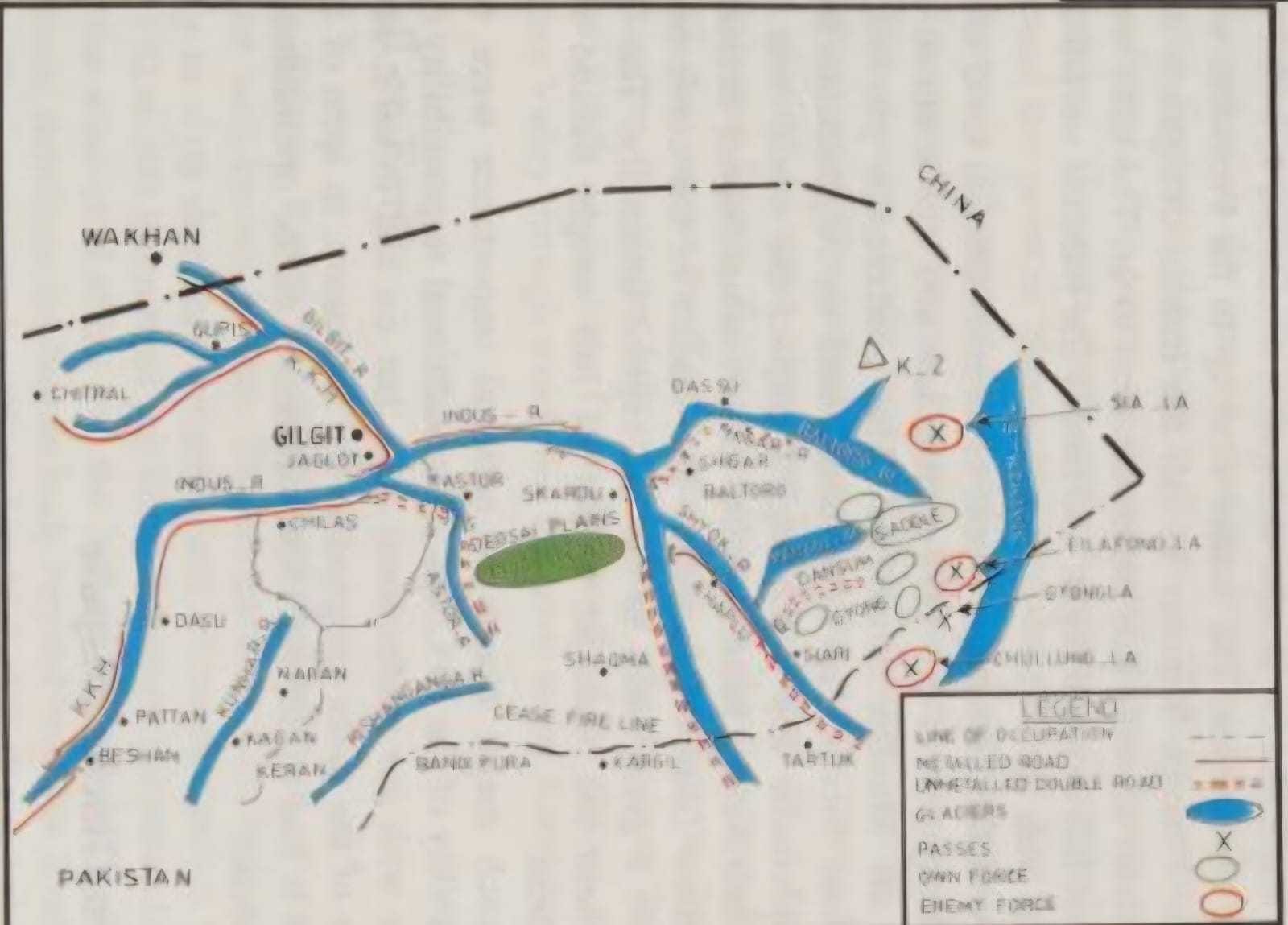
The Saltoro Range is the natural geographic divide and watershed separating the Indian and Pakistani positions in the Siachen glacier region. The glacier itself, ensconced between the Saltoro on its west and Eastern Karakorams on its east, looks like a worm winding its way between the mountains with several tributary glaciers joining it on either side. Therefore to approach Siachen from the Pakistan controlled side one has to ascend the Saltoro along its western slopes, cross it through one of its many passes and then descend down its eastern slopes. Traditionally mountaineering expeditions did this cross over from Bilafond La (17,881 feet), the widest pass lying towards the center by gradually ascending the Bilafond Glacier and descending the Lolofond Glacier. However some expeditions went further north ascending from the Kondus glacier valley and then gradually coming down to Siachen from Sia La (18,337 feet). A third pass, Gyong La (18,655 feet) towards the southern edge of the Saltoro was rarely used because the descent from this region is very steep with near vertical ice walls and jagged peaks on the way. The pass itself, in the form of a small saddle lies on a ridgeline which is higher in altitude than the line at Bilafond La and Sia La. Since no immediate threat was anticipated from Gyong La, the initial tasks assigned for Operation Meghdoot by the Indian Army Head Quarters on 31 March 1984 included securing Bilafond La and Sia La with no reference to Gyong La.
Once Bilafond La and Sia La were swiftly occupied by India within the first two weeks of the Operation, the only route left for Pakistan to cross the Saltoro was Gyong La. Therefore it was natural that it made a dash for it given the easier access to the pass from its side. Even though Siachen itself is not visible from Gyong La, and any movement across it with a sizeable force would have been very difficult, yet the occupation of dominating heights in the Gyong Area would have given Pakistan a chance to threaten Indian positions around it.
Despite its best efforts, Pakistan was unable to achieve this objective, notwithstanding its head start because 19 KUMAON stood in its way. While much is known about the capture of Bilafond La and Sia La, what stands out is the striking scarcity of literature on the capture of Gyong La and the role of 19 KUMAON in the Sector.
UNNIS and Gyong La: The perception
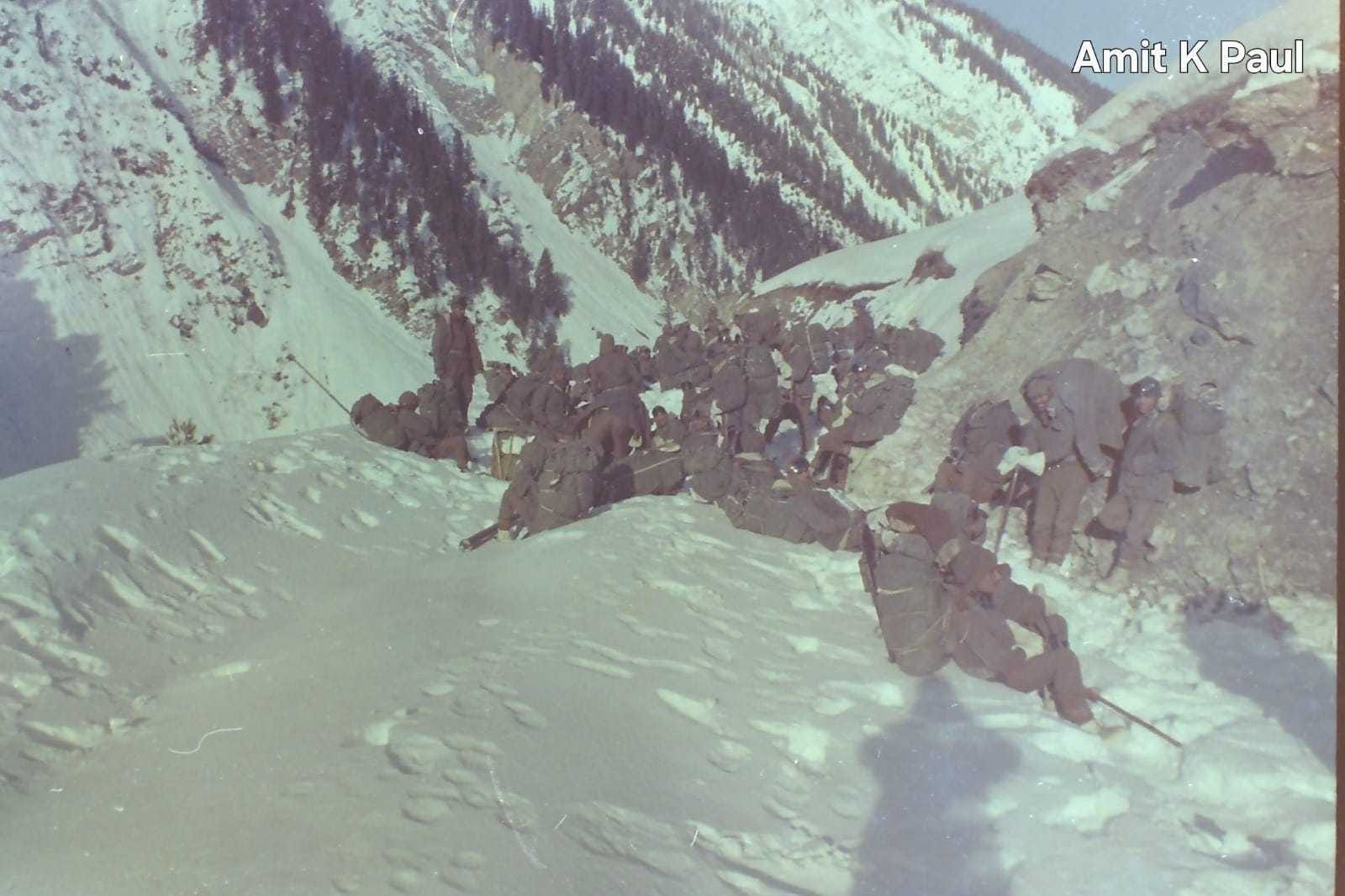
The occupation of Gyong La by 19 KUMAON has been best described by Nitin Gokhale in his book Beyond NJ 9842-The Siachen Saga where he writes that on 22nd April 1984, Lt. Gen. Chibber visited the area of Operations and after an extensive aerial survey directed that patrolling of all Southern Glaciers including Gyongla, Lagongma,Layogma, Urdolep and Korisa be carried out to counter infiltration attempts by Pakistan and enemy be prevented from establishing a foot hold on the Saltoro Range and any area east of it. Following these directives Lt. Gen. Hoon issued instructions to expedite movement of troops to the Saltoro crest line especially to Gyong La and directed one company of 19 KUMAON to move to the crest line at Gyong La. However the progress of this company under Lt Col D K Khanna was rather slow and by 20 May, after 14 days of marching from the base camp the troops were still moving in the general area of the administrative base. Brig.Channa during his aerial reconnaissance of the ridge line had seen a small group of Pakistani personnel in khaki and dark clothing around saddle 6646. No tents or field fortifications were seen. The enemy had apparently secured a foothold on Saddle. The Sector Commander directed CO 19 KUMAON to move towards the crest line at the earliest and if possible, to engage the enemy by maneuvering troops to a suitable vantage position, or by physical action. This column reached the line after 18 days of marching. Finally, by the first week June 1984, one Company of 19 KUMAON consolidated its position on Gyong La. The occupation of Point 5705, OP Hill, the Ring Countour and the eastern slopes of point 5965 meant, the complete area south and west of the crest line came under India’s domination.
Implicit in this detailed narrative is the contention that UNNIS started marching towards the crest line of Saltoro near Gyong La somewhere around 6 May (20 May-14 days) but did not reach it till the 24 May thereby taking almost 18 days to do what ought to have been done in 5 to 6 days. As a consequence, Pakistan was able to establish a foothold on the ridgeline.
However a reconstruction of the event sequence-drawn from interactions with key personnel, review of the official records and corroboration with contemporaneous evidence reveals additional facts which are at divergence from the discourse and therefore warrant consideration. This holds, even though people recalling long-ago events often find dates, times and personalities blurred.
Also read: Operation Sindoor 2 could unfold in 5 yrs. Pakistan is learning from Iran
The Journey Begins
In March 1984 only two Companies, one each from the Ladakh Scouts and 4 KUMAON were at the disposal of Brigadier VN Channa, Sector Commander, 26 SECTOR for the Siachen Operations. Even though Brig. Channa was confident of handling the situation and felt there was no need for any outside backup , the top brass at the Northern Command decided there should be a reserve force in case of any contingency. At this time 19 KUMAON was stationed at Khrew, near Srinagar. Since this battalion had earlier operated at high altitudes of more than 20,000 feet at Gorichen in Arunachal Pradesh, it was felt that its experience would be invaluable for this Operation. Additionally, being located in the same State, it could be inducted swiftly without making too much noise. Therefore it was decided that CO 19 KUMAON with two companies would be relocated at Sasoma to cater for any situation which may arise in the area of the Siachen glacier while its 2IC with two Company groups would be suitably relocated and dedicated as reserve for Turtok Area.
Around 14 February 1984, the Corps Commander, Lt. Gen. Hoon informed Col. DK Khanna, the Commanding Officer of 19 KUMAON that it should start preparing for an important operational task in snowbound areas and be ready to move any time after 15 March 1984. This left it with just about a month to prepare. With a sense of urgency setting in at the battalion headquarters, all leaves were cancelled, all personnel already on leave were recalled and all soldiers on duty outside the battalion were directed to be returned to the unit. Critical equipment deficiencies were made up and an extensive training regimen put in place to toughen the battalion, sharpen their basic skills of shooting in high altitude, and improve their ability to operate in snow and cold conditions.
‘UNNIS’s induction in the Sector was to be done in complete secrecy. No situation reports were to be filed through the Corps of Signals, no radio communication was to be done, and the move was not to be reported internally to any Department. We were to give the impression that there was no additional induction of troops in that area and there was only one KUMAON battalion in the region. In fact years later when Lt. Gen. Jahan Dad Khan, the Pakistani Corps Commander wrote about Pakistan not being able to detect the movement of an entire battalion in the region and called it a massive intelligence failure, he was talking about us’, says Brigadier DK Khanna (Retd).
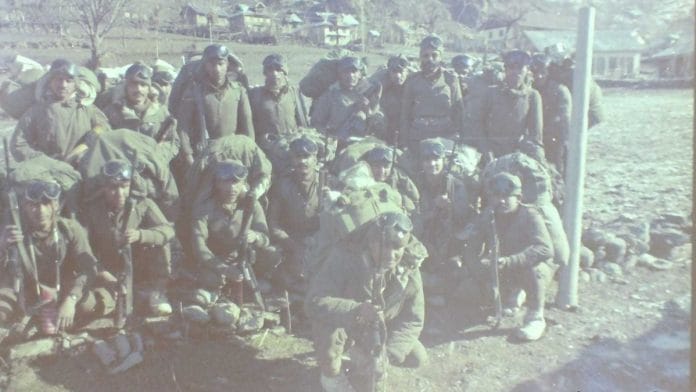
On 18 March, fourteen officers, 20 JCOs, and 474 other ranks of UNNIS assembled at the Kalika Mata temple and after seeking her blessings started their journey from Khrew towards the Siachen Glacier, almost 630 kilo meters north to stand in as a reserve battalion of 3 DIV at the disposal of the 26 Sector Commander. Taking the Khrew-Srinagar-Sonamarg-Zozi La-Kargil-Leh- Khardung La route, UNNIS was expected to reach Sasoma in the shortest possible time. With both Zoji La and Khardung La under 40 feet of snow and no movement of vehicles possible, UNNIS crossed them on foot with full battle loads.
On 26 March 1984, Col. DK Khanna attended Exercise Walnut Cracker at the Corps Headquarters in Srinagar where the Siachen plans were war gamed. ‘Since the conventional route to cross the Saltoro Ridge from the other side was from Bilafond La and Sia La therefore the immediate focus was to occupy these passes quickly. The threat through Gyong La was in the assessment of the Command and the Corps Headquarters but it was down played by the Sector. Had it been acknowledged, they would have certainly planned for it and made the same preparations for occupying Gyong La as they did for Sia La and Bilafond La by providing proper equipment, chopper and logistic support ’, explains Khanna.
Around 18 April, the last column led by Major DL Julka arrived at the Sasoma camp established by UNNIS on the banks of river Nubra and by 26 April this camp was shifted to Warshi. ‘Since no immediate operational tasks had been assigned to us, we used this time to concentrate on acclimatization, basic training, physical fitness, and zeroing of all weapons. Around 25 April we received the good news that Captain Roshan Lal Yadav, an officer of UNNIS along with selected ski troopers from the Corps had linked up with the forward patrol base at Sia La and unfurled the tricolor at Indira Col’, remembers Khanna.
The patrolling commences
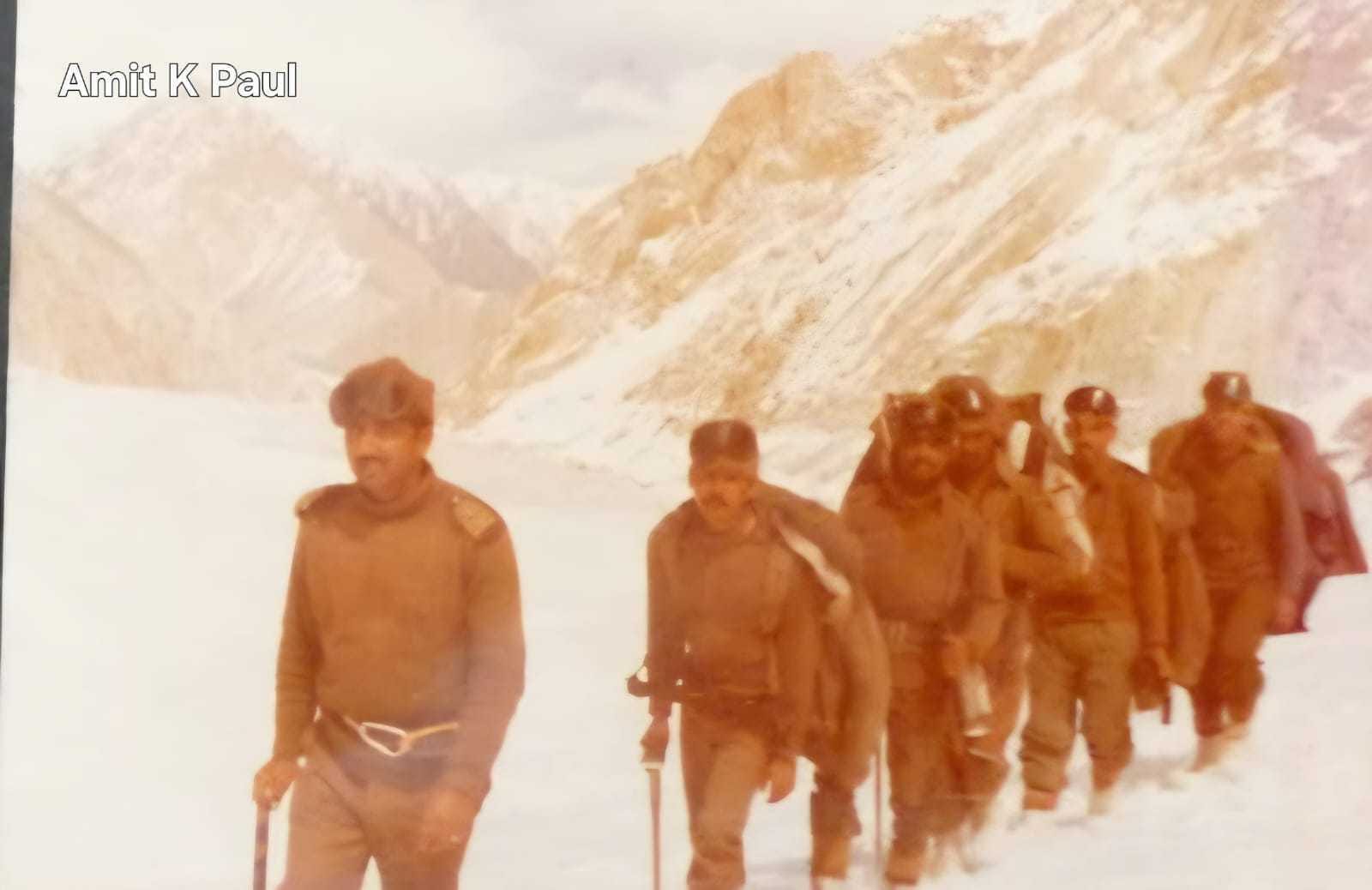
Around 26/27 April, after the plans were approved by the Sector Commander, UNNIS started patrolling the Siachen Glacier region. While B Company was made responsible for Gyongla and Dzingrulma, D Company was given the charge of Lagongma and Layogma. Each patrol was to be of a platoon strength and initially these were to be day patrols only. Any overnight camping would have increased the administrative problems therefore platoons were to be turned over every day. Brig Khanna explains, ‘anyone who has served at Siachen knows that the glacial region we are talking about is not small and the surface of the glacier is very deceptive. Crevasses and fissures may be hidden under soft snow giving the impression that it is flat and even. The only way to negotiate these, in the absence of ladders, is to go all the way around them. A visible crevasse like a known enemy is less dangerous than a hidden one, where one can fall into the unknown without warning. The effects of terrain, weather, and the extremely high altitude restrict mobility and movement is slow, tiring, and dangerous. A few meters can take from minutes to hours. Troops were normally self-contained during the move and heavily loaded. The avalanche-prone areas were usually crossed early in the morning, as this is when the ice is at its hardest and the probability of an avalanche is reduced. Initially, troops walked to the new location with light loads- with only their weapons and ammunition and a pick, shovel and ice axe to beat the snow and open the route, established a temporary camp at the new location, and returned to their old base by evening. The next day, they would ferry their heavy loads to the new camp via the path created the previous day’.
Also read: Al-Qaeda’s new empire rising in Mali. Europe, US, Russia failed to halt its rise
Point 5385
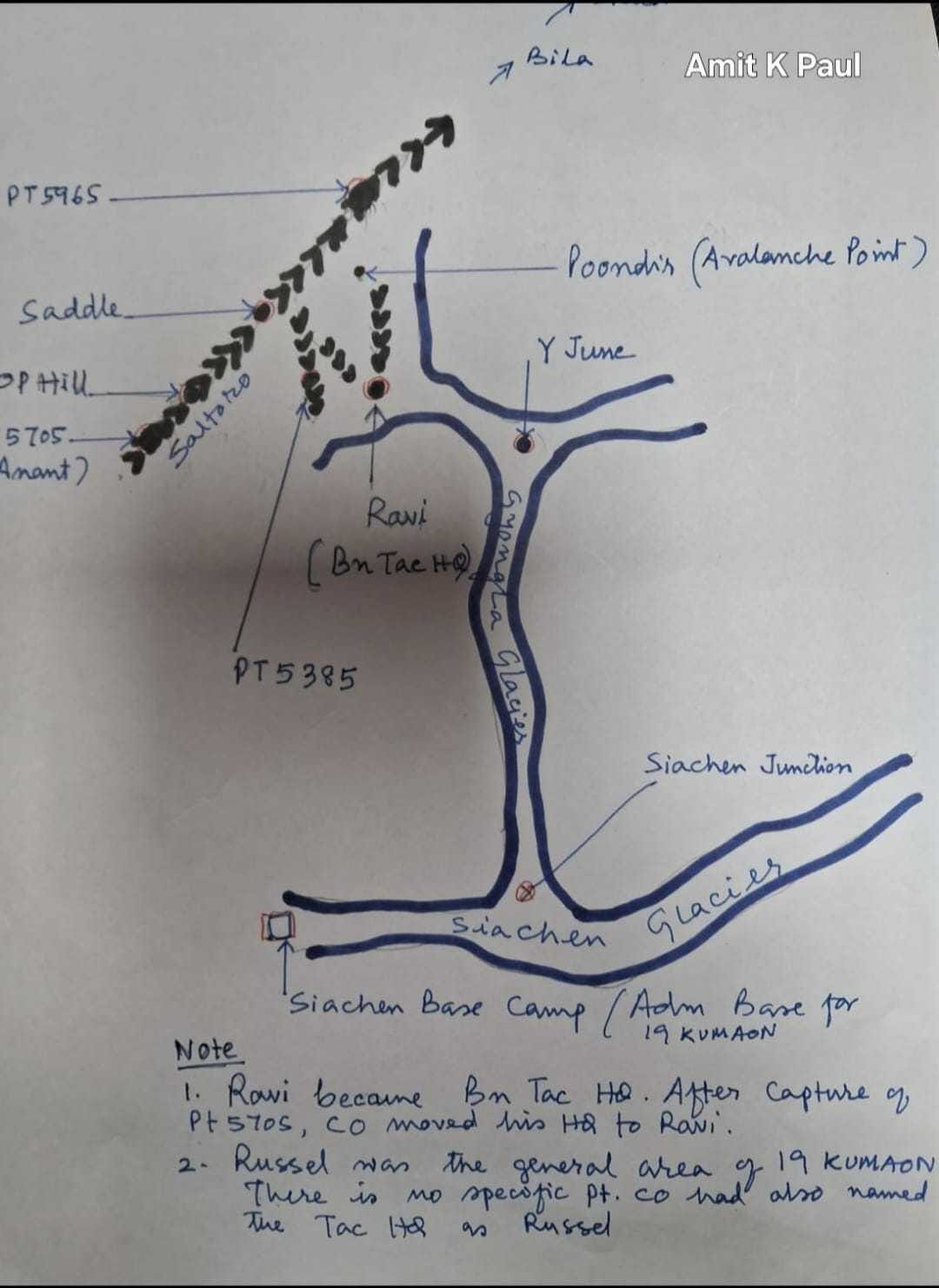
Around 3 May, the B Company led by Major Ravi Negi established a patrol base PB (Ravi) at the base of Pt 5385 at a height of about 17,000 feet. ‘Located near the Yankee junction, this area gave us a vantage position to check any movement towards this side from the ridgeline’, recalls Col. Ravi Negi (Retd.)
While there is no reference to any order of 6 May 1984 passed by the Sector Commander anywhere directing UNNIS to occupy the Saltoro ridgeline, both Brigadier Khanna and Col. Negi vividly remember the events of that day. ‘Around 6 May, we received a call from the Sector Commander who wanted immediate action to occupy the crest line through all the glaciers. He told me to go as far as human endurance makes it possible and I informed the CO as soon as he returned to the base’, recollects Col. Negi.
‘When I heard this I was surprised because unlike Bilafond La and Sia La, Gyong La had not been reconnoitered before. The ridgeline in this region is at an average height of 20,000 feet and we did not even have the basic mountaineering equipment needed to climb in the given conditions -no avalanche cords, proper boots, crampons or aluminum ladders. We were making good with the normal ECC equipment. Occupying those height would require staging camps with proper administrative and logistic support. While the men were ready, their clothing, shoes and equipment had all started showing wear and tear. Nevertheless, I worked out the details and spoke to the Commander. Thereafter I asked Major Negi to lead the patrols from the PB (Ravi) in either direction as far as he could traverse towards the ridge line’, explains Brig Khanna.
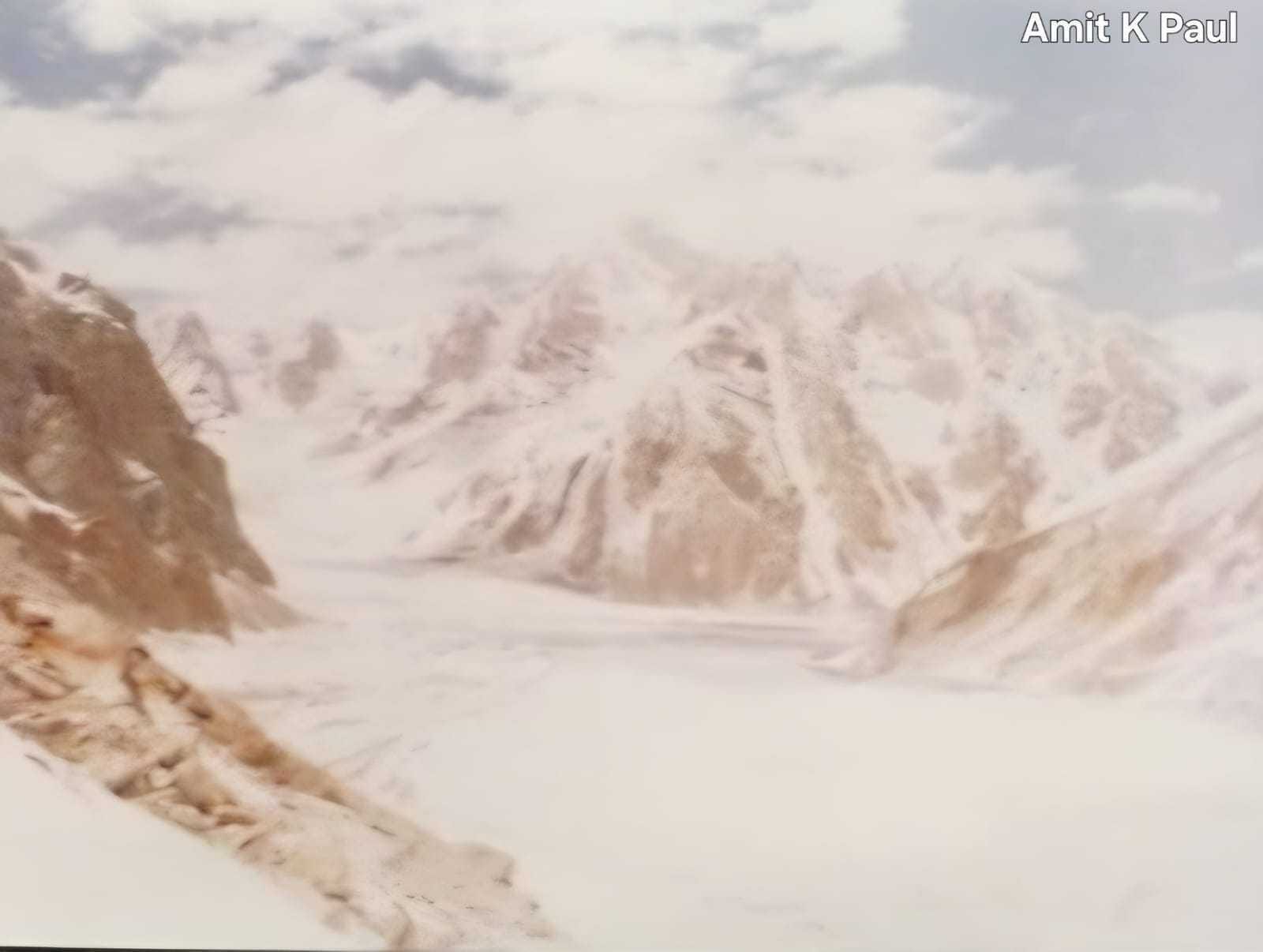
Major Negi took a team of 4 to 5 men and proceeded to patrol the glaciers near the Y junction and tried to approach the ridgeline. ‘I remember going as far as possible towards the right but after a point of time nothing was visible. Everything was white. I gathered some stones with the men and made a ‘maana’ so that it could be seen from the air and turned back as it was impossible to proceed ahead. I apprised the CO as well as the Commander that even if one or two people cross over into this region from the other side it would be impossible to sustain any force without being checked by our position near 5385’, states Col. Negi.
On 10 May the Northern Army Commander directed GOC 3 Infantry DIV that all possible approaches between NJ 9842 along the Saltoro Ridge up to Indira Col. be dominated by own patrols; possibility of deploying mountain/field guns at Base Camp for covering approaches along Lagongma and Layogma glaciers be examined and move of one 75/24 mm Gun/HOW to support troops at Gyong La be undertaken.
19 May 1984: Enemy sighting by the Sector Commander during an aerial recce
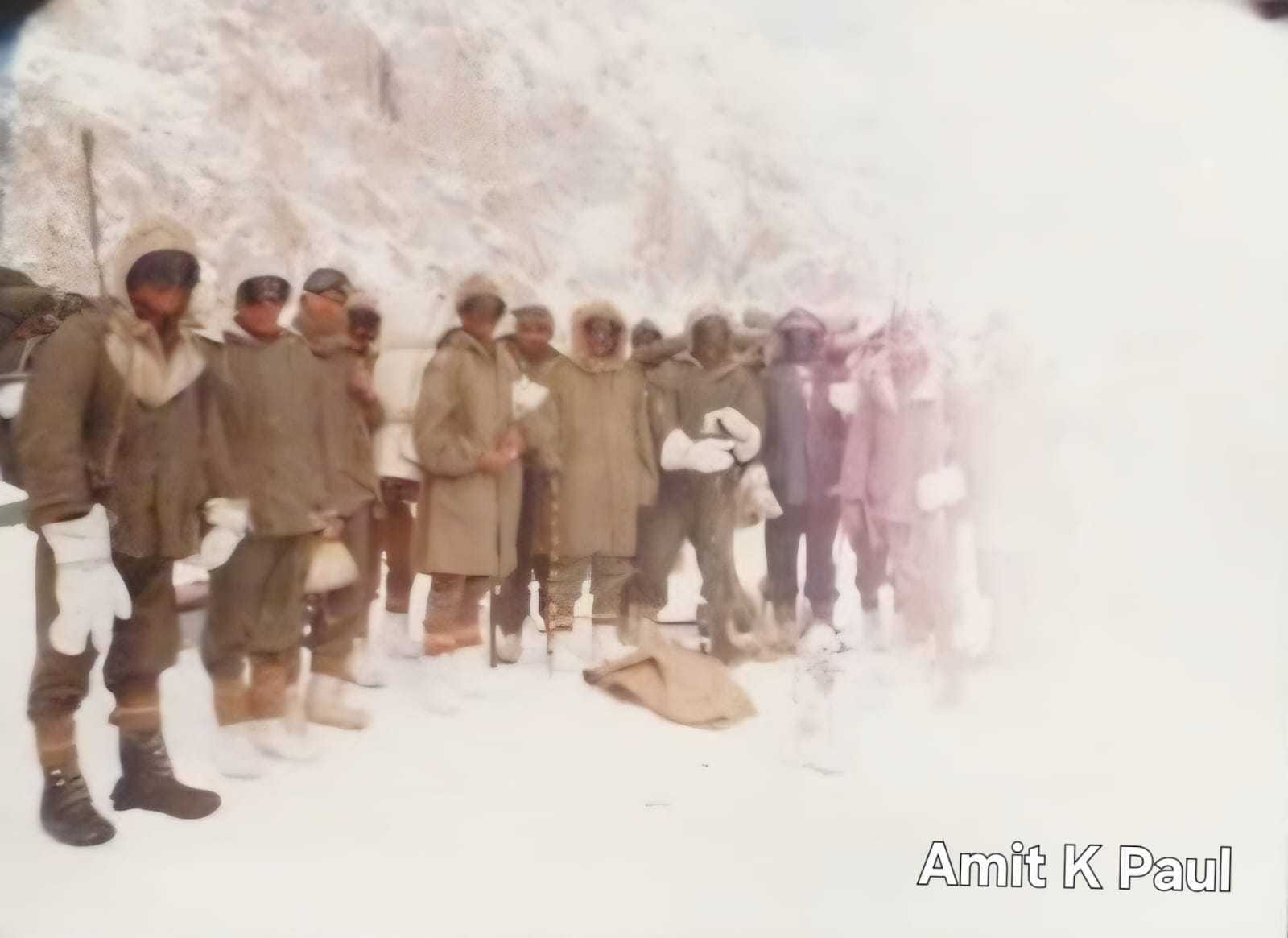
Around 19 May at about 1230, the Sector Commander landed at the Battalion Headquarters after flying over the three glaciers and asked Col. Khanna to send a platoon up the Ridge as he had seen small groups of Pak personnel in khaki and dark clothing somewhere in the area saddle 5646. Khanna was also directed to join the Gyong La Patrol and engage with the enemy. Accordingly patrolling was intensified. ‘We were desperate to find the location of the enemy and were hoping they would expose themselves even if it meant exposing ourselves. By this time I had moved to PB (Ravi) and it became UNNIS’s Tactical HQ in the region. One platoon under 2/Lt Anant Bhuyan was kept ready to move at short notice should the elusive enemy be spotted’, recalls Brig. Khanna.
Also read: India’s close encounters with Pakistan on Siachen
Occupation of Pt 5705
Around 22 May the Sector Commander landed at the Administrative Base and met Subedar Harak Singh since Col. Khanna and others were out for routine patrolling. The Commander had seen the enemy again and directed the JCO to send one platoon to the crest line immediately. Pursuant to this, in the evening itself one section led by 2/Lt Anant Bhuyan was sent to occupy Point 5705 on the Saltoro range to dominate the saddle where the enemy had been sighted by the Sector Commander during his aerial recce. After a steep climb and trek of nearly eight hours, carefully navigating overhanging ice ledges which could break at any time and trigger an avalanche, this section reached the base of point 5705 by 23 May and by 24 May the entire platoon had firmed in on it. While consolidating his position on 5705, 2/Lt Bhuyan came under enemy fire and retaliated as now the location of the enemy was known. He also observed that the enemy fire being directed at his position from the far end of the saddle region was being guided from what appeared to be an Observation Post (OP) about 300 mtrs ahead of him. ‘I informed the base that unless we occupy this OP on the hill (OP Hill) it would be difficult for us to dominate the region and check the enemy at the far end of the saddle’, recalls Maj. Gen. Bhuyan (Retd).
‘Anant was a young officer, not even 21 and with just about four months of service. Though he had successfully occupied and consolidated our position on the ridgeline at 5705, for evicting the enemy from OP Hill and saddle I asked the CO to send in some one more experienced. It was then that we decided to send Captain Sanjay Agarwal for the task’, recollects Col. Negi.
‘Occupy 5965’
Around 24 May, the Sector Commander relayed a message to Col. Khanna through the Adjutant Captain Ajit Samuel to occupy Point 5965 with a platoon to dominate the saddle region. Col. Khanna immediately sent a personal message apprising the Commander that it would be possible to clear the enemy from 5705 itself as it was dominating the ridgeline and had a clear line of sight. Simultaneous with the occupation of 5705, Col. Khanna started preparing to evict the enemy from the saddle. Major S R Mahajan was directed to set up a staging camp between PB (Ravi) and 5705 and Captain Sanjay Aggarwal was asked to proceed to 5705 for the offensive with an MMG.
On 25 May the GOC and the Commander landed at the Administrative Base. Col. Khanna explained that his plan was to build up strength at 5705 and then launch an offensive to evict the enemy from OP Hill and dominate the saddle. However the same evening, he again received a message from the Sector Commander through the Adjutant to immediately occupy Point 5965 with a platoon. Even though not convinced about its feasibility, Col. Khanna reluctantly agreed when 2/Lt Poondir volunteered for the task knowing fully well that would be very risky to do so with the kind of equipment and wherewithal at their disposal. On 27th May 2/Lt Poondir and 17 other ranks of UNNIS, after mustering all the equipment and gear they could lay their hands on, commenced their trek towards point 5965.They spent their first night near Pt 5385 and second night near the base of Pt 5965.
‘I used to speak to Poondir twice a day, once at 5 am before they set out for the day and once at 6 pm when they reached their destination. However, on 29 May, there was no contact. The maintenance party which had gone to rescue Hav Bhagwat Singh who had fallen into a crevasse reported that it had seen sleeping bags and other equipment strewn all over the glacier. I immediately informed the Sector and a helicopter was sent for the search. Simultaneously a search team also started moving up from the base’, remembers Khanna.
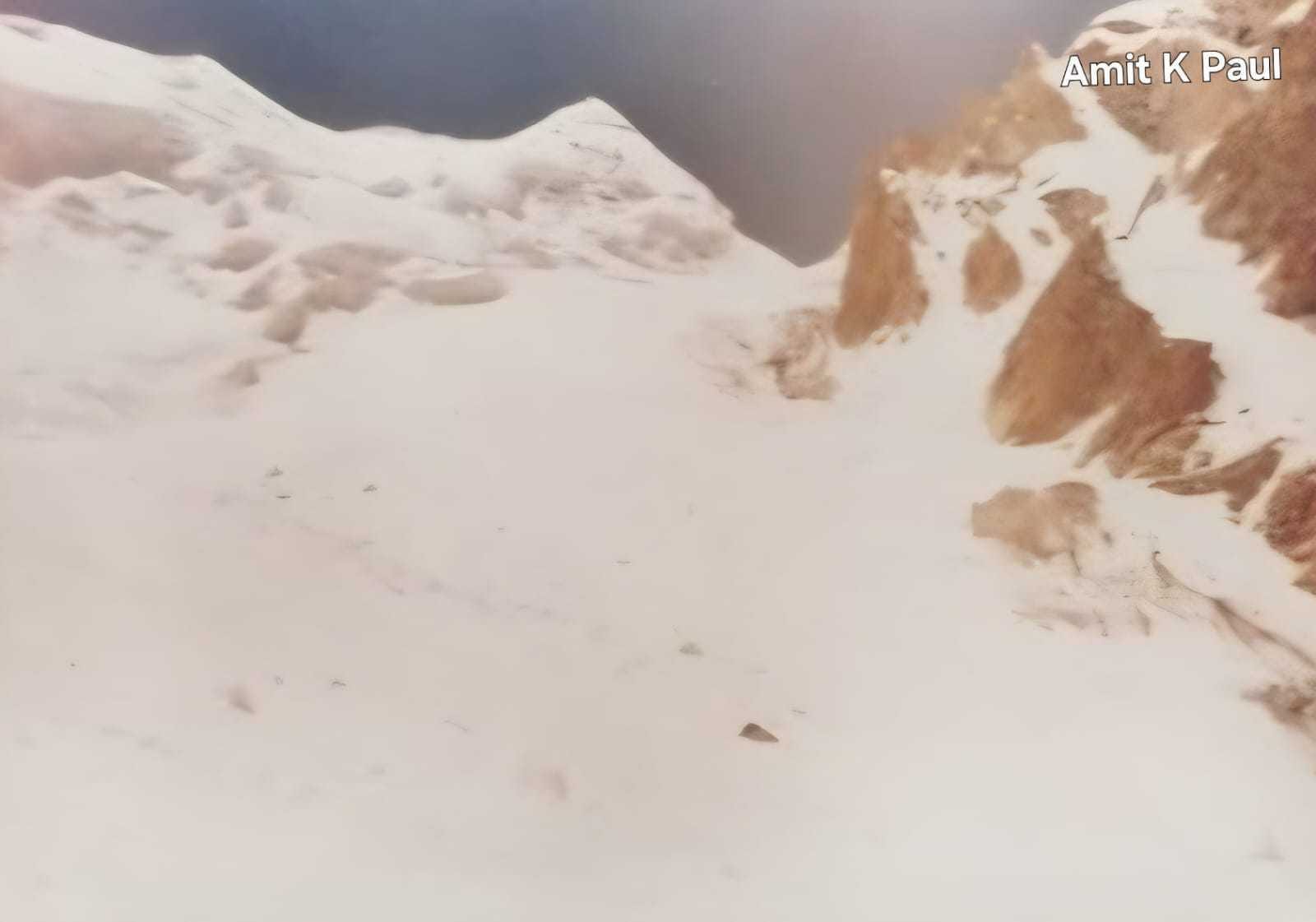
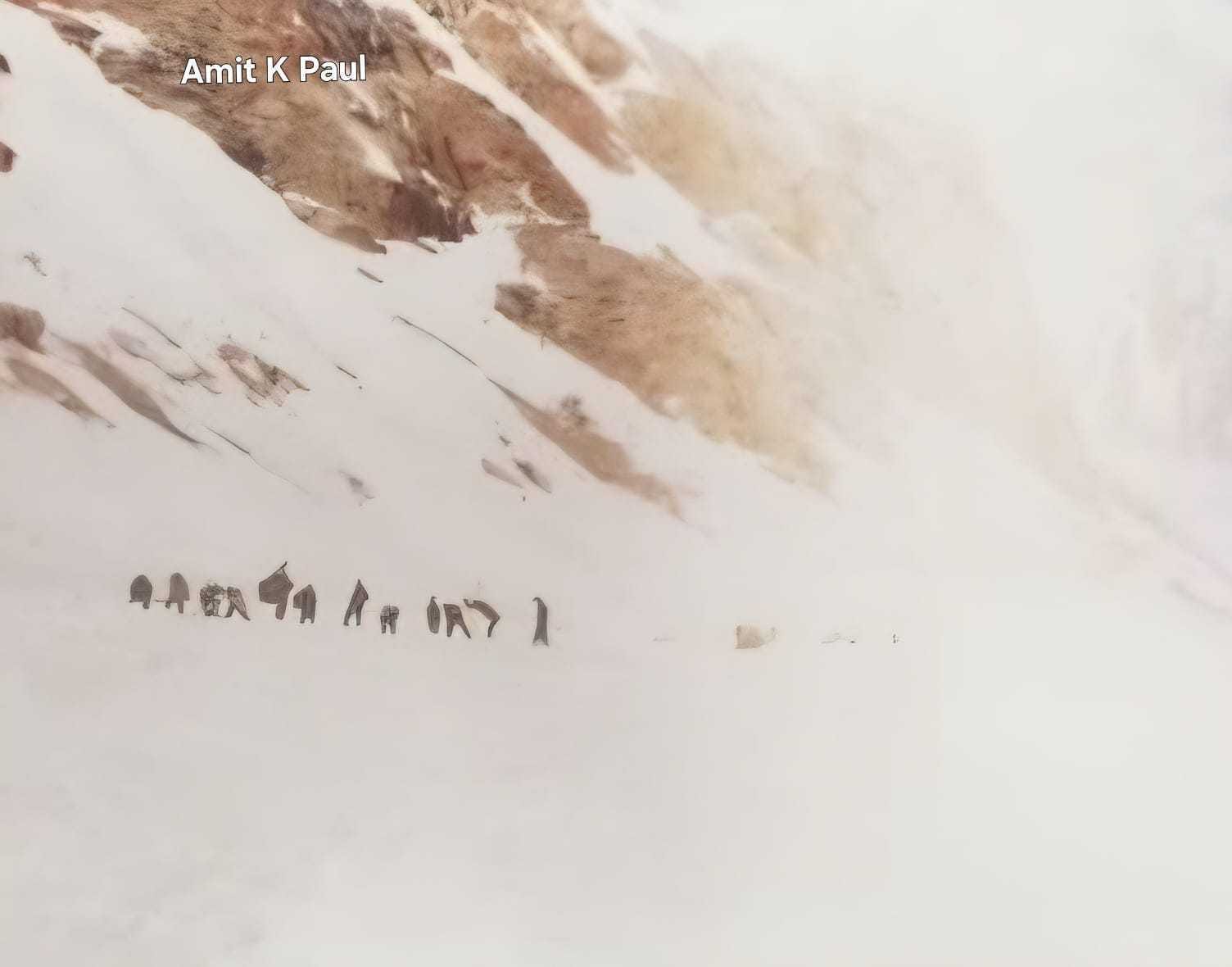
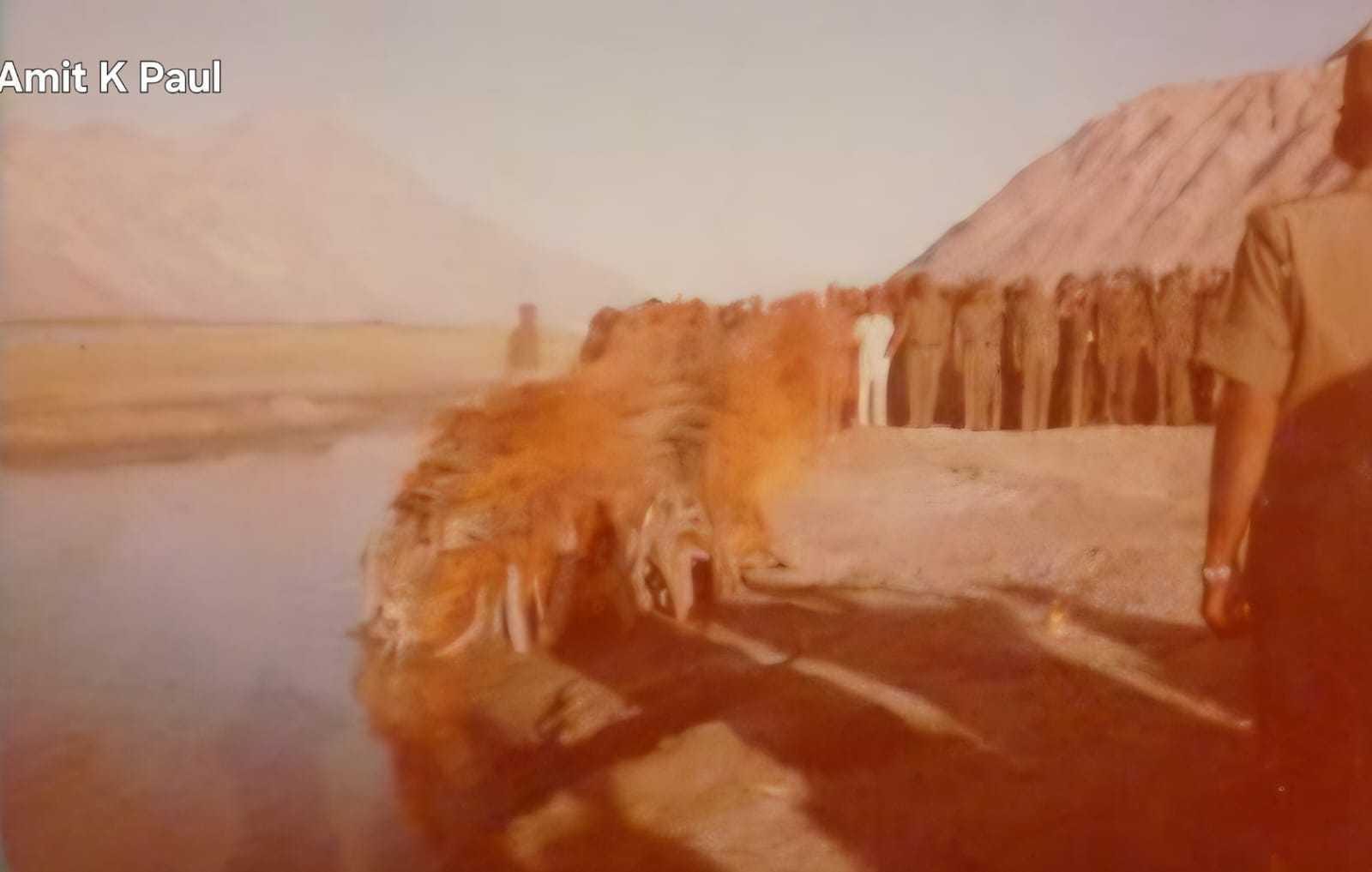
‘Our worst fears came true when the body of Sepoy Pushkar Singh was found. All 18 men of the patrolling party led by 2/Lt. Poondir had perished in an avalanche which occurred sometime in the night of 28/29 May burying everything and everyone. Thereafter almost every hour and for days bodies kept coming to the camp. That was our longest night. Most men did not sleep, instead choosing to provide a vigil for the dead’, remembers Khanna. Five bodies were not recovered at that time and one was recovered only in August 2022. ‘These were all young men who had just joined service. Some were not even married and some had not even seen their first leave. Poondir himself had put in just one and a half years of service. At that time there was no provision for sending the bodies’ home so we conducted their last rites on the banks of the Nubra at Thoise in June 1984’, remembers Lt Gen Rajender Singh (Retd.)
‘Withdraw from 5705’
With the battalion still in shock, on 29 May, Col. Khanna received an order from the Sector Commander, once again relayed through the Adjutant Captain Ajit Samuel that UNNIS should withdraw from 5705 and consolidate its position at 5385. This order was confirmed through a log sent to the Adjutant by GSO3 at the Sector HQ. The withdrawal was to be completed during the night of 29/30 May. ‘‘I was surprised because till two days ago the Sector was insisting that we occupy 5965 and the CO had reluctantly sent 2/Lt Poondir for the task and now it was asking us to move back even from 5705 where we were entrenched firmly. I relayed the order to the Tac HQ from the Base as CO was not available in location and gave clear instructions that no further action be taken on it unless approved by CO’, clearly remembers Col. Ajit Samuel (Retd.)
‘If Point 5385 was now considered sufficient to dominate the region and the troops had to withdraw to it by nightfall even from 5705 then where was the need to send Poondir to Point 5965? As soon as I came to know of this order, I put my foot down and had it conveyed to everyone that no withdrawal will take place without my express orders given in person. I knew that the withdrawal will not only demoralize the whole battalion but it would also be impossible to recapture 5705 again once the enemy became vigilant and the ridge line could be lost forever. When the commander was told of my reaction, he agreed to hold his withdrawal order in abeyance subject to review later’, says Brig. Khanna.
OP Hill
Slowly moving up the crevasse laden maintenance route of Point 5705 and climbing near vertical ice walls with ladders, Captain Sanjay Agarwal and his section reached 5705 with the MMG by 27/28 May 1984. ‘Prodding for crevasses, roped together, we stealthily moved in a single file on the intervening night of 2nd/ 3rd June towards OP Hill from 5705. I was surprised to find the post empty. However within minutes we came under heavy fire from the Pakistani positions on the western side of the saddle. I immediately retaliated with accurate MMG fire and sniper fire and also used the mortar. To direct fire effectively I needed to communicate with the base but the telephone cable had snapped. Lance Naik Ram Mehar Singh volunteered to repair it while facing a stream of enemy bullets and was hit. After the barrage from our side everything fell silent. Later on the CO told me that intercepted messages revealed that there were many casualties on the other side’, recollects Brigadier Sanjay Agarwal who received a Bar to his Sena Medal for this action while Lance Naik Ram Mehar Singh was awarded the Shaurya Chakra for his bravery.
With OP Hill captured, Indian positions on the Saltoro Ridgeline now dominated the saddle and Pakistan was relegated towards its western slopes.
Different means, same ends
From the foregoing sequence of events it emerges that even though occupation of the crest line of Saltoro near Gyong La may have been desired or contemplated at different points of time, it was neither pressed nor pursued, and discussions consistently led to alternative actions that were agreed upon and implemented. Pursuant to the Sector Commander’s enemy sighting on 19 May and after his visit to the base on 22 May, a patrol was immediately sent to the ridgeline in the evening and it occupied 5705 on 24 May. In the intervening period between 6 May and 24 May, several interactions took place between the CO and the Sector Commander directly as well as through the Adjutant. Therefore there was ample time to resolve, rectify, escalate or smoothen differences, if at all any. In the wake of all these exchanges the only inference that can be drawn is that the actions of the CO either had the imprimatur of the Sector or had been acquiesced by it even though their might have been operational disagreements. Therefore the contention that even after 14 days of marching UNNIS was still in the region of the Admin base and its slow progress enabled Pakistan to establish a toehold on the ridgeline is not borne out from any contemporaneous evidence.
In any event, Operation Meghdoot aimed to secure commanding positions along the Saltoro Ridge to block any incursions from the west-and it succeeded. Despite repeated efforts, Pakistan has never breached the ridge line, thanks to India’s strategic outposts established in 1984 which continue to dominate the area, even today.
Also read: The forgotten Lt Col who did the first recce of Siachen. He used his family’s camels
UNNIS and Siachen
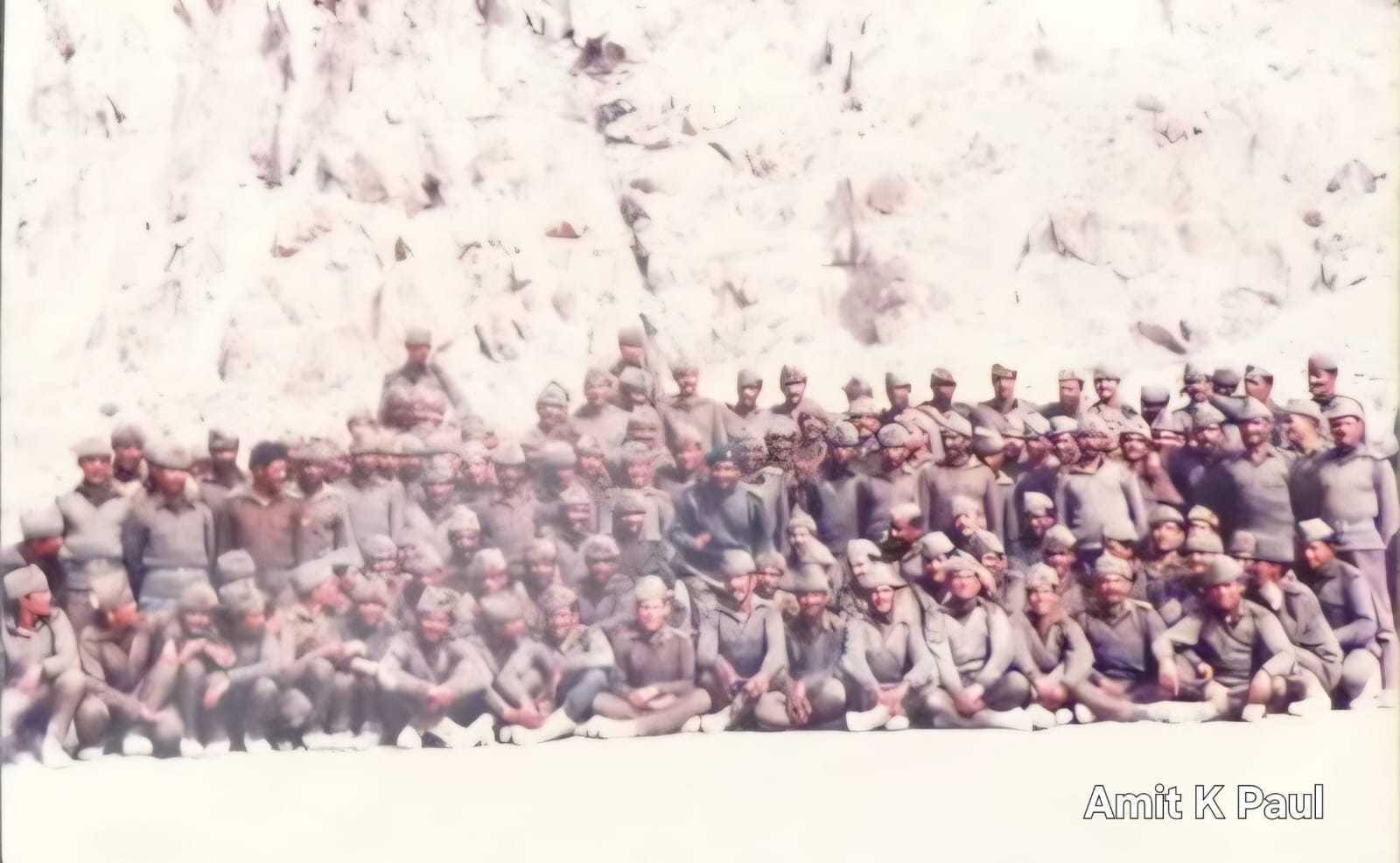
19 KUMAON entered the theatre of operations around 18 April and was de inducted by 13 August 1984. During this period it was spread all through the area of Siachen with Captain Roshan Lal Yadav in the extreme North at Indira Col, Major Shashi Kant Mahajan and Major Darshan Lal Julka on the Central Glaciers (Gyongla, Dzingrulma, Lagongma and Layogma) and Major Rajender Singh in the extreme South at the Urdolep Glacier. By occupying 5705 on the Saltoro ridgeline, not vacating it despite express orders to do so, and proceeding to capture OP Hill, 19 KUMAON effectively sealed Gyong La for Pakistan.
Though, often unsung the role of these ‘outsiders’ and their contribution to the Siachen Operations can neither be undermined nor forgotten.
Amit Krishankant Paul is an independent researcher and author of the book ‘Meghdoot: The Beginning of the Coldest War’. Views are personal.
Excellent write up. I was there from Khrew to Siachen with UNNIS. I have some more photos from that time period. Proud to have been a part of Op Meghdoot.